Our verdict
SHI occupies a compelling position in Long Island City's emerging dining corridor, sitting across the East River from Manhattan's most decorated tables yet operating in a neighbourhood still finding its fine-dining footing. For visitors seeking a serious meal outside the well-worn Midtown and downtown circuits, the address alone signals a different kind of intention.

Pearl is the En Primeur Club membership app, where members save venues, book tables and use the concierge.

The menu
What to order
- Crispy Rice with Spicy Tuna
- Shrimp Dumplings
Long Island City and the Case for Dining Across the River
New York's fine-dining conversation has historically been anchored on a tight Manhattan grid: the Columbus Circle corridor where Per Se and Masa hold court at the leading price tier, the Midtown stretch where Le Bernardin has maintained its three-star position for decades, and the Flatiron and NoMad zones where Eleven Madison Park redefined plant-forward tasting menus. What's less discussed is how that concentration has created a pressure valve effect: serious operators looking for lower overhead, a different clientele, and room to build something without the weight of Manhattan's existing critical hierarchy have increasingly looked to the outer boroughs. Long Island City, in particular, has absorbed a wave of that energy. Positioned directly across the East River, reachable by a short subway ride on the 7 train from Midtown or a quick car crossing via the Queens-Midtown Tunnel, the neighbourhood offers waterfront proximity and a developing residential density that makes a destination restaurant viable in a way it wasn't fifteen years ago.
SHI, at 47-20 Center Blvd in Long Island City, sits in this context. The Center Boulevard strip runs along the western edge of Queens facing the Manhattan skyline, an address that would have seemed improbable for a notable dining destination a decade ago but now sits within a neighbourhood actively building the infrastructure, residential population, and cultural confidence to support one. That locational logic matters as much as anything on the plate when reading what SHI is attempting.
The Neighbourhood as Frame
Long Island City's dining scene has developed unevenly, as outer-borough neighbourhoods tend to when gentrification outpaces the culinary supply chain. There are pockets of strong cooking, particularly in the direction of Jackson Heights to the east, where some of the most technically accomplished South Asian and Latin American food in the five boroughs can be found at a fraction of Manhattan prices. But the western waterfront strip where SHI operates is a different animal: newer, more residential, oriented toward a demographic that commutes into Manhattan but prefers to eat closer to home when the occasion allows. A restaurant at this address is making an implicit argument that a dining destination doesn't require a Midtown zip code.
That argument has been made successfully elsewhere in the outer boroughs. Brooklyn's transformation from culinary afterthought to serious dining territory over the past two decades is the obvious parallel. What Long Island City has that Brooklyn's early restaurant wave lacked is direct, fast transit access to Midtown Manhattan, meaning the friction of a dinner reservation here is lower than it was for the first generation of destination restaurants in Williamsburg or Carroll Gardens. The 7 train from Times Square to Queensboro Plaza takes under ten minutes. For visitors already staying in Midtown, SHI's address is logistically no more demanding than a crosstown cab to the far West Side.
Seasonal Timing and When to Visit
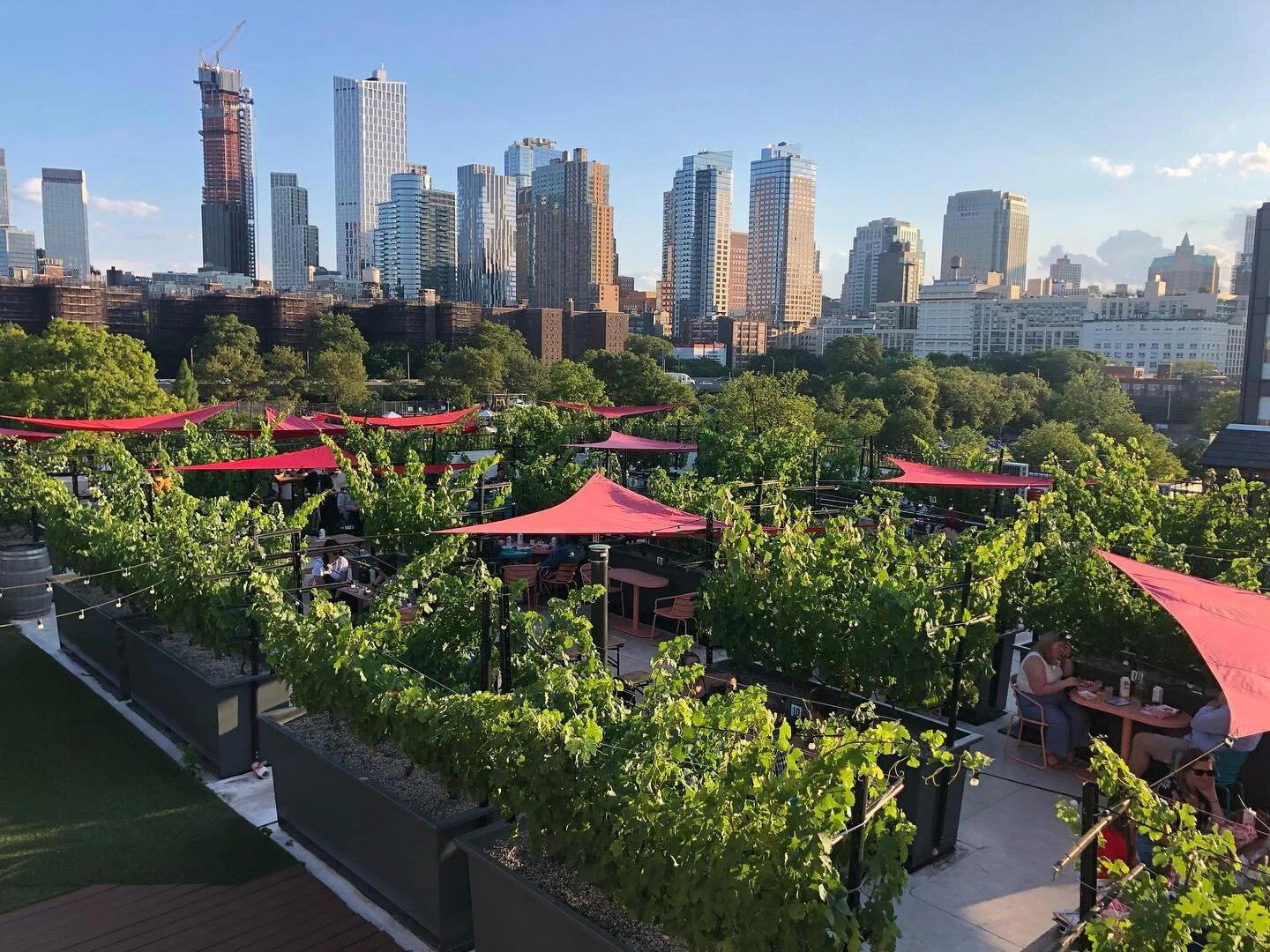
Long Island City's waterfront position gives it a seasonal dimension that matters for the overall experience. The Center Boulevard stretch faces west toward Manhattan, which means summer evenings bring a skyline view in direct sunlight that shifts through late-afternoon gold before the city's lights take over. For a neighbourhood restaurant aiming to offer something beyond the plate, that setting is an asset that no amount of interior design budget can replicate inside a Manhattan building. The practical implication: warm-weather bookings, particularly for tables that face or approach the waterfront, carry a different value proposition than winter visits, when the skyline is equally dramatic but the external setting less forgiving. If timing a trip to New York around a meal at SHI, the window from late May through early October captures the neighbourhood at its most coherent. For context on how New York's broader dining calendar works across the year, the full New York City restaurants guide covers seasonal patterns across the major dining corridors.
Placing SHI in Its Competitive Set
What the address signals is a deliberate step outside the Manhattan premium tier occupied by restaurants like Atomix, whose $$$$ Modern Korean tasting format has become one of the city's most discussed fine-dining programs, or the Columbus Circle flagships. Outer-borough restaurants that have successfully made the case for destination status tend to operate with a specific point of difference: format, cuisine angle, or price-to-quality positioning that justifies the extra few stops on the subway.
The same logic applies nationally. Restaurants that have built reputations outside the obvious city-centre coordinates, from Lazy Bear in San Francisco's communal tasting format to Smyth in Chicago's hyper-seasonal approach, demonstrate that address is a frame, not a ceiling. Destination dining outside capital-city cores has its own logic at properties like Blue Hill at Stone Barns in Tarrytown, Single Thread Farm in Healdsburg, and The French Laundry in Napa, all of which drew critical attention precisely because their locations amplified, rather than diminished, the experience on offer. SHI's Long Island City positioning invites the same kind of reading: the neighbourhood is part of the proposition.
For readers building a broader itinerary, the range of formats and price tiers available across the country gives useful calibration. Providence in Los Angeles, Addison in San Diego, Emeril's in New Orleans, and The Inn at Little Washington each represent different approaches to building a serious dining identity outside the most obvious addresses. Internationally, the territory-first logic appears in places like Atelier Moessmer Norbert Niederkofler in Brunico and Dal Pescatore in Runate, both of which trade on location as much as on plate. Frasca Food & Wine in Boulder makes the same case in a smaller market.
Planning a Visit
Long Island City is accessible from Midtown Manhattan in under fifteen minutes by subway (7 train from Times Square or Grand Central, exit at Queensboro Plaza or Court Square) or by taxi and rideshare across the Queensboro or Queens-Midtown Tunnel. The Center Boulevard address sits within the newer residential development zone near Gantry Plaza State Park, a neighbourhood that is still building its evening foot traffic relative to Manhattan, which means parking is considerably easier than anywhere in Midtown. Given the limited publicly available operational data for SHI at the time of writing, confirming current hours, booking method, and any format specifics directly with the venue before planning a visit is the prudent approach.
Frequently asked questions
What's SHI's location?
SHI is located at 47-20 Center Blvd, Long Island City, NY 11109, New York City.
Is SHI in Long Island City easy to reach from Manhattan without a car?
Yes, SHI's address at 47-20 Center Blvd in Long Island City puts it within a short walk of the Queensboro Plaza station, reachable via the 7 train from Times Square or Grand Central in under fifteen minutes. For a New York City restaurant sitting outside Manhattan, that transit connection removes the usual friction of outer-borough dining and makes SHI a practical option for weeknight visits.
What's the must-try dish at SHI?
The menu specifics at SHI have not been confirmed in the public record at the time of writing. Given the restaurant's address on Center Boulevard, the western-facing waterfront strip in Long Island City, arriving with an open approach to whatever is in season is the more useful orientation than chasing a single dish.
How far ahead should I plan for SHI?
Planning at least one to two weeks ahead is a reasonable baseline for a weekend reservation in this part of Queens, New York City.
What is SHI known for?
SHI sits at 47-20 Center Blvd in Long Island City, a waterfront address that places it west-facing along the East River with direct sightlines toward Midtown Manhattan. Beyond its location, cuisine type and chef credentials have not been confirmed in the public record at time of writing, so the restaurant's specific reputation is best verified through current local sources before visiting.
A short peer table to compare basics side-by-side.
| Venue | Cuisine | Price | Awards | Notes |
|---|---|---|---|---|
| SHIThis venue (the venue you are viewing) | Pan-Asian Sushi & Fusion | $30–50 | Not listed | Not listed |
| Le Bernardin | French Seafood Fine Dining | $300–500 | 3 Michelin Stars · World's 50 Best #13 | French, Seafood |
| Atomix | Modern Korean Tasting Menu | $300–500 | 2 Michelin Stars · World's 50 Best #7 | Modern Korean, Korean |
| Per Se | French Fine Dining Tasting Menu | $300–500 | 3 Michelin Stars · World's 50 Best #40 | French, Contemporary |
| Masa | Traditional Japanese Omakase | $500+ | 2 Michelin Stars · World's 50 Best #27 | Sushi, Japanese |
| Eleven Madison Park | Contemporary Plant-Based Fine Dining | $300–500 | 3 Michelin Stars · World's 50 Best #4 | French, Vegan |