
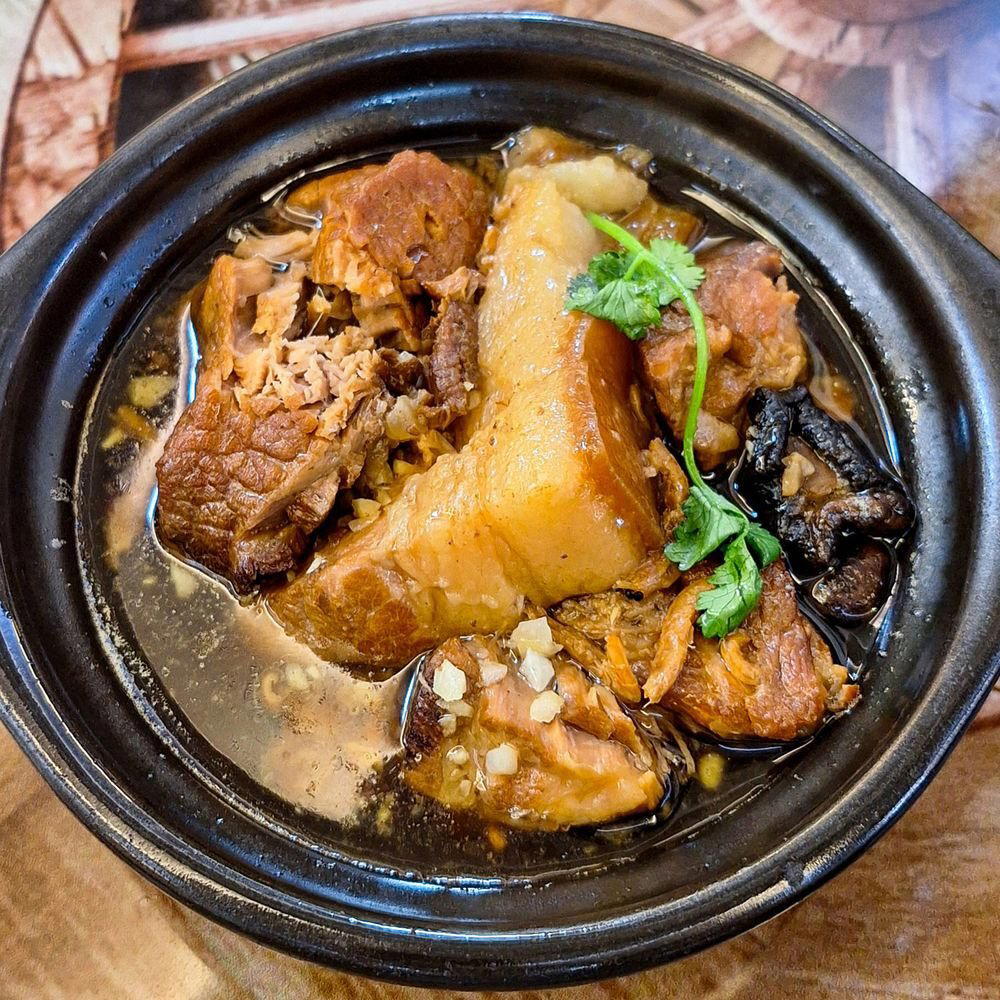
A former Chinese medicine practitioner turned restaurateur, the owner behind Shan Gu Tang on Xiahe Road has built a small, focused menu around herbal soups with genuine medicinal grounding. Standouts include free-range chicken soup with russula mushrooms and pork intestine soup with lotus seeds, alongside blanched dishes, marinated meats, and seasoned taro rice. The bright red sign and trailing herbal aromas do the advertising.
Pearl is the En Primeur Club membership app — saves, bookings, and concierge access live there. Same editors, same standards.
- Address
- 386-119 Xiahe Road, Siming
- Phone
- +86 592 881 8111
- Directions
- Get directions
 Saves & bookings on Pearl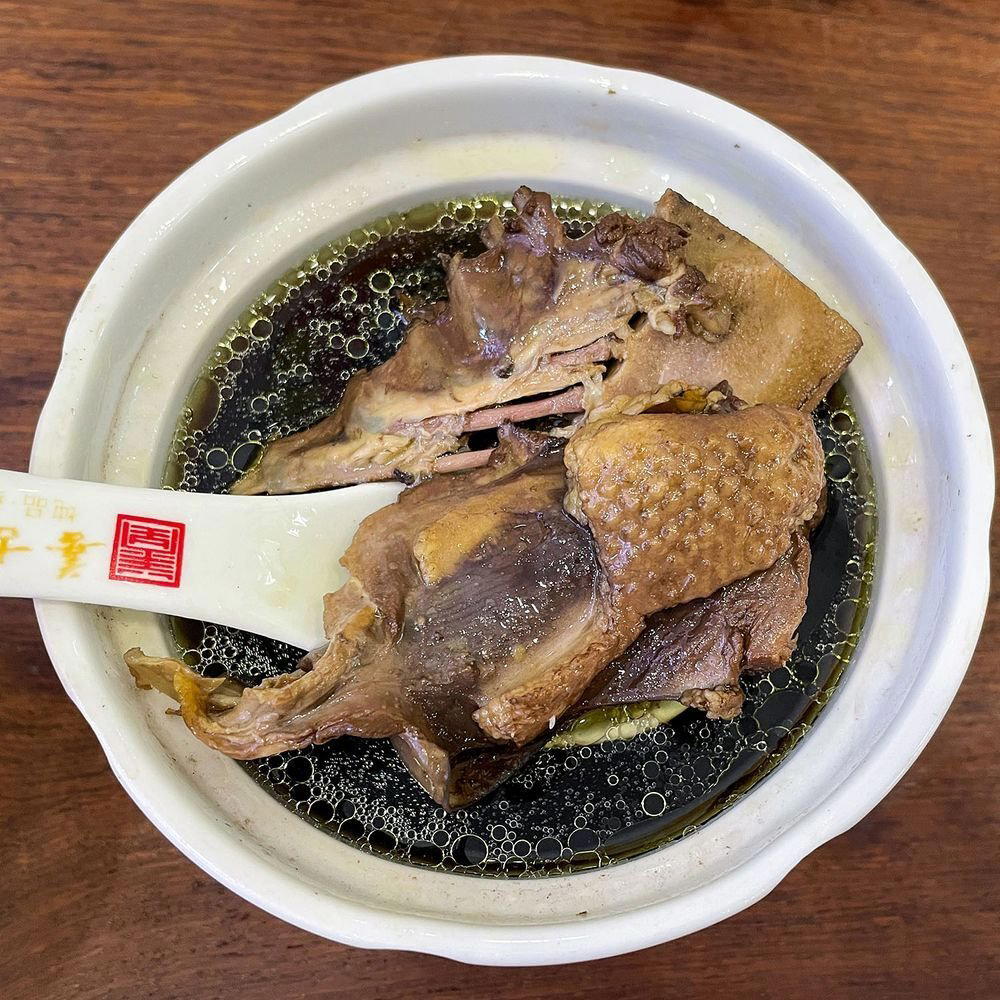
Where the Medicine Cabinet Meets the Kitchen
Shan Gu Tang (Xiahe Road) is a restaurant in Xiamen's Siming district serving Fujian Herbal Soups. The practice of yao shan, medicinal cuisine, has deep roots across Fujian province, where herbalism and cooking have shared a conceptual vocabulary for centuries. Ingredients like lotus seeds, russula mushrooms, and dried roots appear in both the apothecary and the soup pot, not as novelty but as tradition. Shan Gu Tang on Xiahe Road occupies exactly this territory, and the bright red signage at number 386-119 is only the first signal that this is not a conventional lunch stop.
The herbal aromas arrive before the menu does. That sensory cue is itself an indicator of what this style of cooking prioritises: slow extraction, medicinal depth, and an emphasis on ingredient quality that tends to disappear from higher-volume operations. In Xiamen's broader restaurant scene, which covers everything from Fujian banquet houses like Hokklo and Yanyu (Jiahe Road) to the precise Chaozhou cooking of Fleurs Et Festin, Shan Gu Tang occupies a narrower, more specialist position. It is a medicinal soup house, and the menu is built around that purpose without apology.
The Cultural Logic of Medicinal Eating in Fujian
Fujian's culinary tradition has always treated food as a form of preventive health practice, a perspective shaped partly by the province's deep engagement with traditional Chinese medicine and partly by geography: a subtropical coastal region where humidity, heat, and seasonal change created practical reasons to eat in ways that regulated the body. Soups in particular became vehicles for medicinal ingredients precisely because liquid extraction releases compounds that dry preparation cannot. The slow-cooked herbal broth is, in this context, less a dish than a delivery mechanism.
The owner's background as a Chinese medicine clinic practitioner frames the menu as a logical extension of that professional history rather than a marketing angle. The transition from clinic to kitchen is less unusual in this cultural setting than it might appear from outside it. Across southern China, practitioners of traditional medicine have long operated at the boundary between therapeutic prescription and culinary instruction. Shan Gu Tang formalises that boundary into a restaurant format, with dishes designed to carry genuine medicinal value alongside their role as food. This distinguishes it from the many restaurants that deploy herbal terminology loosely, as atmosphere rather than ingredient philosophy.
The Menu: Small, Specific, and Built Around the Soup
The menu is deliberately compact. Herbal soups anchor it, with blanched items, marinated meats, and seasoned taro rice filling the supporting positions. This kind of focused offering is a structural signal: a small menu that does not try to cover all bases usually indicates that what is on it has been chosen with precision. The two soups most frequently mentioned by visitors are the free-range chicken soup with russula mushrooms and the pork intestine soup with lotus seeds. Both reflect the medicinal logic that shapes the kitchen's priorities.
Free-range chicken is a deliberate choice in this context. In Fujian cooking, the quality of the animal matters not just for flavour but for the integrity of the broth, which concentrates whatever the chicken carried in life. Russula mushrooms, a genus with a long history in Chinese medicinal cooking, bring an earthiness and a specific nutritional contribution that cultivated mushrooms do not replicate. The pork intestine soup with lotus seeds is a more technically demanding preparation: intestines require cleaning and long cooking, and lotus seeds carry associations in Chinese medicine with calming properties and spleen health. These are not incidental ingredients; they are the point.
The seasoned taro rice provides a starchy, grounding counterpart to the soups. Taro appears frequently in Fujian cooking, particularly in the coastal areas around Xiamen, and its presence alongside medicinal broths is consistent with a menu designed for complete, restorative eating rather than individual dish selection. For visitors familiar with Xiamen's lighter street-eating formats, such as the noodle-led menu at A Xi Xia Mian, Shan Gu Tang offers a markedly different register: slower, heavier, and more deliberate.
Siming District and Where This Fits in Xiamen's Eating Scene
The Siming district is Xiamen's administrative and commercial core, and Xiahe Road runs through a part of it that mixes residential density with neighbourhood-scale food operations. This is not a tourist-facing address. The customer base drawn in by those herbal aromas tends to be local, which in practical terms means the operation is calibrated for a regular clientele rather than passing trade. That context matters for the visitor: arrival without context or language preparation is manageable but less smooth than at venues oriented towards non-local guests.
Within Xiamen's restaurant ecosystem, Shan Gu Tang occupies a price tier consistent with neighbourhood cooking rather than formal dining. Comparisons within the city's affordable segment include the congee-focused A Xi Xia Mian format and rice-centred lunch houses, but the medicinal soup specialisation puts Shan Gu Tang in a narrower category. For the kind of regionally specific, practitioner-informed cooking that Shan Gu Tang represents, there is no direct equivalent in most other Chinese cities outside Fujian and Guangdong. That specificity is what separates it from the broader herbal soup category.
For deeper context on Fujian cooking traditions in Xiamen, the historically grounded 1927 Dong Yuan Si Chu offers a different angle on the province's culinary inheritance. Visitors interested in how Chinese regional cuisine reads at a more formally constructed level might also reference Xin Rong Ji in Beijing, Ru Yuan in Hangzhou, or the technically rigorous Chef Tam's Seasons in Macau for comparative benchmarks across the Chinese fine dining register. For contrast at the opposite end of the formality spectrum, 102 House in Shanghai, Xin Rong Ji in Chengdu, and Imperial Treasure Fine Chinese Cuisine in Guangzhou each represent different regional approaches to Chinese cooking at a higher price point. Outside China entirely, the fish-forward precision of Le Bernardin in New York City and the Louisiana-rooted cooking at Emeril's in New Orleans illustrate how ingredient-first, culturally grounded cooking translates across completely different culinary systems.
Planning a Visit
Shan Gu Tang is located at 386-119 Xiahe Road in the Siming district. Walk-in is the standard mode of access. Visiting at lunch, when herbal soups are a conventional midday meal in Fujian, is the appropriate timing. The small menu limits decision-making: order from the soup section first, then the taro rice as accompaniment. The free-range chicken soup with russula mushrooms and the pork intestine soup with lotus seeds are the reference dishes.
Cost Snapshot
Comparable venues nearby, for context on price, style, and recognition.
| Venue | Cuisine | Price | Awards | Notes |
|---|---|---|---|---|
| Shan Gu Tang (Xiahe Road)This venue — the venue you are viewing | Siming, Fujian Herbal Soups | $$ | Bib Gourmand | Not listed |
| Hao Shi Lai | Not listed | $$ | Bib Gourmand | Siming District, Hubin South Road area, Traditional Minnan Seafood |
| Homeme18" (Huming Road) | Siming, Modern Fujian Home Cooking | $$ | Bib Gourmand | Not listed |
| Xiang Mo Jin Nian (Siming) | Not listed | $$ | Bib Gourmand | Siming, Minnan Sand-Cooked Fujian Cuisine |
| Yue Hua Sha Cha Mian | Siming, Xiamen Sha Cha Noodles | $ | Bib Gourmand | Not listed |
| Shan Li Yan Sha Cha Mian | Siming, Sha Cha Noodles | $$ | Bib Gourmand | Not listed |
Recognition history
Dated appearances from independent guides and award organizations, with the underlying list record or original source where available.
Michelin Bib Gourmand
Michelin
Continue exploring
More in Xiamen
Restaurants in Xiamen
Browse all →


At a Glance
- Cozy
- Rustic
- Casual Hangout
Current opening hours
- Monday
- 10 AM–10 PM
- Tuesday
- 10 AM–10 PM
- Wednesday
- 10 AM–10 PM
- Thursday
- 10 AM–10 PM
- Friday
- 10 AM–10 PM
- Saturday
- 10 AM–10 PM
- Sunday
- 10 AM–10 PM
Hours can change for holidays and private events. Last verified .
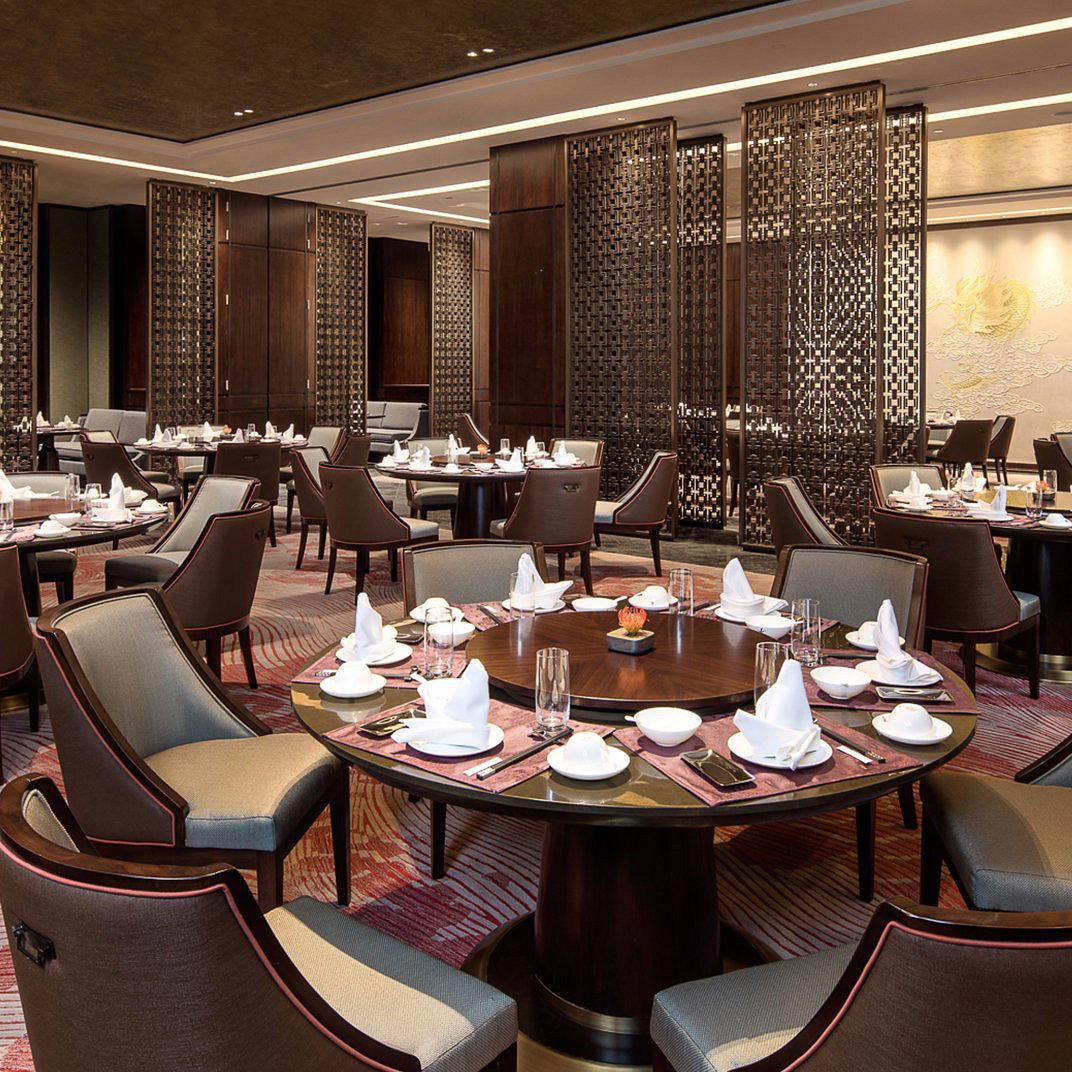
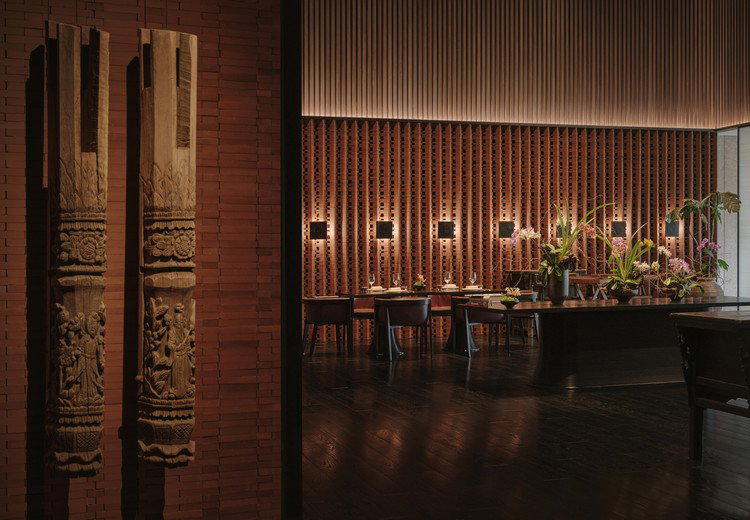
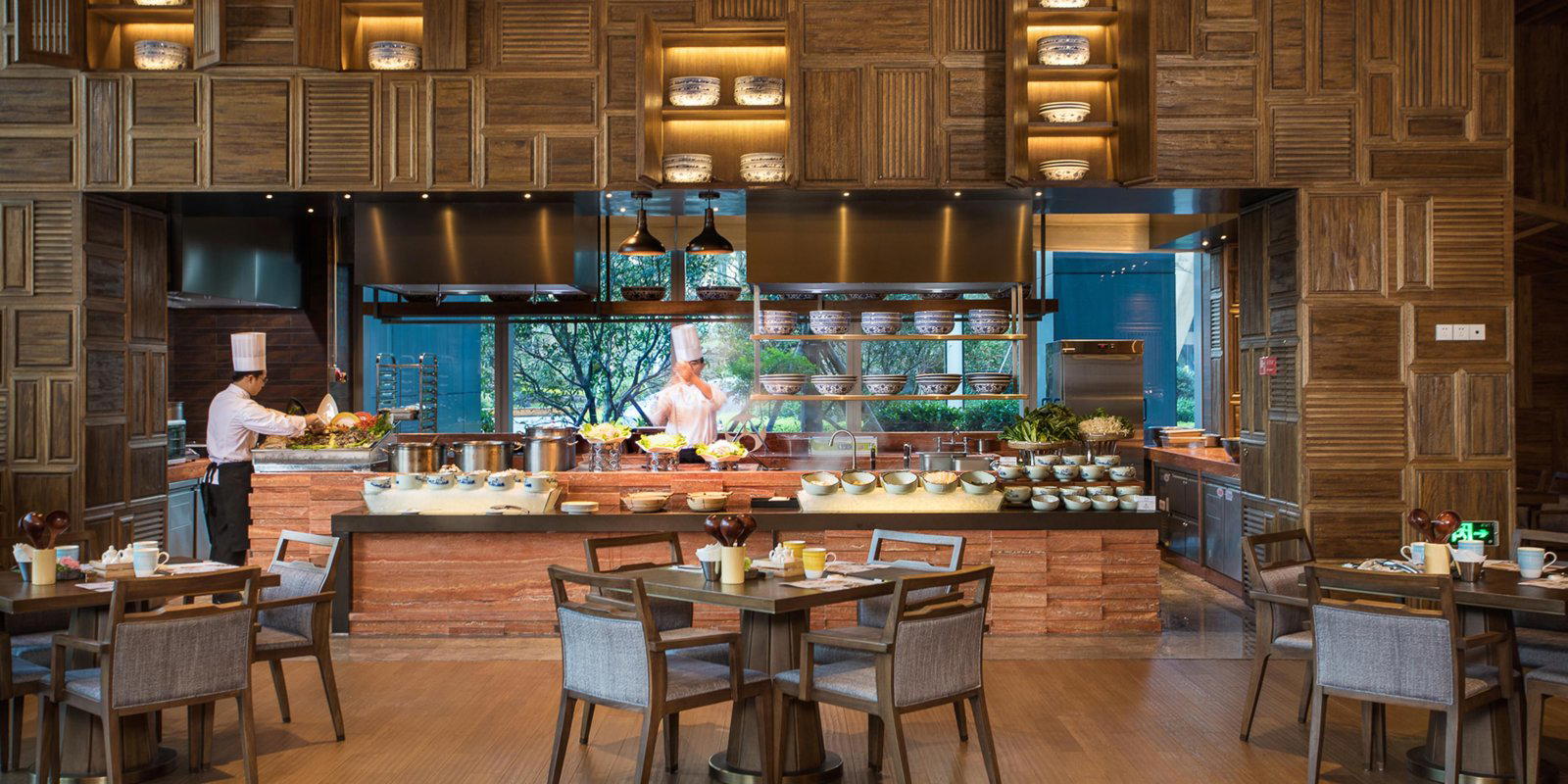
Small shop atmosphere with bright red sign and herbal aromas drawing in customers.