
Farasha Farmhouse-Mouton Noir sits at the intersection of Moroccan agricultural tradition and contemporary cooking, with Chef Aniss Meski bringing a farm-grounded sensibility to one of Marrakesh's more considered dining settings. The address places it outside the medina's concentrated restaurant strip, signalling an intention to draw guests rather than intercept them. For those tracing serious Moroccan cooking beyond the palace-dining circuit, it warrants attention.
Pearl is the En Primeur Club membership app — saves, bookings, and concierge access live there. Same editors, same standards.
- Address
- Farasha, Marrakech, Morocco
- Directions
- Get directions
 Saves & bookings on Pearl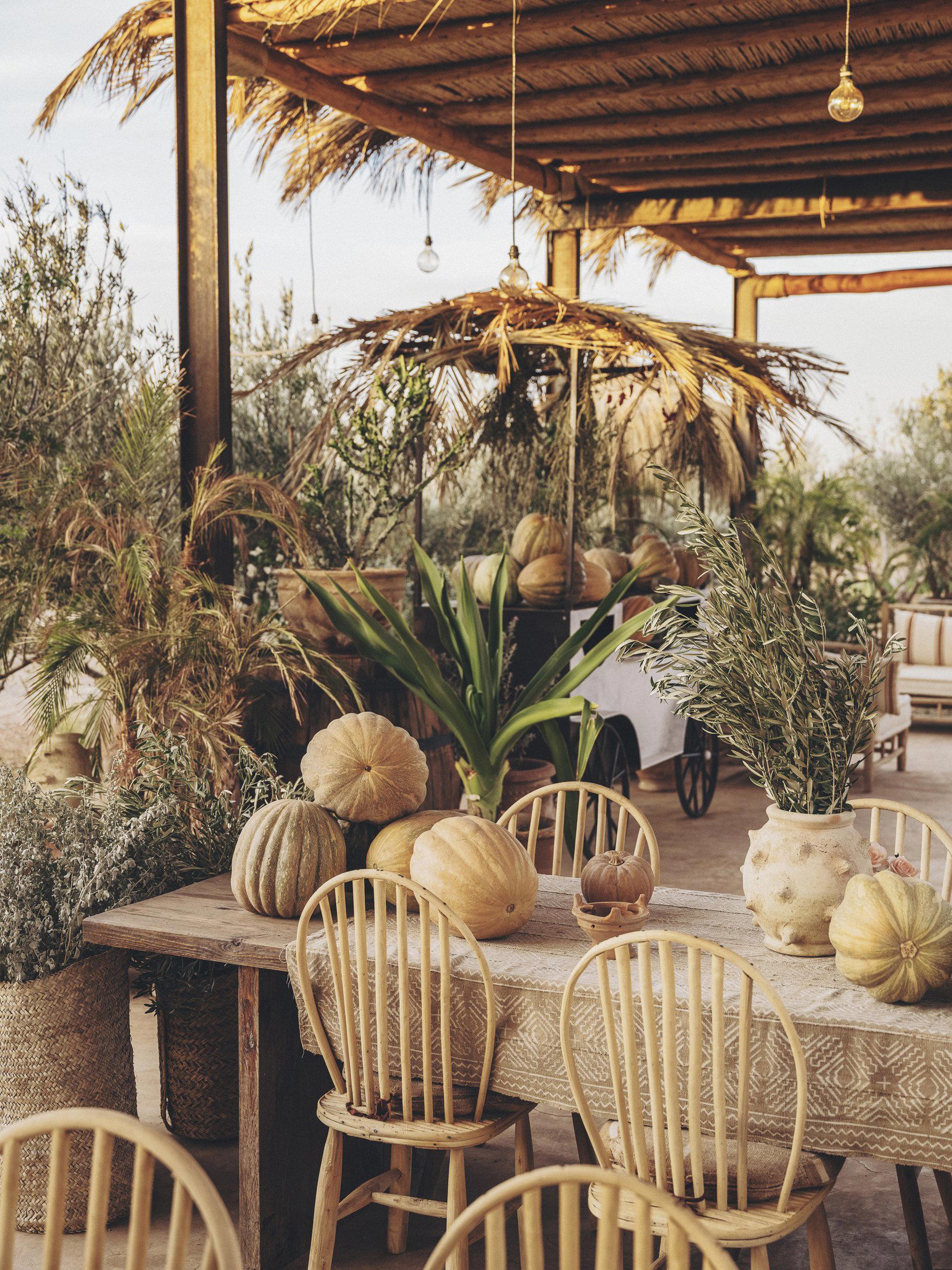
Outside the Medina Circuit: Farmhouse Dining as a Distinct Category
Marrakesh's restaurant scene has, for the better part of two decades, organised itself around two poles: the grand palace riad, where Moroccan tradition is performed at scale for international guests, and the neighbourhood bistro serving the city's growing expatriate population. The farmhouse format sits between those categories and, in many ways, refuses both of them. Where a venue like La Grande Table Marocaine at Royal Mansour frames Moroccan cuisine inside the context of five-star luxury hospitality, and Sesamo operates in the lighter register of modern Mediterranean, Farasha Farmhouse-Mouton Noir plants itself in the agricultural periphery of the city, where the pace slows and the sourcing argument becomes geographic rather than rhetorical.
The name itself signals the intention. Mouton Noir, black sheep in French, carries a self-aware edge: this is a property that knows it sits outside the conventional hierarchy. That positioning is less a marketing posture than an accurate description of where farmhouse dining fits in the Marrakesh market. You do not arrive here because you stumbled past it on a medina alley. You arrive because you looked for it.
The Environment and What It Communicates
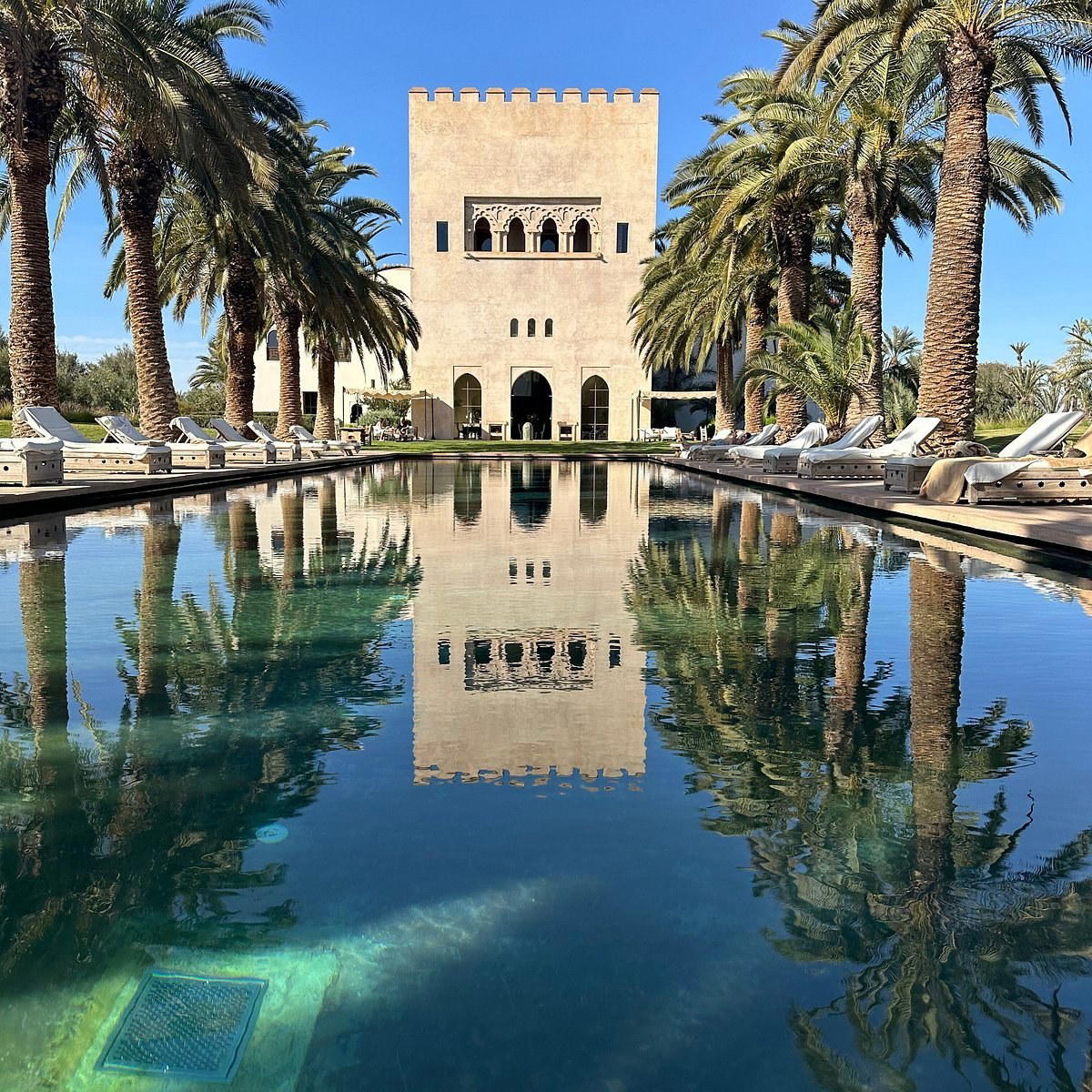
Approaching a working farmhouse property in the Marrakesh countryside, the sensory register changes immediately from the city's compressed energy. The Palmeraie fringe and the agricultural belts that push out toward the Atlas foothills share a quality of space that the medina never offers: horizontal sight lines, the sound of wind rather than motorbikes, and the kind of ambient light that arrives unfiltered through open sky rather than the narrowed channel of a derb. At Farasha, the property's character is shaped by that agricultural setting rather than designed against it.
This is a materially different proposition from the riad-restaurant format that dominates Marrakesh's premium dining geography. Riads are introspective by construction, their courtyard geometry turning attention inward and upward. A farmhouse property turns attention outward, toward land, toward production, toward the origins of what ends up on the table. That shift in orientation is not merely aesthetic. It changes what the kitchen can credibly claim about its ingredients, and it changes what the guest understands about the food they are eating.
Chef Aniss Meski and the Cultural Logic of Moroccan Farm Cooking
Moroccan cuisine, at its historical core, has always been rooted in the agricultural cycle. The great dishes of the tradition, preserved lemons, slow-cooked tagines, grain-forward salads, the long braises that work with tough cuts over hours, were not invented in palace kitchens and handed down to the countryside. They moved in the other direction. The terroir of the Sous valley, the saffron fields of Taliouine, the argan groves of the western slopes: these are not decorative references in Moroccan cooking. They are the origin points.
Chef Aniss Meski's presence at Farasha Farmhouse-Mouton Noir is significant in this context. In Marrakesh's contemporary fine dining tier, which includes venues like Dar Moha operating in the reinterpreted Moroccan register and La Grande Brasserie by Helene Darroze applying a French fine dining framework to Marrakesh's hospitality economy, the question of how a kitchen relates to Moroccan culinary tradition is always present, even when unspoken. A farmhouse setting resolves that question spatially before the first plate arrives. The land is the argument.
That said, the kitchen's specific approach, its menu structure, its treatment of seasonal product, and its relationship to Moroccan technique, are details that the available record does not supply at a level of specificity that would support firm conclusions. What can be said is that the pairing of a named chef with a farm property in the Moroccan context follows a coherent logic: the farmhouse format only works if the sourcing is real and the kitchen has the skill to honour it. Elsewhere in Morocco, that pairing has produced compelling results. L'Oliveraie in El Hajeb demonstrates how a landscape-specific property can anchor a kitchen's identity in ways that urban restaurants cannot replicate. Farasha operates in a similar spatial register.
Where This Sits in the Marrakesh Dining Order
Marrakesh has developed a sophisticated premium dining tier over the past decade, with international chefs, palace-affiliated restaurants, and a growing number of independently operated addresses competing for a traveller audience that arrives with real culinary expectations. Against that backdrop, the farmhouse format represents a specific counter-position: less theatrical, more grounded, and asking a different kind of attention from the guest.
The comparison venues in the city's Moroccan fine dining bracket, including Sesamo and the Franco-Moroccan registers of +61, tend to operate on the logic of the chef's technical ambition expressed through a Moroccan ingredient vocabulary. Farasha inverts that hierarchy: the land and the production system come first, and the kitchen works within those constraints. Whether that produces a more or less ambitious result depends on what you think ambition means in a dining context. For guests who value a direct relationship between place and plate, the farmhouse model is not a step down from the palace-dining tier. It is a different argument entirely.
Travellers moving across Morocco might find useful reference points in addresses like Heure Bleue Palais in Essaouira or Gayza in Fès, both of which move through the question of how to frame Moroccan culinary tradition for an international audience without collapsing it into spectacle. Internationally, the tension between technical ambition and place-rootedness plays out at addresses as different as Le Bernardin in New York and Atomix, though the cultural stakes in Morocco are distinct given the depth and coherence of its culinary inheritance.
Planning a Visit
Farasha Farmhouse-Mouton Noir's address, listed simply as Farasha, Marrakech, positions it outside the medina's walkable core. Reaching it requires a taxi or car, which is consistent with the broader category of Marrakesh farmhouse and palmeraie properties that operate as deliberate destinations rather than convenient options. Given the limited public-facing booking infrastructure currently visible for this address, the most reliable approach is to contact the property directly or to arrange access through your hotel concierge, particularly if you are staying at one of the city's larger riad hotels. For a broader view of where Farasha sits within Marrakesh's dining options, our full Marrakesh restaurants guide maps the full range of addresses across categories and price tiers. Those extending their Morocco itinerary can also consult our guides to Marrakesh hotels, bars, wineries, and experiences for a full picture of the city's offer. For those building a wider Morocco dining itinerary, Château Roslane in Icr Iqaddar, Hôtel Le Doge in Casablanca, and Le Petit Cornichon in Marrakech offer useful context across different registers and cities.
How Farasha Farmhouse-Mouton Noir Marrakech compares with similar nearby venues.
| Venue | Cuisine | Awards |
|---|---|---|
| Farasha Farmhouse-Mouton Noir | Not listed | The Best Chef One Knife (2025) |
| Pool House | Cooking classics | Not listed |
Recognition history
Dated appearances from independent guides and award organizations, with the underlying list record or original source where available.
The Best Chef One Knife
The Best Chef
Continue exploring
More in Marrakech
Restaurants in Marrakech
Browse all →
Bars in Marrakech
Browse all →
Hotels in Marrakech
Browse all →
Wineries in Marrakech
Browse all →
At a Glance
- Rustic
- Scenic
- Cozy
- Elegant
- Intimate
- Special Occasion
- Group Dining
- Celebration
- Garden
- Courtyard
- Open Kitchen
- Extensive Wine List
- Farm To Table
- Local Sourcing
- Garden
- Mountain
Serene and oasis-like with thoughtful details like candlelit patios, drought-resistant gardens, and a welcoming home atmosphere fostering creative gatherings.
Know Before You Go
- Getting there
- Farasha, Marrakech, Morocco