Select Oyster Bar


A Back Bay institution occupying the ground floor of a Gloucester Street rowhouse, Select Oyster Bar trades on a pewter bar counter, daily shellfish offerings, and a focused seafood menu that draws on local sourcing from Maine and the Gulf of Maine. Chef Michael Sherpa's kitchen runs from daily crudo and crab salad to beautifully plated Casco Bay halibut, with the icy plateau a recurring fixture at the center of the room.
Pearl is the En Primeur Club membership app — saves, bookings, and concierge access live there. Same editors, same standards.
- Address
- 50 Gloucester St.
- Phone
- +1 857-239-8064
- Website
- selectboston.com
- Directions
- Get directions
 Saves & bookings on Pearl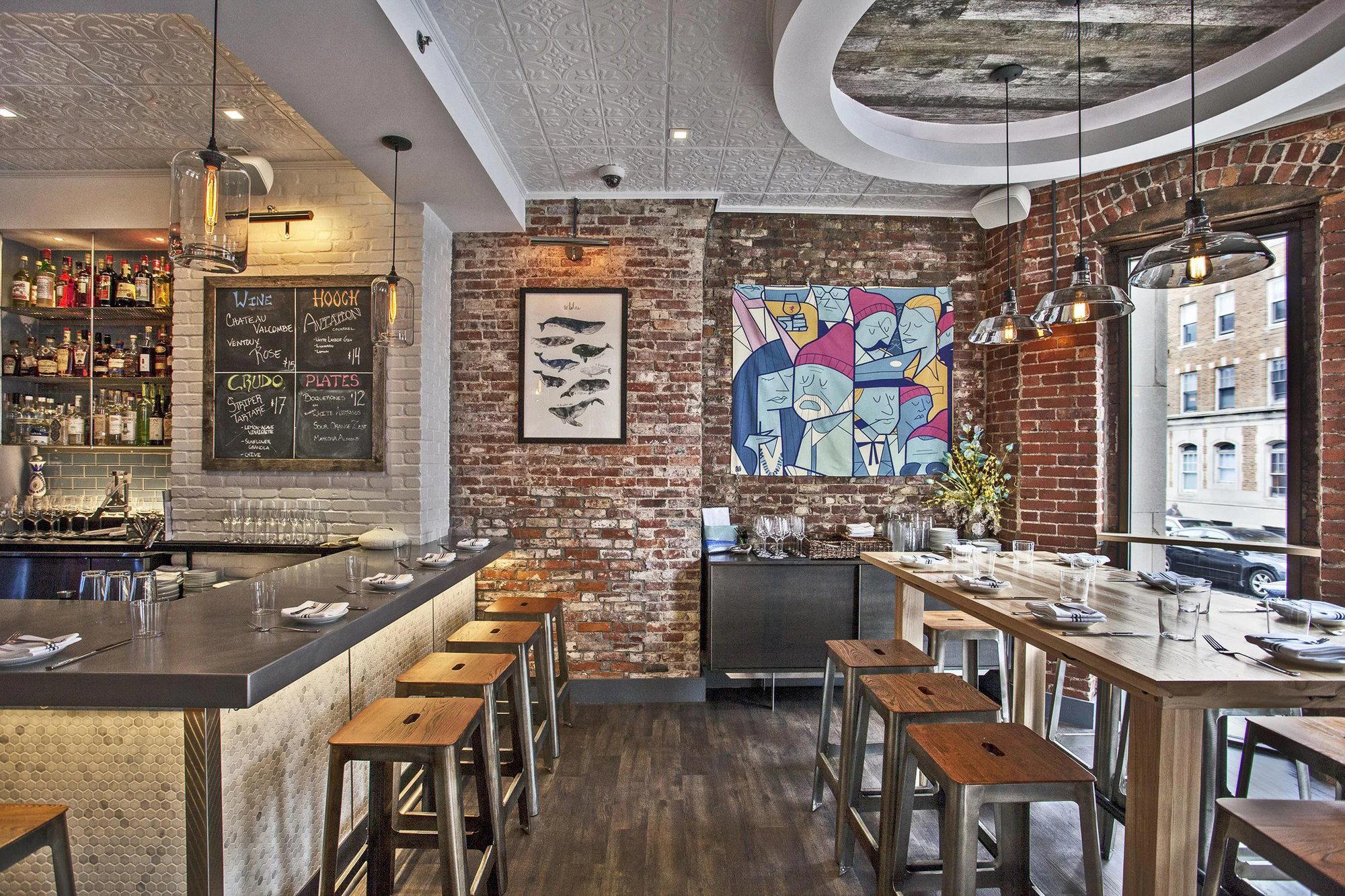
The Ritual of the Raw Bar Counter
There is a particular grammar to eating at an oyster bar that sets it apart from nearly every other dining format in an American city. You sit close to the ice, you make decisions in rounds rather than courses, and the quality of the product does most of the talking. Back Bay's dining scene has long skewed toward white-tablecloth formality and the broader New England seafood house tradition, but Select Oyster Bar on Gloucester Street occupies a more specific register: the intimate counter bar where proximity to the shellfish is both literal and philosophical. The L-shaped pewter bar that dominates the room is less a design choice than a functional commitment to the ritual itself. You are meant to sit, to watch, and to eat incrementally.
This format has a long history along the Eastern Seaboard. The great raw bars of New England were originally workingmen's institutions, built around the afternoon catch and priced accordingly. Over time, as oyster sourcing became sophisticated and chefs began treating shellfish with the same seriousness applied to beef or game, the format migrated upmarket without entirely losing its informality. Select sits in that evolved tier: the setting is a ground-floor rowhouse space on a residential Back Bay block, the atmosphere is convivial rather than hushed, and the menu is structured around daily availability rather than a fixed architecture of courses.
Reading the Menu as a Map of the Season
Chef Michael Sherpa's menu at Select functions the way a good oyster bar menu should: as a document of what arrived that morning rather than what the kitchen decided to offer six months ago. The daily crudo and crab salad anchor the lighter end, and the rotating oyster selection reflects the geography of the Gulf of Maine and beyond, where water temperature, salinity, and tidal patterns produce shells with meaningfully different profiles depending on the harvest site. Boston's position at the intersection of cold Atlantic currents and productive coastal estuaries makes it one of the better American cities for this kind of sourcing specificity.
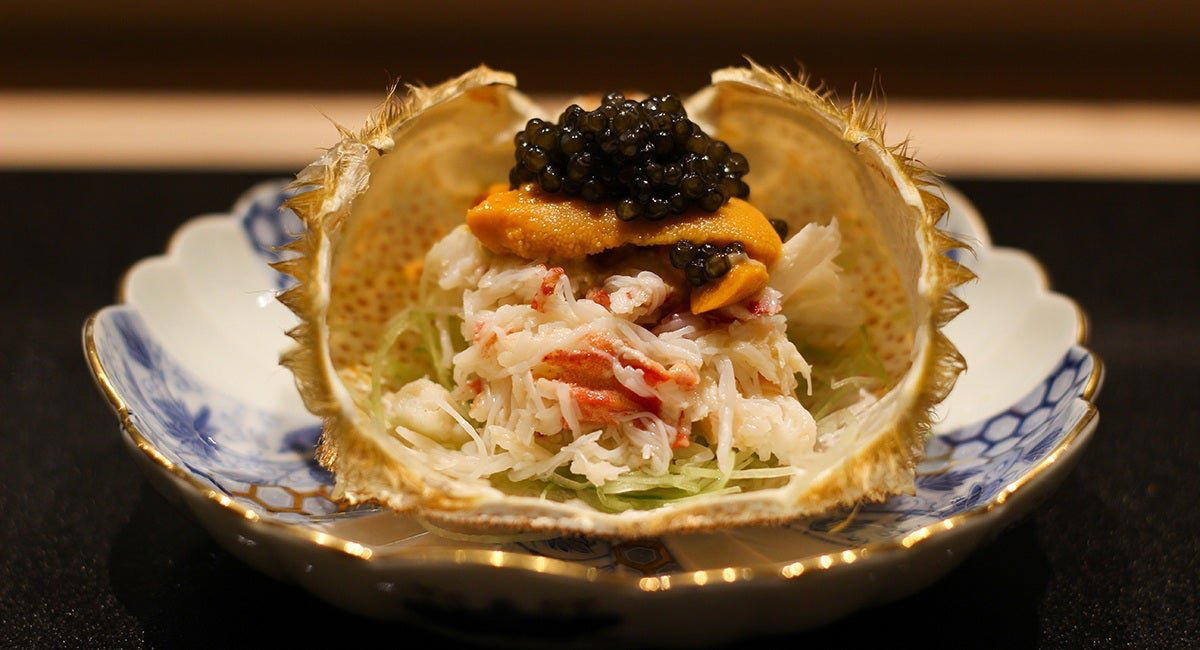
The honey-butter dressed Maine uni toast is the kind of dish that signals where a kitchen's priorities lie. Uni from Maine tends toward a cleaner, brinier profile than its West Coast counterpart, and the pairing with butter and toast is a deliberate act of restraint: the goal is to frame the ingredient rather than transform it. Similarly, the icy plateau, that arrangement of shellfish over crushed ice that has become a fixture of premium seafood dining across the country, functions here as a shared ritual as much as a dish. It is the format most likely to slow a table down, encourage conversation about what you're eating, and push the meal toward the leisurely pace an oyster bar rewards.
Hearty appetites find their answer in the Casco Bay halibut, plated with shaved cauliflower, lightly pickled onions, almonds, and golden raisins. The combination reads as a calibrated contrast of textures and acid levels rather than a decorative arrangement. For those who arrive without interest in seafood, the prime ribeye is on the menu, a practical acknowledgment that oyster bars in the modern American city need to function as neighborhood restaurants as well as specialist counters.
Where Select Sits in Boston's Seafood Conversation
Boston's raw bar and seafood market is more layered than outsiders expect. Neptune Oyster in the North End has held the city's most discussed raw bar position for years, operating at high volume with a queue culture that has become part of its identity. Ostra in the Back Bay operates at a more formal pitch, leaning into Mediterranean preparation and a broader wine program. Select occupies a middle ground: more casual than Ostra in atmosphere, more focused and refined than a neighborhood fish house. The pewter bar and rowhouse setting give it a sense of place that distinguishes it from hotel dining rooms and large-format seafood restaurants.
For comparison with the city's broader dining ambitions, the omakase format at 311 Omakase and the Portuguese-inspired tasting counter at Agosto represent Boston's appetite for structured, chef-driven progression. Select is not that format: it rewards agency and a willingness to order in multiple small rounds rather than surrender to a set sequence. The experience is closer to what you'd find at a well-run seafood counter in coastal France than at a contemporary American tasting-menu restaurant like Lazy Bear in San Francisco or Alinea in Chicago.
Nationally, the closest reference points for Select's format and pitch sit in the tier below destination fine dining but well above casual fish shacks. Le Bernardin in New York represents the apex of white-tablecloth seafood formality; Select operates with none of that ceremony, and that is precisely its appeal. The comparison also clarifies what Select is not competing for: it is not chasing Michelin recognition or 50 Best positioning. Its reputation is built on neighborhood loyalty and the kind of word-of-mouth that accrues when a room consistently delivers quality product in a format that people actually enjoy using. That reputation is the reason it has become a local favorite across multiple years of Boston dining.
Pacing Your Visit
The counter format at Select rewards patience and sequence. Beginning with oysters and a lighter crudo before moving to the plateau and then a cooked fish course is the natural rhythm the room is designed to support. Attempting to replicate a three-course sit-down format at a pewter raw bar counter works against the logic of the space. The leading visits here tend to extend longer than expected, partly because the format encourages incremental ordering and partly because the room, described by regulars as radiating good vibes, makes it easy to stay. Boston winters are long, and a seat at a warm counter with cold shellfish and a glass of something dry is one of the more persuasive arguments for the season.
Select is located at 50 Gloucester Street in the Back Bay, one of the more walkable blocks in the neighborhood and close to several of the district's established dining options, including Abe and Louie's and Alcove. Given the intimate scale of the space, reservations are the practical default for anything other than a spontaneous weeknight visit, and the counter seats in particular tend to go early.
Cuisine and Recognition
Comparable venues nearby, for context on price, style, and recognition.
| Venue | Cuisine | Price | Awards | Notes |
|---|---|---|---|---|
| Select Oyster BarThis venue — the venue you are viewing | Modern Seafood Oyster Bar | $$$ | Michelin Plate | Not listed |
| Ostra | Mediterranean Seafood | $$$$ | Not listed | Theatre District |
| Mooncusser | Modern Seafood Tasting Menu | $$$$ | Michelin Plate | Back Bay |
| Rowes Wharf Sea Grille | Seafood Grill | $$$ | Not listed | Waterfront |
| Row 34 - Kenmore Square | New England Seafood & Raw Bar | $$$ | Not listed | Kenmore |
| Row 34 | New England Seafood Raw Bar | $$$ | Not listed | Fort Point |
Recognition history
Dated appearances from independent guides and award organizations, with the underlying list record or original source where available.
Michelin Plate
Michelin · 2026 Michelin Plate
James Beard Award Semi Finalist
James Beard Award
Continue exploring
More in Boston
Restaurants in Boston
Browse all →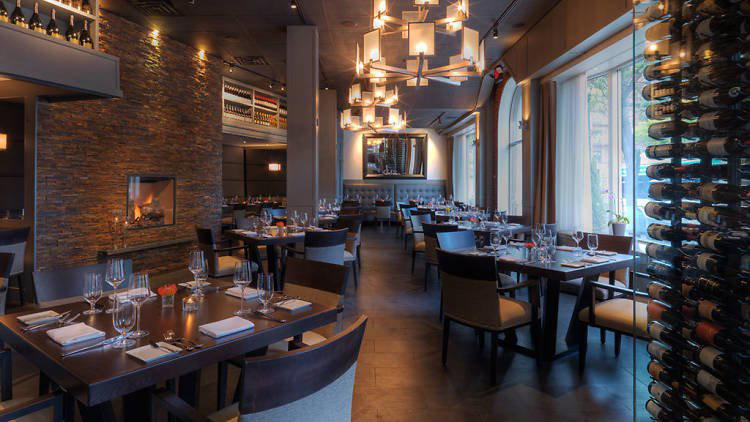
Bars in Boston
Browse all →

Hotels in Boston
Browse all →

Wineries in Boston
Browse all →
At a Glance
- Lively
- Cozy
- Energetic
- Intimate
- Date Night
- Casual Hangout
- Open Kitchen
- Craft Cocktails
- Local Sourcing
- Sustainable Seafood
Current opening hours
- Monday
- 11:30 AM–9:30 PM
- Tuesday
- 11:30 AM–9:30 PM
- Wednesday
- 11:30 AM–9:30 PM
- Thursday
- 11:30 AM–9:30 PM
- Friday
- 11:30 AM–10:30 PM
- Saturday
- 11:30 AM–10:30 PM
- Sunday
- 11:30 AM–9:30 PM
Hours can change for holidays and private events. Last verified .
Energetic and cozy atmosphere in a long narrow townhouse space with higher noise levels, funky art, and multiple seating experiences from bar to back patio.