
Seafood Shokudo Sabaya belongs to Niigata’s practical seafood-diner tradition, where access to the Sea of Japan matters more than ceremony. Its 2026 Tabelog 100 Diner selection gives the room a clear quality signal, while the format remains grounded in shokudo habits: direct, casual, and built around everyday appetite rather than tasting-menu theatre.
Pearl is the En Primeur Club membership app — saves, bookings, and concierge access live there. Same editors, same standards.
- Address
- Japan, 〒950-0116 Niigata, Konan Ward, Kitayama, 188 浮草
- Phone
- +81 80-3315-0388
- Website
- sabaya.biz
 Saves & bookings on Pearl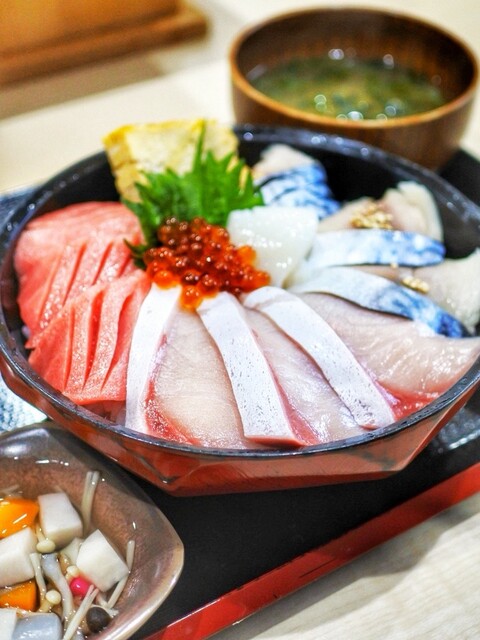
Kitayama’s restaurant rhythm is quiet: low-rise streets, local traffic, and the assumption that a good meal need not announce itself before the first tray lands. In this part of Niigata, seafood differs from Ginza’s polished counters or coastal resort dining rooms. It is daily infrastructure, shaped by the Sea of Japan, rice-country appetite, and the shokudo tradition of feeding people efficiently without losing regional character.
Seafood Shokudo Sabaya sits inside that tradition. Its Tabelog 100 Diner 2026 selection matters because the category rewards consistency, local pull, and food culture regulars understand before critics arrive. A diner listing does not ask a room to behave like kaiseki or sushi omakase; it asks whether an everyday format has enough identity to travel beyond its neighbourhood. Here, the answer is seafood, not spectacle.
Niigata seafood, read through the shokudo format
Niigata’s food identity is often reduced to rice and sake, but seafood is just as important. Facing the Sea of Japan, the prefecture treats fish as staple, not occasional luxury. That changes the mood. Where seafood is priced as status, the room slows down and explains itself. In Niigata’s shokudo lane, the stronger signal is repetition: a menu locals return to, a kitchen built for lunch traffic, and pricing that keeps seafood everyday.
The cafeteria-and-seafood classification says more than a chef biography would. The shokudo is a democratic Japanese form, part canteen, part neighbourhood dining room, judged by clarity rather than performance. When seafood enters that setting, sourcing becomes central. The point is not elaborate technique, but whether the fish-and-rice grammar feels connected to place. Niigata gives that grammar strong raw material, from coastal supply lines to an appetite trained on rice bowls, set meals, and direct preparations.
Compared with higher-spend Niigata options such as Chiyo Zushi, in a different sushi bracket, this seafood diner occupies a functional tier. It is not competing for the evening-occasion role of a counter-led sushi meal, or chasing the broader casual range of World Burger Niigata ekimae ten. Its competitive set is narrower: diners where seafood, speed, and local credibility align. That balance is harder than it sounds, because low prices quickly expose weak sourcing, with little theatre to hide average ingredients.
The 2026 Tabelog recognition gives visitors a useful filter without changing expectations. This is not the place for long-form ceremony, rare glassware, or chef-counter narration. It belongs to Japanese dining where value sits in directness. For travellers using our full kitayama restaurants guide, the appeal is seeing how Niigata seafood is eaten when treated as lunch, not luxury.
Why ingredient proximity matters more than dining-room polish
Seafood restaurants in Japan often fall into two narratives: urban precision or port-town abundance. Niigata complicates that split. It has the agricultural backbone of one of Japan’s great rice regions and the maritime access of a Sea of Japan prefecture, so the plate need not choose between grain and fish. A seafood shokudo works here because the format joins those strengths. Rice is not a side issue; it is the structure that makes fish feel complete, not decorative.
That relationship makes this address different from a destination tasting room. The editorial reason to come is not a named dish or personality-led kitchen story, but a regional food economy expressed with low ceremony: seafood at a cafeteria register, in a neighbourhood outside the obvious tourist core, with public recognition attached to a category travellers often overlook while chasing reservations. The absence of luxury cues is part of the argument. A shokudo earns attention through usefulness.
There is also a Japan-wide comparison. Many travellers build itineraries around famous ramen shops, sushi counters, or wagyu specialists, then leave the cafeteria tradition underexplored. Yet shokudo dining often gives a sharper read on local habits than a formal restaurant does. It shows what a city repeats. In Kitayama, Seafood Shokudo Sabaya offers that read through seafood, while the broader EP Club Japan map ranges from beef-led regional meals such as -Grilled beef Sukiyaki- KAMAKURA TANUKIAN 鎌倉 たぬき庵 in Kamakura to izakaya-style charcoal cooking at . 鮪と炭火焼き うお炭 秋葉原店 in Tokyo, cafe culture at .cafe in Osaka, and contemporary regional dining at .know in Kumamoto.
Judge the experience by category discipline. A seafood diner should feel casual, direct, and ingredient-led, not ask for the patience of a dégustation or the spending logic of a sushi counter. Sabaya’s value lies in alignment: the region supports the product, the format supports the price point, and the recognition supports the detour for travellers already in the Niigata orbit.
How to place it inside a Kitayama itinerary
Kitayama is not shorthand for a city break like Tokyo, Kyoto, or Osaka, so planning works better when food sits inside a wider local circuit. A seafood diner here pairs naturally with a day built around neighbourhood movement rather than one destination meal. Travellers comparing categories can use our full kitayama hotels guide, our full kitayama bars guide, our full kitayama wineries guide, and our full kitayama experiences guide to avoid treating the meal as an isolated errand.
For comparison across casual Japanese formats, useful references are not only seafood rooms. Vietnamese-Japanese neighbourhood dining at (Shoku) Vietnam in Kawasaki, curry specialization at [Curry Senmon Ten] Maruyama Kyoju. in Sapporo, Kyoto small-format dining at [ki:] in Kyoto, meat-focused regional cooking at #肉といえば松田 奈良本店 in Kashihara, burger culture at 1/3 HAMBURGER FACTORY in Kanazawa, and compact casual formats such as 1000 in Yokohama all show how Japan’s everyday dining categories can carry serious local identity.
Seen from outside Japan, that matters. Global appetite for Japanese food often privileges precision and rarity, while everyday formats explain how people actually eat. Even overseas references such as Jōdo Saké Bar in Los Angeles and Onigiri Time in Pasadena borrow power from that daily-use grammar. Sabaya’s place in Kitayama is smaller and more local, but the lesson is the same: the casual form is not lesser when ingredients and regional habits line up.
Travellers heading farther north or into mountain country can read it against rural casual dining such as 1000mヒュッテ 1000m Hut in Kutchan, where setting changes the meaning of simplicity. In Kitayama, the seafood shokudo argument is plain: come for a regional meal with credible recognition, not ceremony. That distinction is exactly what makes it useful.
- Shime saba don
- Salmon don
- Ikashigure don
- Kaisen don
- Braised mackerel teishoku
- Grilled mackerel teishoku
At-a-Glance Comparison
Comparable venues by cuisine and price in the same metro.
| Venue | Cuisine | Price | Notes |
|---|---|---|---|
| Seafood Shokudo SabayaThis venue — the venue you are viewing | Casual Japanese seafood shokudo | $ | Not listed |
| Yoshinoya (吉野家 178号線豊岡店) | Japanese Beef Bowl (Gyudon) | $ | 下陰 |
| 京都 鶏白湯そば 純 | Kyoto Creamy Chicken Broth Soba | $ | Nakagyo-ku |
| Urashima Ramen | Wakayama Ramen | $ | Uchita |
| Umaiya Takoyaki | Traditional Osaka Takoyaki | $ | Tenma |
| Jiyoken | Hakodate Shio Ramen | $ | Matsukaze-cho |
Recognition history
Dated appearances from independent guides and award organizations, with the underlying list record or original source where available.
Tabelog 100 #42 · No. 42
Tabelog · Tabelog 100 - Diner - 2026
Continue exploring
More in kitayama

At a Glance
- Cozy
- Quiet
- Solo
- Family
- Casual Hangout
- After Work
- Group Dining
- Standalone
- Local Sourcing
- Sustainable Seafood
Current opening hours
- Monday
- Closed
- Tuesday
- 10 AM–2 PM
- Wednesday
- 10 AM–2 PM
- Thursday
- 10 AM–2 PM
- Friday
- 10 AM–2 PM
- Saturday
- 10 AM–2:30 PM
- Sunday
- Closed
Hours can change for holidays and private events. Last verified .
Simple, canteen-like local shokudo with bright, functional interiors focused on efficient lunchtime service rather than decor, attracting solo diners, workers, and families.