
Reservation-only yakitori in Niigata’s Higashiodori district, priced at JPY 6,000–7,999 and selected for Tabelog 100 Yakitori EAST in 2023, 2024, and 2025. The room is small, with counter and table seating, and the format suits diners who want a focused chicken-and-izakaya dinner rather than a long multi-venue crawl.
Pearl is the En Primeur Club membership app — saves, bookings, and concierge access live there. Same editors, same standards.
- Address
- Japan, 〒950-0087 Niigata, Chuo Ward, Higashiodori, 2 Chome−1−7 松屋ビル 2F
- Phone
- +81 25-383-8290
- Website
- dawndishproject.com
 Saves & bookings on Pearl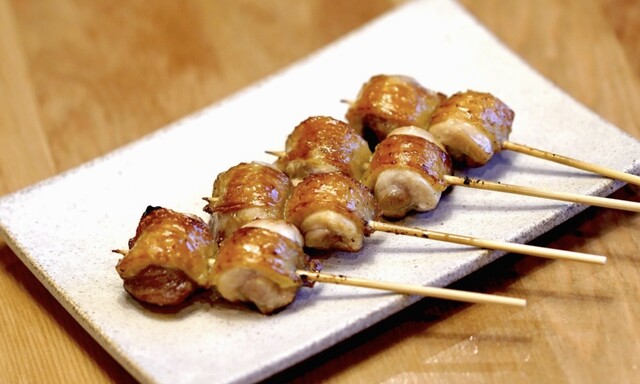
Serious yakitori in Niigata is quieter than in Tokyo, but the grammar is the same: heat, timing, smoke discipline, and a room close enough to the grill that every decision feels visible. In Higashiodori, east of Niigata Station, where evening dining shifts from workday meals to reservation-led counters, Nerima Toricho Niigata belongs to the city’s compact specialist tier, not its casual izakaya tier.
That matters in a rice-and-sake city. Niigata is often reduced to breweries and koshihikari, yet its stronger dining rooms understand how sake culture changes a meal: salt, char, fat, and pacing must hold up beside nihonshu without turning heavy. Yakitori suits that equation. Democratic in origin, its contemporary counter form rewards restaurants that treat chicken as a sequence of textures and cuts, not a snack category.
Yakitori in Niigata, read through fire and sake
Yakitori’s cultural force comes from restraint. The form looks simple, but the craft sits in portioning, skewering, seasoning, and heat control. In cities with deep drinking cultures, it sits between worlds: approachable for after-work dining, exacting enough for diners who judge a kitchen by repetition. Niigata adds sake, not as accessory but regional identity, so serious drink-program restaurants are judged by how well food keeps pace.
Nerima Toricho Niigata’s recognition on Tabelog 100 Yakitori EAST in 2023, 2024, and 2025 places it in a defined national category, not a loose local recommendation. Its Tabelog score of 3.74 adds another signal: this is not simply a neighbourhood grill with loyal regulars, but a restaurant measured within Japan’s crowded yakitori conversation. The listed drinks emphasis, shochu, sake, and wine, reflects a modern yakitori pattern: the counter has moved beyond beer-and-skewer informality without losing the cuisine’s directness.
Within Niigata, that puts it in a different lane from broad local dining rooms such as Echigo Ichie Juro, at JPY 5,000–5,999, and sushi addresses such as Chiyo Zushi, where dinner reaches JPY 8,000–9,999. The comparison matters because Niigata diners choose between genre, not only price: sake-led izakaya, sushi, grill, French-inflected cooking, or something casual before the train. For a wider city read, Our full Niigata restaurants guide maps that spread.
A small-room format, not a sprawling izakaya
The 29-seat room, with 9 counter seats and 20 table seats, changes the meal. Energy can build quickly while the kitchen stays close to the dining room. There are no private rooms or partitions, so expectations should be clear: this is a social, compact format, not a sealed-off business dinner room. The counter is the more revealing choice for diners focused on yakitori craft; tables keep the experience closer to izakaya rhythm.
The small-room format also explains the house fragrance guidance. Yakitori depends on aroma, and in a compact grill-focused restaurant, heavy perfume competes with smoke and seasoning. The policy is less about formality than respect for the format. In Japan’s counter traditions, from sushi to tempura to yakitori, the room is part of the apparatus; proximity is a feature, but diners must meet the restaurant halfway.
Target audience is clear. It suits travelers using Niigata as more than a transit point, especially those wanting dinner that speaks to the city’s sake culture without defaulting to a brewery-adjacent bar. It also helps diners comparing Niigata’s mid-price serious restaurants: below higher sushi dinner bands, above casual burger or pub territory, and more focused than a general izakaya. For contrast, Burger Stand Tender, Amaranthus, and French Teppan Seikou An show how varied Niigata’s dining routes are within a compact urban core.
Planning context matters too. Niigata rewards trips built around food, drink, and regional pacing rather than one dinner. Useful companion reads include Our full Niigata hotels guide, Our full Niigata bars guide, Our full Niigata wineries guide, and Our full Niigata experiences guide. Those categories matter in a prefecture where dining decisions connect to rail timing, sake tasting, and overnight stays, not just a single urban itinerary.
How it compares with Japan's casual-specialist spectrum
Japan’s dining culture is full of narrow specialists: curry counters, onigiri shops, sake bars, sushi rooms, grill houses, and regional taverns that win attention by doing one thing with discipline. Nerima Toricho Niigata sits in that lineage. Its categories, yakitori, chicken dishes, and izakaya, sound familiar, but repeated Tabelog 100 Yakitori EAST selection separates it from everyday drinking spots. It does not replace sushi or kaiseki in Niigata; it gives the city a serious chicken-grill option in a region better known internationally for rice and sake.
For travelers studying the wider Japanese specialist model, comparisons outside Niigata clarify the choice. A beef-led meal such as -Grilled beef Sukiyaki- KAMAKURA TANUKIAN 鎌倉 たぬき庵 in Kamakura frames comfort through simmered richness, while. 鮪と炭火焼き うお炭 秋葉原店 in Tokyo brings seafood and charcoal into a denser metropolitan register. Casual specialists such as.cafe in Osaka.know in Kumamoto, (Shoku) Vietnam in Kawasaki, and [Curry Senmon Ten] Maruyama Kyoju. in Sapporo show another side of the same national habit: tight concepts, clear categories, and meals built around repetition rather than sprawl.
That pattern travels beyond Japan. Jōdo Saké Bar in Los Angeles and Onigiri Time in Pasadena show how Japanese drinking and rice-based formats are translated abroad, often with more explanation. In Niigata, less explanation is needed. The city already understands sake, rice, and the pleasure of a focused dinner. This restaurant’s value is placing yakitori inside that local intelligence, with enough recognition to justify a deliberate stop rather than a fallback near the station.
A Pricing-First Comparison
Comparable venues by cuisine and price in the same metro.
| Venue | Cuisine | Price | Notes |
|---|---|---|---|
| Nerima Toricho NiigataThis venue — the venue you are viewing | Not listed | $$$ | Not listed |
| Chiyo Zushi | Not listed | $$$ | Chuo Ward, Traditional Sushi & Japanese Seafood |
| Sushi Nakahisa Hoshino | Niigata Furumachi, Edomae Sushi | $$$ | Not listed |
| Kappou Choukichi | Not listed | $$$ | Nishikan-ku, Seasonal Wild Duck Kappo (Japanese) |
| Tonkatsu Taro (とんかつ太郎) | Not listed | $$ | 古町 (Furumachi), Niigata Tare Katsu Tonkatsu |
| 兄弟寿し | 古町, 新潟前寿司 Omakase | $$$ | Not listed |
Recognition history
Dated appearances from independent guides and award organizations, with the underlying list record or original source where available.
Tabelog 100 #64 · No. 64
Tabelog · Tabelog 100 - Yakitori - EAST - 2025
Continue exploring
More in Niigata

At a Glance
- Cozy
- Intimate
- Lively
- Date Night
- Business Dinner
- Group Dining
- Solo
- After Work
- Special Occasion
- Chefs Counter
- Standalone
- Sake Program
- Beer Program
- Local Sourcing
Current opening hours
- Monday
- Closed
- Tuesday
- 6–9:30 PM
- Wednesday
- 6–9:30 PM
- Thursday
- 6–9:30 PM
- Friday
- 6–9:30 PM
- Saturday
- 5–7 PM, 8–10 PM
- Sunday
- 5–8:30 PM
Hours can change for holidays and private events. Last verified .
An intimate counter-focused yakitori restaurant with a calm, warm atmosphere where guests enjoy a relaxed course-paced experience and attentive, courteous service ideal for business dinners or quiet evenings with drinks.