Schoolhouse At Cannondale
A converted 19th-century schoolhouse in Wilton, Connecticut, Schoolhouse at Cannondale occupies a category of farm-adjacent American dining that defines much of the Connecticut River Valley corridor. The setting frames a menu built around regional sourcing, placing it in the same broad conversation as destination restaurants that use provenance as a primary editorial statement rather than a marketing footnote.
- Address
- 34 Cannon Rd, Wilton, CT 06897
- Phone
- +12038349816
- Website
- schoolhouseatcannondale.com
- Directions
- Get directions
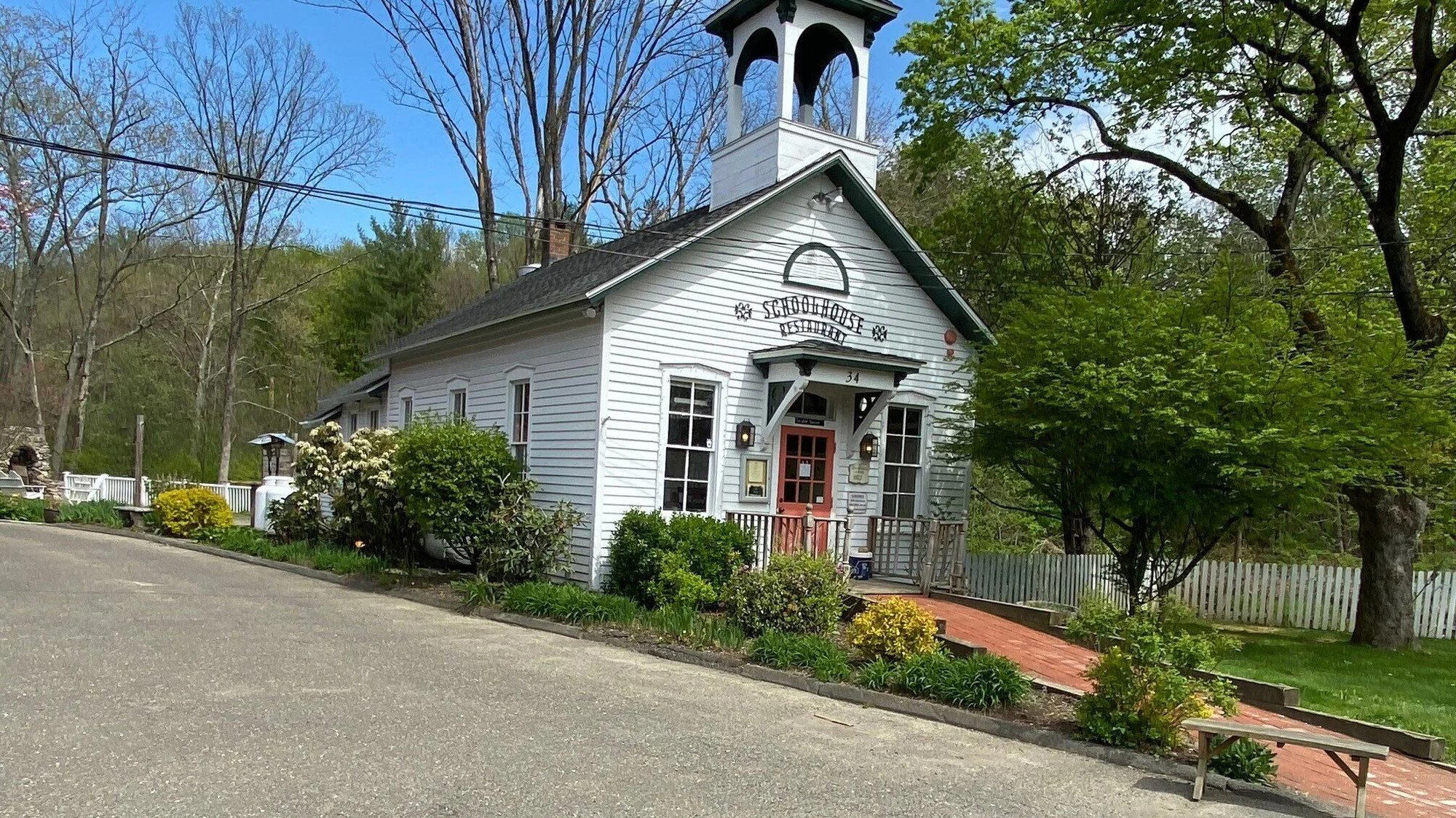
Where the Building Does the First Work
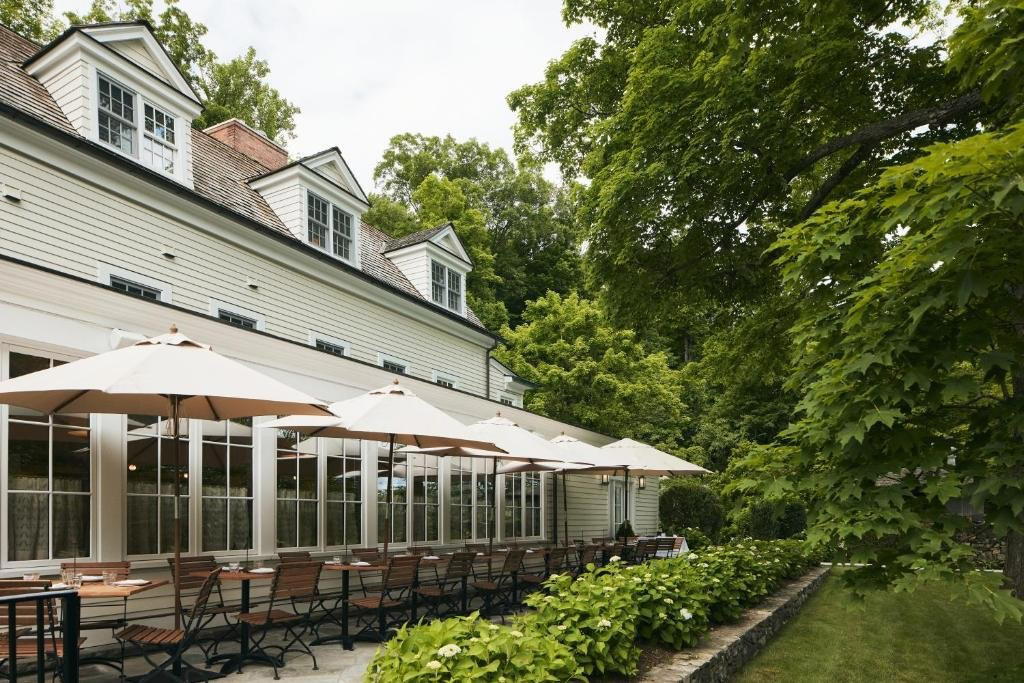
Certain dining rooms earn their reputation before the food arrives, and the Schoolhouse at Cannondale operates in that territory. The structure at 34 Cannon Rd in Wilton, Connecticut is a former village schoolhouse, a building type that carries an immediate and specific weight in rural New England: civic, modest in scale, rooted in a particular community moment. Dining rooms carved from converted institutional buildings tend either to respect that history or to erase it with renovator confidence. The Schoolhouse at Cannondale belongs to the first category, where the architecture itself sets the register for what follows.
Wilton sits in Fairfield County, a stretch of southwestern Connecticut that has quietly sustained a meaningful restaurant culture largely outside the coverage radius of New York food press. That relative obscurity is not a failure of quality but a function of geography and audience: the towns along this corridor serve a local population with high expectations and limited appetite for spectacle. Restaurants here compete on consistency and sourcing credibility more than on marquee chef names or social media visibility. For anyone tracking where farm-driven American dining is practiced with discipline rather than theater, Fairfield County deserves more attention than it typically receives.
The Sourcing Framework That Defines the Menu
Farm-adjacent dining has fractured into distinct tiers over the past decade. At one end sit restaurants that treat local provenance as a branding layer, mentioning farm names in menu text without meaningful purchasing relationships. At the other end are kitchens where sourcing decisions structurally constrain the menu, where what is available from specific growers in a given week determines what is cooked rather than the reverse. The distinction matters because it produces food that tastes different. Produce harvested close and sold directly into a kitchen retains qualities that distribution chains erode.
Connecticut's agricultural profile makes this approach plausible in ways that not every state can support. The state has a functioning network of small farms producing vegetables, heritage proteins, dairy, and foraged goods within a tight geographic radius. Restaurants that commit to working within that network, rather than supplementing it with commodity purchasing when the menu demands something out of season or out of region, operate under genuine constraints that show in the plate. That discipline is the basis on which farm-to-table credibility is earned rather than claimed.
This positions Schoolhouse at Cannondale in a conversation that includes, at the national level, restaurants like Blue Hill at Stone Barns in Tarrytown, where sourcing from the property's own working farm became the operational center of the entire program, or Single Thread Farm in Healdsburg, where an on-site farm and inn create a closed-loop hospitality model. Those are destination-scale operations with significant capital behind them. What the Cannondale model represents is the regional version: smaller, less publicized, embedded in a specific community, and accountable to a local audience that returns regularly rather than once for a pilgrimage meal.
The Connecticut Dining Context
Understanding Schoolhouse at Cannondale requires understanding what Wilton's dining scene is and is not. This is not a city restaurant competing for national attention. It is a town restaurant with a clear sense of place, operating in a market where the competition includes both casual neighborhood spots and more ambitious tables. Athithi Indian Cuisine and The Wishing Well represent the range of what Wilton's dining options cover, from regional Indian cooking to more traditional American formats. The Schoolhouse sits within that mix as the property most likely to attract a reader who prioritizes sourcing narrative and setting over cuisine category alone.
For a broader picture of where the Schoolhouse fits among Wilton's tables, the full Wilton restaurants guide maps the scene with more granular coverage. The guide is useful for anyone planning a day or weekend in Fairfield County and wanting to understand which restaurants serve which purposes.
Placing the Schoolhouse in the National Farm-Driven Conversation
National benchmarks are useful for calibrating expectations. Restaurants like The French Laundry in Napa, Alinea in Chicago, Le Bernardin in New York City, and Lazy Bear in San Francisco operate in a tier defined by tasting-menu formats, significant price points, and advance booking requirements measured in months. That tier is not the one the Schoolhouse occupies. A more useful comparison set includes restaurants like Bacchanalia in Atlanta or The Inn at Little Washington, places where the ambition is serious but the format accommodates a broader range of occasions.
Other restaurants in the national farm-driven field worth understanding as context: Addison in San Diego uses regional California sourcing within a formal tasting format; Providence in Los Angeles centers sustainable seafood sourcing as its defining editorial position; Brutø in Denver applies a similar local-producer discipline to a mountain-state context. Each of these represents a different version of the same underlying argument: that where food comes from is as consequential as how it is cooked. The Schoolhouse at Cannondale makes that argument in a New England vernacular, in a building that itself is a piece of local history.
For readers oriented toward international fine dining, context from restaurants like Atomix in New York City, Emeril's in New Orleans, Causa in Washington, D.C., or 8 1/2 Otto e Mezzo Bombana in Hong Kong illustrates how differently sourcing and provenance can function as organizing principles depending on geography and cuisine tradition. The Schoolhouse operates in a specifically American and specifically New England register that none of those restaurants replicate.
Planning a Visit
Schoolhouse at Cannondale is located at 34 Cannon Rd in Wilton, Connecticut, a roughly one-hour drive from midtown Manhattan under normal traffic conditions and accessible from the Merritt Parkway. Wilton itself is not a destination that generates significant visitor traffic on its own terms, which means the Schoolhouse operates for a primarily local and regional audience rather than for tourists. That audience tends to be knowledgeable and consistent, which is exactly the kind of guest base that rewards a kitchen focused on seasonal sourcing over crowd-pleasing menu stability.
| Venue | Cuisine | Price | Awards |
|---|---|---|---|
| Schoolhouse At CannondaleThis venue — the venue you are viewing | This venue | Not listed | Not listed |
| Le Bernardin | French, Seafood | $$$$ | Michelin 3 Star |
| Atomix | Modern Korean, Korean | $$$$ | Michelin 2 Star |
| Lazy Bear | Progressive American, Contemporary | $$$$ | Michelin 2 Star |
| Alinea | Progressive American, Creative | $$$$ | Michelin 3 Star |
| Atelier Crenn | Modern French, Contemporary | $$$$ | Michelin 3 Star |
Continue exploring
More in Wilton
Restaurants in Wilton
Browse all →

Bars in Wilton
Browse all →
Hotels in Wilton
Browse all →
Wineries in Wilton
Browse all →
At a Glance
- Rustic
- Elegant
- Intimate
- Scenic
- Date Night
- Special Occasion
- Celebration
- Waterfront
- Historic Building
- Terrace
- Standalone
- Craft Cocktails
- Farm To Table
- Organic
- Local Sourcing
- Waterfront
Contemporary with Italian touches in a restored historic schoolhouse; warm and inviting with river views through floor-to-ceiling windows.
Know Before You Go
- Getting there
- 34 Cannon Rd, Wilton, CT 06897