Savoy Kitchen

Savoy Kitchen on East Valley Boulevard is one of Alhambra's most-discussed casual spots, drawing regulars from across the San Gabriel Valley for its focused menu built around Hainan chicken rice and a tight roster of Chinese-Southeast Asian plates. The address puts it squarely in a corridor where Hong Kong-style cafes, Vietnamese specialists, and Cantonese dim sum houses compete within a few city blocks, making the kitchen's discipline around a narrow format its clearest editorial statement.
Pearl is the En Primeur Club membership app — saves, bookings, and concierge access live there. Same editors, same standards.
- Address
- 138 E Valley Blvd, Alhambra, CA 91801
- Phone
- +16263089535
- Website
- savoykitchen.site
- Directions
- Get directions
 Saves & bookings on Pearl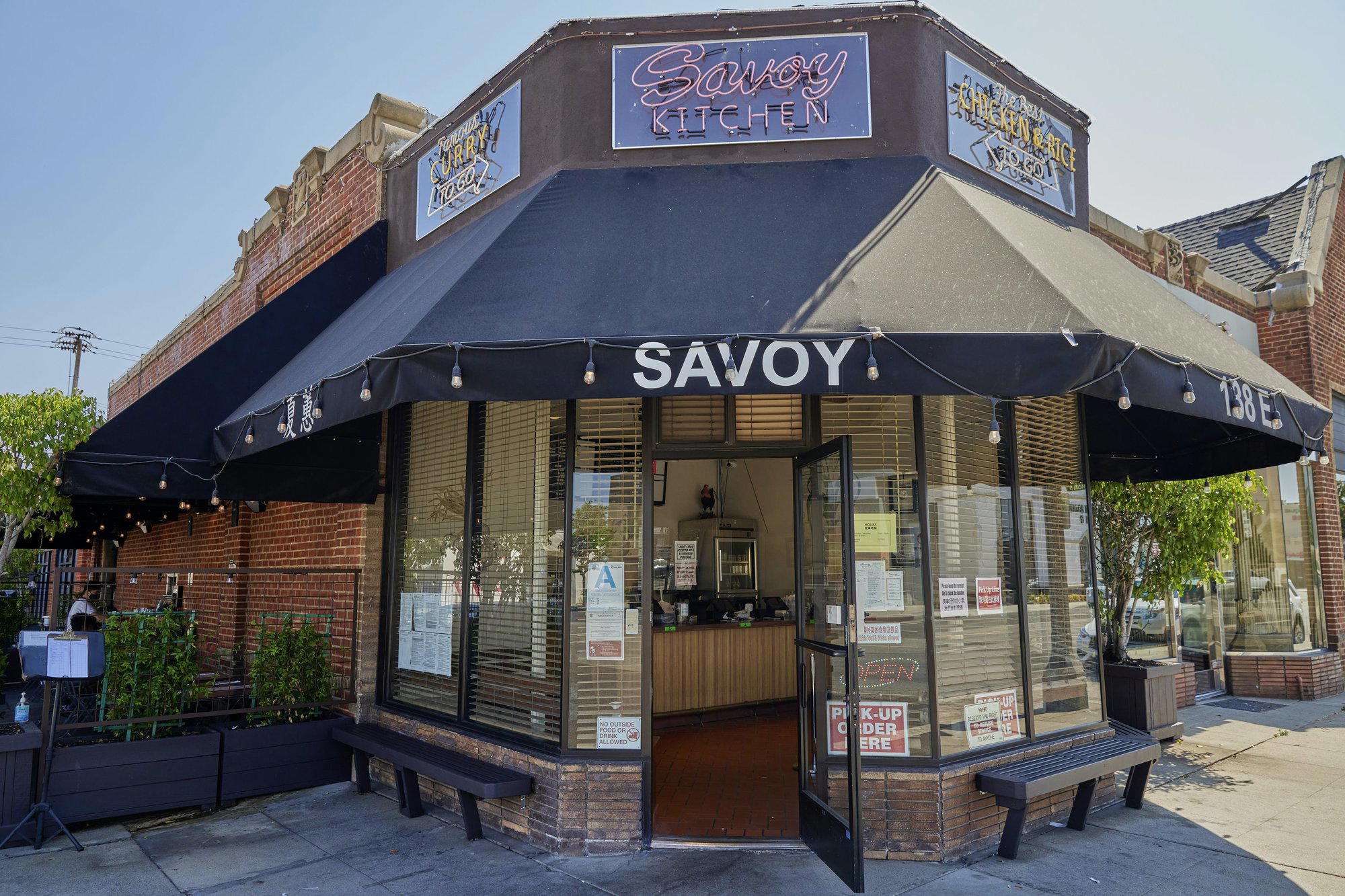
East Valley Boulevard and the Logic of the Focused Menu
Alhambra's East Valley Boulevard does not reward generalism. The corridor running through the San Gabriel Valley's western edge is one of the most competitive stretches of Chinese and Southeast Asian dining in California, where a kitchen that tries to do everything tends to disappear behind neighbors that do one thing with precision. Savoy Kitchen, at 138 E Valley Blvd, sits inside that competitive logic. Its menu is narrow by design, anchored around Hainan chicken rice, and that narrowness is itself an editorial statement about what the kitchen thinks matters.
Hainan chicken rice belongs to a tradition that rewards restraint. The dish, descended from Wenchang chicken preparations brought to Singapore and Malaysia by Hainanese immigrants in the nineteenth and early twentieth centuries, is deceptively simple in its components: poached or roasted chicken, rice cooked in chicken stock and fat, and a set of condiments, typically ginger scallion sauce, chili sauce, and dark soy. The skill is almost entirely in execution: the temperature of the poach, the ratio of fat to stock in the rice, the freshness of the aromatics in the sauces. There is nowhere to hide behind complexity, which is why kitchens that specialize in it tend to attract a following that returns specifically to assess consistency rather than novelty. Savoy Kitchen has built that kind of following across the San Gabriel Valley.
What the Menu Architecture Reveals
A menu structured around a single hero dish tells you something specific about a kitchen's priorities. Rather than spreading across a broad Chinese-American or pan-Asian format, Savoy Kitchen's approach concentrates its quality signal into the chicken rice and a supporting cast of plates that do not compete with it for identity. This is a different operating philosophy than the Hong Kong-style cafe model common elsewhere on the boulevard, where the menu runs to dozens of items across rice dishes, noodles, congee, toast, and milk tea. It is also different from the dim sum format practiced nearby at operations like Lunasia, where variety and tableside service are part of the value proposition.
The narrow format works in both directions. It limits the kitchen's exposure to inconsistency across a large menu, and it sets an expectation with the guest: you are here for the chicken rice, and the rest of the menu exists in service of that visit rather than as a parallel attraction. In cities like Singapore, this kind of specialization is the norm rather than the exception at the hawker level, where single-dish stalls earn reputations that persist across decades. Alhambra has developed a version of that culture, particularly along Valley Boulevard, where specialists in beef roll, Shanghainese soup dumplings, and Vietnamese banh mi operate with the same kind of focused discipline. Bánh Mì Mỹ Tho and Dong Nguyen Restaurant represent that same specialist logic in the Vietnamese register, while 101 Noodle Express has built a reputation on a similarly concentrated northern Chinese format.
Savoy Kitchen Inside Alhambra's Dining Scene
The San Gabriel Valley's dining density is a function of demographic concentration, not culinary accident. The area holds one of the largest Chinese-American populations in the United States, with significant communities from Guangdong, Fujian, Taiwan, and Hong Kong that have created sustained demand for regional-specific food rather than generalized Chinese-American cuisine. That demand supports the kind of specialization that keeps a Hainan chicken rice kitchen viable over time, because the customer base includes people who grew up eating the dish in Singapore, Malaysia, Hong Kong, or southern China and will return to a reliable version rather than accept a diluted approximation.
Savoy Kitchen operates in that context. Its regulars are not novelty-seekers rotating through the latest San Gabriel Valley opening. They are the kind of diners who have a preferred version of a dish and measure each visit against that internal standard. That dynamic places Savoy alongside the other focused specialists in Alhambra rather than with the broader, more varied operations on the boulevard. For a fuller map of what the neighborhood offers across formats, the full Alhambra restaurants guide covers the range from casual to sit-down. Nearby, Charlie's Trio and Fosselman's Ice Cream fill different registers of the neighborhood's casual dining culture.
For readers who move between Alhambra's casual specialist tier and the formal tasting-menu circuit, the contrast in operating philosophy is worth noting. Operations like Providence in Los Angeles, Lazy Bear in San Francisco, or The French Laundry in Napa build menu architecture around sequential progression and total creative control. Savoy's architecture works on the opposite principle: the guest does the selecting, the kitchen executes a defined set of preparations with precision, and the value is in the depth of that execution rather than the breadth of the offering. Both approaches can produce a strong dining experience; they simply operate on different terms. Restaurants like Alinea in Chicago, Atomix in New York City, Le Bernardin in New York City, Addison in San Diego, Single Thread Farm in Healdsburg, Blue Hill at Stone Barns in Tarrytown, Emeril's in New Orleans, The Inn at Little Washington, and 8 1/2 Otto e Mezzo Bombana in Hong Kong all represent the formal, chef-directed end of that spectrum. Savoy Kitchen represents the other end, where the cooking tradition and the guest's preference drive the encounter.
Planning Your Visit
Savoy Kitchen is located at 138 E Valley Blvd, Alhambra, CA 91801, positioned on a stretch of the boulevard well served by street parking and accessible from the 10 freeway. Given the absence of a published reservations system in the available record, this is almost certainly a walk-in format, consistent with the casual specialist model common throughout the San Gabriel Valley. Arriving during off-peak hours, mid-afternoon rather than the lunch rush or early evening, will reduce wait times at a kitchen that draws a consistent local following. Current hours, pricing, and any updated booking details are best confirmed directly before visiting, as this kind of operation can shift those particulars without wide announcement.
How Savoy Kitchen Alhambra compares with similar nearby venues.
| Venue | Cuisine | Price |
|---|---|---|
| Henry's Cuisine | Chinese | $$$ |
| Ipoh Kopitiam | Malaysian | $$ |
Recognition history
Dated appearances from independent guides and award organizations, with the underlying list record or original source where available.
Opinionated About Dining Casual in North America Recommended
Opinionated About Dining
Continue exploring
More in Alhambra
Restaurants in Alhambra
Browse all →
Bars in Alhambra
Browse all →
Hotels in Alhambra
Browse all →

Wineries in Alhambra
Browse all →
At a Glance
- Classic
- Cozy
- Casual Hangout
- Family
Current opening hours
- Monday
- 11 AM–9 PM
- Tuesday
- 11 AM–9 PM
- Wednesday
- 11 AM–9 PM
- Thursday
- 11 AM–9 PM
- Friday
- 11 AM–9 PM
- Saturday
- 11 AM–9 PM
- Sunday
- Closed
Hours can change for holidays and private events. Last verified .
Cozy old-school atmosphere with a focus on simple, flavorful comfort food.
Know Before You Go
- Getting there
- 138 E Valley Blvd, Alhambra, CA 91801