On the Rue du Cherche-Midi in the 6th arrondissement, Sauvage occupies a stretch of Paris where the boundaries between neighbourhood bistro and ambitious table have always been permeable. The address sits within walking distance of Saint-Germain-des-Prés, a district that has sustained serious eating across several culinary generations. What the room offers is a considered progression through courses that rewards patience.
Pearl is the En Primeur Club membership app — saves, bookings, and concierge access live there. Same editors, same standards.
- Address
- 55 Rue du Cherche-Midi, 75006 Paris, France
- Phone
- +33145488679
- Website
- sauvageparis6.net
- Directions
- Get directions
 Saves & bookings on Pearl
A Street That Has Always Fed Serious Eaters
The Rue du Cherche-Midi has been a working address in the 6th arrondissement for long enough that its restaurant culture predates most modern dining categories. The street connects the Luxembourg quarter to the edges of Montparnasse, running through a neighbourhood where the standard for a credible table has been set and reset across decades. Sauvage is a restaurant at 55 Rue du Cherche-Midi, 75006 Paris, France, serving modern French bistronomic cooking at about $50 per person. The 6th has historically supported a tier of restaurant that sits below the grand palace dining of the 8th or the 16th but operates with comparable seriousness of intent, a format that the French broadly understand and that visitors sometimes misread as understatement.
Paris's contemporary dining map has split in a way that clarifies where a room like this one sits. On one end, addresses such as Alléno Paris au Pavillon Ledoyen and Arpège anchor the creative and produce-forward tier at prices that reflect monument status. On the other end, a wave of natural-wine-led, relaxed-format addresses has expanded the middle. Sauvage occupies a position that acknowledges both without simply replicating either.
The Arc of the Meal
Multi-course sequencing in Paris has its own grammar, and the Rue du Cherche-Midi address follows a version of it that privileges restraint over spectacle. The meal at this kind of table tends to open with small, precise work, things that signal intent without overloading the palate, before moving through a middle act where the kitchen's sourcing logic becomes visible. By the time the main course arrives, a properly sequenced French meal of this register has already told you something about the chef's priorities, even if those priorities are never stated explicitly.
That structure matters more in Paris than in many cities because the competition is genuinely demanding. Kei in the 1st, which holds Michelin recognition and crosses contemporary French technique with Japanese precision, demonstrates how high the bar for a composed tasting format sits in this city. L'Ambroisie on the Place des Vosges operates at the far end of the classical register and has held three Michelin stars since 1988, making it a reference point for what French grand cuisine looks like at its most resolved. Against that context, a table in the 6th is not competing for the same category of occasion, but it is answerable to the same culture of expectation.
The progression framework, amuse, cold starter, warm starter, fish, meat, cheese, dessert, has been modified and abbreviated across Paris over the past decade, partly under influence from Scandinavian tasting formats and partly because a new generation of cooks trained at addresses like Mirazur in Menton returned with ideas about pacing and seasonal anchoring that compressed the classical arc without abandoning it. Sauvage operates within the downstream of that shift.
Saint-Germain Dining at the Current Moment
The 6th arrondissement has undergone a quiet reordering over the past several years. Rents on the main commercial arteries have pushed certain categories of independent table toward side streets and the quieter sections of longer roads, and the Rue du Cherche-Midi has absorbed some of that movement. The result is a stretch that now contains a wider range of serious eating than its tourist visibility might suggest.
For the kind of meal that builds through courses with genuine intent, the 6th competes with the 11th and the 9th for particularly interesting independent tables in the city, a shift from ten years ago, when the left bank's restaurant reputation was considered more conservative than its right-bank equivalents. That rebalancing has made addresses on streets like this one easier to find if you are paying attention to where Paris is actually eating, rather than where it has historically been photographed eating.
Across France more broadly, the generational transfer of restaurant culture has produced a set of addresses worth tracking as comparison points. Troisgros in Ouches and Auberge de l'Ill in Illhaeusern represent the long-established regional model, multi-generational, deeply rooted, with reputations that have compounded over fifty-plus years. Bras in Laguiole sits in a different category again, defined by its relationship to a specific landscape and a philosophy of sourcing that preceded the mainstream conversation about terroir-led cooking by two decades. Paris tables, including those in the 6th, are in dialogue with that provincial canon even when the dialogue is implicit.
Where Sauvage Sits Among Its Peers
Placing Sauvage within a comparable set requires being clear about what the comparable set is. The high-end palace format, represented in Paris by Le Cinq at the Four Seasons George V, operates with a different set of inputs: room scale, brigade size, a wine cellar that functions as a separate institution. That is not the relevant comparison. The relevant comparison is a smaller tier of independent tables in the 6th and adjacent arrondissements, where the meal's architecture is the primary product and where the room itself is secondary to what comes out of the kitchen.
Internationally, the French model has been exported and reinterpreted. Le Bernardin in New York has sustained a French-trained approach to seafood sequencing over decades and holds four James Beard Awards alongside three Michelin stars, making it a data point for how a French tasting grammar can travel. Atomix, also in New York, demonstrates a different approach to multi-course sequencing, one that is annotated and contextualised through cards presented with each course, a format that has influenced how younger Paris kitchens think about communicating the arc of a meal.
Within France, addresses such as AM par Alexandre Mazzia in Marseille, Assiette Champenoise in Reims, and Auberge du Vieux Puits in Fontjoncouse show how the tasting-menu format is being pursued at a high level across regions, creating a national network of reference points against which any Paris table is implicitly measured. Paul Bocuse in Collonges-au-Mont-d'Or remains the canonical reference for what French culinary identity looked like at its most codified. Au Crocodile in Strasbourg and Flocons de Sel in Megève each represent distinct regional expressions of the multi-course format, one rooted in Alsatian classicism, the other in Alpine produce and mountain-specific sourcing logic.
Planning Your Visit
| Detail | Sauvage (55 Rue du Cherche-Midi) | L'Ambroisie (Place des Vosges) | Le Cinq (8th arr.) |
|---|---|---|---|
| Arrondissement | 6th (Saint-Germain) | 4th (Marais) | 8th (Champs-Élysées) |
| Format tier | Independent, mid-size | Grand classical, three stars | Palace hotel, three stars |
| Booking lead time | Data not confirmed | Several weeks minimum | Several weeks minimum |
| Price tier | Not confirmed | €€€€ | €€€€ |
| Walk-in availability | Not confirmed; see booking notes below | Not recommended | Not recommended |
Peers You’d Cross-Shop
Comparable venues nearby, for context on price, style, and recognition.
| Venue | Cuisine | Price | Notes |
|---|---|---|---|
| SauvageThis venue — the venue you are viewing | Modern French Bistronomic | $$$ | Not listed |
| La Société | French Brasserie | $$$ | Saint-Germain-des-Prés |
| Le Layon | Modern French Fusion | $$$ | 14th Arrondissement |
| L'Auberge du Roi Gradlon | Breton French Bistro | $$$ | Gobelins |
| Le Bistro Marbeuf | Traditional French Bistro with Lyonnaise Specialties | $$$ | 8th Arr. - Élysée |
| Mayo Restaurant | French Bistro | $$$ | Ternes |
Continue exploring
More in Paris
Restaurants in Paris
Browse all →
Bars in Paris
Browse all →
Hotels in Paris
Browse all →
At a Glance
- Rustic
- Cozy
- Intimate
- Trendy
- Date Night
- Casual Hangout
- Open Kitchen
- Natural Wine
- Local Sourcing
- Sustainable Seafood
Current opening hours
- Monday
- 12:30–2 PM, 7:30–10 PM
- Tuesday
- 12:30–2 PM, 7:30–10 PM
- Wednesday
- 12:30–2 PM, 7:30–10 PM
- Thursday
- 12:30–2 PM, 7:30–10 PM
- Friday
- 12:30–2 PM, 7:30–10 PM
- Saturday
- 12:30–2:15 PM, 7:30–10 PM
- Sunday
- Closed
Hours can change for holidays and private events. Last verified .
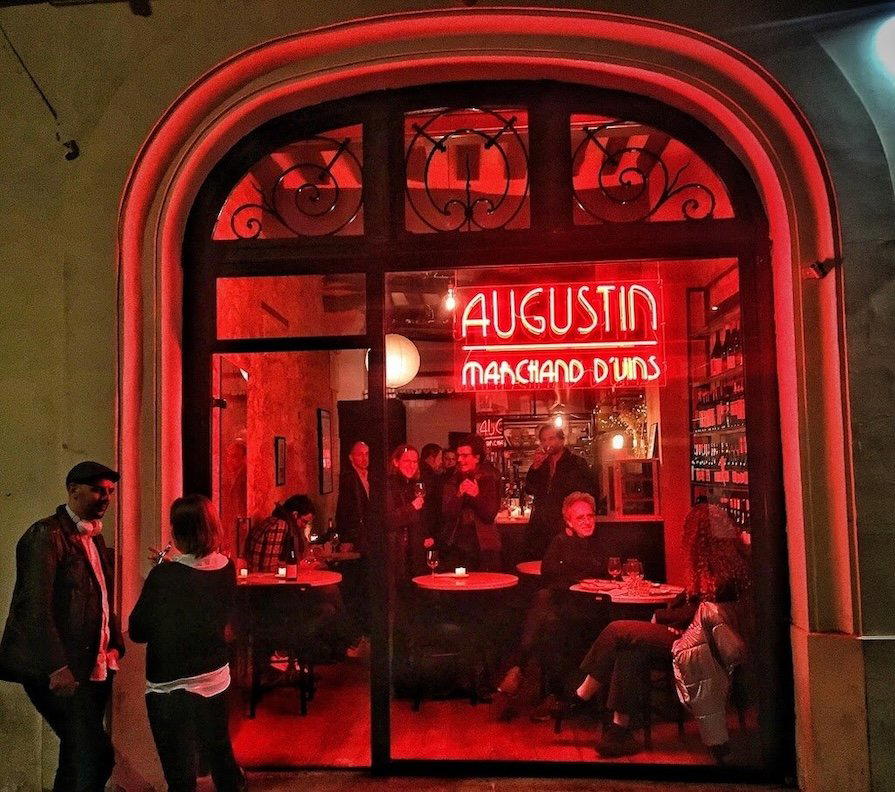
Rustic yet friendly with a boisterous, neighborhood wine bar feel in an intimate setting.