
Choshi’s sweet-shop culture is at its sharpest when it stays small, local, and portable. Sanoya Imagawayaki Ten brings that logic into focus through imagawayaki, taiyaki, obanyaki, and kakigori, with Tabelog 100 recognition in 2023 placing this modest takeout counter inside eastern Japan’s serious wagashi conversation.
Pearl is the En Primeur Club membership app — saves, bookings, and concierge access live there. Same editors, same standards.
- Address
- 千葉県銚子市飯沼町6-7
- Phone
- +81479220150
- Website
- tabelog.com
- Directions
- Get directions
 Saves & bookings on Pearl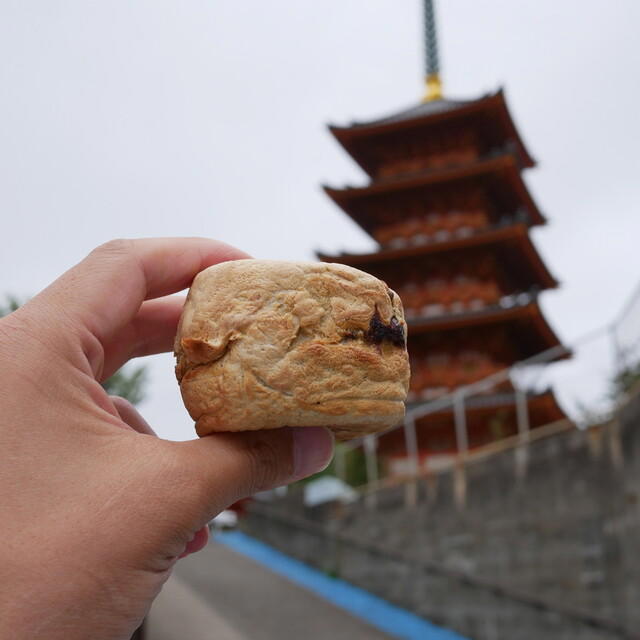
Approaching the Kannon side of Choshi, the food story changes scale. The city is better known to travellers for fishing-port rhythms, soy sauce history, and the Choshi Electric Railway, but its smaller pleasures often sit closer to temple paths and station walks than to formal dining rooms. Warm griddles, paper-wrapped sweets, and shaved ice belong to a kind of Japanese eating that is built for movement: bought quickly, carried outside, shared between train stops, or folded into a family errand.
That is the right frame for Sanoya Imagawayaki Ten. This is not a dessert salon trying to dress wagashi in restaurant language. Its importance lies in a tighter tradition: filled batter cakes and seasonal cold sweets, priced in the everyday bracket and served with the efficiency of a local counter. In Choshi, where serious meals can mean seafood, eel, beef, or set-menu dining, a shop like this argues for a different measure of quality: repetition, heat control, batter discipline, and filling balance rather than ceremony.
Choshi's everyday sweets, judged by craft rather than theatre
Imagawayaki, taiyaki, and obanyaki occupy a particular place in Japanese sweets culture. They are not luxury wagashi in the Kyoto tea-ceremony sense, nor are they convenience-store desserts. Their appeal depends on the meeting of griddle work and filling, with a thin margin for error: batter too heavy and the cake turns dull; filling too sweet and the second bite loses clarity. The format rewards shops that make a narrow range repeatedly rather than kitchens that chase novelty.
The recognition matters because this category is often underestimated by visitors. Selection for the Tabelog 100 list for Japanese traditional sweets and Japanese sweets cafes in eastern Japan in 2023 puts the shop into a vetted regional conversation, not simply a neighbourhood footnote. Its earlier selection in the Tabelog Sweets EAST 100 in 2022 reinforces the same point: Choshi’s casual sweet counters can be judged against a wider field without losing their local purpose.
Ingredient sourcing is most visible here through the category itself. Filled cakes in Japan rely on a few elements that cannot hide behind plating: bean paste, batter, heat, and timing. Kakigori adds another register, where ice texture and syrup restraint determine whether the bowl reads as refreshment or excess. The shop’s listed categories, taiyaki, obanyaki, and kakigori, map a compact sweets program built around familiar Japanese components rather than imported dessert language. For travellers, that makes the stop useful: it explains local taste through forms residents already understand.
The comparison with Choshi’s meal-based restaurants is instructive. Kyuroku, in the same city, sits in a higher meal-spend bracket and belongs to a different decision: where to anchor lunch or dinner. This counter belongs to the in-between hours, the low-commitment stop that can sit before a train ride, after a temple visit, or between larger meals. That distinction is why Choshi dining should not be read only through reservations and courses.
A compact takeout format with a serious regional signal
The physical format tells the reader how to use the place. Four seats are listed, private rooms are unavailable, and service is identified as takeout. That combination places the experience closer to a purchase-and-go sweets counter than a lingered café. It also explains why families and friends are natural audiences: the food is shareable, the cost is restrained, and the format does not require a long table commitment.
There is a practical intelligence to this kind of stop. The nearest rail anchor is Kannon Station on the Choshi Electric Railway, and the route through the Iinuma Kannon temple grounds gives the visit a local shape rather than a purely transactional one. The area rewards travellers who build a day from small movements: temple, railway, port, sweets, then a more substantial meal elsewhere. For a broader city read, our full Choshi restaurants guide is the natural companion, while our full Choshi hotels guide, our full Choshi bars guide, our full Choshi wineries guide, and our full Choshi experiences guide fill out the rest of the itinerary.
The counter’s payment and service details also speak to its position in the city’s food economy. This is a low-price, local sweets format rather than a destination tasting menu. Credit cards are not accepted, electronic money through transportation IC cards is accepted, and QR code payments are not. For international visitors, that matters less as a warning than as a category clue: this is everyday Japan, not a luxury room translated for overseas diners.
Choshi’s appeal often depends on resisting the urge to overplan every bite. A sweets stop of this kind works because it is specific, affordable, and anchored in a regional list that takes traditional sweets seriously. The stronger editorial read is not that Sanoya Imagawayaki Ten replaces a meal, but that it completes the city’s food picture: grilled cakes and shaved ice beside rail travel, temple grounds, fishing-port lunches, and the small economies that make Japanese regional cities worth eating through slowly.
Where it sits in a wider Japan itinerary
For travellers building a Japan food trip, this is a useful counterpoint to the country’s better-known restaurant categories. A meal at -Grilled beef Sukiyaki- KAMAKURA TANUKIAN 鎌倉 たぬき庵 in Kamakura, . 鮪と炭火焼き うお炭 秋葉原店 in Tokyo, .cafe in Osaka.know in Kumamoto, (Shoku) Vietnam in Kawasaki, [Curry Senmon Ten] Maruyama Kyoju. in Sapporo, [ki:] in Kyoto, #肉といえば松田 奈良本店 in Kashihara, 1/3 HAMBURGER FACTORY in Kanazawa, or 1000 in Yokohama asks for a different kind of attention. So do overseas Japanese-adjacent addresses such as Jōdo Saké Bar in Los Angeles and Onigiri Time in Pasadena. Choshi’s sweet counter tradition is quieter and more compressed, but it teaches the same lesson: narrow formats often reveal more about daily taste than longer menus do.
At-a-Glance Comparison
Comparable venues by cuisine and price in the same metro.
| Venue | Cuisine | Price | Notes |
|---|---|---|---|
| Sanoya Imagawayaki Ten | Traditional imagawayaki & Japanese sweets shop | $ | Iinumacho / near Kannon Station |
| Kyuroku | Japanese syokudo & teishoku with seafood bowls | $ | Araoicho |
| Uogashi Nihon-ichi (魚がし日本一) | Standing Sushi Bar | $ | Shibuya |
| Suzaki Foods Shop | Sanuki Udon | $ | Takasecho, Mitoyo City |
| Ayu Ramen Plus (鮎ラーメンプラス) | Traditional Ayu Ramen | $ | Toranomon |
| 旭がのぼるまで | Miso Ramen | $ | Susukino |
Recognition history
Dated appearances from independent guides and award organizations, with the underlying list record or original source where available.
Tabelog 100 #66 · No. 66
Tabelog · Tabelog 100 - Japanese traditional sweets / Japanese sweets cafe - EAST - 2023
Continue exploring
More in Choshi
At a Glance
- Classic
- Cozy
- Solo
- Family
- Casual Hangout
- Standalone
- Zero Waste