
Kyuroku belongs to Choshi’s fish-first dining culture, where port proximity matters more than ceremony. The draw is a seafood-cafeteria format centered on tuna and kaisen-don, with Tabelog 100 Diner selections in 2024 and 2026 placing it above the usual market-town lunch stop.
Pearl is the En Primeur Club membership app — saves, bookings, and concierge access live there. Same editors, same standards.
- Address
- Japan, 〒288-0056 Chiba, Choshi, Araoicho, 1 Chome−36−49
- Phone
- +81 479-22-1038
- Website
- instagram.com
- Directions
- Get directions
 Saves & bookings on Pearl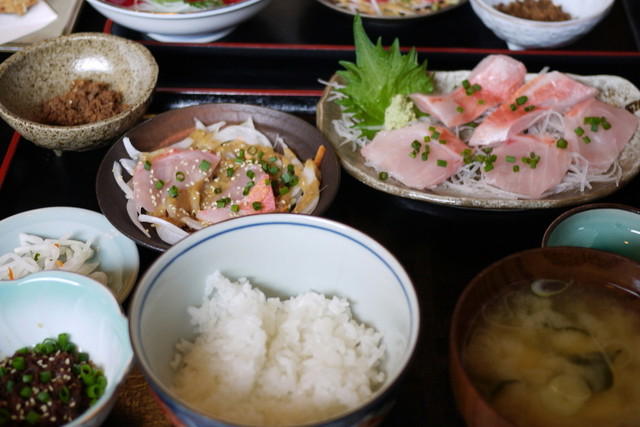
Choshi announces itself through water before it announces itself through restaurants: the Pacific edge, the working-port rhythm, the practical appetite that follows a town built around fish. In that setting, the seafood bowl is not a decorative genre. It is a local shorthand for supply, timing, and restraint, with rice serving as the plain structure under whatever the day’s buying and preparation can justify.
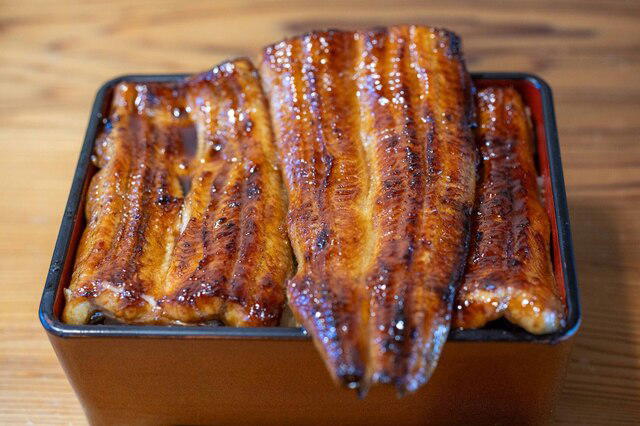
Kyuroku sits inside that tradition rather than outside it. Its category is listed as cafeteria, seafood, and kaisen-don, which matters because Choshi’s stronger meals often come from places that prioritize product flow over dining-room theatre. The restaurant has been specializing in fresh tuna since 2017, a useful dividing line in a town where visitors may arrive expecting a broad catalogue of port-town fish. The current identity is narrower and more legible: tuna-led, casual in format, and serious enough to earn selection in Tabelog’s Diner “Tabelog 100” in both 2024 and 2026.
Choshi seafood culture rewards supply over ceremony
Japan’s great seafood cities do not all express themselves through sushi counters. In port towns, the more revealing meal can be a cafeteria or shokudo format, where sourcing and turnover carry the argument. Choshi has the advantage of proximity to fishing activity, but proximity alone is not a guarantee of a meal worth planning around. The difference is whether the kitchen has a defined point of view on what to buy, what to drop, and when to stop trying to be everything to everyone.
That last point is important here. Kyuroku no longer serves the red snapper that previously drew media attention, and that change says more than a long origin story would. In a seafood town, editing the menu can be a stronger sign than expansion. Tuna is now the anchor, and the restaurant’s “particular about fish” positioning fits the Choshi pattern: a meal built less around chefly display than the discipline of selecting and serving a focused category well.
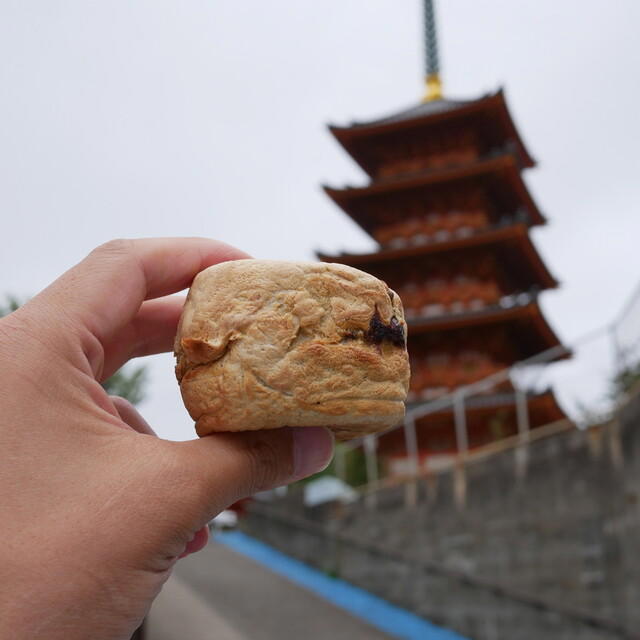
The comparison within Choshi is useful. Sanoya Imagawayaki Ten represents another kind of local eating, low-cost and snack-driven, while Kyuroku occupies a heavier seafood-lunch register. Both belong to the city’s everyday food map, but they answer different questions. One is about a quick local sweet; the other is about why travelers come to a fishing city hungry for fish rather than for polish.
A tuna-led shokudo in the Tabelog 100 Diner tier
Tabelog’s Diner “Tabelog 100” list is not a luxury ranking. Its value is that it recognizes everyday Japanese formats that rarely fit the international fine-dining script: cafeterias, set-meal houses, seafood bowls, and local specialists. Selection in 2024 and again in 2026 places Kyuroku in a national conversation about informal dining, not just Choshi tourism. That distinction matters for travelers who already know Japan’s reservation-led restaurants and want a different read on quality.
The room reinforces the category. Counter seating and tatami seating point to a mixed audience of solo diners, friends, and families rather than a single tasting-menu demographic. Private rooms and private use are not part of the format, which keeps the experience in the shared shokudo lane. For Choshi, that is a strength. The city’s seafood meals work better when they feel connected to public appetite rather than sealed off from it.
Kyuroku’s listed Tabelog score of 3.59 is another useful signal, especially in Japan where regional specialists often sit below the numerical fame of metropolitan sushi and kaiseki counters. The number should be read alongside the award selections and category. A tuna-focused seafood cafeteria in Chiba does not need the same markers as a Ginza counter; its credibility comes from repeat recognition within a format that rewards consistency, ingredient judgment, and local relevance.
How to place it in a Choshi day
Choshi is better treated as a compact food-and-coast itinerary than as a single-meal detour. A seafood lunch here pairs naturally with the city’s waterfront character and market-town pace, then leaves room for smaller local stops rather than another heavy restaurant sitting. For broader planning, our full Choshi restaurants guide maps the city’s dining options, while our full Choshi hotels guide, our full Choshi bars guide, our full Choshi wineries guide, and our full Choshi experiences guide help frame the trip beyond the table.
For travelers building a wider Japan food route, the lesson is category discipline. A Choshi tuna bowl should not be judged by the same criteria as sukiyaki in Kamakura, charcoal tuna in Tokyo, Osaka cafe culture, Kumamoto dining, Vietnamese cooking in Kawasaki, Sapporo curry, Kyoto modern dining, Kashihara beef, Kanazawa burgers, or Yokohama casual rooms. Those contrasts are exactly why a regional seafood shokudo deserves its own slot. See the broader spread through -Grilled beef Sukiyaki- KAMAKURA TANUKIAN 鎌倉 たぬき庵 in Kamakura, . 鮪と炭火焼き うお炭 秋葉原店 in Tokyo, .cafe in Osaka.know in Kumamoto, (Shoku) Vietnam in Kawasaki, [Curry Senmon Ten] Maruyama Kyoju. in Sapporo, [ki:] in Kyoto, #肉といえば松田 奈良本店 in Kashihara, 1/3 HAMBURGER FACTORY in Kanazawa, and 1000 in Yokohama.
The verdict is practical rather than romantic: this is the Choshi address for travelers who want the city’s fish culture in a direct, low-ceremony form. It is not built around named chef mythology, luxury signals, or a sprawling menu narrative. Its case rests on tuna specialization, shokudo accessibility, ocean-town context, and repeated Tabelog 100 Diner recognition. For readers extending the Japanese food thread abroad, Jōdo Saké Bar in Los Angeles and Onigiri Time in Pasadena show how Japanese formats travel; Kyuroku shows why the source context still matters.
Fast Comparison
Comparable venues by cuisine and price in the same metro.
| Venue | Cuisine | Price | Notes |
|---|---|---|---|
| Kyuroku | Japanese syokudo & teishoku with seafood bowls | $ | Araoicho |
| Sanoya Imagawayaki Ten | Traditional imagawayaki & Japanese sweets shop | $ | Iinumacho / near Kannon Station |
| ひろめで安兵衛 | High Kochi Yatai Gyoza | $ | 帯屋町 |
| Tsurukamedo Zenzai | Okinawan Shaved Ice (Zenzai) | $ | Yomitan Village |
| Chiikawa Bakery | Chiikawa-themed Japanese bakery café | $ | Umeda |
| Jiyouken (滋養軒) | Hakodate-Style Salt Ramen | $ | Daimon (大門) |
Recognition history
Dated appearances from independent guides and award organizations, with the underlying list record or original source where available.
Tabelog 100 #85 · No. 85
Tabelog · Tabelog 100 - Diner - 2026
Continue exploring
More in Choshi
At a Glance
- Solo
- Casual Hangout
- Family
- Standalone
- Local Sourcing
Current opening hours
- Monday
- 12–4 PM
- Tuesday
- Closed
- Wednesday
- 12–4 PM
- Thursday
- 12–4 PM
- Friday
- 12–4 PM
- Saturday
- 12–4 PM
- Sunday
- 12–4 PM
Hours can change for holidays and private events. Last verified .
Casual, no-frills cafeteria-style atmosphere focused on simple counter and table seating rather than decor.