
Tabelog 100 #66
Our verdict
Unasen places Katori’s eel culture in a rural Chiba frame: fish-led cooking, sake, tatami seating, and recognition in Tabelog’s Unagi 100 for 2024 and 2022. The interest here is sourcing as much as technique, especially the seasonal possibility of wild eel from mid-September to mid-November, when availability depends on the fishing season rather than a fixed menu promise.

Pearl is the En Primeur Club membership app, where members save venues, book tables and use the concierge.
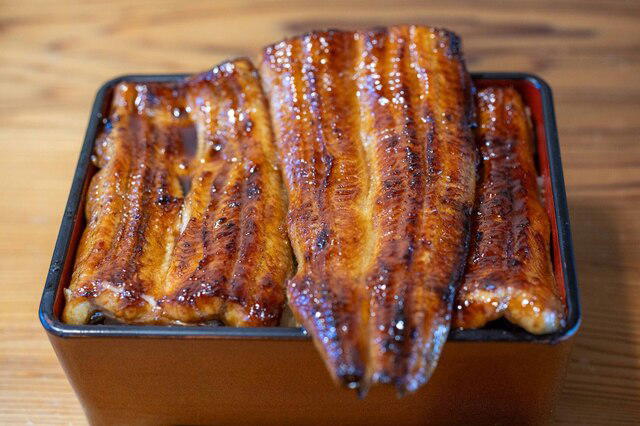
The menu
What to order
- Grilled unagi over rice
- Wild eel (seasonal, mid‑September to mid‑November)
- Loach (dojo) dishes
Approaching Unasen in Katori changes the rhythm of an eel meal. The city noise drops away, the pace feels regional rather than metropolitan, and the emphasis moves from spectacle to a narrow food tradition. In Katori, where local dining can sit closer to the table than in central Tokyo dining rooms, unagi is less a luxury signal than a specialist product with rules: preparation matters, category focus matters, and the restaurant’s purpose matters more than decorative staging.
Unasen belongs to that focused regional register. Its listed categories are unagi and dojo, and its identity is built around a focused eel-house format rather than a broad, metropolitan counter experience. Tabelog selected it for the Unagi 100 in 2024, a useful marker in a category where small regional specialists can carry serious reputational weight without the international machinery of Michelin dining. Within Katori, the natural comparison is Unagi Kappou Yamada, another eel address in the city; the point is not a simple ranking, but the fact that Katori has enough eel depth to support comparison at all. For wider planning, Our full Katori restaurants guide maps the city’s dining options beyond eel.
Specialist eel focus gives the meal its real tension
Unagi culture often gets flattened into sauce, heat, and lacquered presentation. The more interesting question is how seriously the restaurant treats its specialism. At Unasen, the appeal comes from entering a dining room where eel is not a token item on a long menu, but the core reason for the visit. That focus places the restaurant inside an ingredient-led economy rather than a fixed performance economy, where the value of the meal depends on product, preparation, and timing rather than on a chef’s promise to reproduce a theatrical sequence every day.
That matters in Katori. The city’s setting and food culture make eel feel less imported as an urban delicacy and more connected to place. In a Tokyo setting, unagi can become a polished, transactional lunch; in Katori, the same category reads more regional and grounded. The appeal is not novelty. It is the seriousness of a narrow specialism, handled in a format that keeps attention on the fish, the cooking, and the pace of the meal.
The Tabelog Unagi 100 selection is also more useful here than a generic rating badge. Japan’s eel specialists are often modest in format, conservative in service, and resistant to broad-menu expansion. Recognition in a category-specific list signals that the restaurant is being judged against other eel houses, not against French tasting rooms, sushi counters, or hotel dining. That context keeps expectations honest.
A regional eel house, not a city counter
The room shapes the experience. Unasen sits closer to a regional dining house than to a compact urban counter, and that changes how the meal should be read. This is an address that can work for diners who want a focused eel meal rather than a scene-driven reservation. The fish-led category, with unagi and dojo listed as its core, gives the restaurant a clarity that is easy to understand before arrival.
Service model also affects how to read the cooking. Eel is not fast food in the Japanese specialist tradition; it rewards patience and punishes over-scheduling. Rather than treating the meal as a quick stop, the smarter diner treats it as the anchor of a Katori day. That approach leaves room for the slower tempo that specialist regional restaurants often require, especially when the point of the visit is not variety but concentration.
Planning is another reminder that regional Japan does not always behave like central-city dining. Unasen is best approached as a deliberate Katori meal rather than a spontaneous urban crawl, especially for travellers coming from outside the city. Travellers building a fuller city stay can pair restaurant planning with Our full Katori hotels guide, Our full Katori bars guide, Our full Katori wineries guide, and Our full Katori experiences guide.
How to place it within a Japan dining itinerary
Unasen is strongest when treated as a specialist regional meal, not as a catch-all Japanese restaurant. The listed lunch budget is JPY 4,000 to JPY 4,999, placing it above casual everyday lunch and below the high ceremony of luxury omakase formats. That middle position suits eel: the cost is in the ingredient, the preparation, and the narrowness of the craft rather than in luxury staging.
For travellers moving through Japan, it offers a useful counterpoint to more urban or genre-specific reservations. Other dining rooms in Katori and beyond may express different parts of the country’s dining grammar, from meat-led meals to seafood-focused counters to quieter everyday stops. The point of adding Katori eel is specificity: one ingredient-led tradition, one regional frame, and a meal whose value depends on understanding why focus and category depth change the result.
Readers building a broader route can use contrasts across cities rather than chasing sameness. Different restaurants in Japan sit in different price and format conversations, from casual local rooms to more polished reservation-led meals. Even overseas Japanese-adjacent dining underlines the same editorial lesson: Japanese food travels well, but its regional ingredient logic is hardest to replicate.
The verdict is narrow and clear. This is a Katori eel meal for travellers who care about product, local format, and specialist recognition more than theatrical service. With a Tabelog score listed at 3.71 and Unagi 100 recognition in 2024, Unasen has enough external validation to matter, but its real purpose is simpler: a focused way to understand Katori’s unagi culture.
Frequently asked questions
Is Unasen suitable for children?
The available information does not specify a children policy. Expect a focused unagi and dojo meal, with the listed price range at JPY 4,000 to JPY 4,999.
Is Unasen better for a quiet night or a lively one?
It is best understood as a focused meal rather than a broad night-out venue. The setting is Katori, and the restaurant’s listed categories are unagi and dojo.
What's the price range at Unasen?
Pricing at Unasen is listed as JPY 4,000 - JPY 4,999 View spending breakdown.
How do I find Unasen?
Katori.
A Quick Peer Check
Comparable venues by cuisine and price in the same metro.
| Venue | Cuisine | Price | Awards | Notes |
|---|---|---|---|---|
| UnasenThis venue (the venue you are viewing) | Traditional Unagi (Grilled Eel) Restaurant | $30–50 | Tabelog 100 #66 | Not listed |
| Unagi Kappou Yamada | Traditional Unagi (Grilled Eel) Restaurant | $30–50 | Tabelog 100 #71 | Sawara |
| 香屋 | Hiroshima Okonomiyaki Izakaya | Not listed | Not listed | 城町 |
| Kirakutei (器楽亭) | Seafood Izakaya | $20–30 | Not listed | Kugayama |
| Hana Goori Kakigori | Japanese Kakigori (Shaved Ice) | $20–30 | Not listed | Roppongi |
| Yagiya | Traditional Okinawan Soba | $10–20 | Not listed | Yaese-cho |
Recognition history
Dated appearances from independent guides and award organizations, with the underlying list record or original source where available.
Tabelog 100 #66 · No. 66
Tabelog · Tabelog 100 - Unagi - 2024
Details
- Classic
- Cozy
- Rustic
- Group Dining
- Casual Hangout
- Family
- Solo
- Private Dining
- Standalone
- Sake Program
- Local Sourcing
- Sustainable Seafood
- A La Carte
- Set Menu
- Sake
- Beer
- Pescatarian Friendly
A classic house‑style unagi restaurant with tatami rooms and a small table area, non‑smoking and relaxed, where the focus is on quietly enjoying expertly prepared eel rather than flashy decor.