SALT Korean BBQ
Our verdict
SALT Korean BBQ brings the communal fire-at-the-table tradition of Korean barbecue to North Wales, Pennsylvania, sitting at 1222 Welsh Rd in a suburban corridor that has grown more culinarily diverse over the past decade. The format centers on tableside grilling, where the sourcing and cut of the meat carry as much weight as the technique. For Montgomery County diners, it fills a distinct gap in a dining scene more accustomed to Italian-American staples and casual American fare.

Pearl is the En Primeur Club membership app — saves, bookings, and concierge access live there. Same editors, same standards.
- Address
- 1222 Welsh Rd, North Wales, PA 19454
- Phone
- (215) 412-4200
- Hours
- Mon ClosedTue–Sun 11 AM–10:30 PM
- Website
- saltkoreanbbq.com
- Directions
- Get directions
- Booking
- Book on OpenTable
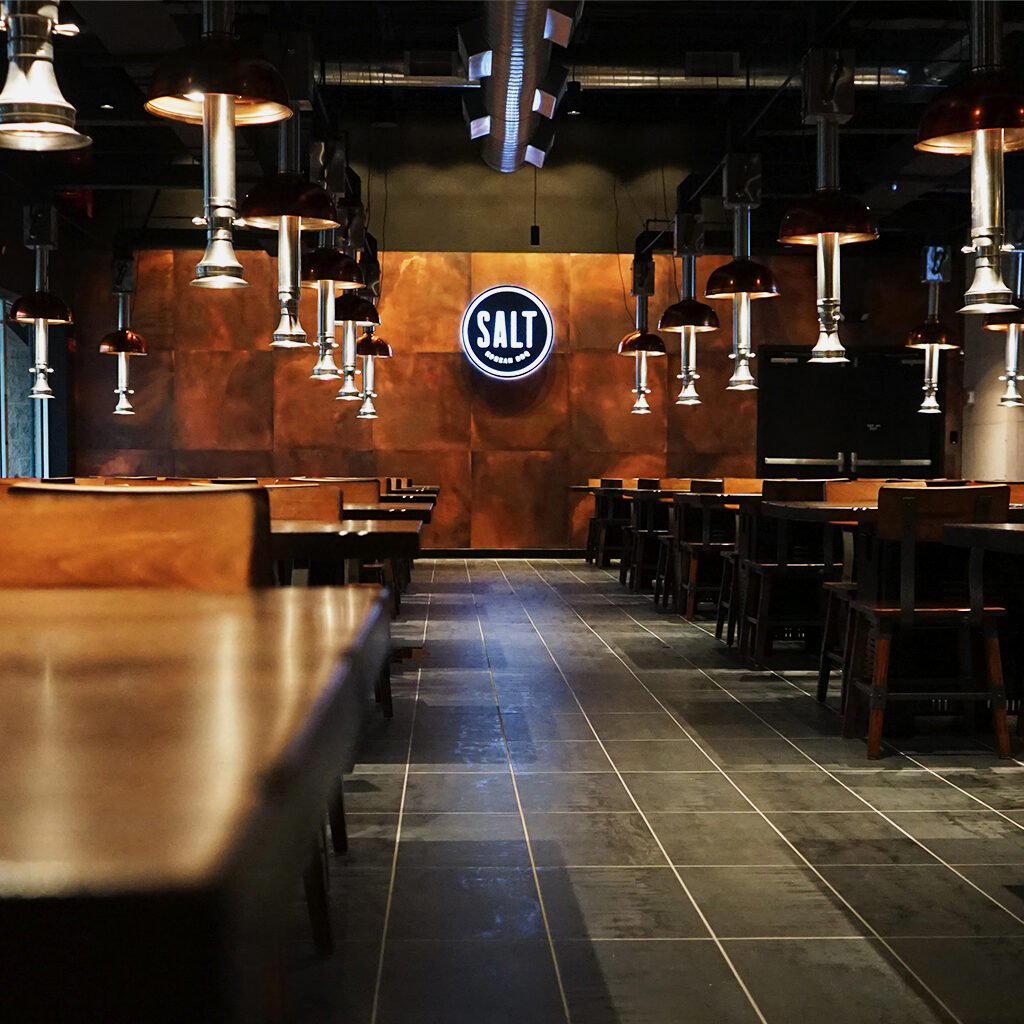
Korean BBQ in the Philadelphia Suburbs: What SALT Gets Right
Suburban Philadelphia's dining map has expanded steadily outward from the city's dense restaurant core, and Montgomery County has been one of the more interesting beneficiaries of that spread. The corridor along Welsh Road in North Wales sits in a zone where chain dining once dominated almost entirely, but where independent operators have increasingly found footholds over the past several years. Korean barbecue, a format built on communal tableside grilling, high-quality protein cuts, and a rotating procession of small accompaniments, is among the more demanding restaurant concepts to execute well in a suburban context. The cuisine's success depends heavily on sourcing discipline: the cuts that go over a live flame at the table have nowhere to hide. SALT Korean BBQ, at 1222 Welsh Rd, plants this tradition in a neighborhood where it represents a genuine alternative to the options around it. For context on what else the area offers, see our full North Wales restaurants guide, which maps the dining character of the corridor more broadly, including nearby stops like Tex Mex Connection.
The Sourcing Logic Behind Tableside Grilling
Korean barbecue's central editorial argument, as a cuisine category, is that it forces transparency about ingredient quality in a way that most other formats do not. When a thin-sliced brisket or a well-marbled short rib hits a grill built into the dining table, the diner is watching the cooking process in real time. There is no kitchen to absorb the gap between a mediocre cut and a well-sourced one. This structural transparency is why the genre has bifurcated so sharply in American cities: operations that invest in sourcing tend to hold a loyal repeat clientele, while those that treat the tableside spectacle as sufficient tend to cycle through novelty seekers.
In Korean barbecue's home tradition, the hierarchy of cuts is well-established. Samgyeopsal, thick-cut pork belly, and chadolbaegi, thinly shaved beef brisket, are the democratic entry points. Galbi, short rib cut across the bone, and the ribeye-adjacent cuts occupy the upper tier. The difference between these tiers in the dining experience comes almost entirely down to marbling and handling before the meat arrives at the table. Restaurants that source thoughtfully tend to show it in the fat distribution and the way the cut responds to heat within the first thirty seconds on the grill.
This sourcing discipline is what separates Korean barbecue's leading American practitioners from the format's more performative iterations. At the high end of the American Korean dining scene, venues like Atomix in New York City have demonstrated that Korean culinary traditions can anchor four-star experiences when ingredient provenance and technique are treated with the same rigor applied to fine dining in any other tradition. SALT operates in a different register, as a neighborhood Korean barbecue restaurant rather than a tasting-menu destination, but the underlying sourcing logic that drives quality in both contexts is the same.
The Suburban Context and What It Means for the Diner
North Wales, Pennsylvania is not a dining destination in the way that Philadelphia's Chinatown or the Koreatown corridors of larger American cities function. It is a residential suburb where restaurant decisions are more often driven by proximity and occasion than by destination dining intent. That context shapes how SALT fits into the local dining pattern. Korean barbecue is inherently a group format: the grills are sized for sharing, the banchan array is designed to be passed and picked at collectively, and the meal's pacing tends toward the leisurely. In a suburban setting where family dinners and casual group outings are the primary restaurant occasions, that format translates well.
The comparison to destination Korean barbecue in denser urban markets is useful for calibrating expectations. In a suburban Montgomery County setting, the competitive frame is different: SALT competes against the full range of casual dining options in the corridor, which gives it a relatively clear positioning advantage as the area's Korean barbecue option of note.
The Grilling Tradition and What to Order
Korean barbecue's banchan component deserves attention as an indicator of kitchen investment. The small side dishes, typically including fermented kimchi in several forms, seasoned spinach, pickled radishes, and various seasoned vegetables, are not incidental. In well-run operations, they are made in-house and rotated with some frequency. In lower-investment operations, they arrive from a shared commissary. The texture and acidity of house-made kimchi in particular is immediately distinguishable from the commercial version, and it functions as a useful early signal about how seriously a kitchen takes the full table experience rather than treating the grilled proteins as the only thing that matters.
For diners less familiar with the format, the typical approach is to begin with the more approachable cuts, pork belly and brisket, before moving toward the marinated short rib preparations, which carry more complexity. The ssam format, wrapping grilled meat in perilla or lettuce with fermented soybean paste and raw garlic, is the traditional eating method and worth following rather than defaulting to rice alone. The interplay between the fat from the grilled protein, the sharpness of the paste, and the freshness of the leaf is where the cuisine's flavor logic becomes clear.
Where SALT Sits in a Broader Dining Context
For EP Club readers who track the full range of American dining, from the farm-sourcing rigor of Blue Hill at Stone Barns in Tarrytown or Single Thread Farm in Healdsburg, to the technical ambition of Alinea in Chicago, Lazy Bear in San Francisco, or The French Laundry in Napa, SALT occupies a very different position. It is not in the company of Le Bernardin in New York City, Providence in Los Angeles, Addison in San Diego, The Inn at Little Washington, or Emeril's in New Orleans. Nor does it aim to be.
The more relevant comparison set for SALT is the cluster of Korean barbecue independents that have established themselves in suburban American markets over the past decade, from the mid-Atlantic to the Midwest, where Korean American communities have grown and where the cuisine has moved from enclave dining to broader suburban adoption. Restaurants like Bacchanalia in Atlanta, Frasca Food and Wine in Boulder, Brutø in Denver, and Causa in Washington, D.C. each represent strong regional independent dining, and that is the tier in which SALT's ambitions and context should be read.
Planning Your Visit
SALT Korean BBQ is located at 1222 Welsh Rd, North Wales, PA 19454, in a suburban commercial corridor that is accessible primarily by car. For current hours, reservation availability, and pricing, contacting the restaurant directly or checking current third-party listing platforms is advisable, as these details are subject to change. Korean barbecue as a format runs comfortably for groups of three or more, where the range of the menu is most fully expressed. First-time visitors should plan for a relaxed pace: the meal is structured around the grill's rhythm, not a kitchen's ticket time.
Frequently asked questions
Does SALT Korean BBQ work for a family meal?
Korean barbecue's communal format is well-suited to family groups, particularly those comfortable with shared plates and an interactive, participatory table. The at-table grilling structure keeps the meal informal and paced around the group rather than individual courses. SALT's location at 1222 Welsh Rd in North Wales, PA, within a car-accessible suburban commercial corridor, also makes arrival practical for families rather than requiring city parking logistics.
What's the overall feel of SALT Korean BBQ?
The dining register is casual and participatory: the diner takes an active role in grilling, which distributes attention around the table rather than centering it on a server. Korean barbecue as a category occupies a distinct middle ground between fast-casual and full-service, and SALT operates within that format. For Montgomery County, where sit-down Korean barbecue is sparsely represented, the venue fills a specific gap in the suburban dining map outside Philadelphia proper.
How does SALT Korean BBQ compare to Korean BBQ options in the Philadelphia suburbs?
Korean barbecue with at-table grilling is more common in Philadelphia's Chinatown and surrounding blocks than in Montgomery County's suburban corridor, which makes SALT at 1222 Welsh Rd one of the more accessible options for North Wales and surrounding communities without a city drive. For EP Club readers tracking the regional dining picture, the suburban format prioritizes convenience and space over the density of city dining districts. Specific comparisons on pricing or menu range are best confirmed with the venue directly.
What's the must-try dish at SALT Korean BBQ?
Across Korean barbecue menus as a category, galbi (marinated short rib) functions as a reliable benchmark: it tests marinade depth, cut quality, and grill timing in a single order. The banchan selection, the small fermented and seasoned side dishes served before the grill is lit, is an equally important indicator of kitchen investment and worth assessing alongside the main proteins.
What part of town is SALT Korean BBQ in?
SALT Korean BBQ is located at 1222 Welsh Rd, North Wales, PA 19454, North Wales.
Comparable Spots, Quickly
Comparable venues nearby, for context on price, style, and recognition.
| Venue | Cuisine | Price | Notes |
|---|---|---|---|
| SALT Korean BBQThis venue — the venue you are viewing | Korean BBQ | $30–50 | Not listed |
| Tex Mex Connection | Tex-Mex Fusion | $20–30 | North Wales |
| Seorabol Center City | Authentic Korean BBQ | $20–30 | Avenue of the Arts |
| The Copper Crow | Modern American Gastropub | $30–50 | Horsham |
| Fraschetta | Roman-Inspired Italian | $30–50 | Bryn Mawr |
| Osteria Saporino | Modern Italian Trattoria | $30–50 | Huntingdon Valley |
Continue exploring
More in North Wales
Restaurants in North Wales
Browse all →
Bars in North Wales
Browse all →

Hotels in North Wales
Browse all →
Wineries in North Wales
Browse all →
Details
- Lively
- Trendy
- Group Dining
- Casual Hangout
- Open Kitchen
- Sake Program
- A La Carte
Current opening hours
- Monday
- Closed
- Tuesday
- 11 AM–10:30 PM
- Wednesday
- 11 AM–10:30 PM
- Thursday
- 11 AM–10:30 PM
- Friday
- 11 AM–10:30 PM
- Saturday
- 11 AM–10:30 PM
- Sunday
- 11 AM–10:30 PM
Hours can change for holidays and private events. Last verified .
Energetic atmosphere with theatrical food presentation and karaoke rooms available on weekends.