Salsa & Coentros sits in Lisbon's residential northeast, at a remove from the tourist-dense Baixa and Bairro Alto circuits. The name, salsa and coriander, the twin herbs of Portuguese kitchen tradition, signals where the kitchen's allegiances lie: in the domestic register of Portuguese cooking rather than in the capital's growing tier of modernist tasting menus. For visitors already mapped to that fine-dining tier, this is the counterpoint worth understanding.
Pearl is the En Primeur Club membership app — saves, bookings, and concierge access live there. Same editors, same standards.
- Address
- R. Cel. Marques Leitão 12, 1700-337 Lisboa, Portugal
- Phone
- +351 21 841 0990
- Website
- restaurantesalsaecoentros.pt
- Directions
- Get directions
 Saves & bookings on Pearl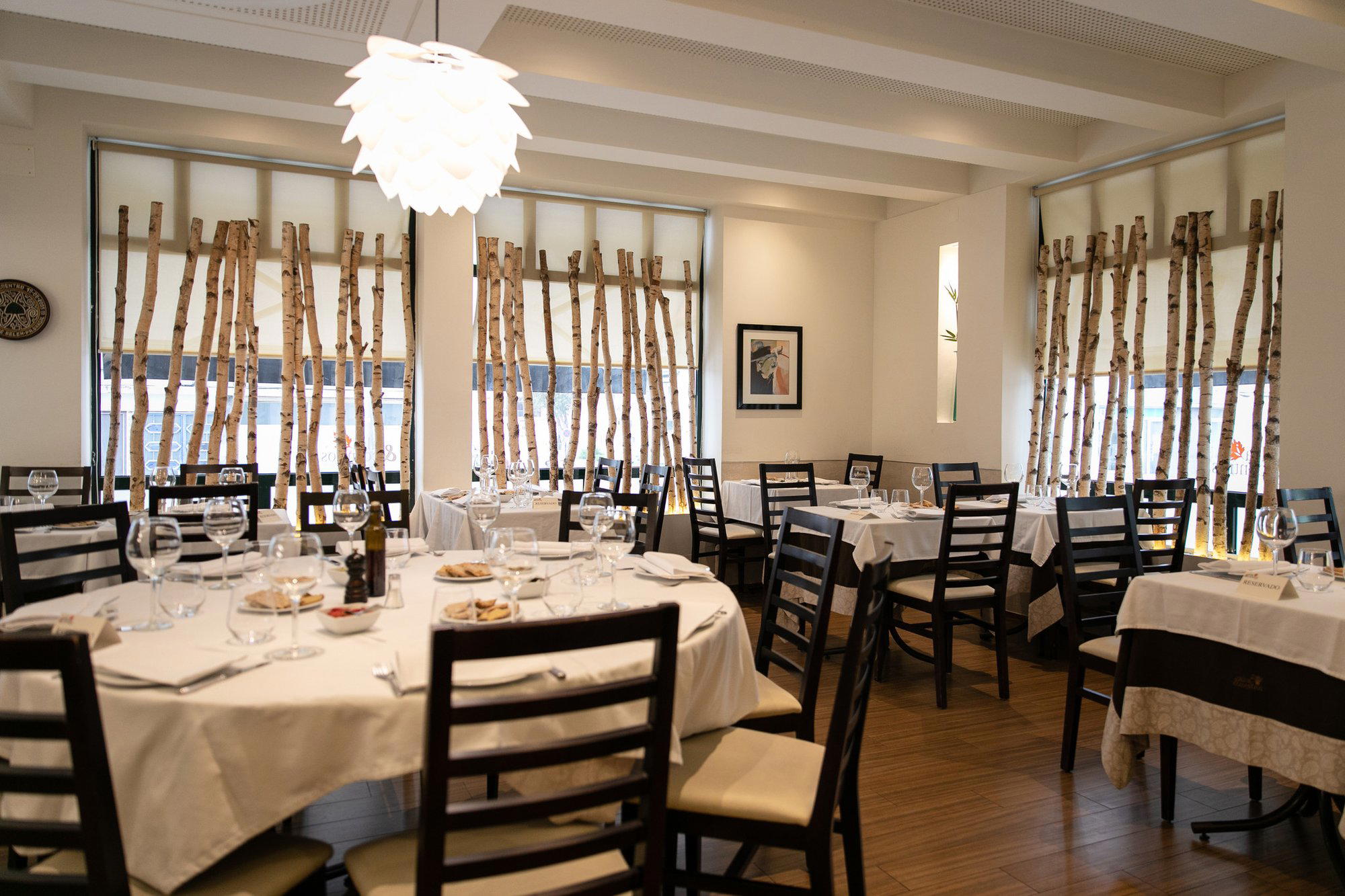
Where Portuguese Domestic Cooking Holds Its Ground
Lisbon's restaurant conversation has shifted toward modernist Portuguese in recent years. Belcanto, CURA, and Eleven anchor the city's upper end with tasting menus that treat Portuguese culinary heritage as raw material for technical reinterpretation. That category has depth in the capital, and it connects to a wider national picture that includes Vila Joya in Albufeira, Casa de Chá da Boa Nova in Leça da Palmeira, and Ocean in Porches. But alongside that modernist layer, Lisbon maintains a parallel tradition of neighbourhood restaurants that work the same culinary territory without the tasting menu architecture, places where the logic of the meal is recognisably domestic rather than choreographed, and where the sequencing follows the pattern of Portuguese home eating rather than the conventions of contemporary fine dining.
Salsa & Coentros occupies that second category. The address, Rua Coronel Marques Leitão 12, in the 1700 postal district, places it northeast of the Avenida da Liberdade axis, in a residential stretch that sees little tourist foot traffic. That geography matters. Restaurants in this part of Lisbon are cooking for a repeat local clientele, which tends to enforce consistency in the kitchen.
The Architecture of the Meal
The tasting progression at a restaurant rooted in Portuguese domestic cooking follows a different logic than the arc you find at 50 Seconds from Martin Berasategui or the format discipline of 2Monkeys. There is no amuse-bouche sequence, no mid-meal sorbet to reset the palate, no closing petit-four presentation. Instead, the meal moves through the structural logic that has organised Portuguese eating for generations: cold or cured openers, a fish or soup course, a meat-centred main, and something sweet or fruit-based to close. This is a different tradition, one that carries its own internal coherence.
The name itself is instructive. Salsa (parsley) and coentros (coriander) are the two herbs that appear most consistently across the Portuguese kitchen, from the fish stews of the coast to the pork dishes of the interior. Their pairing in the restaurant's name is less a branding choice than a declaration of culinary allegiance, to the herb-forward, produce-led cooking of the Portuguese domestic tradition rather than to the reductive, technique-forward style that defines the city's Michelin-recognised tier. Compare this to the philosophical position of Antiqvvm in Porto, which works similar historical Portuguese territory but through a more formally structured menu architecture.
Reading the Neighbourhood
1700 postal district in Lisbon is not a dining destination in the way that Chiado or Príncipe Real are dining destinations. There are no bar clusters, no hotel restaurant spillover, no concentration of venues competing for the same tourist spend. What the area does have is the texture of a functioning residential neighbourhood, local bakeries, small grocers, tabacarias, and within that texture, restaurants that exist because people who live nearby want to eat well close to home. That dynamic tends to produce cooking that prioritises consistency and value over spectacle.
For visitors, the practical implication is that reaching Salsa & Coentros requires intention. This is not a restaurant you discover by walking through a photogenic neighbourhood. You go because you have decided to go, which means the visit carries a different quality of attention than a spontaneous dinner in the Bairro Alto. That kind of deliberate visit tends to suit a traveller looking for the counterpoint to the modernist tasting menu tier, or one who wants to understand Lisbon's food culture beyond its decorated restaurants.
Portugal's dining geography rewards this kind of lateral movement. The country's decorated restaurants, from Fortaleza do Guincho in Cascais to The Yeatman in Vila Nova de Gaia to Il Gallo d'Oro in Funchal, tell one part of the story. The neighbourhood restaurants tell another, and the full picture requires both.
Portuguese Herb-Kitchen Cooking in Context
The herbs in the restaurant's name anchor it to regional traditions. Coriander dominates the Alentejo and is fundamental to dishes like açorda, the bread-and-herb soup that represents among the more distinctive preparations in the Portuguese canon. Parsley appears across the country in contexts from grilled fish to caldeirada. A kitchen that foregrounds both is signalling fluency across regional registers, the coast, the interior, the Tagus basin, rather than specialisation in a single culinary subregion.
This multi-regional competency is different from the approach taken at restaurants like Ó Balcão in Santarém, which works from a more geographically specific brief, or Al Sud in Lagos, which draws on the Algarve's southern inflections. It is also distinct from the international reference points visible at Gusto by Heinz Beck in Almancil. The herb-kitchen tradition at Salsa & Coentros represents a generalist Portuguese position, cooking that draws from across the country's larder rather than staking out a regional claim.
The domestic-register neighbourhood restaurant that maintains quality without modernist ambition is a recognized category in mature dining cities. Lazy Bear in San Francisco and Le Bernardin in New York City represent the opposite pole, technically ambitious, format-disciplined, internationally recognised. Salsa & Coentros occupies the space those restaurants are not trying to fill: the reliable neighbourhood anchor that a city's food culture depends on as much as its decorated flagships.
Planning the Visit
The restaurant is located at Rua Coronel Marques Leitão 12 in the 1700-337 postal district of Lisbon, a northeast residential area most efficiently reached by taxi or rideshare from the central hotel zones. Specific hours, booking channels, and pricing are not included here; contacting the restaurant directly is advisable before visiting. Because the venue is not on the main tourist circuit, same-day availability may be more accessible than at the busier Chiado and Príncipe Real addresses, though this cannot be guaranteed.
The Minimal Set
Comparable venues nearby, for context on price, style, and recognition.
| Venue | Cuisine | Price | Notes |
|---|---|---|---|
| Salsa & CoentrosThis venue — the venue you are viewing | Not listed | $$ | Not listed |
| Zé da Mouraria | Mouraria, Traditional Portuguese | $$ | Not listed |
| Cozinha Popular da Mouraria | Not listed | $$ | Mouraria, Traditional Portuguese Multicultural |
| Fabulas | Not listed | $$ | Chiado, Traditional Portuguese with Vegan Options |
| Luzzi | Baixa, Modern Lusitanian Cuisine | $$$ | Not listed |
| Maria da Mouraria - Casa de Fados | Not listed | $$$ | Mouraria, Traditional Portuguese Fado Dinner |
Continue exploring
More in Lisbon
Restaurants in Lisbon
Browse all →
Bars in Lisbon
Browse all →
Hotels in Lisbon
Browse all →
At a Glance
- Cozy
- Classic
- Intimate
- Business Dinner
- Family
- Casual Hangout
- Historic Building
- Extensive Wine List
- Local Sourcing
Current opening hours
- Monday
- 12:30–3 PM, 7:30–10:30 PM
- Tuesday
- 12:30–3 PM, 7:30–10:30 PM
- Wednesday
- 12:30–3 PM, 7:30–10:30 PM
- Thursday
- 12:30–3 PM, 7:30–10:30 PM
- Friday
- 12:30–3 PM, 7:30–10:30 PM
- Saturday
- 12:30–3 PM, 7:30–10:30 PM
- Sunday
- Closed
Hours can change for holidays and private events. Last verified .
Comfortable room with quiet mood, good lighting, and welcoming atmosphere like dining at a friend's home.