Salón Tenampa
Our verdict
Plaza Garibaldi has anchored Mexico City's mariachi tradition for over a century, and Salón Tenampa sits at the heart of that history. One of the square's original cantinas, it draws locals and visitors alike with tequila poured at the source and live son huasteco rolling through the room most evenings. This is where the ritual of the plaza begins, not where it ends.

Pearl is the En Primeur Club membership app, where members save venues, book tables and use the concierge.
Where Garibaldi's Ritual Actually Starts
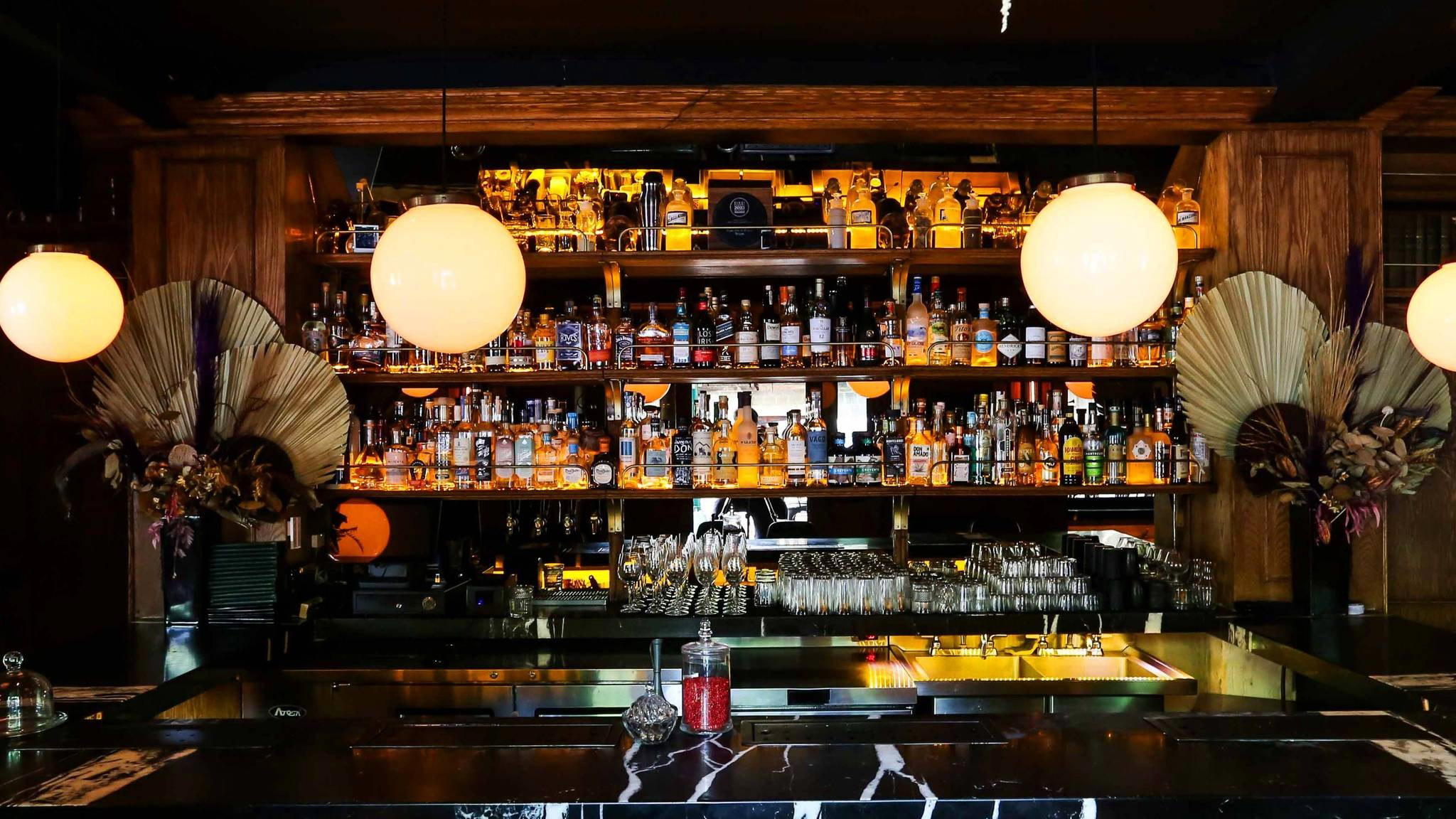
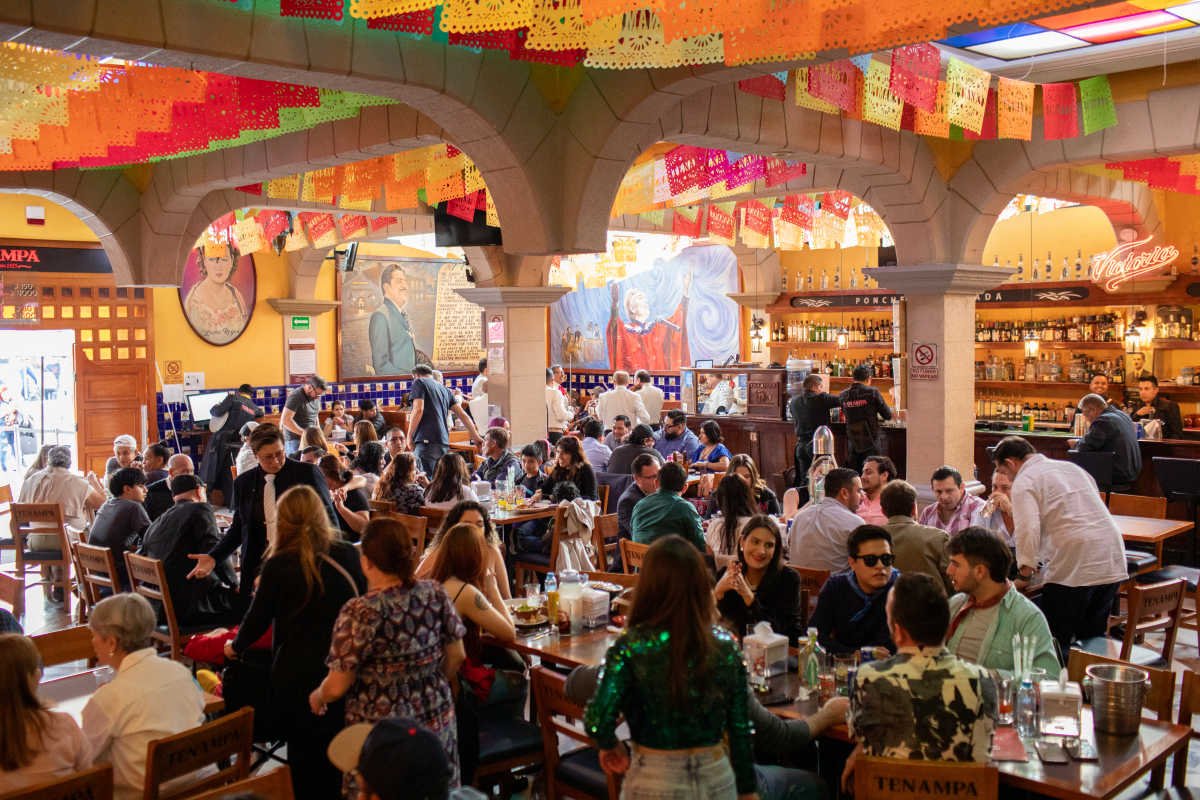
Step onto Plaza Garibaldi on any evening and the first thing you register is sound: overlapping trumpet lines, competing guitarrón rhythms, and the particular kind of crowd noise that builds when alcohol and live music arrive simultaneously. The square has operated as Mexico City's mariachi exchange since the early twentieth century, a place where bands cluster for hire and the distinction between performer and audience dissolves by midnight. Salón Tenampa, positioned at Plaza Garibaldi 12 in the Centro Histórico district of Cuauhtémoc, is one of the establishments that gave the plaza its original character before the tourist coaches arrived. The murals on its walls document that lineage in paint rather than press releases.
The Source Question: Tequila and Its Territory
The editorial angle that matters most at a place like Tenampa is not the menu in the conventional sense. It is the origin of what arrives in the glass. Mexico's appellation system for tequila is among the most tightly governed in the spirits world: by law, tequila must be produced from blue agave (Agave tequilana Weber) grown within a designated territory that covers Jalisco and parts of four additional states. Mezcal operates under a parallel but broader denomination, covering agave spirits from regions including Oaxaca, Durango, and Guerrero. A cantina operating on Garibaldi since the mid-twentieth century exists inside that framework as a point of consumption at the far end of a long agricultural and distillation chain that begins in the highlands of Jalisco or the valleys of Oaxaca.
This geography matters because it shapes what a venue like Tenampa actually represents within Mexico City's drinking culture. The capital is not a producing region; it is the national marketplace and the place where agave spirits from across Mexico's diverse production zones converge. A glass of tequila reposado at a Garibaldi cantina is, in that sense, a document of Mexican terroir consumed at a considerable remove from its source, which is precisely what makes the combination of mariachi and tequila in this specific plaza feel like a cultural compression rather than a simple night out.
Garibaldi in Mexico City's Broader Dining and Drinking Map
Mexico City's restaurant scene in the contemporary era has attracted international attention through tasting-menu formats at venues like Pujol and Quintonil, both of which appear regularly on global ranking lists and price in the $$$$ tier. The creative end of the city's dining spectrum also includes venues like Em and, in a different register, Rosetta, which applies Italian creative thinking to Mexican ingredients. Neighbourhood-specific ambition extends further with places like Sud 777 in Pedregal.
Salón Tenampa belongs to none of these categories. Its competitive set is not the tasting-menu tier; it is the category of places that document a city's social history through continuous operation. The distinction is worth making clearly: the venues above serve as evidence of where Mexican cuisine has arrived in the twenty-first century, while Garibaldi's cantinas preserve the ritual infrastructure around which the city's popular culture has organised itself for generations. Both are necessary to understand Mexico City fully. Our full Mexico City restaurants guide maps the contemporary dining scene across neighbourhoods and price tiers if you are planning a broader visit.
The Garibaldi Experience as a Format
What Garibaldi offers, and what Tenampa functions as a home base for, is a participatory format rather than a passive dining experience. Mariachi groups are available for hire by the song or by the hour; the square operates as an open marketplace where the price per performance is negotiable and the quality varies across ensembles. A table at one of the surrounding cantinas serves as a fixed point from which to engage that market, order rounds, and receive serenades at close range. The experience is loud in the way that reflects genuine acoustic instruments in a confined space, not amplified background music calibrated for conversation.
That format has remained relatively stable even as the surrounding Centro Histórico has undergone significant rehabilitation since the early 2000s. The area around the Zócalo and Alameda Central now attracts a different visitor profile than it did two decades ago, but Garibaldi's essential character, as a place organised around live popular music and the social rituals of the cantina, has proved durable.
Mexican Agave Traditions Beyond the Capital
For those tracing Mexico's agave and regional food traditions beyond the city, the production zones themselves offer a different kind of access. Levadura de Olla Restaurante in Oaxaca operates in the heartland of mezcal production and Oaxacan culinary tradition. Animalón in Valle de Guadalupe represents the farm-proximity model in Baja California's wine and food corridor. Coastal traditions are documented at HA' in Playa del Carmen and at Le Chique in Puerto Morelos, which applies technique-forward thinking to Yucatecan ingredients. The northern industrial cities have developed their own serious dining scenes: KOLI Cocina de Origen in Monterrey and Pangea in San Pedro Garza Garcia both represent the ambition operating in Nuevo León. Alcalde in Guadalajara works closer to tequila's actual source. Olivea Farm to Table in Ensenada takes the ingredient-proximity argument seriously in Baja Norte. In the Yucatán, Huniik in Merida draws on the peninsula's distinct pantry. Lunario in El Porvenir represents the wine-country dining format in the Valle de Guadalupe appellation. For international comparison points in the fine-dining register, Le Bernardin in New York City and Atomix in New York City show how ingredient-sourcing narratives function at the highest formal tier in a different context entirely.
Planning a Visit
Salón Tenampa is located at Address: Plaza Garibaldi 12, Centro, Cuauhtémoc, 06010, Mexico City. Getting there: The nearest Metro station is Garibaldi on Line 8, roughly a five-minute walk from the plaza. Timing: The plaza accelerates from early evening onward, with the densest mariachi activity typically running from around 9 p.m. into the early hours; weekends amplify both the crowd and the noise considerably. Walk-ins: The cantina format at Garibaldi operates on a walk-in basis; no advance reservation is standard practice for this category of venue. Budget: Dress: No formal dress code applies; the environment is casual and animated.
Frequently asked questions
Where is Salón Tenampa in Mexico City?
Salón Tenampa is located at Plaza Garibaldi 12, Centro, Cuauhtémoc, 06010 Centro, CDMX, Mexico, Mexico City.
Is Salón Tenampa the right base for exploring Mexico City's agave spirit traditions?
For anyone tracing tequila and mezcal beyond the bottle, Tenampa at Plaza Garibaldi 12 in Centro, Mexico City, offers direct access to the cantina format where these spirits have historically been consumed, alongside live mariachi, which is inseparable from the ritual. It functions less as a spirits bar in the contemporary tasting-room sense and more as an entry point into a tradition that has operated on this square for generations. Those wanting to go deeper into production regions would need to travel to the agave-growing states themselves.
What do people recommend at Salón Tenampa?
Tenampa's reputation rests on its tequila and mezcal selection and on the live mariachi that circulates through the room and onto Plaza Garibaldi itself. Most visitors come to drink agave spirits at the source, in a room where the music is not background noise but the point. The format is participatory: groups can hire a mariachi band directly for a set at the table.
Do they take walk-ins at Salón Tenampa?
Walk-ins are the standard mode of entry at Garibaldi's cantinas, and Tenampa at Plaza Garibaldi 12 operates within that convention. There are no reservations to secure in advance. Peak evenings, particularly weekends, bring high foot traffic across the plaza, so arriving earlier in the evening gives you more room to settle.
What has Salón Tenampa built its reputation on?
Longevity and location are the two pillars. Tenampa is one of the oldest continuously operating cantinas on Plaza Garibaldi, a square that has functioned as the central gathering point for mariachi musicians in Mexico City since the first half of the twentieth century. That history is not decorative, the plaza remains a working hire market for bands, and Tenampa sits at its centre.
Where It Fits
Comparable venues nearby, for context on price, style, and recognition.
| Venue | Cuisine | Price | Notes |
|---|---|---|---|
| Salón TenampaThis venue (the venue you are viewing) | Traditional Mexican Cantina | $20–30 | Not listed |
| Karisma | Tex-Mex Cantina | $20–30 | Polanco Chapultepec |
| Los Panchos Restaurant | Traditional Mexican Carnitas | $20–30 | Nva Anzures |
| La Buena Fe | Mexican Cantina with International Influences | Not listed | San Ángel Inn |
| Taqueria El Pastorcito | Traditional Mexican Taqueria | $10–20 | Aeronáutica Militar |