Sakoon Restaurant
Our verdict
Sakoon Restaurant on East El Camino Real places itself at the intersection where South Asian culinary tradition meets the technical ambitions of Silicon Valley's dining scene. The address puts it within reach of Santa Clara's densely multicultural corridor, where Indian and broader South Asian cooking operates at a notably high register. For the neighbourhood, it represents a specific kind of ambition: regional flavour with serious kitchen discipline.

Pearl is the En Primeur Club membership app, where members save venues, book tables and use the concierge.
East El Camino Real and the Ambition Behind the Address
East El Camino Real in Santa Clara does not announce itself as a dining destination the way a city centre strip might. The road is wide, the signage is utilitarian, and the context is firmly suburban Silicon Valley. What it does offer, however, is one of the Bay Area's most concentrated corridors of South and East Asian dining, a stretch where Chungdam's Korean precision, Asia Live's multi-cuisine complexity, and ramen specialists like Orenchi all operate within a short distance of each other. It is the kind of street where a restaurant has to define its register clearly, because the competition is not generic.
Sakoon Restaurant at 3701 E El Camino Real positions itself inside that competitive corridor. The question any serious dining address on this stretch has to answer is not simply what it serves, but at what level of technical and conceptual ambition it chooses to operate. For South Asian cooking in particular, a cuisine that carries enormous diversity across regions and enormous variation in kitchen rigour, that distinction matters considerably.
South Asian Cooking and the Technique Question
The broader story of Indian and South Asian restaurants in the United States over the last decade is largely a story of technique catching up with ambition. For years, the format defaulted to a fixed grammar: a long menu of subcontinental standards, quantity over refinement, and spice calibrated for a cautious audience. That model still dominates much of the country's South Asian dining supply. What has shifted in cities with concentrated South Asian populations and technically demanding diners, the Bay Area chief among them, is a smaller, more deliberate cohort of kitchens applying genuine technical discipline to the same ingredient traditions.
This intersection of local or indigenous products with imported method is where the more interesting South Asian restaurants now operate. The same dynamic plays out across fine dining globally: Atomix in New York City frames Korean tradition through French fine dining precision; 8½ Otto e Mezzo Bombana in Hong Kong applies Italian rigour to a Chinese dining market. At a different scale, American restaurants like Lazy Bear in San Francisco and Single Thread Farm in Healdsburg have made indigenous and regional ingredients the structural argument of menus built around European tasting-course logic. The template is clear: technique is the frame, the ingredient tradition is the content.
For South Asian cooking, that negotiation is more fraught. The cuisine's complexity is already substantial, spice layering, slow-cooked proteins, fermented elements, bread traditions that require their own specialist knowledge, so the question is not whether to apply technique but which techniques add to the tradition and which ones merely flatten it into something more legible for a non-South Asian audience. The restaurants that resolve that tension well tend to be the ones worth paying attention to on a street like East El Camino Real.
The Santa Clara Dining Context
Santa Clara's dining scene rewards specificity. The city's population skews heavily toward South and East Asian communities with high culinary expectations shaped by home-country reference points. That context is more demanding than it might look from the outside: a diner who grew up eating their grandmother's biryani in Chennai, or attending weddings in Hyderabad where the rice is layered with a precision that takes hours, is not going to be satisfied by a kitchen cutting corners on spice sourcing or cook times.
Within that context, a restaurant like Sakoon competes not only with neighbours on the same strip, Athena Grill, Birk's, Chicken Meets Rice, and the more festive format of AnQi Shaken and Stirred, but also with the informal authority of home cooking and community expectations. The restaurants that earn genuine loyalty in this market tend to do so through consistency and sourcing integrity rather than novelty alone.
Across the Bay Area more broadly, the South Asian fine dining conversation has been shaped by a handful of restaurants that demonstrated what the cuisine looks like when given the same resources and critical attention applied to European or Japanese formats. Those references matter for how Sakoon's position on East El Camino is read by the city's dining community. For a broader picture of where Sakoon fits within Santa Clara's dining options, the full Santa Clara restaurants guide maps the category in more detail.
Technique, Ingredients, and What the Address Implies
The editorial angle that applies to the better South Asian restaurants in a market like Santa Clara involves a specific tension between imported technical methods and the integrity of the ingredient base. Whole spice sourcing, ghee quality, the provenance of lentils and legumes, the variety of rice, these are not decorative details. They are structural to whether a dish actually does what the tradition intends. The restaurants applying modern technique most effectively tend to be those that treat the ingredient sourcing with the same rigour as a farm-to-table kitchen in Healdsburg or a Michelin-starred property using named-supplier proteins.
That frame is relevant when thinking about what a restaurant at Sakoon's address is attempting. The South Asian dining tradition it operates within has its own canon of technical difficulty. Getting dal right is not simple. Neither is the bread program, the layering of a biryani, or the management of heat in a way that produces complexity rather than blunt intensity. Venues that understand this, that the cuisine's challenge is precision, not just spice volume, tend to position themselves differently in their local market than those that default to the format conventions.
For comparison, consider how the leading American fine dining addresses like The French Laundry in Napa, Alinea in Chicago, Providence in Los Angeles, Le Bernardin in New York City, Blue Hill at Stone Barns in Tarrytown, Addison in San Diego, The Inn at Little Washington, and Emeril's in New Orleans each earned their standing through sustained technical credibility rather than format novelty. The same logic applies at every price tier: the baseline is always consistency backed by genuine kitchen skill.
Planning Your Visit
Sakoon Restaurant is located at 3701 E El Camino Real, Santa Clara, CA 95051, and sits within easy reach of the city's main commercial corridors. Given the density of dining options along this stretch and the community following that South Asian restaurants with strong reputations tend to generate in the Bay Area, arriving with a reservation rather than as a walk-in is advisable, particularly on weekends when Santa Clara's large South Asian resident population tends to dine out in family groups. Weekday evenings typically offer more flexibility. For the most current hours and booking availability, checking directly with the restaurant is recommended, as operational details are subject to change.
Frequently asked questions
Where is Sakoon Restaurant located?
Sakoon Restaurant is located at 3701 E El Camino Real, Santa Clara, CA 95051, Santa Clara.
Is Sakoon Restaurant in Santa Clara suitable for a group dinner celebrating a special occasion?
Sakoon's location at 3701 E El Camino Real in Santa Clara positions it within easy reach of the city's main commercial corridors, making logistics straightforward for groups travelling from across Silicon Valley. Santa Clara's South Asian dining community holds restaurants to a high standard of hospitality, and venues on this stretch tend to handle group sittings as a matter of course rather than exception. For confirmed private dining arrangements or large-party policies, reaching out directly to Sakoon ahead of your visit is the only way to lock in specifics.
What's the signature dish at Sakoon Restaurant?
Sakoon's menu specifics are not publicly catalogued in available editorial records, which is itself telling, the restaurant operates within a Santa Clara South Asian dining scene where menus shift with technique and season rather than anchoring to a single promotional centrepiece. The address at 3701 E El Camino Real places it within a corridor where community expectations run high, meaning the kitchen is accountable to an audience that cooks this food at home. Visiting with an open order rather than a fixed target is the more productive approach.
How far ahead should I plan for Sakoon Restaurant?
No booking window data is documented for Sakoon, but Santa Clara's South Asian dining corridor on E El Camino Real draws a consistent local audience with genuine culinary literacy. Weekends in particular tend to compress availability at restaurants of this type. Contacting the restaurant directly at 3701 E El Camino Real, Santa Clara, CA 95051 to confirm current reservation policy before you plan around a specific date is the practical move.
Comparable Spots
Comparable venues nearby, for context on price, style, and recognition.
| Venue | Cuisine | Price | Notes |
|---|---|---|---|
| Sakoon RestaurantThis venue (the venue you are viewing) | Modern Indian Regional | $30–50 | Not listed |
| Indian Sizzler | Indian Sri Lankan Indo-Chinese | Not listed | Great America |
| Jang Su Jang | Authentic Korean BBQ | $20–30 | Koreatown |
| Tapsilog Cantina | Filipino Silog Comfort Food | $20–30 | Homestead Road area |
| Athena Grill | Authentic Greek Grill | $20–30 | Santa Clara |
| Asia Live | Modern Chinese with Sichuan Flavors | $20–30 | Westfield Valley Fair |
Continue exploring
More in Santa Clara
Restaurants in Santa Clara
All restaurants in Santa Clara →
Bars in Santa Clara
All bars in Santa Clara →


Details
- Elegant
- Modern
- Date Night
- Business Dinner
- Family
- Open Kitchen
- A La Carte
- Vegetarian Friendly
Current opening hours
- Monday
- 11:30 AM–2:30 PM, 5:30–10 PM
- Tuesday
- 11:30 AM–2:30 PM, 5:30–10 PM
- Wednesday
- 11:30 AM–2:30 PM, 5:30–10 PM
- Thursday
- 11:30 AM–2:30 PM, 5:30–10 PM
- Friday
- 11:30 AM–2:30 PM, 5:30–10:30 PM
- Saturday
- 12–3 PM, 5:30–10:30 PM
- Sunday
- 12–3 PM, 5:30–10 PM
Hours can change for holidays and private events. Hours as of .
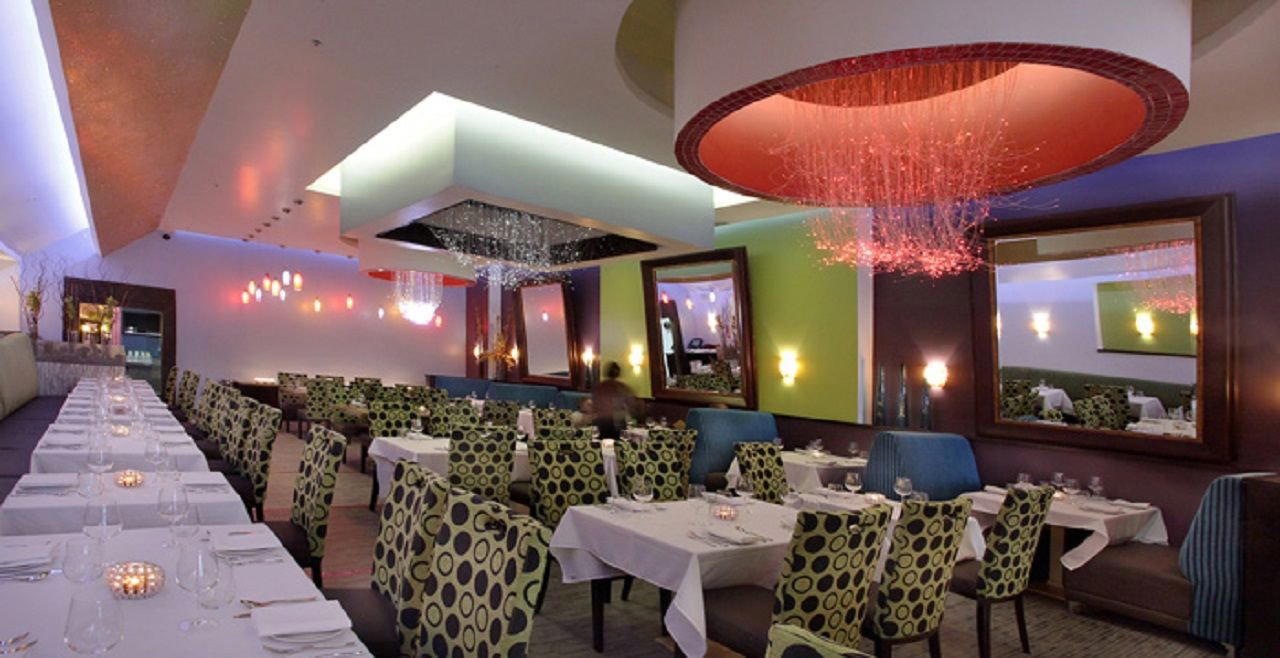
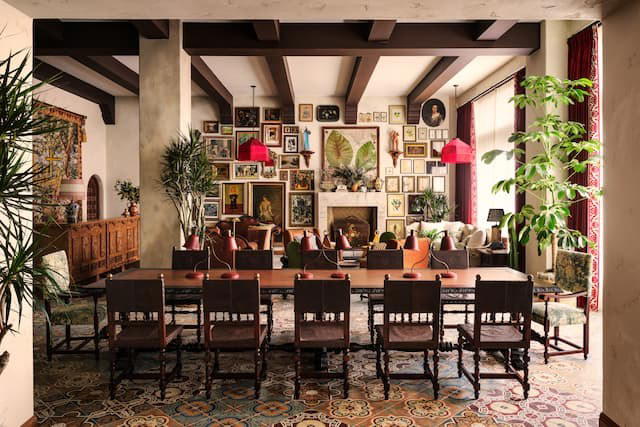
Dazzling decor likened to a Bollywood backdrop, creating a lively and eclectic atmosphere.