Asia Live
Our verdict
Asia Live on Stevens Creek Boulevard brings together Chinese, Southeast Asian, Indian, Korean, and Japanese food under one roof in Santa Clara. The format sits closer to a communal Asian food hall than a conventional restaurant, making it one of the Bay Area's more practical destinations for groups that can't agree on a single cuisine. It draws a steady local crowd from the surrounding tech corridor.

Pearl is the En Primeur Club membership app — saves, bookings, and concierge access live there. Same editors, same standards.
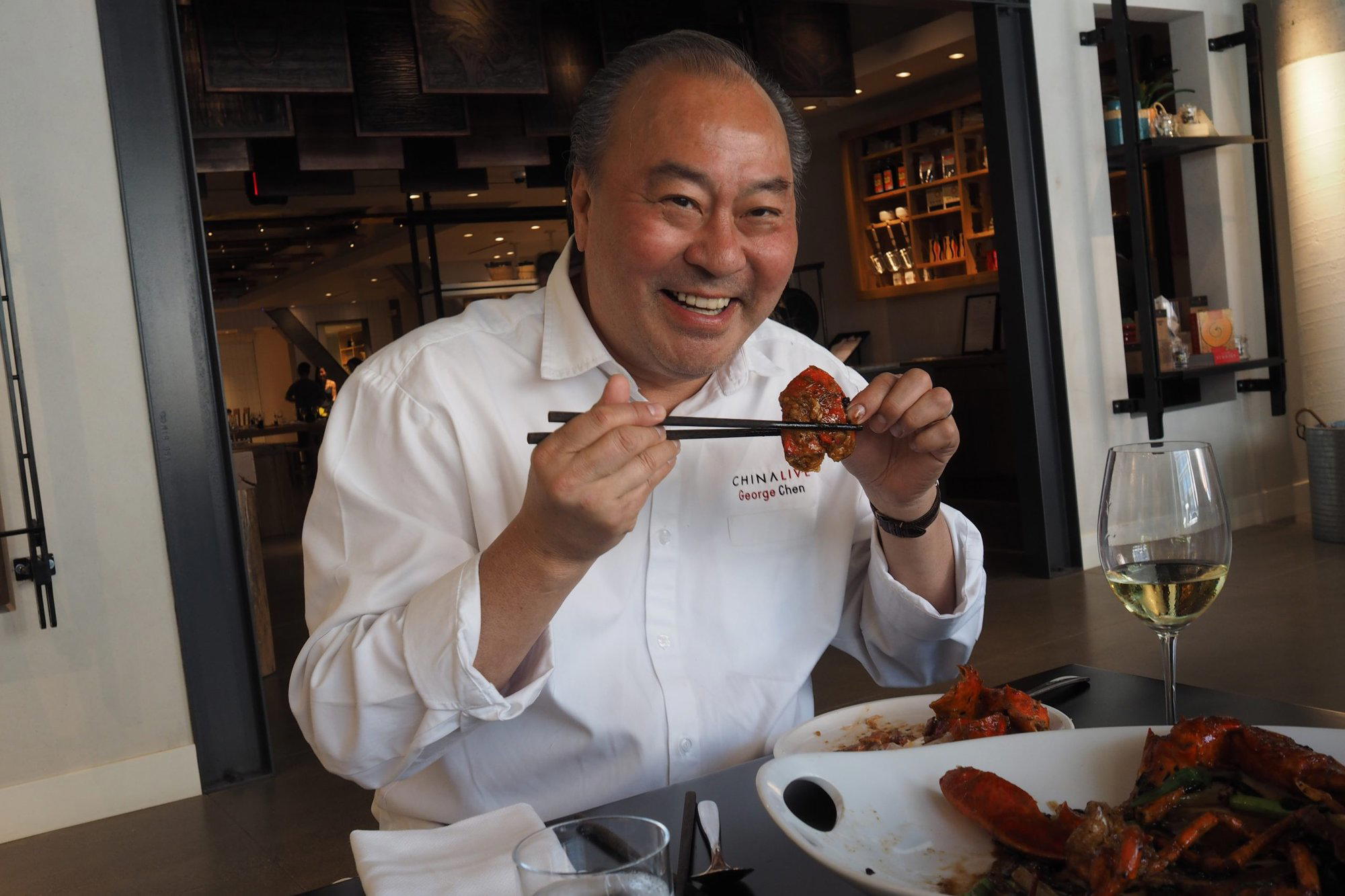
The menu
What to order
- Wok-Seared Black Pepper Beef
- House Special Beef Fried Rice
The Food Hall Format and Why It Works Here
Silicon Valley's dining geography has always been shaped by its workforce: dense, multinational, and largely indifferent to the kind of monolithic dining experience that suits a homogenous crowd. The result, across Santa Clara and its neighbours, is a cluster of restaurants and food complexes that operate more like culinary crossroads than conventional dining rooms. Asia Live, at 2855 Stevens Creek Boulevard, sits squarely in that tradition. It brings Chinese, Southeast Asian, Indian, Korean, and Japanese food together under a single roof, functioning less like a restaurant and more like a self-contained Asian food district compressed into one address.
The multi-cuisine food hall format is not native to the Bay Area, but it has found particularly fertile ground here. Communities with strong diasporic ties to East, South, and Southeast Asia have long maintained parallel restaurant ecosystems across the Peninsula. What Asia Live does is collapse those parallel tracks into a single visit, which is a logistical argument as much as a culinary one. For the technology campuses that line this stretch of Stevens Creek, that kind of range under one roof has obvious appeal.
The Communal Logic of Eating This Way
There is a social structure to eating across multiple cuisines simultaneously that resembles the izakaya model more than the fine-dining progression. The izakaya, in its Japanese form, is organised around the idea that food and drink arrive in no particular order, shared across the table, with the conversation as the constant rather than the course sequence. The multi-cuisine food hall works similarly: different members of a group follow different appetites, plates arrive from different stations, and the table becomes a kind of informal geography of the evening's choices.
This format redistributes authority. Nobody at the table has to compromise entirely. The Korean eater and the Chinese food purist and the person who wants Japanese do not have to negotiate a single menu. That democratic quality is underappreciated in discussions about food halls, which tend to fixate on the individual vendor quality rather than the social experience the format enables. At a venue covering five cuisine families, the shared table becomes the point.
Santa Clara's dining scene, documented more fully in our full Santa Clara restaurants guide, spans enough ground that focused single-cuisine specialists and broad-format complexes coexist without much friction. Chungdam (Korean) operates at the focused end, offering a specific regional cuisine with depth. Chicken Meets Rice stakes out a tighter lane still. Asia Live runs the opposite logic: breadth as the product, range as the reason to visit.
What Five Cuisines in One Room Actually Signals
Covering Chinese, Southeast Asian, Indian, Korean, and Japanese under one roof is not a casual editorial decision. Each of those traditions carries enormous internal variation. Chinese alone spans regional styles from Cantonese to Sichuan to Shanghainese. Southeast Asian encompasses Thai, Vietnamese, Filipino, Malaysian, and more. Indian cooking differs radically from North to South. Korean and Japanese each have their own specialist traditions that dedicated venues spend years refining.
A multi-cuisine complex operating at this scale necessarily makes choices about which expressions of each tradition to represent, and at what depth. The format trades specialist depth for accessible breadth, which is a legitimate trade-off rather than a failure. Venues like Le Bernardin in New York City, The French Laundry in Napa, or Atomix in New York City sit at the other end of the spectrum entirely, where a single cuisine tradition is refined to the point of abstraction over years of single-minded focus. The comparison is not meant as a hierarchy. Providence in Los Angeles, Lazy Bear in San Francisco, and Smyth in Chicago represent that same depth-over-breadth commitment in their respective cities. Asia Live is simply answering a different question: not what is the deepest expression of one tradition, but what happens when a community's full range of food cultures shares a table.
That answer has genuine value in a city where tech workers from across Asia, South Asia, and the broader Pacific Rim constitute a substantial portion of the dining public. The Stevens Creek corridor has more Asian restaurants per block than most American cities can claim per district, which means Asia Live is not filling a vacuum so much as providing a consolidated alternative to the dispersed specialist options nearby.
Santa Clara's restaurant scene splits along fairly clear lines. At one end, venues like Birk's and Athena Grill serve a more conventional American and Mediterranean template, aimed partly at the corporate dining circuit. At the other, the Asian-cuisine concentration on Stevens Creek and surrounding streets reflects the area's demographic reality more directly. AnQi Shaken and Stirred operates in a more polished cocktail-forward register within that broader Asian-influence category.
Asia Live sits outside all of those peer sets in a meaningful way. It is not competing with the corporate dining circuit, nor with the specialist ramen counters or Korean barbecue rooms that define the focused end of local Asian dining. Its competitive reference point is the large-format Asian food hall that has become a fixture in cities with high concentrations of Asian diaspora communities: think the food court dynamics of large Asian grocery complexes scaled up into a standalone dining destination.
Venues at the specialist end of the spectrum, from Addison in San Diego to Single Thread Farm in Healdsburg or Blue Hill at Stone Barns in Tarrytown, build their identity around controlled scarcity: limited seats, long booking windows, highly edited menus. Asia Live inverts that model. The proposition is openness rather than curation: come as you are, want what you want, eat across cuisines in the same sitting. Venues like Emeril's in New Orleans, The Inn at Little Washington, or Atelier Moessmer Norbert Niederkofler in Brunico represent the heavily chef-authored end of the spectrum; Asia Live makes no such authorial claim, and does not need to.
Planning a Visit
Asia Live is located at 2855 Stevens Creek Boulevard in Santa Clara, on a commercial strip that runs through the heart of the tech corridor. The Stevens Creek address puts it close to major office campuses and within reasonable distance of San José's downtown, making it accessible for both weekday lunch groups and weekend family visits. Given the multi-cuisine format, it suits groups with divergent preferences better than most single-concept restaurants on the same street.
Frequently asked questions
How do I find Asia Live?
Asia Live is located at 2855 Stevens Creek Blvd, Santa Clara, CA 95050, Santa Clara.
Is Asia Live in Santa Clara a practical option for a group that can't agree on a single cuisine?
It is one of the more direct solutions to that problem in the South Bay. With five distinct cuisine categories — Chinese, Southeast Asian, Indian, Korean, and Japanese — available at one address on Stevens Creek Boulevard, each member of a group can order from a different station without requiring a separate restaurant. That format is relatively uncommon at this scale in Santa Clara's commercial corridor.
What do people recommend at Asia Live?
Recommendations at Asia Live tend to follow individual cuisine stations rather than a single signature dish. Because the complex covers Chinese, Southeast Asian, Indian, Korean, and Japanese food under one roof at 2855 Stevens Creek Blvd, regulars typically anchor on one or two stations per visit based on their preference. Groups with mixed tastes often split across stations, which is effectively the point of the format.
Booking and Cost Snapshot
Comparable venues nearby, for context on price, style, and recognition.
| Venue | Cuisine | Price | Notes |
|---|---|---|---|
| Asia LiveThis venue (the venue you are viewing) | Modern Chinese with Sichuan Flavors | $20–30 | Not listed |
| Din Tai Fung | Taiwanese Soup Dumplings & Noodles | $20–30 | Westfield Valley Fair, Taiwanese Soup Dumplings & Noodles |
| Puesto Santa Clara | Modern Mexican Tacos | $30–50 | Dining |
| Cooking Papa | Authentic Hong Kong Roasted Duck & Dim Sum | $10–20 | Santa Clara, Authentic Hong Kong Roasted Duck & Dim Sum |
| La Pizza & La Pasta | Neapolitan Pizza & Artisanal Pasta | $20–30 | Westfield Valley Fair, Neapolitan Pizza & Artisanal Pasta |
| Pedro's Restaurant & Cantina | Classic Mexican | Not listed | Not listed |
Continue exploring
More in Santa Clara
Restaurants in Santa Clara
All restaurants in Santa Clara →
Bars in Santa Clara
All bars in Santa Clara →
Details
- Lively
- Modern
- Trendy
- Group Dining
- Casual Hangout
- Open Kitchen
- A La Carte
- Small Plates