On the São Martinho seafront, Sabor Da India brings Indian cuisine to a Funchal dining scene dominated by Atlantic and contemporary European cooking. The address on Rampa do Lido places it within easy reach of the Lido promenade, offering a distinct counterpoint to the modern cuisine formats that occupy the upper tiers of the island's restaurant offer.
Pearl is the En Primeur Club membership app — saves, bookings, and concierge access live there. Same editors, same standards.
- Address
- Rampa do Lido 8 Loja A, São Martinho, 9000-106 Funchal, Portugal
- Phone
- +351 291 765 346
- Directions
- Get directions
 Saves & bookings on Pearl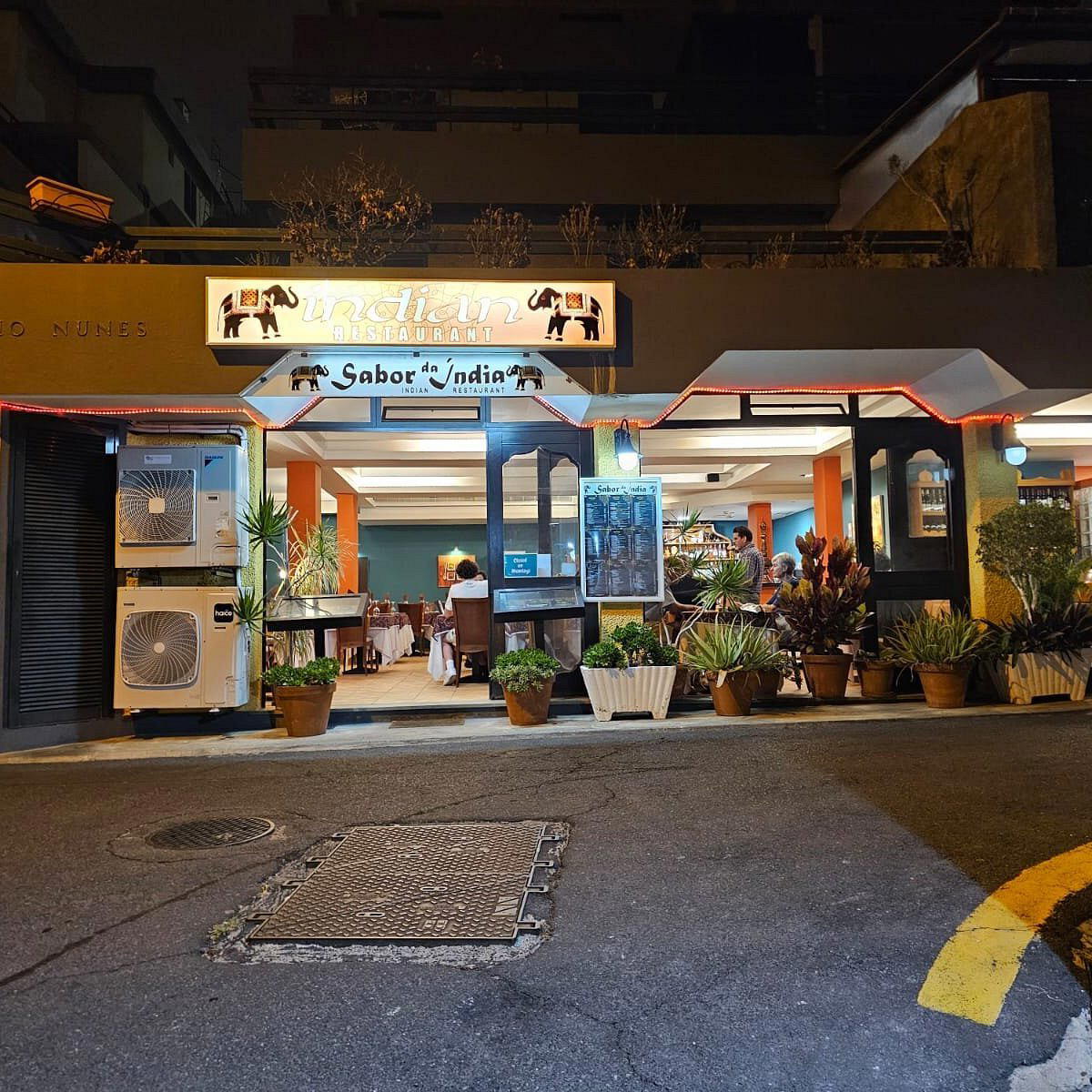
A Different Register on the Lido Strip
Funchal's restaurant scene has consolidated around two poles: the high-concept contemporary dining found at addresses like Il Gallo d'Oro and Desarma, and the Atlantic-facing Mediterranean offer typified by Avista. Indian cuisine sits outside both poles, which is precisely what makes Sabor Da India a notable point of difference on the western seafront. The address, Rampa do Lido 8 in São Martinho, puts the restaurant on the slope that connects the Lido promenade to the upper residential streets, a corridor that sees both hotel guests and Funchal residents moving between the coast and the city. That foot traffic, and the absence of Indian restaurants competing directly in this part of Madeira, shapes the character of the place before you step inside.
Spice-forward cooking is not native to Madeiran tradition, which runs toward espada com banana, lapas grelhadas, and carne de vinha d'alhos. Indian cuisine arrives here through the same global mobility that has brought it to coastal cities across southern Europe, but in Funchal it occupies genuinely thin competition. Where Lisbon has a well-established Indian restaurant cluster and Porto has a handful of long-running addresses, Madeira's Indian offer is sparse, which gives Sabor Da India a structural advantage that has little to do with fine dining credentials and everything to do with category scarcity.
The Sensory Environment Around Rampa do Lido
Approaching from the Lido promenade, the shift in register is immediate. The seafront strip is Atlantic in character: open air, salt-tinged, the sound of waves and the occasional ferry horn carrying from the marina. Rampa do Lido climbs sharply away from that coastal flatness, and the loja-format unit at number 8 sits at street level, with the kind of compact frontage common to neighbourhood restaurants across Funchal's western parishes. São Martinho is primarily a residential district rather than a tourist precinct, which tends to produce dining rooms calibrated for regular custom rather than passing trade.
Indian cooking is sensory in ways that read distinctly against this Atlantic backdrop. The aromatic signature of a kitchen working with cumin, coriander, cardamom, and fenugreek carries differently in a coastal city than it does in a metropolitan neighbourhood accustomed to the category. In Funchal, where the dominant olfactory register outdoors runs toward bougainvillea and salt air, the shift on entering an Indian restaurant is pronounced. That contrast is worth noting because it is part of what the experience offers: not just a meal in a different cuisine, but a genuine relocation of the senses within a city that rarely provides it.
For context on how spice-forward cooking sits within Portugal's broader dining moment, it is useful to look at what is happening on the mainland. The restaurants drawing critical attention, from Belcanto in Lisbon to Antiqvvm in Porto and The Yeatman in Vila Nova de Gaia, are focused almost entirely on Portuguese identity and product. The awards tier, which also includes Vila Joya in Albufeira, Ocean in Porches, Casa de Chá da Boa Nova in Leça da Palmeira, A Cozinha in Guimaraes, Bon Bon in Lagoa, and Al Sud in Lagos, reinforces that Portuguese product is the dominant editorial and critical framework. Indian cooking in Portugal operates entirely outside that framework, which means it is judged differently and serves a different function in the dining ecosystem.
What Indian Cuisine Fills in Funchal
The role that a restaurant like Sabor Da India plays in a city like Funchal is primarily about filling a gap that the dominant local cuisine does not address. Madeiran cooking is deeply satisfying within its own logic: preserved meats, grilled limpets, black scabbardfish, and the sweet density of bolo de mel. What it does not offer is heat in the chilli sense, layered spice complexity, or the textural contrasts of a cuisine built around dal, bread, rice, and sauce working together. For residents who have spent time in larger cities, or for visitors from Northern Europe and the UK (where Indian cooking has been a mainstream category for decades), the appetite for that register is real and relatively unsatisfied in Funchal.
The Avista Ásia fusion format at the marina end of the city points at Asian flavour profiles from a different angle, operating in the €€€ bracket with a contemporary technique overlay. The restaurant sits in a different tier and with a different intent: the category is Indian rather than pan-Asian, and the address and format suggest neighbourhood accessibility over destination dining. That positioning makes it a different decision for the visitor, not necessarily a lesser one.
For those moving between Funchal's various dining registers, the full Funchal restaurants guide maps the city's offer from fine dining through to neighbourhood-level cooking. The contemporary tier, which also includes Audax, operates with tasting menus and significant price points. The restaurant serves a reader who wants something outside that format on a given evening.
It is also worth placing Funchal's Indian offer against the international fine dining context. At the level of Le Bernardin in New York City or Atomix, the conversation is about culinary reference points and technical precision. At A Ver Tavira in the Algarve, the emphasis is on local seafood in a regional idiom. The restaurant is making neither of those arguments. It is making the simpler and often more useful argument that some evenings call for a different kind of cooking entirely, and that in Funchal, the category is genuinely difficult to find.
Planning a Visit
The restaurant is located at Rampa do Lido 8 Loja A, São Martinho, Funchal, within walking distance of the Lido complex and the hotel strip that runs along the western seafront. São Martinho sits to the west of the city centre, and the Lido area is accessible by the seafront promenade from the marina or by taxi and local bus from central Funchal.
Peers Worth Knowing
Comparable venues nearby, for context on price, style, and recognition.
| Venue | Cuisine | Price | Notes |
|---|---|---|---|
| Sabor Da IndiaThis venue — the venue you are viewing | Authentic Indian | $$ | Not listed |
| Konsai | California-Style Fusion Sushi | $$ | Avenida Zarco |
| Window to Asia | Asian Fusion | $$ | São Martinho |
| Sakura Sushi | Japanese Sushi | $$ | Funchal |
| Pizzaria Lume | Neapolitan Pizza | $$ | São Martinho |
| KIRITA Japanese noodle laboratory | Japanese Ramen & Udon Noodle Bar | $$ | São Martinho |
Continue exploring
More in Funchal
Restaurants in Funchal
Browse all →
Bars in Funchal
Browse all →

Hotels in Funchal
Browse all →
At a Glance
- Cozy
- Lively
- Family
- Group Dining
- Date Night
- Standalone
Current opening hours
- Monday
- Closed
- Tuesday
- 12–3 PM, 6–11 PM
- Wednesday
- 12–3 PM, 6–11 PM
- Thursday
- 12–3 PM, 6–11 PM
- Friday
- 12–3 PM, 6–11 PM
- Saturday
- 12–3 PM, 6–11 PM
- Sunday
- 12–3 PM, 6–11 PM
Hours can change for holidays and private events. Last verified .
Colourful and warm interior with typical Indian décor and a lively atmosphere.