In a city where fine dining tilts toward Atlantic fish and European technique, KIRITA Japanese noodle laboratory occupies a different register entirely. Located in São Martinho on the western edge of Funchal, it brings a specialist noodle format to an island whose restaurant scene has historically had little room for it. For visitors tracking ingredient-led cooking across Portugal, it warrants attention.
Pearl is the En Primeur Club membership app — saves, bookings, and concierge access live there. Same editors, same standards.
- Address
- R. dos Piornais 15 Kirita, São Martinho, 9000-679 Funchal, Portugal
- Website
- kirita.eu
- Directions
- Get directions
 Saves & bookings on Pearl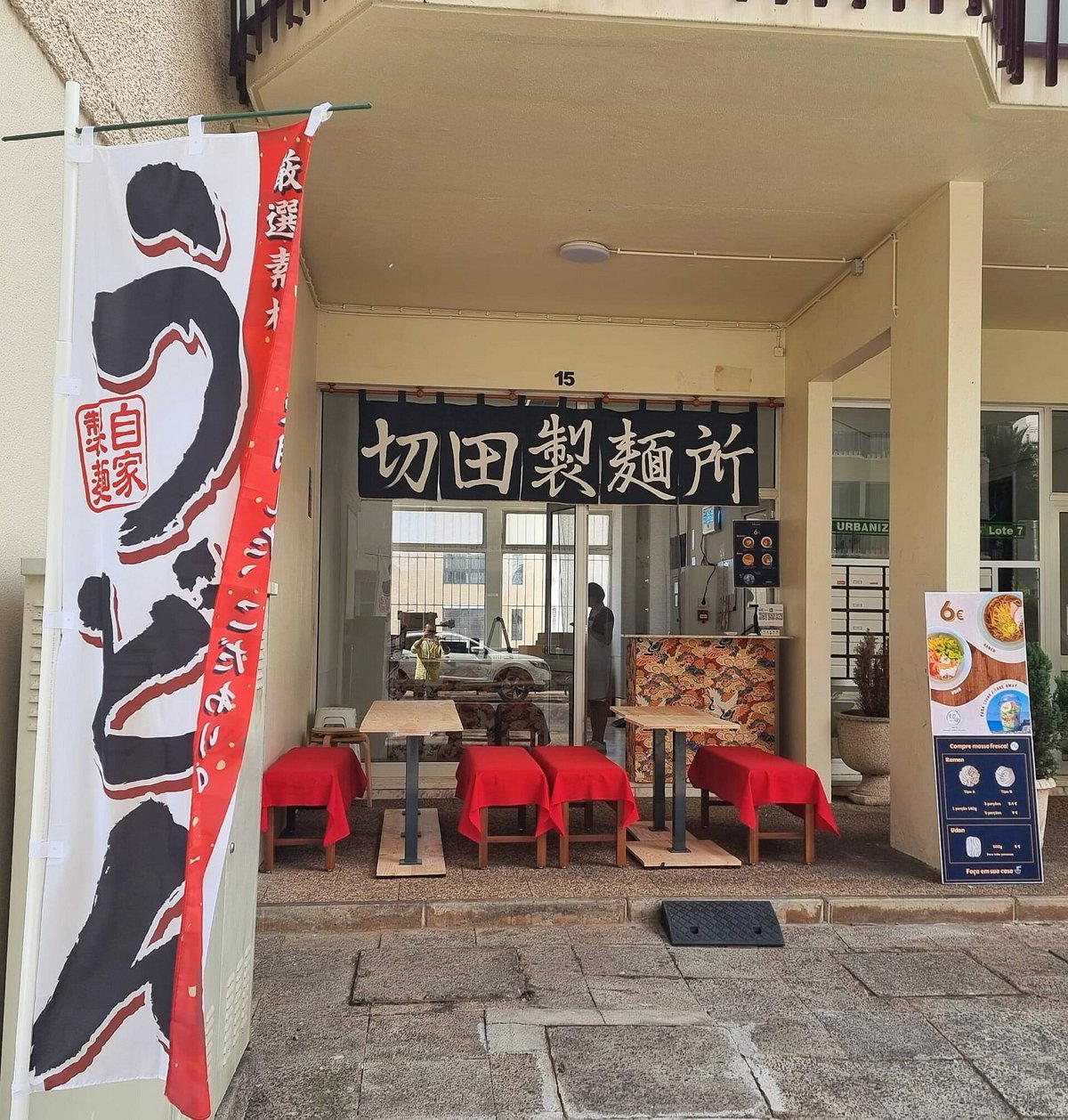
A Different Register in Funchal's Dining Scene
Funchal's restaurant scene is structured around a recognizable logic: Atlantic-caught fish, Portuguese technique, and a handful of fine-dining rooms that compete on Michelin credibility. Il Gallo d'Oro and Desarma operate in the upper bracket of that hierarchy, while Avista and Avista Ásia occupy a mid-range position with Mediterranean and fusion orientations respectively. KIRITA Japanese noodle laboratory is a restaurant in Funchal, Portugal, serving Japanese Ramen & Udon Noodle Bar dishes. It is a specialist format in a city that has not historically supported specialist formats, and that positioning alone makes it worth examining on its own terms.
The address places it in São Martinho, a residential neighbourhood on the western edge of Funchal that sees far less tourist foot traffic than the waterfront or the old town. Arriving here is not an accident. Visitors who find themselves at R. dos Piornais 15 have made a deliberate choice to move away from the obvious dining circuit, which tends to self-select for a particular kind of guest: someone already familiar enough with Japanese noodle culture to seek out a specialist operation rather than settle for a generalist Asian menu.
The Case for Noodle Specialization on an Atlantic Island
Across Europe, Japanese noodle specialists have followed a pattern established by ramen culture in major cities: a small-format, focused menu, sourcing decisions made at the bowl level rather than the dish level, and a kitchen philosophy that treats broth as its primary technical challenge. That model has taken root in Lisbon and Porto in recent years, but Madeira has lagged, partly because of supply chain distance and partly because the island's food identity is so thoroughly defined by its own produce, espada (scabbardfish), lapas (limpets), Madeira wine, and the dense, fermented flavours of traditional preservation.
Against that backdrop, a Japanese noodle laboratory format raises an immediate question about sourcing: where do the core ingredients come from, and how does island geography shape the product? Broth quality in ramen and related noodle formats depends on specific proteins, pork bones, chicken carcasses, dried fish, kombu, whose availability and freshness vary significantly depending on supply infrastructure. On an island like Madeira, a kitchen committed to ingredient integrity has to solve logistical problems that a mainland restaurant would not face.
Madeira does, however, offer one significant advantage: its own Atlantic fish culture. An operation willing to think laterally about broth bases and toppings can draw on local espada, chicharro (Atlantic horse mackerel), and other species that don't appear on the standard Japanese noodle template but are plausible ingredient sources for a kitchen willing to work between traditions. Whether KIRITA takes that direction or stays closer to a conventional Japanese sourcing model is the kind of detail that separates a genuinely place-specific operation from a concept that could exist anywhere.
Where KIRITA Sits in the Broader Portuguese Restaurant Picture
Portugal's most discussed Japanese-inflected cooking currently happens in Lisbon and the Algarve. Belcanto in Lisbon operates at the fine-dining end of Portuguese gastronomy, while the Algarve's two-Michelin-star rooms at Vila Joya, Ocean, and Bon Bon draw on European fine-dining traditions with varying degrees of Asian influence. In Porto, Antiqvvm and A Cozinha in Guimarães represent the northern Portuguese contemporary register. None of these are noodle specialists.
The closest international reference points for KIRITA's format are not Portuguese at all. The discipline of a focused noodle counter has more in common with what Atomix in New York represents for Korean fine dining, a specialist format imported and refined in a city without deep roots in that tradition, than with the broader arc of Portuguese gastronomy. That is not a criticism. Specialist imports that do the work seriously tend to fill genuine gaps rather than compete directly with local identity. Le Bernardin in New York built its reputation on French technique applied to fish, in a city with many its own seafood culture. The format and the sourcing discipline mattered more than the geography of origin.
The São Martinho Setting
São Martinho is not where Funchal's dining scene performs for tourists. The neighbourhood has its own internal logic: residential, quieter than the marina, and not oriented around the cruise-ship economy that shapes so much of what gets served in the centre. For a noodle laboratory format, that setting makes more sense than a waterfront location would. The kitchen is not competing for passing foot traffic, and guests come for the format rather than by chance.
That self-selecting dynamic affects the entire experience. The Audax in central Funchal operates in a different social register, drawing from a hotel-anchored guest base. KIRITA, in São Martinho, is working with a local and intentional crowd, which gives the kitchen a different kind of mandate. Cooking for guests who understand what they ordered is a different pressure than cooking for guests who are discovering the format for the first time.
Planning Your Visit
KIRITA is located at R. dos Piornais 15 in the São Martinho district of Funchal, west of the city centre. The neighbourhood is accessible by car or taxi from the waterfront in under ten minutes; public transport connections exist but are less direct. Reservations are recommended. Check the opening hours before you go, especially on Fridays and Saturdays, when the restaurant serves both lunch and dinner.
Casa de Chá da Boa Nova in Leça da Palmeira or the Algarve's A Ver Tavira and Al Sud, all of which represent different points on the Portuguese dining spectrum from a noodle specialist in Funchal. The contrast is part of the value.
Comparison Snapshot
Comparable venues nearby, for context on price, style, and recognition.
| Venue | Cuisine | Price | Awards | Notes |
|---|---|---|---|---|
| KIRITA Japanese noodle laboratoryThis venue — the venue you are viewing | Japanese Ramen & Udon Noodle Bar | $$ | Not listed | Not listed |
| Konsai | California-Style Fusion Sushi | $$ | Not listed | Avenida Zarco |
| Sabor Da India | Authentic Indian | $$ | Not listed | São Martinho |
| Pizzaria Lume | Neapolitan Pizza | $$ | Not listed | São Martinho |
| O. Giro | Portuguese Churros & Paninis | $$ | Not listed | Sé |
| Oxalis | Modern Portuguese Fine Dining | $$$ | Michelin Plate | Palheiro |
Continue exploring
More in Funchal
Restaurants in Funchal
Browse all →
Bars in Funchal
Browse all →
Hotels in Funchal
Browse all →
At a Glance
- Casual
- Modern
- Cozy
- Casual Hangout
- Sake Program
- Local Sourcing
Current opening hours
- Monday
- Closed
- Tuesday
- 12–7 PM
- Wednesday
- 12–7 PM
- Thursday
- 12–7 PM
- Friday
- 12–4 PM, 7–9 PM
- Saturday
- 12–4 PM, 7–9 PM
- Sunday
- Closed
Hours can change for holidays and private events. Last verified .
Casual cafe-style atmosphere with a focus on simple, natural flavors.