Tabelog 100
Our verdict
Sabo Musashino Bunko places Kichijoji’s kissaten culture in a practical, everyday register: coffee shop, curry house, literary room and neighbourhood meeting point rather than destination dining theatre. Its Tabelog 100 Kissaten selections in 2021 and 2022 place it among Japan’s recognised traditional coffee-shop addresses, with curry and café staples at the centre of the appeal.

Pearl is the En Primeur Club membership app — saves, bookings, and concierge access live there. Same editors, same standards.
The menu
What to order
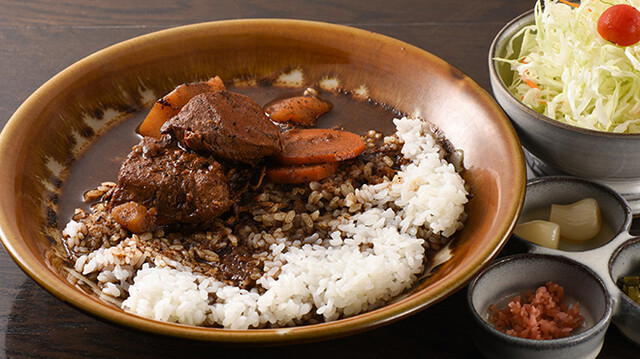
- Curry rice
- Lemon cream soda
- Homemade lemon cake
- Curry set with salad and coffee
In Tokyo, department-store traffic gives way in places to smaller streets, and the pace suits the kissaten: rooms built for coffee, conversation, reading and curry rather than spectacle. Sabo Musashino Bunko belongs to that older Tokyo grammar. Its appeal is not chef-counter drama or tasting-menu choreography, but the durable Japanese coffee-shop format: a café that can also be a curry address, a quiet stop and a neighbourhood-style room patient enough for a long sit.
Tokyo is useful terrain for this kind of place. The city balances urban momentum with pockets of everyday comfort: errands, browsing and casual dining can sit close together. That gives the local food scene a rhythm different from the city’s more overtly premium dining circuits, where high-end meals often announce themselves through scarcity, counter seats and price. In Tokyo, a serious address can be modest, casual and still carry cultural weight.
Kissaten culture, curry and the Tokyo tempo
The kissaten is one of Japan’s more instructive dining forms because it resists a clean Western category. Not simply a café, it has historically functioned as coffee room, breakfast stop, date setting, reading room and light-meal counter, often with more ritual than its price suggests. Sabo Musashino Bunko’s listing as a Kissa (Japanese coffee shop) and curry restaurant points to that hybrid identity: coffee brings the room into focus, while curry gives the visit meal-time gravity.
That matters in Tokyo, where curry has its own parallel geography. There are other named casual addresses within the city’s broader dining orbit, including Mamezou and LITTLE SPICE. Sabo Musashino Bunko sits in another lane: not only a curry reference point, but a kissaten where curry belongs to the daily repertoire. In a specialist curry shop, the spice program may be the story; in a kissaten, curry is part of a broader social contract, a plate that lets coffee, reading and conversation share the same afternoon.
The room’s credibility is measurable. Tabelog selected it for the Kissaten “Tabelog 100” in 2022, a useful trust signal in a category visitors can struggle to parse from outside. Tokyo has thousands of cafés, but relatively few carry recognition within the kissaten tradition. That places the venue closer to Japan’s preserved coffee-shop culture than to the city’s newer dessert-café economy, though Tokyo also has that side, represented in the wider field by places such as Liberte Patisserie Boulangerie Tokyo honten・kichijoji.
Why this room reads differently from Tokyo's newer café culture
Tokyo’s current café scene often splits into visual concepts, bakery-led formats and quiet specialist rooms. Some newer cafés speak to the city’s appetite for designed environments, while patisserie-boulangerie hybrids move through pastry, bread and take-away traffic. The kissaten tradition works on another time scale, rewarding repetition, low-volume rituals and menus that do not need constant reinvention.
Sabo Musashino Bunko’s appeal deepens that reading. Rather than relying on novelty or a chef-led narrative, it carries the atmosphere of an established Japanese coffee-shop format. That continuity matters as cultural memory rather than nostalgia: the kissaten tradition survives because certain rooms keep the same promises over time. Coffee and curry are not novelty here; they are the framework through which the room makes sense.
The format is more flexible than many visitors expect. A kissaten can be a coffee stop, a light-meal address and a place to pause between errands, without needing the formality of a destination restaurant. That puts it far from the fragile, silence-first café stereotype and closer to democratic Tokyo dining: accessible in spirit, shaped by habits rather than hype. In a city where attention often tilts toward hard reservations, omakase counters and chef-driven menus, everyday institutions can be just as revealing.
Comparison helps. Hikiniku to Kome Kichijouji channels a different side of the city’s everyday dining appetite. Chinese Sai Yunron sits in another lane while sharing the broader Tokyo dining map. Sabo Musashino Bunko occupies the elastic middle ground: a café-meal address whose significance comes from category memory, not luxury cues. For travellers building a Tokyo food itinerary, it is a counterweight to reservation-heavy meals and a way to read the city through ordinary rituals.
How to place it within a Tokyo itinerary
Use Sabo Musashino Bunko as a Tokyo anchor rather than a standalone trophy stop. Pair it with an unhurried stretch of the city, then let the meal sit at the centre of a slower half-day. That suits the venue’s cultural role. Kissaten are not built for box-ticking; they work when the schedule lets coffee and curry join the city’s rhythm.
For a wider Tokyo dining map, contrast this room with sharper specialist categories across the city: focused counter formats, casual rooms and other everyday dining rooms. Curry obsessives can extend the thread through other unnamed Japanese casual-dining formats, while café culture can be read against the country’s newer bakery, pastry and coffee rooms. The broader field is useful precisely because it shows how modest venues and specialist rooms can sit side by side.
International comparisons clarify the point rather than flatten it. Japanese casual formats travel abroad in many forms, but the Tokyo kissaten remains rooted in local tempo: lingering, accessible and quietly structured around repeat use. For broader planning, EP Club’s city coverage can help place this kind of room among Tokyo restaurants, hotels, bars, wineries and experiences without reducing it to a luxury checklist.
The editorial case is clear: Sabo Musashino Bunko is valuable because it preserves a Tokyo dining category easily overlooked when attention goes to luxury counters and new openings. Its Tabelog Kissaten 100 recognition, Tokyo setting and coffee-and-curry format make it a compact lesson in how the city eats between errands, conversations and long afternoons.
Frequently asked questions
What time does Sabo Musashino Bunko open and close?
Check current opening hours directly with Sabo Musashino Bunko before visiting.
What's the price range at Sabo Musashino Bunko?
Pricing at Sabo Musashino Bunko is listed as JPY 1,000 - JPY 1,999 JPY 1,000 - JPY 1,999.
Where do I go for Sabo Musashino Bunko?
Tokyo.
What is Sabo Musashino Bunko known for?
Sabo Musashino Bunko is known for being a Tabelog 100 Kissaten 2022 selection in Tokyo. The listed categories are Kissa (Japanese coffee shop) and Curry, with prices in the JPY 1,000–JPY 1,999 range.
What It’s Closest To
Comparable venues by price and recognition.
| Venue | Cuisine | Price | Awards | Notes |
|---|---|---|---|---|
| Sabo Musashino BunkoThis venue (the venue you are viewing) | Traditional Japanese curry & coffee kissaten | $10–20 | Tabelog 100 | Not listed |
| たんたん亭 本店 | Classic Tokyo Shina Soba & Wonton Ramen | $10–20 | Tabelog 100 #84 | Hamadayama |
| Yamacho (黒うどん 山長) | Black Udon (Kuro Udon) | $10–20 | Not listed | Harajuku |
| Iruka Tokyo | Modern ramen shop | $20–30 | Tabelog 100 #71 | Roppongi |
| Nogata Gyoza Honten | Gyoza & casual Japanese-Chinese izakaya | $20–30 | Tabelog 100 #45 | Nakano |
| Chuka Soba Benten | Traditional Japanese Ramen & Tsukemen | Not listed | Tabelog 100 #61 | Nerima |
Recognition history
Dated appearances from independent guides and award organizations, with the underlying list record or original source where available.
Tabelog 100
Tabelog · Tabelog 100 - Kissaten - 2026
Full recognition history (2 entries)
Tabelog 100 #13 · No. 13
Tabelog · Tabelog 100 - Kissaten - 2022