Rules




Michelin Plate · World's 50 Best #47 · The Good Food Guide GFG Good
Our verdict
London's oldest restaurant, operating continuously since 1798, Rules occupies a set of rooms in Covent Garden that have changed less than the city around them. The menu anchors itself in British tradition: game from the restaurant's own estate, steak and kidney suet pudding, and nursery-end desserts.

Pearl is the En Primeur Club membership app — saves, bookings, and concierge access live there. Same editors, same standards.
- Address
- 35 Maiden Ln, London WC2E 7LB, United Kingdom
- Phone
- +44 20 7836 5314
- Hours
- Mon–Thu 12–10 PMFri–Sat 12–11 PMSun 12–10 PM
- Website
- rules.co.uk
- Directions
- Get directions
- Booking
- Book on SevenRooms
The menu
What to order
- Steak and Kidney Suet Pudding
- Welsh Rarebit
- Venison
- Rib of Beef
- Fish Pie
London's Oldest Restaurant and What It Still Gets Right
Rules opened in 1798, making it London's oldest restaurant in continuous operation. That is not a marketing claim; it is a dateable fact, placing the Covent Garden dining room squarely in the reign of George III and well ahead of the Victorian institutions that most people associate with old London. Over two centuries later, the address at 35 Maiden Lane, WC2E 7LB remains, the rooms remain, and so does the fundamental argument the kitchen has always made: that British cooking, at its most serious, is worth preserving without apology.
That argument puts Rules in a peculiar position within London's dining ecosystem. The city's prestige tier has, over the past two decades, largely coalesced around modern interpretations of British produce: CORE by Clare Smyth at the haute end, St John in the offal-forward reformist camp, and a cluster of technically driven rooms like The Ledbury and Sketch, The Lecture Room and Library that barely reference tradition at all. Rules sits apart from all of them, not because it has failed to modernise, but because it has decided, quite deliberately, not to. The Michelin Plate recognition it held in both 2024 and 2025, alongside an Opinionated About Dining Casual in Europe recommendation from 2023, confirms that this is a position earned on merit, not nostalgia alone.
The Sequence of a Meal at Rules
Starting Upstairs
The meal at Rules conventionally begins before you reach the dining room. The cocktail bar upstairs operates as a proper pre-dinner destination, not a holding pen. Ordering a Black Velvet here carries a small history lesson with it: the combination of Champagne and Guinness served in a silver tankard was reportedly devised to mark the death of Prince Albert in 1861, the Guinness providing the drink's sombre colouring. Whether or not you find that anecdote persuasive, the drink itself functions as a good frame for what follows: something traditional, slightly theatrical, served with care.
The Dining Rooms
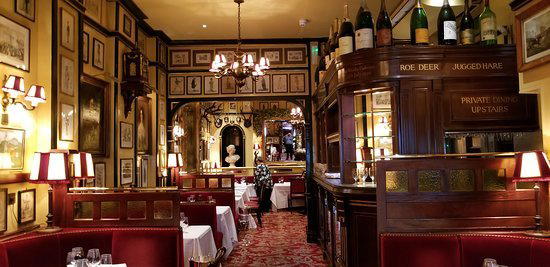
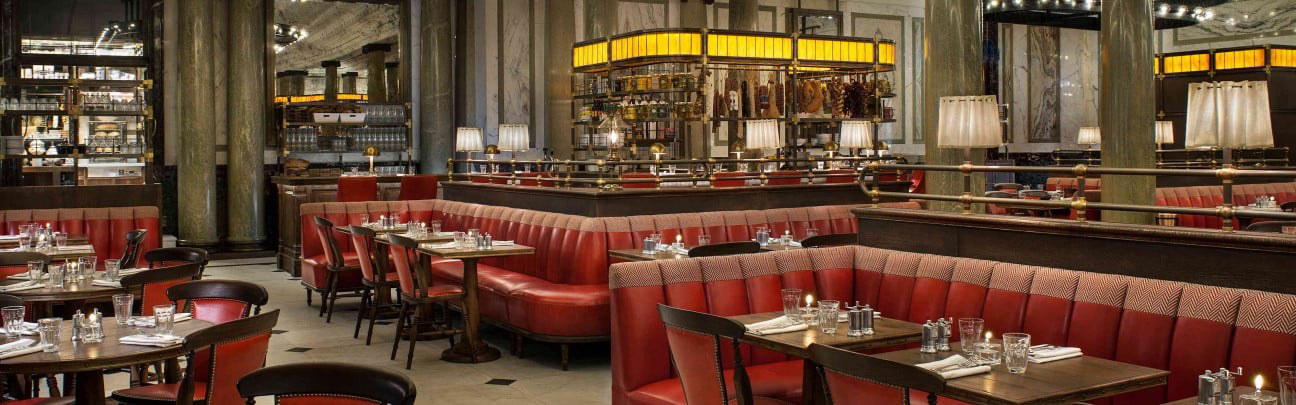
The ground-floor rooms that open off the staircase accumulate their atmosphere from the walls outward. Antique cartoons, drawings, oil paintings, classical figurines, and burnished wood panelling fill the space in the way that only genuine accumulation over generations produces. This is the opposite of designed heritage. Rooms decorated to simulate age tend to feel provisional; these feel settled. The effect is less museum than old London club dining room, which is precisely what Rules once was adjacent to, geographically and socially.
Opening Courses
Menu at Rules is, as its own description puts it, unashamedly traditional, and the first courses operate accordingly. Stuffed mussels with garlic and herb butter, topped with breadcrumbs, represent the kitchen in its most direct mode. More interesting, perhaps, are the salads that acknowledge the present without abandoning the kitchen's register: smoked ham with pomegranate and blood orange, or beetroot with apple, walnut, and blue cheese. These are not radical departures, but they signal that the kitchen reads its room and its moment with more alertness than the room's fixed decor might imply.
The Main Event: Game and Heritage Dishes
Serious argument for Rules sits in its main courses, and in particular in its game programme. The restaurant sources game from its own estate, which means the supply chain here is shorter and more controlled than at most London addresses. During the game season, the menu carries grouse, partridge, and other birds depending on the year and the bag. A red-legged partridge appearing on the September menu is typical of what the kitchen does well: not a fixed, laminated product, but a response to what the season and the estate provide.
Outside of game, the steak and kidney suet pudding is the dish most associated with Rules and with good reason. The version served here arrives freighted with tender beef and intensely flavoured offal, with an oyster embedded in the filling and a silver gravy boat on the side. Dauphinoise and creamed spinach complete the plate. This is heritage cooking treated as if it still matters, which, at Rules, it does. Elsewhere in the main courses, a rabbit and smoked bacon cassoulet with black pudding extends the kitchen's commitment to British produce and slow-cooked technique. Fish runs to a salmon escalope with Champagne chive butter, which gives the menu some range without diluting its focus.
For a contrasting point of reference, the technically ambitious approach to British culinary history being pursued at The Fat Duck in Bray or the produce-led, ingredient-forward rooms like L'Enclume in Cartmel and Moor Hall in Aughton represent the direction much serious British cooking has taken. Rules makes the opposite choice and does so without defensiveness.
Puddings and the Close of the Meal
Desserts at Rules operate from what the awards notes call the nursery end of the canon: treacle tart, orchard fruit crumbles, the kind of puddings that predate the European influence on British restaurant menus by several decades. Alongside these, a flourless blood-orange and chocolate cake demonstrates that the kitchen is not simply frozen in time. The wine list opens with a Rhône red and a dry white Bordeaux available by the glass, which signals a list oriented toward classical European drinking rather than the natural wine programmes that now dominate at many London addresses.
Service runs from arrival to departure with the formality that the room demands and the warmth that long-established restaurants sometimes lose.
Rules in the Context of London Dining
Most of London's expensive dining now occupies the ££££ bracket, where Restaurant Gordon Ramsay and its peers compete on tasting menus, wine pairings, and modernist technique. Rules prices at £££, which in Covent Garden, for this level of produce and room, represents a different kind of value proposition. The question is not whether Rules is keeping pace with the city's more ambitious kitchens; it is whether the tradition it represents has a place in a city where that tradition is increasingly niche.
For other reference points in British dining beyond London, Gidleigh Park in Chagford, Hand and Flowers in Marlow, and Le Manoir aux Quat' Saisons in Great Milton each approach British produce and formal dining from different angles. Internationally, the disciplined classical tradition that Rules embodies finds different expression at rooms like Le Bernardin in New York City and Atomix in New York City, both of which demonstrate that commitment to a defined culinary identity, rather than trend-chasing, remains a coherent strategy.
For a fuller picture of what London's dining, drinking, and hotel scene offers, see our full London restaurants guide, our full London hotels guide, our full London bars guide, our full London wineries guide, and our full London experiences guide.
Planning Your Visit
Address: 35 Maiden Lane, London WC2E 7LB. Hours: Tuesday to Thursday 12pm–10pm, Friday and Saturday 12pm–11pm, Sunday 12pm–10pm, closed Monday. Budget: £££, mid-range for the West End at this standard of produce and room. Reservations: Advisable, particularly for weekend evenings and any visit during game season (August through January). Dress: Smart casual is the practical minimum; the room rewards dressing for dinner. Chef: David Stafford leads the kitchen.
Frequently asked questions
What days is Rules closed?
Hours at Rules: Hours: Monday Closed Tuesday 12–10 pm Wednesday 12–10 pm Thursday 12–10 pm Friday 12–11 pm Saturday 12–11 pm Sunday 12–10 pm.
Peers Worth Knowing
| Venue | Cuisine | Price | Awards | Notes |
|---|---|---|---|---|
| RulesThis venue — the venue you are viewing | Traditional British Fine Dining | $100–150 | Michelin Plate · World's 50 Best #47 | Not listed |
| The Ledbury | Modern British Fine Dining | $300–500 | 3 Michelin Stars · World's 50 Best #42 | Modern European, Modern Cuisine |
| Sketch, The Lecture Room and Library | Modern French Fine Dining | $200–300 | 3 Michelin Stars · World's 50 Best #18 | Modern French |
| CORE by Clare Smyth | Modern British Fine Dining | $150–200 | 3 Michelin Stars · World's 50 Best #97 | Modern British |
| Restaurant Gordon Ramsay | French Fine Dining | $200–300 | 3 Michelin Stars · World's 50 Best #13 | Contemporary European, French |
| Dinner by Heston Blumenthal | Historic British Fine Dining | $200–300 | 2 Michelin Stars · World's 50 Best #45 | Modern British, Traditional British |
Recognition history
Dated appearances from independent guides and award organizations, with the underlying list record or original source where available.
Michelin Plate
Michelin
World's 50 Best Bars #47
World's 50 Best
The Good Food Guide GFG Good
The Good Food Guide
Opinionated About Dining Casual in Europe Recommended
Opinionated About Dining
Full recognition history (6 entries)
Michelin Plate
Michelin
Michelin Plate
Michelin
Continue exploring
More in London
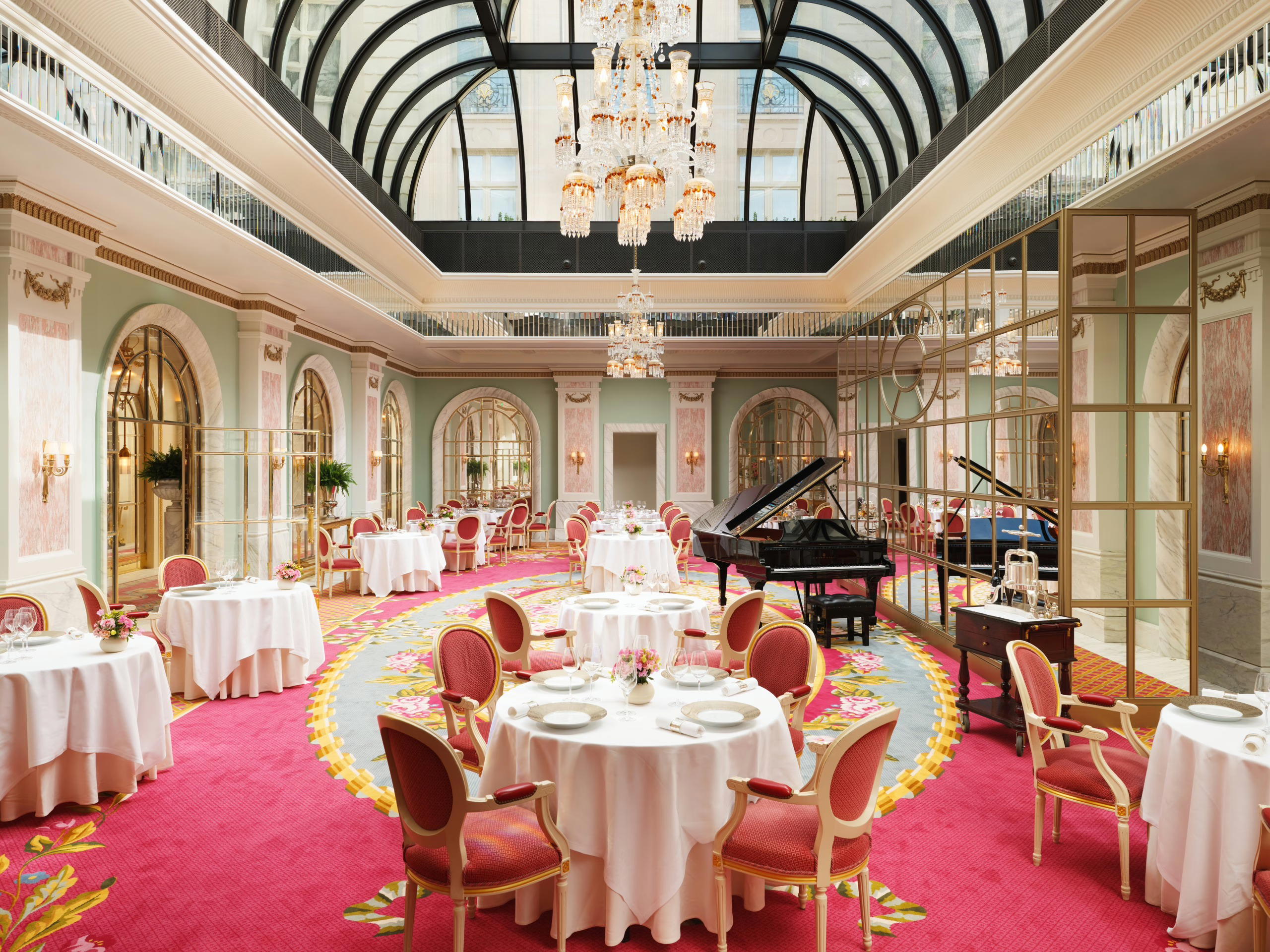
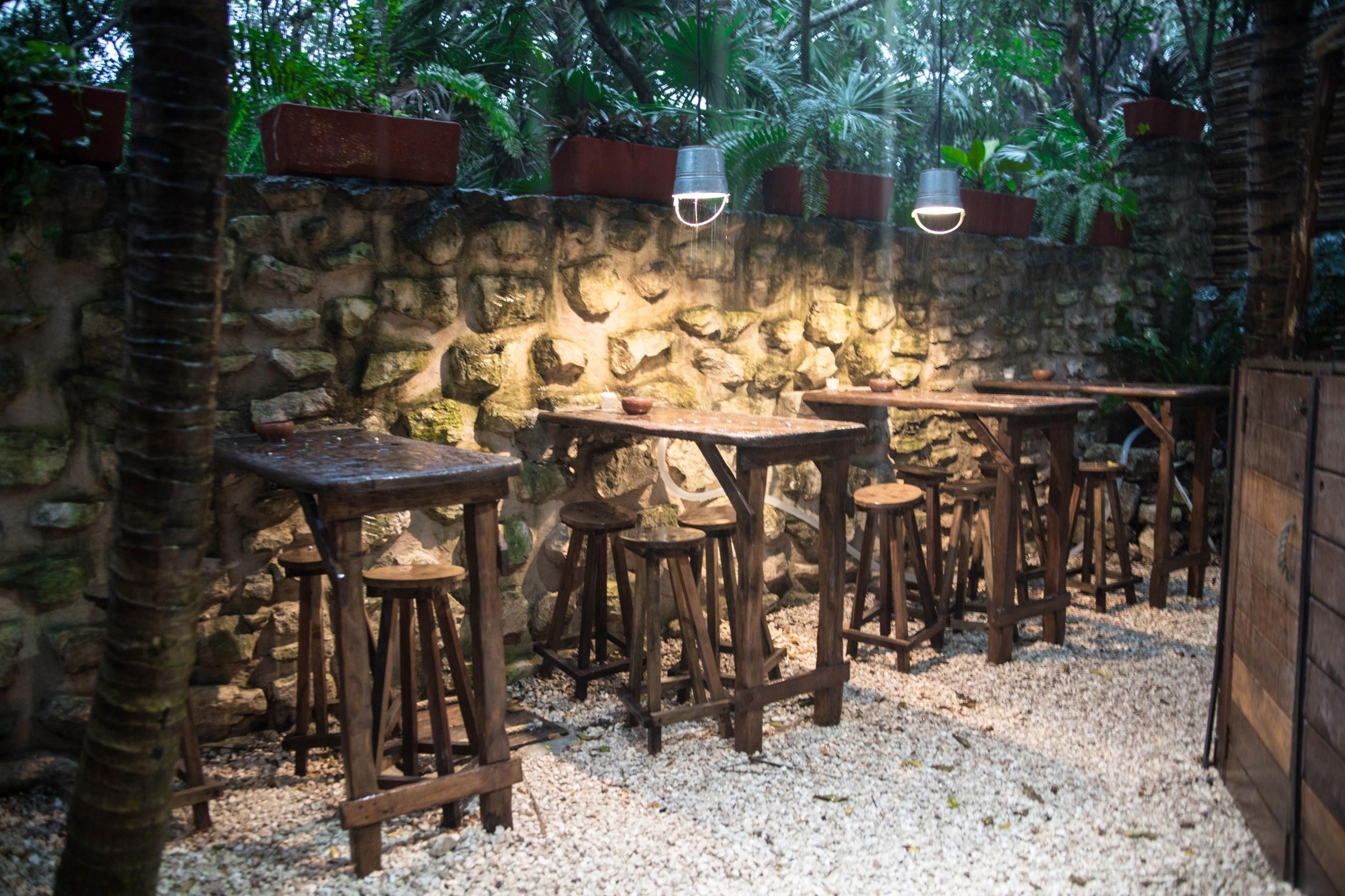
Restaurants in London
Browse all →
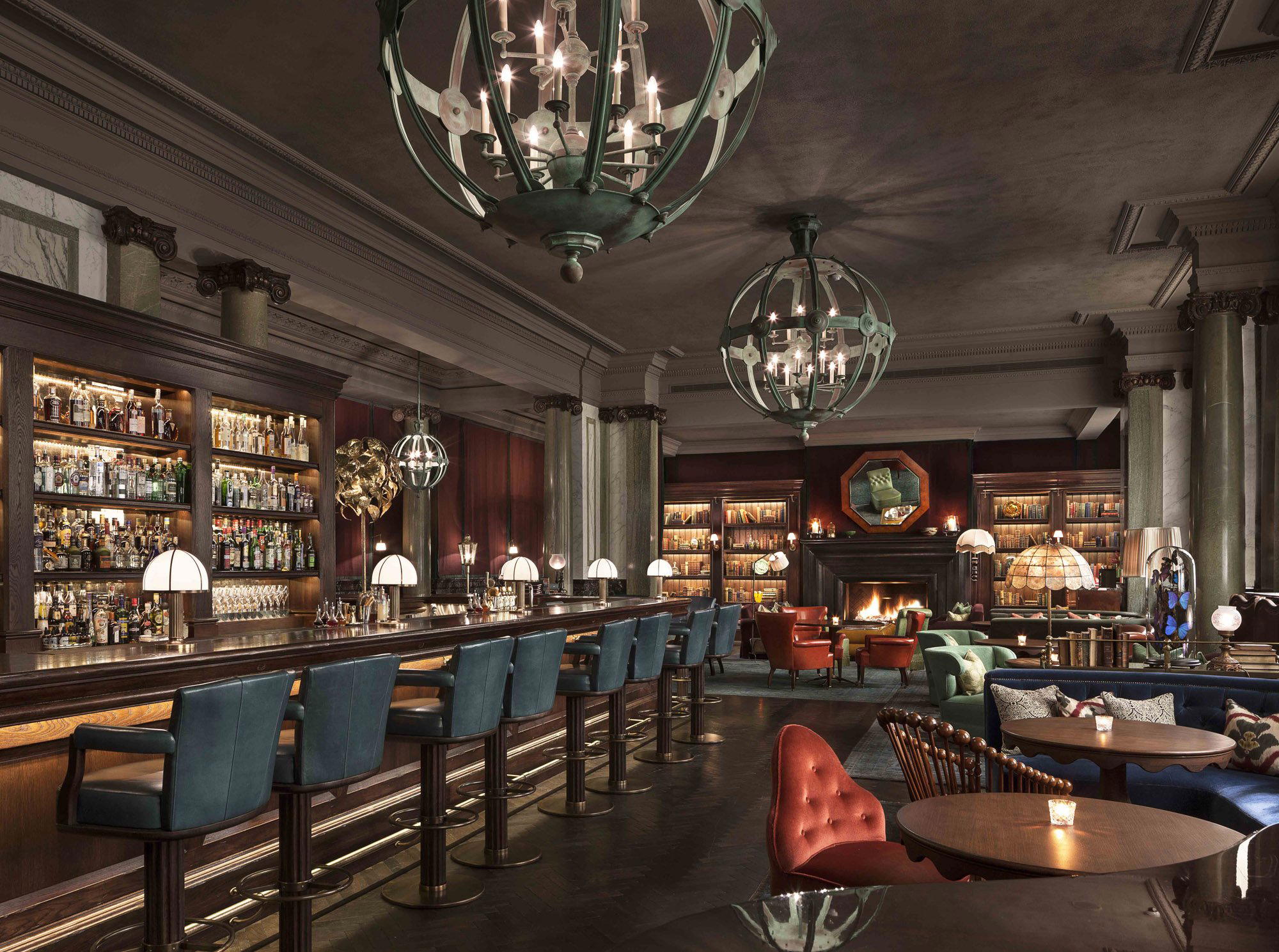
Bars in London
Browse all →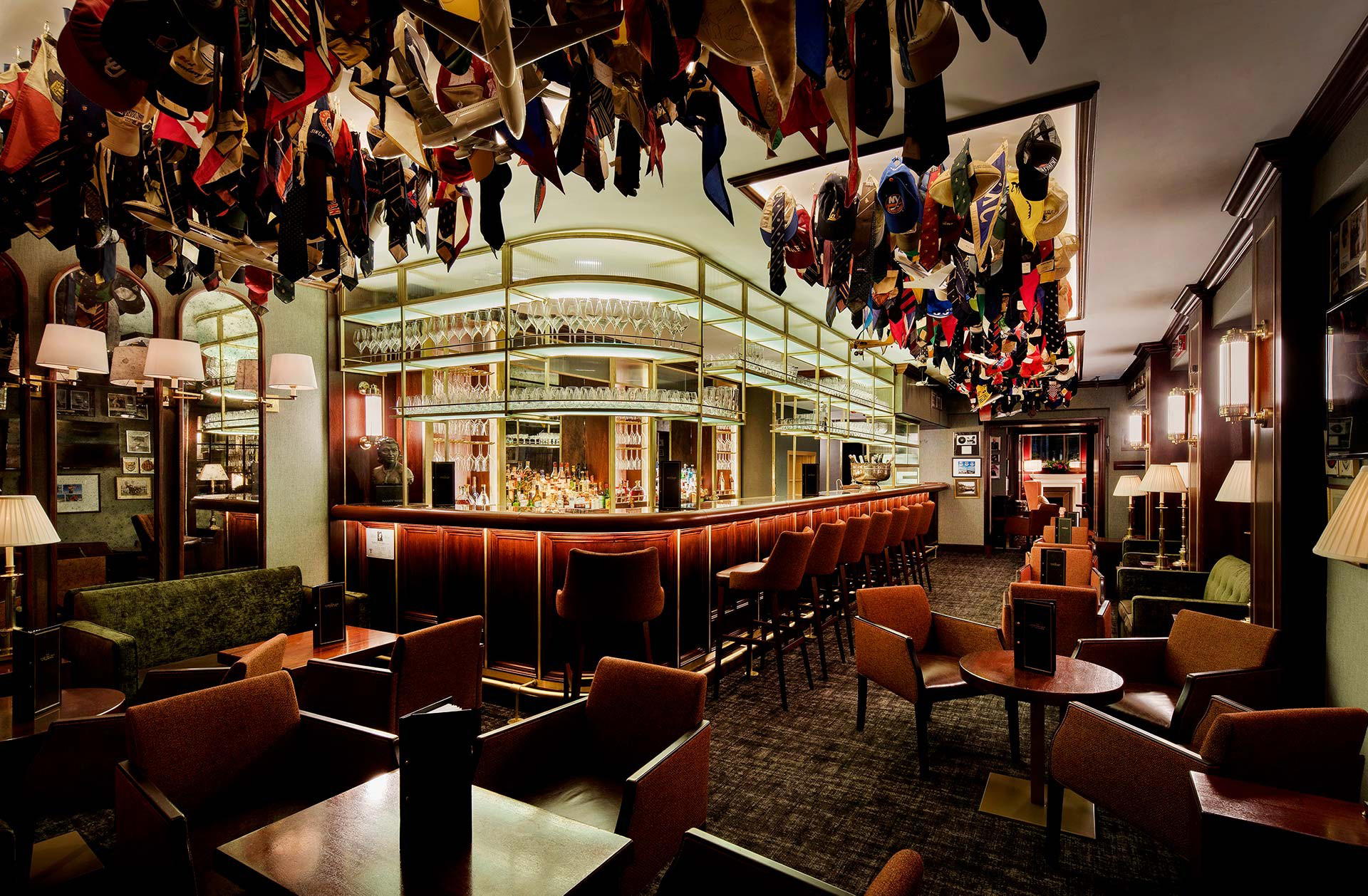
Hotels in London
Browse all →



Rules
The wine
- Wine program
- Curated wine list
- Extensive wine list
- Sommelier-led
- Craft cocktails
Details
- Classic
- Elegant
- Well Known
- Sophisticated
- Romantic
- Special Occasion
- Date Night
- Celebration
- Business Dinner
- Historic Building
- Private Dining
- Extensive Wine List
- Craft Cocktails
- Sommelier Led
- Local Sourcing
- A La Carte
- Set Menu
- Cocktails
- Wine
Current opening hours
- Monday
- 12–10 PM
- Tuesday
- 12–10 PM
- Wednesday
- 12–10 PM
- Thursday
- 12–10 PM
- Friday
- 12–11 PM
- Saturday
- 12–11 PM
- Sunday
- 12–10 PM
Hours can change for holidays and private events. Last verified .
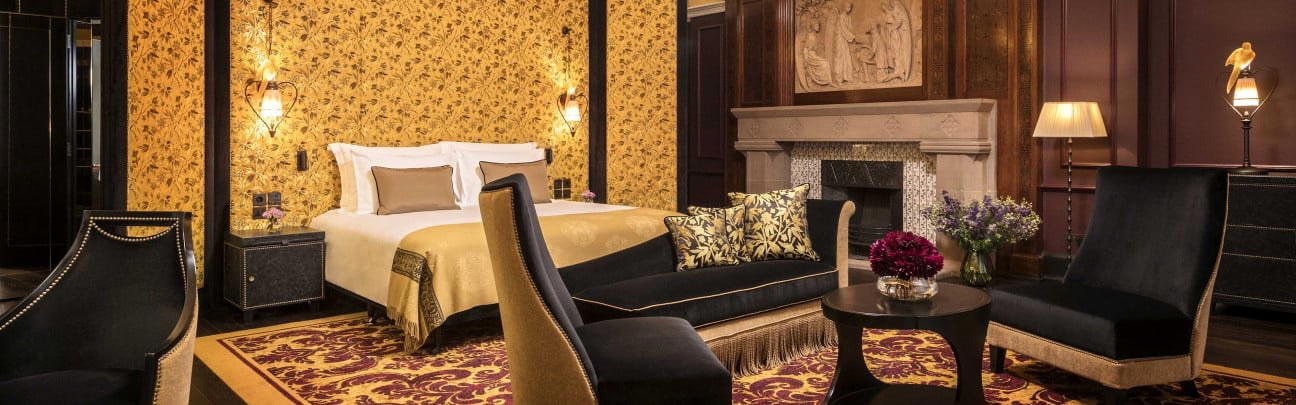
Elegant and steeped in history with dark wood paneling, red velvet banquette seating, crimson and gold carpets, glistening wood, period prints, and a quiet air of calm professionalism; waiters in tuxedos evoke timeless British formality.