Ruggles
Our verdict
Ruggles sits within Houston's broader tradition of ingredient-driven American cooking, where sourcing decisions carry as much weight as technique. The city's dining scene has long rewarded kitchens that treat provenance as a point of argument rather than decoration, and Ruggles belongs to that lineage. For visitors building a Houston table itinerary, it represents a useful entry point into the city's relationship with Southern and Gulf Coast ingredients.

Pearl is the En Primeur Club membership app — saves, bookings, and concierge access live there. Same editors, same standards.
- Address
- Ruggles Township, OH 44851
- Phone
- (713) 524-3839
- Directions
- Get directions
The menu
What to order
- Big Sexy Pork Chop
- Angry Shrimp
- Snapper Fish and Chips
- Paleo Beef Short Rib Taco
Houston's Sourcing Argument, Served at the Table
Houston has never been a city that needed to borrow its culinary identity from elsewhere. The Gulf Coast sits close enough that seafood provenance is a live conversation, not a menu flourish. The Hill Country and East Texas supply beef, pork, and game with regional specificity that kitchens here have historically known how to use. In that context, ingredient-forward American restaurants in Houston occupy a different position than their counterparts in, say, San Francisco or New York, where provenance rhetoric sometimes outpaces the actual supply chain. Here, the sourcing claims tend to be shorter in distance and easier to verify.
Ruggles sits within this tradition. Houston's dining culture has long supported kitchens that treat where food comes from as a primary editorial statement, and the restaurants that have endured in this city tend to be the ones that made a legible argument about their ingredients rather than dressing up commodity produce in technical language. That discipline, applied consistently, is what separates a serious sourcing-led kitchen from a marketing exercise.
Where Ruggles Fits in Houston's Dining Tier
Houston's restaurant scene is more stratified than casual visitors often expect. The city that gave rise to serious fine dining in Texas, producing chefs who trained in French and Mediterranean traditions before returning to apply that rigor to Gulf and Southern product, now operates across a range of price points and formats. At the leading end, tasting-menu formats compete with the kind of destination-dining ambition you see at places like The French Laundry in Napa or Alinea in Chicago. Below that, a dense middle tier of ingredient-driven, à la carte-focused restaurants does some of the most interesting cooking in the American South.
Ruggles operates in this middle register of Houston's dining culture, where the sourcing conversation happens in the dining room rather than in a press release. Compared to the hyper-technical precision of Atomix in New York City or the farm-to-table formalism of Blue Hill at Stone Barns in Tarrytown, Houston's approach to ingredient sourcing has always been less ideological and more practical. Farmers and fishers here supply restaurants that serve a genuinely diverse city, which means the ingredient argument has to hold up across a broader range of palates.
For a fuller picture of where Ruggles sits among the city's options, our full Houston, Texas restaurants guide maps the scene by neighborhood and format.
The Gulf Coast Larder and Why It Matters Here
The ingredient story in Houston kitchens is inseparable from geography. The Gulf of Mexico delivers brown shrimp, red snapper, and Gulf oysters to restaurant kitchens with a logistical proximity that Pacific Coast cities don't have for their own seafood. Restaurants in Houston that treat Gulf product seriously are working with a supply chain that is genuinely shorter than what most American coastal cities can claim. That proximity changes how kitchens cook: less need for preservation technique, more room for simplicity, and a higher floor for freshness standards.
This is the context in which ingredient-driven American cooking in Houston makes its strongest case. The argument isn't that local is always better in some abstract sense, but that Gulf Coast and Texas product, handled by kitchens that know it well, produces results that are specific to this place. That specificity is harder to achieve when the supply chain runs through national distributors, which is why the restaurants in Houston worth tracking tend to have direct supplier relationships rather than relying on what's available at a regional food-service hub.
Kitchens operating on this model, whether in Houston or at comparable American restaurants like Single Thread Farm in Healdsburg or Providence in Los Angeles, share a common discipline: the menu follows what the supplier can deliver, not the other way around. That inversion of the usual kitchen-to-market relationship is what gives ingredient-led cooking its credibility when it works, and its obvious weakness when it doesn't.
Houston's Broader Dining Ecosystem
No single restaurant tells the full story of a city's dining culture, and Houston is a city that rewards exploration across formats and neighborhoods. The same energy that supports serious ingredient-driven kitchens also sustains one of the most sophisticated bar cultures in Texas. Our full Houston, Texas bars guide covers the cocktail programs and wine-focused rooms that have grown up alongside the restaurant scene here. For visitors spending more than a night, our full Houston, Texas hotels guide and our full Houston, Texas experiences guide provide the logistical context to build a complete trip.
The broader American South dining conversation also runs through New Orleans, where a kitchen like Emeril's in New Orleans has long navigated the tension between regional tradition and contemporary technique. Houston's relationship to that tradition is distinct: more multicultural, less historically codified, and arguably more open to ingredient arguments that don't fit neatly into a single regional cuisine.
Planning a Visit
Visitors to Houston building a food itinerary around ingredient provenance should treat Ruggles as part of a broader pattern of sourcing-led kitchens in the city rather than as an isolated destination. The city's restaurant culture rewards repeat engagement more than single-visit trophy dining, which means the most useful approach is to cross-reference multiple kitchens across a trip rather than concentrating a single evening on one address. Houston's geographic spread also means neighborhood context matters: the dining character of the Montrose area differs substantially from the Galleria corridor or the East End, and those differences are reflected in how kitchens approach their ingredient sourcing and price positioning.
For visitors whose interest in American ingredient-driven cooking extends to coastal California, comparisons with Addison in San Diego or Lazy Bear in San Francisco are useful for calibrating expectations around format, price, and the level of editorial intent behind the sourcing narrative. On the East Coast, Albi in Washington, D.C. and The Inn at Little Washington offer a different register of the same conversation. For seafood-focused fine dining with genuine technical precision, Le Bernardin in New York City remains the benchmark against which serious fish kitchens across the country are measured. And for a window into how high-concept sourcing operates in an international context, 8 1/2 Otto e Mezzo Bombana in Hong Kong provides an instructive contrast.
Houston's winery scene is smaller than its restaurant culture, but our full Houston, Texas wineries guide covers what the city offers for those interested in Texas viticulture alongside their dining itinerary.
Frequently asked questions
Would Ruggles be comfortable with kids?
Houston's sourcing-led kitchens tend to run along a spectrum from neighborhood-casual to counter-formal, and Ruggles sits within that Houston dining context. Houston broadly accommodates multigenerational dining across its restaurant tier, so the practical fit depends on the specific format Ruggles operates in.
Is Ruggles formal or casual?
In Houston's dining ecosystem, restaurants in the Gulf Coast sourcing category range from counter-casual to structured dinner service. Calling ahead to confirm the atmosphere before arrival is the practical move for any first-time visit.
How does Ruggles fit into Houston's Gulf Coast ingredient-driven dining scene?
Houston's proximity to the Gulf of Mexico shapes which kitchens build their menus around provenance, and Ruggles is framed within that sourcing-led tier of the city's restaurant culture. This positions it alongside Houston kitchens that treat Gulf Coast geography as a defining part of the plate rather than a marketing note. For visitors building a Houston food itinerary around ingredient provenance, Ruggles represents a specific strand of the city's argument for regional culinary identity.
What's the best thing to order at Ruggles?
The body context positions Ruggles within Houston's Gulf Coast larder tradition, where brown shrimp, red snapper, and Gulf oysters define what kitchens in this category do well.
How do I find Ruggles?
Ruggles is located at Ruggles Township, OH 44851, Houston, Texas.
Side-by-Side Snapshot
| Venue | Cuisine | Price | Awards | Notes |
|---|---|---|---|---|
| RugglesThis venue — the venue you are viewing | Paleo Fusion American-Asian-Indian | $50–100 | Not listed | Not listed |
| Le Bernardin | French Seafood Fine Dining | $300–500 | 3 Michelin Stars · World's 50 Best #13 | French, Seafood |
| Atomix | Modern Korean Tasting Menu | $300–500 | 2 Michelin Stars · World's 50 Best #7 | Modern Korean, Korean |
| Lazy Bear | Modern American Tasting Menu | Not listed | 2 Michelin Stars · World's 50 Best #25 | Progressive American, Contemporary |
| Alinea | Avant-Garde Molecular Gastronomy | $300–500 | 2 Michelin Stars · World's 50 Best #37 | Progressive American, Creative |
| Masa | Seasonal Hokkaido Tempura Omakase | $150–200 | Tabelog 100 #34 | Sushi, Japanese |


Details
- Elegant
- Trendy
- Sophisticated
- Lively
- Date Night
- Group Dining
- Celebration
- Brunch
- Open Kitchen
- Terrace
- Craft Cocktails
- Local Sourcing
- A La Carte
- Vegetarian Friendly
- Gluten Free Options
- Allergy Accommodating
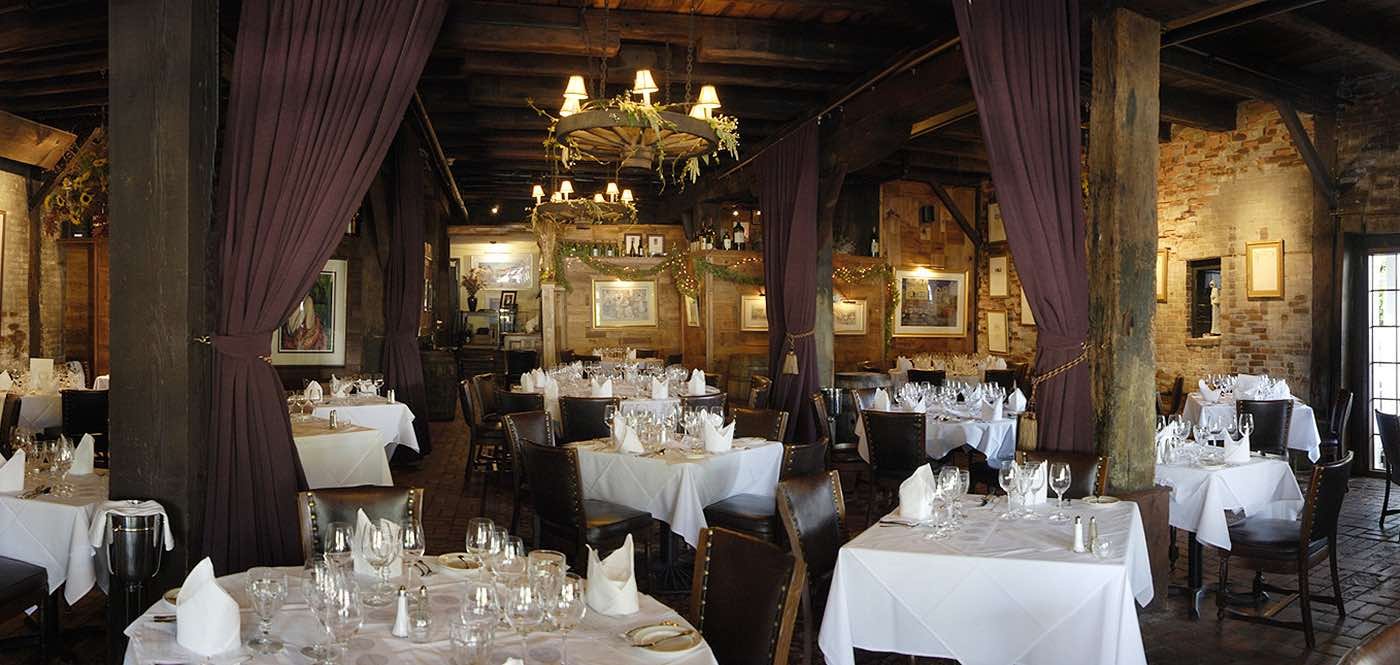
Sexy ambiance with beautiful chandeliers, black and gold accent walls, trendy light fixtures, and a lively atmosphere.