
Tabelog 100 #38
Our verdict
Rishin places Kakogawa inside western Japan’s serious steak and teppanyaki conversation rather than treating the city as a stop between Kobe and Himeji. The draw is ingredient-led cooking across beef, seafood, sake, shochu and wine, with Tabelog 100 Steak / Teppanyaki WEST selections in 2022, 2024 and 2025 giving the room a clear external signal.

Pearl is the En Primeur Club membership app — saves, bookings, and concierge access live there. Same editors, same standards.
The menu
What to order
- Premium Wagyu steak
- Lobster
- Ise lobster
- Selected meat teppanyaki
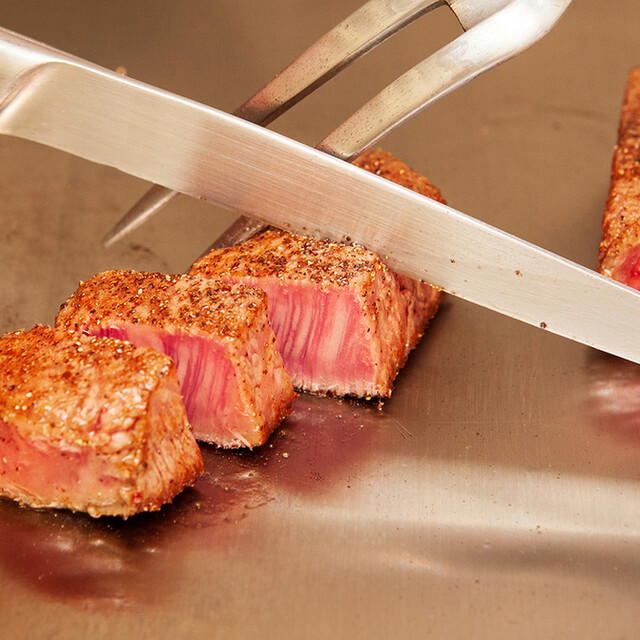
Teppanyaki carries a different tension from the hotel-counter version familiar in larger cities. The cooking is theatrical only when the ingredients justify attention: beef fat meeting iron, seafood timed against heat, and the quiet discipline of a room built around proximity rather than spectacle. In Kakogawa, that format has a useful local edge. A serious steak and seafood counter has to persuade diners on substance, not address value alone.
Rishin belongs to that ingredient-first tier. Its category is listed as teppanyaki, steak and seafood, placing it in a focused Japanese dining lane rather than a broad casual-grill category. The external marker is not casual. Recognition in Tabelog’s Hyakumeiten-related data for 2025, with a listed score of 3.58, places it within a competitive steak and teppanyaki conversation where sourcing, grill control and repeat local confidence matter more than novelty.
Hyogo steak culture, read through the iron plate
Steak houses are often judged against two overlapping traditions. One is the prestige economy of beef, where provenance can dominate the conversation before the first cut reaches the plate. The other is teppanyaki as craft service, where timing, portioning and heat management define the meal as much as the beef itself. Kakogawa matters as context. A restaurant here has less reason to lean on tourist shorthand; it has to make a case through the sequence of ingredients, the room’s rhythm and the confidence of regular diners.
The seafood listing is important because it shifts the meal away from a single-protein steakhouse model. For a serious kitchen, beef and seafood can operate as parallel signals of sourcing rather than as simple luxury add-ons. That is the editorial reason to look at Rishin: not as a personality-led dining room, but as a Kakogawa answer to what teppanyaki can be outside the big-city hotel circuit.
Compared with the out-of-metro casual bracket represented by Mugikiri Tokuoka, Cafe Domusshu Himeji ten, Eiyo Ken Himeji ekimae ten and Bakery Lamp, this sits in a different dining economy altogether. Those names occupy lower-spend everyday categories; Rishin works in the occasion-driven steak and teppanyaki band. Kushiyaki Kobe beef is the closer conceptual reference because it also puts beef at the centre, but skewered beef and counter teppanyaki ask different things of a kitchen. One compresses pleasure into small, direct bites; the other stretches judgment across a meal.
A compact room for occasions, not a hotel steakhouse template
The format is intimate enough to matter. Rishin reads as a focused restaurant built around teppanyaki, steak and seafood rather than as a broad dining hall. That scale changes the stakes of this kind of cooking. Heat, pacing and conversation are closer to the table, and the meal is less about anonymous luxury than about how a kitchen handles ingredients in front of diners who are watching the plate.
Its listed dinner budget of JPY 10,000 - JPY 14,999 and lunch budget of JPY 3,000 - JPY 3,999 place the restaurant in a Japanese celebration category rather than an everyday quick-meal bracket. For travellers, that distinction is useful: the room can serve serious steak and seafood without requiring the assumptions of a large-city hotel counter.
The practical shape is equally clear. Rishin is a Kakogawa restaurant, and that local context matters in a dining setting where a meal is often planned rather than stumbled into between major tourist stops. The decision is less about spontaneous discovery and more about building a meal around the city itself.
Where it fits in a Kakogawa itinerary
Kakogawa is rarely sold internationally as a dining destination, which makes its stronger restaurants easier to misread. The smarter approach is to treat the city as a place for smaller rooms that carry local demand rather than as a simple stopover. Rishin’s 2025 Tabelog Hyakumeiten-related recognition gives that local dining picture a concrete point of reference.
Readers building a local plan should start with Our full Kakogawa restaurants guide, then decide whether the trip needs a wider stay, drinks or non-restaurant programming through Our full Kakogawa hotels guide, Our full Kakogawa bars guide, Our full Kakogawa wineries guide and Our full Kakogawa experiences guide. For a broader comparison, beef-focused readers can look at other dining rooms in Japan, while casual-format contrast comes from unnamed everyday restaurants, cafes and counter-service spots. For drink-and-rice culture abroad, overseas Japanese-format bars and rice-focused shops show how Japanese formats travel, though they belong to a different dining conversation.
Frequently asked questions
Is Rishin okay with children?
Rishin is best understood through its listed categories of teppanyaki, steak and seafood. For family meals or special requirements, confirm details directly with the restaurant in Kakogawa before booking.
What should I expect atmosphere-wise at Rishin?
Expect a Kakogawa teppanyaki restaurant focused on steak and seafood rather than a generic casual grill. Its listed dinner and lunch budgets place it in a more occasion-driven lane than everyday dining in Kakogawa.
What does dinner at Rishin typically cost?
Pricing at Rishin is listed as Dinner: JPY 10,000 - JPY 14,999; Lunch: JPY 3,000 - JPY 3,999.
What days is Rishin closed?
Specific closing days are not provided in the available ground-truth data. Check directly with Rishin in Kakogawa before planning a visit.
Comparison Snapshot
Comparable venues by cuisine and price in the same metro.
| Venue | Cuisine | Price | Awards | Notes |
|---|---|---|---|---|
| RishinThis venue (the venue you are viewing) | Teppanyaki Steak & Seafood | $50–100 | Tabelog 100 #38 | Not listed |
| Tempura Niitome (天風良 にい留) | Modern Tempura Omakase | Not listed | Not listed | Naka |
| Teppan to o-sake Sōya (鉄板とお酒 宗や) | Teppanyaki Izakaya | $30–50 | Not listed | Shimogyo |
| Chikuyotei (竹葉亭) | Traditional Edomae Unagi and Kaiseki | $30–50 | Not listed | Ginza |
| Torichou (鳥長) | High-end Yakitori Omakase | $100–150 | Tabelog 100 #67 | 練馬区 |
| Robata | Japanese Robata Grill | Not listed | Not listed | 倶知安町 |
Recognition history
Dated appearances from independent guides and award organizations, with the underlying list record or original source where available.
Tabelog 100 #38 · No. 38
Tabelog · Tabelog 100 - Steak / Teppanyaki - WEST - 2025
Continue exploring
More in Kakogawa
Restaurants in Kakogawa
All restaurants in Kakogawa →
Hotels in Kakogawa
Browse all →
Wineries in Kakogawa
Browse all →
Rishin
The wine
- Wine program
- Curated wine list
- Extensive wine list
- Sake program
Details
- Cozy
- Elegant
- Romantic
- Special Occasion
- Celebration
- Date Night
- Family
- Business Dinner
- Group Dining
- Chefs Counter
- Open Kitchen
- Private Dining
- Standalone
- Sake Program
- Extensive Wine List
- Local Sourcing
- Sustainable Seafood
- Counter Dining
- Set Menu
- A La Carte
- Tasting Menu
- Sake
- Wine
- Shochu
Current opening hours
- Monday
- Closed
- Tuesday
- 11:30 AM–2 PM, 5–10 PM
- Wednesday
- 11:30 AM–2 PM, 5–10 PM
- Thursday
- 11:30 AM–2 PM, 5–10 PM
- Friday
- 11:30 AM–2 PM, 5–10 PM
- Saturday
- 11:30 AM–2 PM, 5–10 PM
- Sunday
- 11:30 AM–2 PM, 5–10 PM
Hours can change for holidays and private events. Last verified .
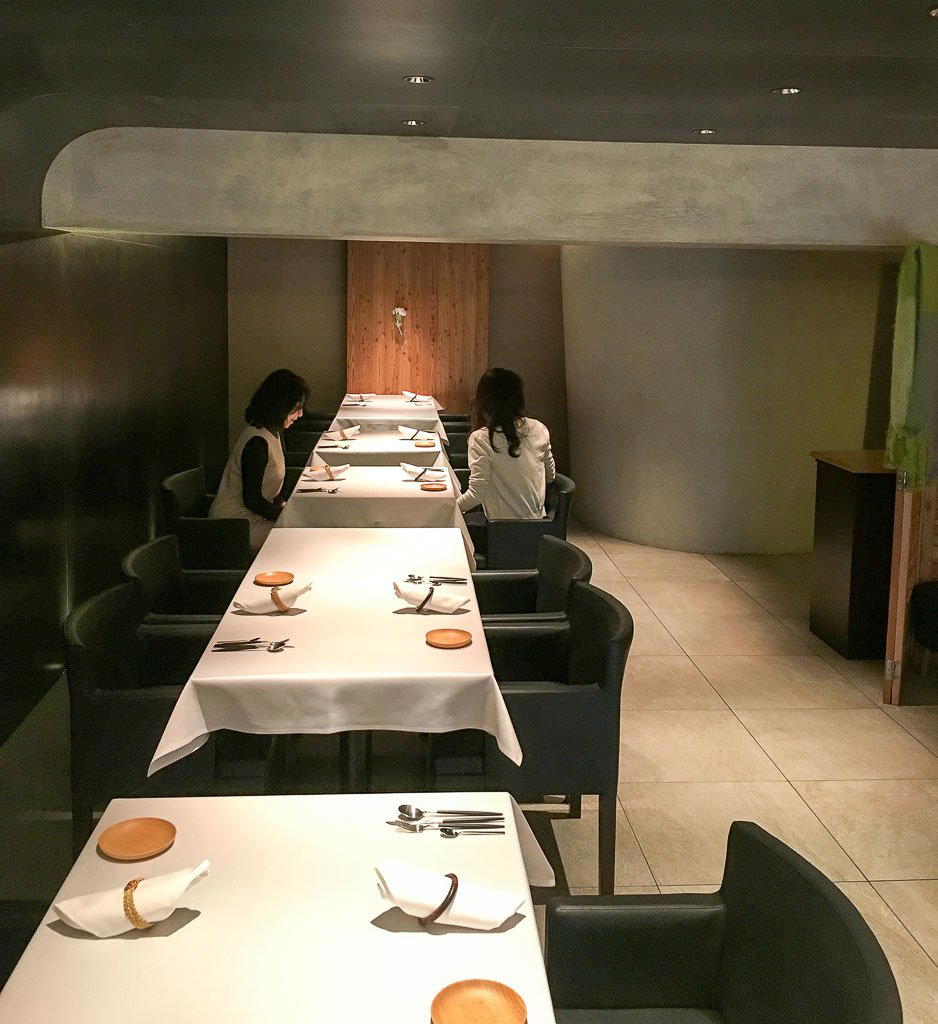
A stylish yet relaxing teppanyaki house-restaurant with counter seating around the grill, intimate lighting, and a cozy, hideout-like feel suited to anniversaries and family gatherings.