Restaurante Capricciosa occupies a former warehouse on Lisbon's Doca de Santo Amaro, where the Tagus waterfront has quietly become one of the city's more compelling dining corridors. The address places it in a bracket of riverside restaurants that trade on setting as much as plate, making it a useful reference point for understanding how Lisbon's casual-to-mid dining scene has evolved along the water.
Pearl is the En Primeur Club membership app — saves, bookings, and concierge access live there. Same editors, same standards.
- Address
- Doca de Santo Amaro, Calçada Santo Amaro Armazém 8, 1350-353 Lisboa, Portugal
- Phone
- +351213955977
- Website
- capricciosa.com.pt
- Directions
- Get directions
 Saves & bookings on Pearl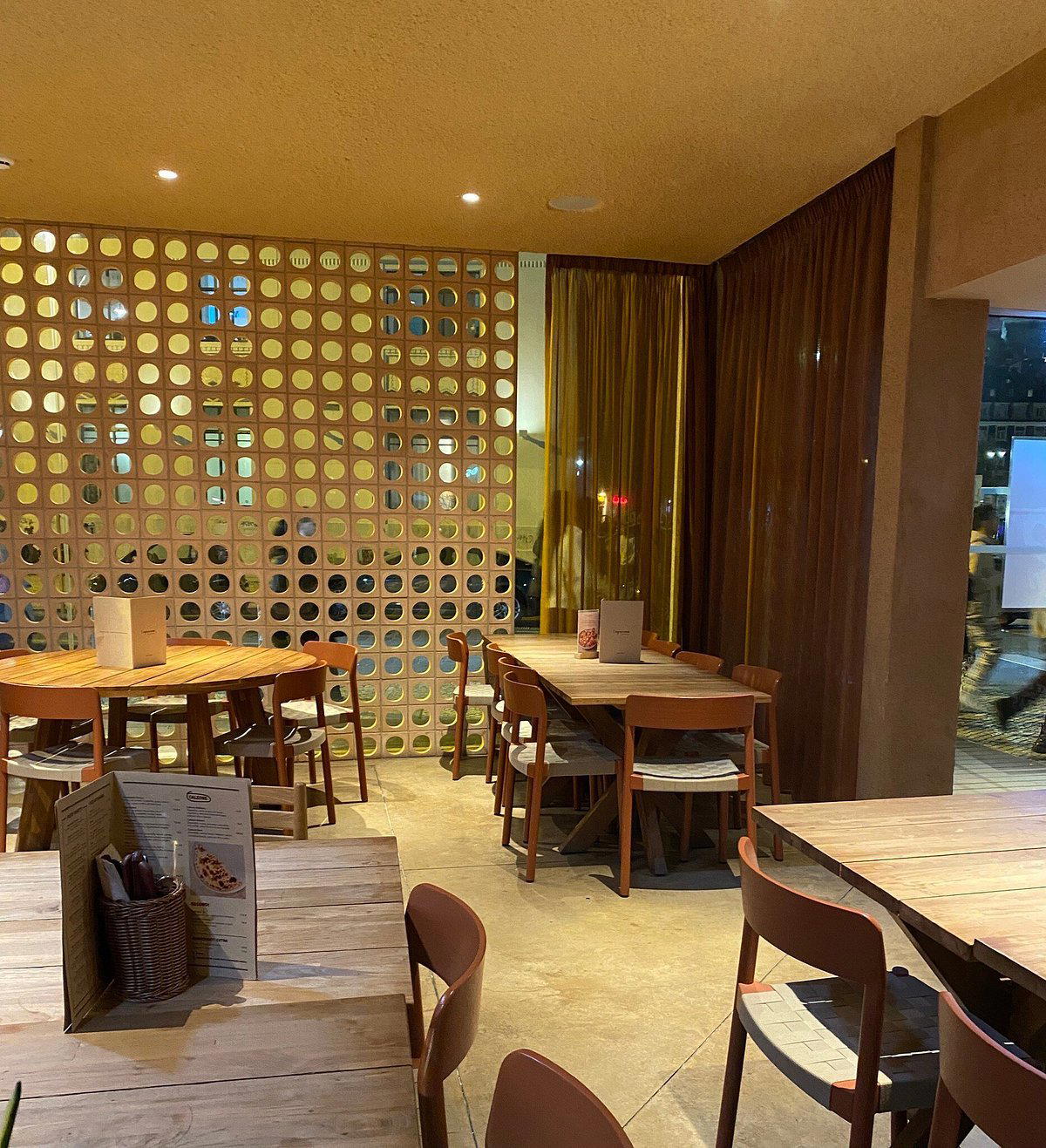
Where the Tagus Shapes the Table
Lisbon's waterfront dining has undergone a slow but legible transformation over the past two decades. The Doca de Santo Amaro, a strip of repurposed riverside warehouses beneath the shadow of the 25 de Abril Bridge, was among the first zones to pivot from industrial function to restaurant row. That shift carried ecological stakes from the start: the Tagus estuary is one of Western Europe's largest wetland systems, and the restaurants that settled along its banks have operated in varying degrees of proximity to that ecological reality. The better ones have taken it seriously. The proximity to the river is not incidental scenery — it is, or should be, a sourcing argument.
Restaurante Capricciosa sits at Armazém 8 on the Calçada Santo Amaro, in exactly that warehouse-conversion format that defines the Doca's architectural character. Approaching from the street, the building reads as industrial heritage: thick stone walls, the kind of bones that predate tourism. The waterfront position means natural light and river views define the interior rhythm in a way that interior Lisbon restaurants simply cannot replicate. This is a room shaped by its geography before a single plate arrives.
The Doca de Santo Amaro as a Dining Corridor
To understand the competitive positioning of any restaurant on the Doca, it helps to map the corridor's broader character. This is not Lisbon's fine-dining district — that conversation belongs to Chiado and Belém, where restaurants like Belcanto and CURA operate at the €€€€ tier with tasting menus and Michelin recognition. The Doca sits in a different register: accessible, view-led, and broadly casual in its hospitality contract. What distinguishes individual restaurants within that format is how deliberately they engage with the waterfront's ecological and agricultural context, rather than simply borrowing its aesthetics.
Across Portugal, the conversation about sustainable sourcing has gathered pace at every price point. At the higher end, restaurants like Vila Joya in Albufeira and Ocean in Porches have built sourcing narratives into their editorial identity. At the mid-range level, which is where waterfront warehouse restaurants tend to operate, the same questions apply, even if the answers are less formally documented. Where does the fish come from? How does a restaurant positioned metres from a major estuary respond to questions of seasonality and fishing pressure on Atlantic stocks?
Sourcing, Setting, and the Sustainability Argument
Portugal's Atlantic coastline gives its restaurants a structural advantage in seafood sourcing that few European countries can match. The country's fishing tradition is deep and documented: bacalhau, percebes, amêijoas, and fresh Atlantic fish have anchored Portuguese cuisine for centuries. But proximity to tradition and proximity to sustainable practice are not the same thing. The distinction matters increasingly to diners arriving at Lisbon's waterfront restaurants in 2024 and beyond.
Restaurants operating in repurposed heritage structures like the Doca warehouses carry an implicit sustainability signal in their architecture, adaptive reuse rather than new construction. That is a starting point, not a conclusion. The more substantive questions concern supply chains: local day-boat fish versus industrially sourced product, seasonal menu adjustments versus static offerings, and the degree to which waste reduction is built into kitchen practice rather than treated as a branding note. These are the criteria by which environmentally conscious diners are increasingly sorting their options, and they apply as clearly to a riverside casual restaurant as to a tasting-menu house.
For broader context on how Portugal's dining scene maps ethical sourcing across different price tiers and regions, Antiqvvm in Porto, Casa de Chá da Boa Nova in Leça da Palmeira, and The Yeatman in Vila Nova de Gaia each offer reference points at different positions on the formality spectrum. Further south, Bon Bon in Lagoa, Al Sud in Lagos, and A Ver Tavira in Tavira demonstrate how Algarve kitchens are approaching regional produce with increasing specificity.
Placing Capricciosa in Lisbon's Wider Dining Map
Lisbon's restaurant scene in the mid-2020s is stratified more clearly than it was a decade ago. The top tier, Belcanto, CURA, Eleven, 50 Seconds from Martin Berasategui, operates with formal tasting formats, advance booking requirements, and internationally calibrated wine programs. The creative middle ground includes restaurants like 2Monkeys, which bring a different editorial sensibility to casual formats. The Doca corridor occupies a third position: experiential, view-dependent, and pitched at a tourist and local mixed audience that prioritises setting alongside food quality.
That positioning is not a criticism, it is a description of a real and durable dining category. Waterfront restaurants serve a function in any city's hospitality ecosystem that tasting-menu houses do not: they are where people eat on a Tuesday evening without a reservation six weeks in advance, where the light off the river is part of what they are paying for, and where the food needs to be honest and well-sourced without requiring a formal critical framework to appreciate it. The restaurants that do this well in Lisbon are worth knowing about. Our full Lisbon restaurants guide maps the city's options across all tiers.
For international points of comparison, the model of a technically precise seafood-led restaurant in a city with a strong fishing tradition has analogues at the highest level, Le Bernardin in New York City represents the apex of that format, and Atomix in New York City shows how a different cuisine tradition handles the intersection of sourcing rigour and tasting-menu formality. Il Gallo d'Oro in Funchal and A Cozinha in Guimarães anchor the broader Portuguese picture.
Planning Your Visit
The Doca de Santo Amaro is reachable by tram from central Lisbon, Tram 15E runs from Praça da Figueira toward Belém and stops close to the waterfront. The walk from the tram stop to Armazém 8 takes roughly five minutes along the water. Evening visits benefit from the light conditions as the sun moves behind the 25 de Abril Bridge. Given the Doca's popularity with both locals and visitors, particularly in summer months from June through September, arriving early or checking in advance about table availability is advisable. Specific booking details, current hours, and contact information are best confirmed directly with the restaurant, as operational details vary seasonally.
Continue exploring
More in Lisbon
Restaurants in Lisbon
Browse all →

Bars in Lisbon
Browse all →
Hotels in Lisbon
Browse all →

At a Glance
- Lively
- Cozy
- Family
- Group Dining
- Casual Hangout
- Terrace
- Waterfront
- Waterfront
- Street Scene
Current opening hours
- Monday
- 12 PM–12 AM
- Tuesday
- 12 PM–12 AM
- Wednesday
- 12 PM–12 AM
- Thursday
- 12 PM–12 AM
- Friday
- 12 PM–12 AM
- Saturday
- 12 PM–12 AM
- Sunday
- 12 PM–12 AM
Hours can change for holidays and private events. Last verified .
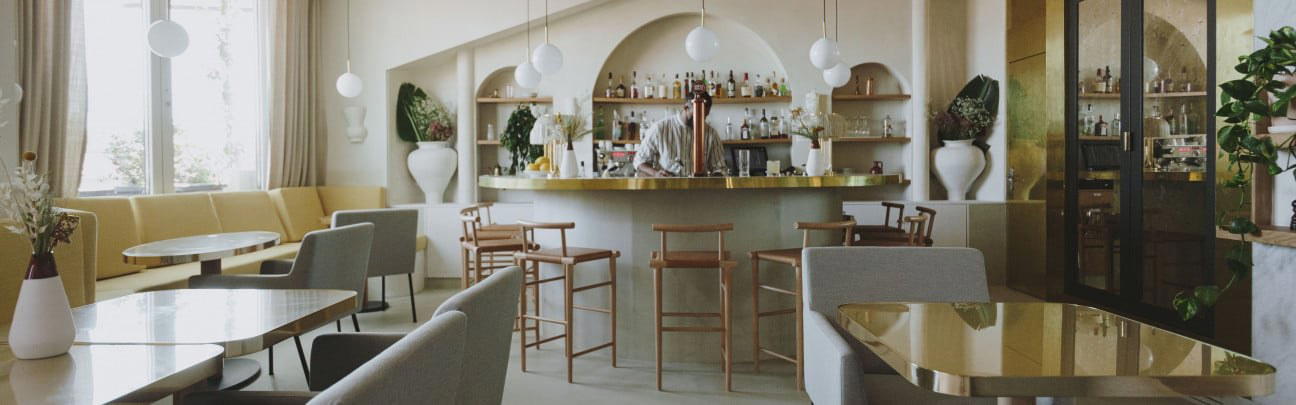
Spacious and well-decorated with natural elements, hanging lamps, and lively terrace seating by the water.
Know Before You Go
- Getting there
- Doca de Santo Amaro, Calçada Santo Amaro Armazém 8, 1350-353 Lisboa, Portugal