
Restaurant Terroir sits in the small Flemish village of Gierle and carries both a Star Wine List White Star and a World of Fine Wine 3-Star Accreditation, placing it firmly in Belgium's serious wine-dining tier. The name signals the kitchen's orientation: sourcing and provenance matter here, not spectacle. For the Kempen region, that combination of wine credibility and kitchen ambition is rare.
Pearl is the En Primeur Club membership app — saves, bookings, and concierge access live there. Same editors, same standards.
- Address
- Gierle, Belgium
- Phone
- +32 014 74 85 05
- Website
- resto-terroir.be
 Saves & bookings on Pearl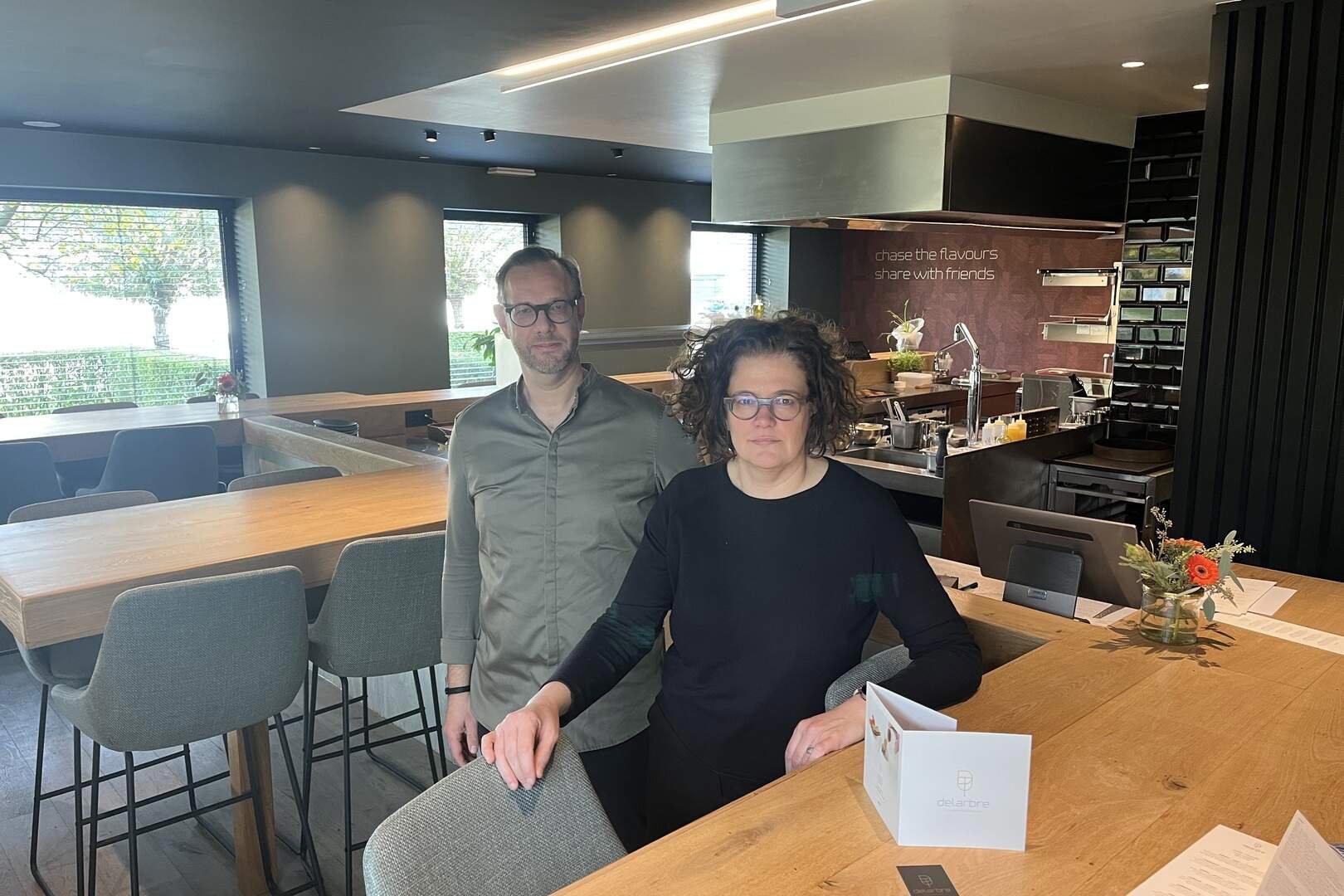
Where the Kempen Finds Its Table
Belgium's serious dining circuit clusters predictably around Ghent, Antwerp, and the coastal strip, with occasional outposts in Limburg and the Brabant countryside. Gierle, a quiet village in the Kempen region northeast of Antwerp, sits outside that circuit almost entirely. Which is precisely what makes the presence of Restaurant Terroir worth pausing on. Restaurant Terroir is a French-Belgian Bistro in Gierle, Belgium, with a price per person of about $65. The kitchen and cellar here are oriented toward a specific kind of diner: one who travels for the meal rather than the postcode.
The Kempen is flat, forested, and unhurried. Arriving in Gierle, the architectural texture is low-rise and domestic. That context is worth naming because it shapes the experience: this is not a restaurant that competes on urban atmosphere or destination-hotel backdrop. What it offers instead belongs to a different register, one where the argument is made entirely through what ends up on the table and in the glass. For readers familiar with similar rural Flemish addresses, Hof van Cleve in Kruishoutem or Willem Hiele in Oudenburg, the pattern will be familiar: Belgium's most committed kitchens often operate at a deliberate remove from city noise.
The Terroir Argument: Why Sourcing Is the Story Here
The name Terroir is not decorative. In wine, terroir names the specific interaction between soil, climate, aspect, and human practice that makes a place legible in a glass. Applied to a restaurant, the word carries an implicit promise: that the food will be rooted in where and how ingredients were grown, raised, or foraged, and that provenance will register in the eating rather than just on the menu copy.
This framing matters for Belgian fine dining specifically. The country's strongest kitchens have increasingly moved away from classical French architecture toward something more grounded in local supply, the sandier Kempen soils, the North Sea coast's catch cycles, the Ardennes' game seasons, the Pajottenland's lambic grain traditions. That shift mirrors what has happened across northern Europe over the past fifteen years, as chefs trained in French technique turned their attention to what was actually growing around them. Restaurant Terroir's name positions it squarely inside that movement. The ingredient is the argument; the kitchen's job is to make that argument clearly.
In practical terms, ingredient-led cooking at this level means menus that respond to season and supply more than restaurants oriented around a fixed signature style. It also means that the wine list's 3-Star World of Fine Wine accreditation is not incidental: a cellar that earns that level of recognition is one built to match food that changes, which requires broader range and deeper thinking than a list assembled to flatter a static menu. Belgium's wine-forward dining addresses, compare Zilte in Antwerp or Boury in Roeselare, tend to treat the cellar as a second kitchen. The evidence here points in the same direction.
Reading the Awards
Two distinct accreditations appear on Terroir's record. The Star Wine List White Star is awarded to restaurants that demonstrate serious wine program quality, evaluated by wine editors rather than general dining critics. The World of Fine Wine 3-Star Accreditation operates on a separate scale, reserved for establishments whose lists meet a high threshold of range, depth, and curation. Together they place Restaurant Terroir in a narrow tier of Belgian restaurants where the cellar is not an afterthought.
For context: among Belgium's recognized fine-dining addresses, wine program depth at this level is relatively uncommon outside the major cities. Castor in Beveren and De Jonkman in Sint-Kruis occupy a similar creative tier in terms of kitchen ambition, but the wine accreditation stack at Terroir is specific enough to suggest that pairing-led dining, where the sequence of glasses is as considered as the sequence of courses, is central to the offer rather than optional. Guests who visit primarily for food and treat wine as secondary are likely to underuse what the restaurant does well.
It is also worth noting what these awards do not tell us. Neither accreditation speaks to price tier, format length, or service register. Belgium's upper-tier addresses in this category, see also Cuchara in Lommel, geographically close in the Limburg province.
Kempen as a Dining Region
The province of Antwerp's rural northeast has not historically registered as a gastronomic destination in the way that the Flemish coast or the Ghent-Bruges corridor has. That is changing, slowly, as a handful of addresses in smaller Kempen towns have built reputations that draw visitors from Antwerp and beyond. Gierle is approximately 40 kilometres northeast of Antwerp's city centre, making it a feasible drive for an evening, though the distance argues for treating the meal as a destination in itself rather than a stop on a broader city itinerary.
For those building a longer trip around Belgian fine dining, the regional logic holds: combine Terroir with an Antwerp base and pair it against urban reference points like Zilte for a study in how the same provincial ingredient supply gets interpreted differently by city and countryside kitchens. Those coming from further afield, or using Brussels as a gateway, might consult Bozar Restaurant in Brussels to calibrate the range of what Belgian fine dining covers before heading north. Gierle restaurants can be explored alongside nearby hotels if you are planning to stay overnight in the region rather than drive back to the city.
The Kempen also has its own bar and wine culture, if slower-paced than Antwerp's. Gierle bars and wineries can help round out a full day around the area, while the region's broader cultural offer is also easy to explore.
Planning Your Visit
Given the wine accreditation weight and the rural location, a few practical considerations apply. Gierle is not served by regular public transport at a level that makes it convenient from Antwerp for an evening meal, so arriving by car is the standard approach. For those with this level of wine program, booking ahead is the sensible default: restaurants earning 3-Star World of Fine Wine recognition in a village setting tend to run small, and demand from wine-focused diners is disproportionate to the size of the dining room. Belgium's comparable rural addresses, Bartholomeus in Heist, L'Eau Vive in Arbre, or d'Eugénie à Emilie in Baudour, all reward advance planning, and the pattern applies here. Current hours, reservation methods, and menu formats should be confirmed directly with the restaurant.
In Context: Similar Options
Comparable venues nearby, for context on price, style, and recognition.
| Venue | Cuisine | Price | Awards | Notes |
|---|---|---|---|---|
| Restaurant TerroirThis venue — the venue you are viewing | French-Belgian Bistro | $$ | Not listed | Not listed |
| Terroir | Dining | Not listed | Michelin Plate | Gierle |
| Salto! | French-Italian Bistro | $$ | Michelin Plate | historic center |
| Bourgondisch Kruis | Classic French-Belgian | $$ | Not listed | Kuurne |
| Chez Jean | Classic French Brasserie | $$ | Not listed | Sint-Martens-Latem |
| Rallye des Autos | Belgian Brasserie & French Classics | $$ | Not listed | Uccle |
Recognition history
Dated appearances from independent guides and award organizations, with the underlying list record or original source where available.
Star Wine List
Star Wine List
World's Best Wine Lists Awards WBWL 3-Star
World's Best Wine Lists Awards
World's Best Wine Lists Awards WBWL 3-Star
World's Best Wine Lists Awards
At a Glance
- Cozy
- Intimate
- Date Night
- Special Occasion
- Open Kitchen
- Extensive Wine List
- Local Sourcing
Cozy and welcoming atmosphere with focus on the open kitchen and friendly service.