Sushi Isao occupies a second-floor address on Rua da Glória in Liberdade, São Paulo's Japanese neighbourhood and the demographic centre of the largest Japanese diaspora outside Japan. The restaurant sits within a sushi tier that has grown considerably more sophisticated over the past decade, as Liberdade's dining scene has shifted from neighbourhood staple to serious culinary destination for the city's Japanese-Brazilian community and beyond.
Pearl is the En Primeur Club membership app — saves, bookings, and concierge access live there. Same editors, same standards.
- Address
- R. da Glória, 111 - 2º Andar - Liberdade, São Paulo - SP, 01510-001, Brazil
- Phone
- +5511977230150
- Website
- sushiisao.com.br
- Directions
- Get directions
 Saves & bookings on Pearl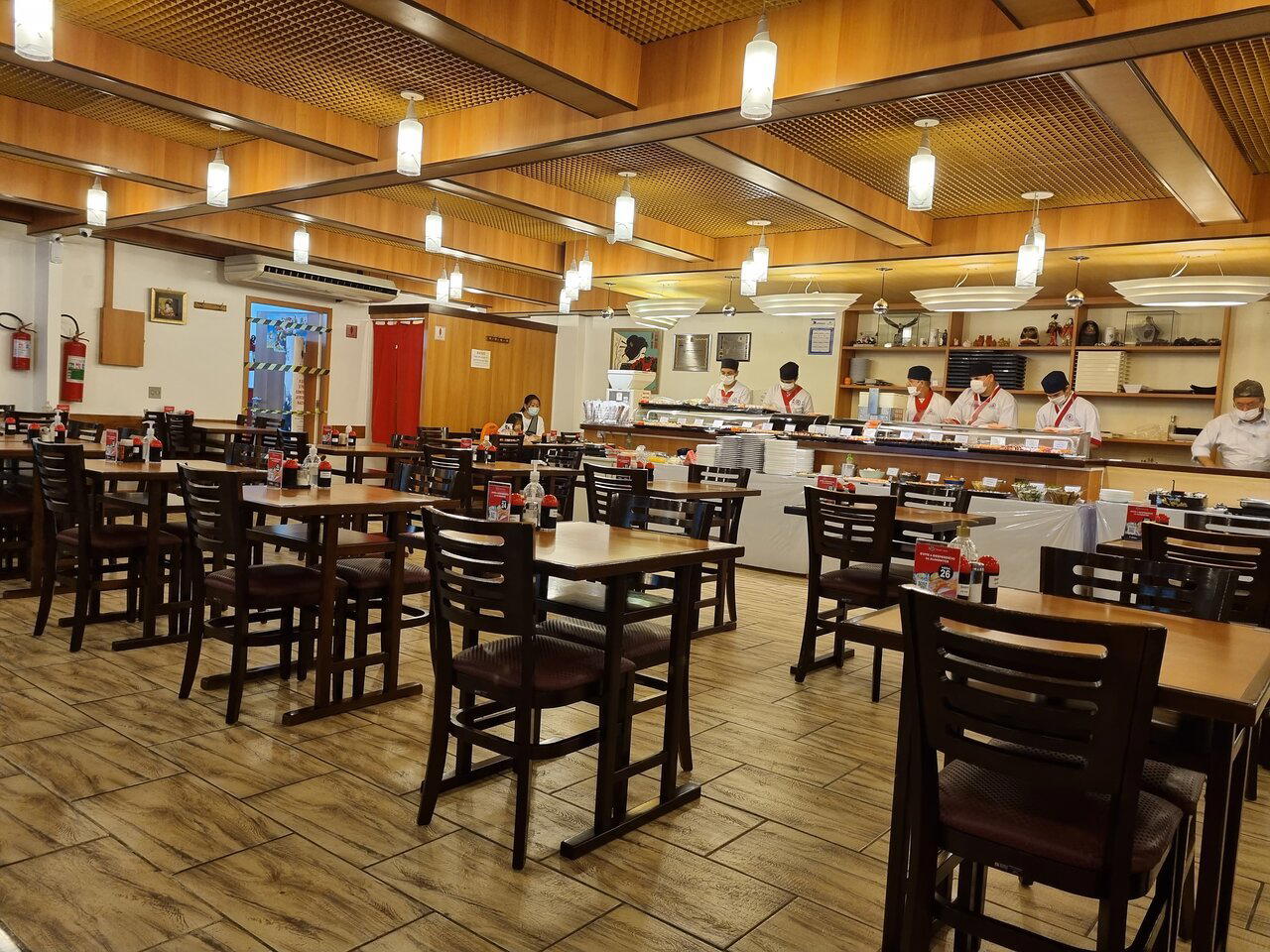
Liberdade and the Architecture of Brazilian-Japanese Dining
São Paulo's Liberdade district does not merely contain the largest Japanese diaspora community outside Japan, it has spent decades producing a sushi culture that operates by its own logic, distinct from the omakase orthodoxy of Tokyo and equally distant from the westernised rolls that define sushi in most of the Americas. The neighbourhood's restaurants reflect a community that has been cooking Japanese food in Brazil for over a century, absorbing local ingredients while preserving technical traditions. Rua da Glória, where Sushi Isao occupies a second-floor space at number 111, sits at the quieter, more residential edge of that ecosystem, the kind of address that filters out casual foot traffic and rewards the visitor who arrives with intent.
Within São Paulo's broader restaurant conversation, which runs from D.O.M.'s modern Brazilian tasting menus through to the creative contemporary work at Tuju and Maní, Japanese dining occupies a specific and well-populated niche. The city has a range of serious sushi restaurants, and Sushi Isao's Liberdade address places it within the neighbourhood that gives these restaurants their cultural legitimacy rather than the Itaim Bibi or Jardins corridors where many of São Paulo's international fine-dining addresses cluster.
The Second Floor and What It Signals
A second-floor dining room in a Latin American city reads differently than it might in Tokyo or New York. In São Paulo, it typically signals a room that has survived on quality rather than visibility, you do not end up on the second floor of a Liberdade building by accident, and the climb is a mild act of commitment that tends to pre-select a more engaged clientele. The physical separation from street-level noise also shapes the experience: the register drops, the pace slows, and the attention available for the food increases.
This format has parallels in how premium Japanese dining has evolved globally. At venues like Atomix in New York City and the more technically demanding end of the São Paulo sushi scene, the room design is understood as part of the meal's sequencing, what you see and feel before the first course arrives already calibrates expectation. Liberdade's leading sushi addresses have understood this longer than the city's newer fine-dining openings, in part because the Japanese-Brazilian community has always treated the dining room as an extension of hospitality culture rather than mere backdrop.
The Progression of a Meal: How Sushi Sequencing Works Here
Brazilian-Japanese sushi at its most considered moves through a logic that differs from both the strict edo-mae tradition of Tokyo counters and the more casual omakase formats that have proliferated internationally. The meal tends to open with lighter preparations, sashimi selections that foreground the quality of the fish sourcing, before moving into nigiri, where the relationship between rice temperature, vinegar balance, and fish quality becomes the primary variable. The middle of a serious sushi progression in São Paulo will often include preparations that reflect the local ingredient environment: fish species from Brazilian coastal waters that do not appear on Japanese menus, handled with the same technical care as imported bluefin.
This sourcing reality is one of the more interesting structural features of Liberdade sushi. Brazil's Atlantic coastline produces species, certain sea bass, grouper, and local tuna varieties, that Japanese-Brazilian chefs have spent decades learning to treat through a Japanese technical lens. The result is a cuisine that cannot be reduced to either tradition alone. For context on how this kind of regional-meets-technique synthesis plays out in other high-level Brazilian cooking, the approach at Evvai and Fame Osteria in the Italian-Brazilian contemporary space offers a useful parallel: tradition transplanted, then adapted by a community with deep roots.
The later stages of a meal at this level typically involve cooked preparations, tamago, a soup course, that function as a form of punctuation, bringing the progression to a close rather than extending it. The sequencing discipline that distinguishes the better Liberdade sushi rooms from more casual neighbourhood options is most visible here: a kitchen that understands when to stop is a kitchen that understands pacing.
Positioning Within São Paulo's Sushi Tier
São Paulo's sushi restaurants now occupy a more stratified market than they did a decade ago. At the upper end sit a small number of omakase-format counters with long lead times and prices that compare to the city's leading tasting-menu restaurants, Below that sits a mid-tier of serious à la carte and set-menu Japanese restaurants with strong neighbourhood followings, and below that the more casual sushi delivery and mall-format operations that account for most of the city's sushi volume.
Sushi Isao's Liberdade address and second-floor format suggest positioning in the mid-to-upper end of that middle tier, a restaurant with enough seriousness to attract informed diners, but within a neighbourhood context that keeps it connected to the community dining tradition rather than the high-ticket omakase circuit. This is a meaningful distinction. The technically accomplished sushi in São Paulo does not always come from the highest-priced room; Liberdade has historically produced restaurants where the fish knowledge is deep and the prices remain grounded by neighbourhood economics.
For reference points beyond São Paulo, the dynamic resembles what one finds in cities with significant diaspora Japanese communities: Lasai in Rio de Janeiro demonstrates a different version of this, serious technique operating outside the expected luxury corridor, and internationally, the gap between technically rigorous and astronomically priced is well illustrated by the contrast between Le Bernardin in New York City and neighbourhood-level excellence.
Planning Your Visit
Rua da Glória 111 is in the Liberdade neighbourhood, accessible from Liberdade metro station on Line 1 (Blue), making it one of the more direct São Paulo restaurant addresses to reach without a car. The second-floor location means there is no street-level shopfront to find, visitors should look for the building number and head upstairs. Given the restaurant's address within Liberdade's denser dining corridor, weekends and Friday evenings tend to see higher demand across the neighbourhood; arriving earlier in a dinner service or booking ahead where the restaurant's system allows is the sensible approach.
At a Glance
Comparable venues nearby, for context on price, style, and recognition.
| Venue | Cuisine | Price |
|---|---|---|
| Restaurant Sushi IsaoThis venue — the venue you are viewing | Se, Traditional Japanese Buffet | $$$ |
| Jam Jardins Japanese Cusine | Jardim Paulista, Japanese Fusion | $$$ |
| Restaurante Aizomê | Vila Bela Vista, Modern Japanese Kaiseki | $$$ |
| Ohka | Pinheiros, Modern Japanese Cuisine | $$$$ |
| By Koji | Morumbi, Japanese Sushi and Seafood | $$$$ |
| Restaurante Sushi Hiroshi | Santana, Traditional Japanese Sushi | $$$ |
Continue exploring
More in São Paulo
Restaurants in São Paulo
Browse all →
Bars in São Paulo
Browse all →
At a Glance
- Cozy
- Family
- Group Dining
- Casual Hangout
- Standalone
- Sake Program
Current opening hours
- Monday
- Closed
- Tuesday
- Closed
- Wednesday
- 11 AM–3 PM
- Thursday
- 11 AM–3 PM
- Friday
- 11 AM–3 PM, 6–9 PM
- Saturday
- 11 AM–3 PM, 6–9 PM
- Sunday
- 11 AM–3 PM
Hours can change for holidays and private events. Last verified .
Clean, organized, and comfortable family atmosphere with a focus on fresh food preparation.