Restaurant PRAKM
Our verdict
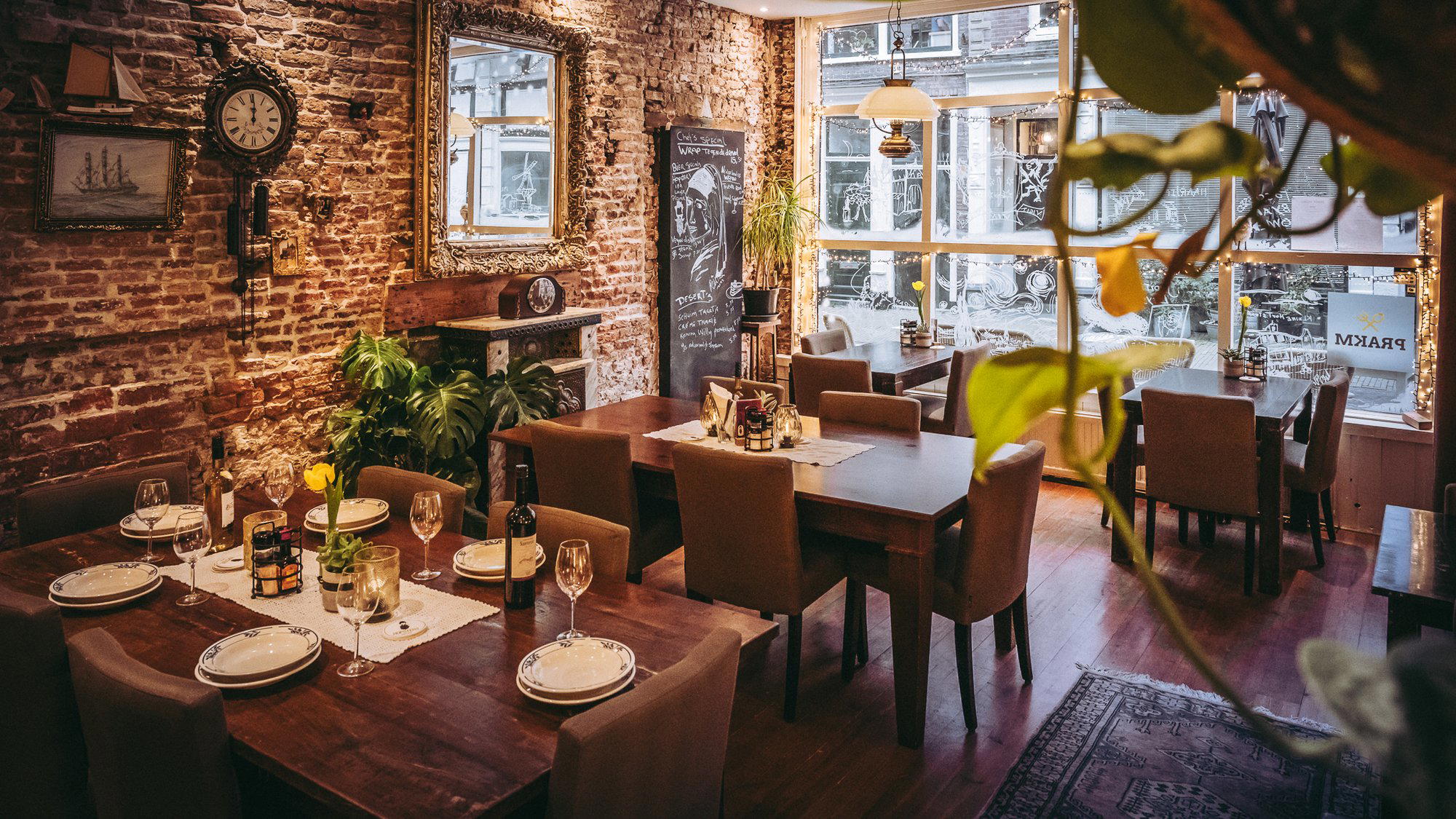
On Kleine Houtstraat, one of Haarlem's quieter pedestrian stretches, Restaurant PRAKM occupies a position that rewards those who look past the city's more visible dining circuit. Haarlem's restaurant scene has matured considerably, producing a tier of destination-quality addresses that compete credibly with Amsterdam's mid-range creative bracket, and PRAKM sits within that conversation.

Pearl is the En Primeur Club membership app — saves, bookings, and concierge access live there. Same editors, same standards.
The menu
What to order
- Beef stew
- Venison stew
- Clam stew
- Stamppot
- Draadjesvlees
- Dutch meatballs
Kleine Houtstraat and What It Says About Haarlem Dining
Haarlem's dining geography has a logic that visitors often miss on a first pass. The Grote Markt and its surrounding streets draw the foot traffic and the tourist euro, but the more considered restaurants tend to migrate toward quieter residential corridors where rents allow kitchens to invest in product rather than location premium. Kleine Houtstraat is one of those corridors: a pedestrian-scale street in the southern part of the historic centre where independent restaurants coexist with local residents rather than day-trippers. Restaurant PRAKM at number 105 belongs to this quieter stratum of Haarlem's food scene, which is precisely what gives it a different character from the city's more prominent addresses.
That geography matters because Haarlem itself has undergone a meaningful shift over the past decade. Once treated primarily as a commuter satellite of Amsterdam, the city now holds its own as a dining destination. The thirty-minute train connection from Amsterdam Centraal remains the standard routing for visitors, but increasingly people are making the journey specifically for the food rather than as a scenic detour. The presence of addresses like Ratatouille Food & Wine (€€€€ · Modern Cuisine) and ML (€€€ · Creative) at the upper end of the local market, alongside neighbourhood restaurants like Brasserie BRUIS and Adamo, signals a scene with genuine range rather than one propped up by tourist volume alone.
Where PRAKM Sits in the Haarlem Tier Structure
The Haarlem restaurant market has stratified in ways that parallel what happened in Amsterdam a generation earlier. At the leading sits a small cluster of formal destination restaurants with national visibility and price points to match. Below that, a mid-range creative tier, priced roughly in the €€€ bracket, competes on cooking ambition and atmosphere rather than on ceremony or room size. Then there is a lower tier of neighbourhood addresses running at €€ or below, where accessibility and informality are the primary draws, including Indonesian specialists like Café Samabe (€€ · Indonesian), which reflects Haarlem's own colonial culinary inheritance.
What the address and neighbourhood context suggest is a restaurant operating for a local and regional audience rather than a walk-in tourist crowd, which typically indicates either a deliberate mid-range positioning or a destination-level format that relies on advance booking rather than casual footfall. Visitors planning a visit should check current availability and pricing directly, as both can shift seasonally.
For context on the wider Dutch fine-dining circuit that Haarlem restaurants compete against regionally, the reference points include De Bokkedoorns in Overveen, which sits just outside Haarlem's city limits and holds a strong regional profile, as well as Aan de Poel in Amstelveen and Ciel Bleu in Amsterdam at the higher end. Further afield, addresses like De Librije in Zwolle, 't Nonnetje in Harderwijk, De Groene Lantaarn in Staphorst, De Lindehof in Nuenen, De Lindenhof in Giethoorn, Brut172 in Reijmerstok, and De Nieuwe Winkel in Nijmegen define the national benchmark against which regional Dutch restaurants are implicitly measured. Internationally, tasting-menu formats at addresses like Le Bernardin in New York City and Atomix in New York City illustrate the global standard for creative, produce-led cooking, a reference point that the better Dutch kitchens increasingly use to calibrate their own ambition.
The Neighbourhood as Part of the Experience
Kleine Houtstraat's character shapes the experience of eating at any restaurant on it before a guest even sits down. The street runs south from the centre toward the Hout, Haarlem's municipal park, and the surrounding blocks are predominantly residential with a local-serving retail mix. Arriving here on foot from the train station takes under fifteen minutes through the historic centre, passing the Frans Hals Museum and the older merchant streets that give Haarlem its architectural identity. That walk is itself part of what distinguishes eating in Haarlem from eating in Amsterdam: the city is compact enough that everything connects on foot, and the pace is noticeably different.
Restaurants in this part of Haarlem tend to attract a clientele of local regulars alongside visitors who have done their research. That mix produces a different room energy than venues on tourist circuits: conversations at neighbouring tables are more likely to be in Dutch, the service rhythm tends to be less performative, and the sense that you are eating where locals choose to eat, rather than where visitors are directed, is more pronounced. For guests coming from Amsterdam specifically to eat rather than to sightsee, that distinction has value.
Planning a Visit
Haarlem is served by frequent direct trains from Amsterdam Centraal, with journeys running approximately twenty to thirty minutes depending on the service. The station sits at the western edge of the historic centre, putting Kleine Houtstraat within comfortable walking distance. Parking is available but the historic centre's layout makes arriving by train or bicycle more practical for most visitors. Given that PRAKM operates on a quieter residential street without confirmed walk-in volume, booking ahead is the sensible approach regardless of format: Haarlem's better restaurants at every price tier tend to fill on weekends. Visitors building a broader Haarlem dining itinerary can use our full Haarlem restaurants guide to map the scene across price tiers and cuisine types.
Frequently asked questions
Is Restaurant PRAKM suitable for children?
The restaurant sits on Kleine Houtstraat 105 in central Haarlem, a street with a quieter, more considered character than the tourist-facing Grote Markt area. The neighbourhood itself is walkable and calm, which works in families' favour before and after a meal.
Is Restaurant PRAKM formal or casual?
No dress code is published in available information for PRAKM. Kleine Houtstraat as a dining street sits outside Haarlem's most tourist-heavy corridors, and restaurants there tend toward a considered but unpretentious register. Calling ahead or checking the restaurant's own channels will give the clearest steer before your visit.
How does Restaurant PRAKM fit into the wider Haarlem dining scene, and is it worth combining with a visit from Amsterdam?
PRAKM is positioned on Kleine Houtstraat, a street that sits in the more local, less foot-traffic-driven part of central Haarlem — a different register from the Grote Markt cluster. Haarlem is accessible from Amsterdam Centraal in roughly twenty to thirty minutes by direct train, making it a practical choice for a standalone dining trip rather than a compromise stopover. The city's restaurant market has stratified noticeably in recent years, and Kleine Houtstraat is part of that shift toward neighbourhood-anchored destination dining.
What do people recommend at Restaurant PRAKM?
The restaurant is located at Kleine Houtstraat 105, Haarlem, and sits within a neighbourhood that has drawn more destination diners in recent years as Haarlem's restaurant tier has developed. For current menu highlights, reaching out to the restaurant directly is the most reliable approach.
Compact Comparison
Comparable venues nearby, for context on price, style, and recognition.
| Venue | Cuisine | Price | Awards | Notes |
|---|---|---|---|---|
| Restaurant PRAKMThis venue — the venue you are viewing | Traditional Dutch Cuisine | $30–50 | Not listed | Not listed |
| Le Mortier | Seasonal French Fine Dining | $50–100 | Not listed | Centrum, Seasonal French Fine Dining |
| Adamo | Classic Italian Trattoria | $50–100 | Not listed | Haarlem city center, Classic Italian Trattoria |
| Deplanu | Modern Seafood Small Plates | $50–100 | Not listed | Kleverplakbuurt, Modern Seafood Small Plates |
| Maita | Nikkei (Japanese-Peruvian Fusion) | $50–100 | Not listed | Centrum, Nikkei (Japanese-Peruvian Fusion) |
| Brasserie BRUIS | Modern French Brasserie | $50–100 | Michelin Plate · Star Wine List | Centrum, Modern French Brasserie |
Continue exploring
More in Haarlem
Restaurants in Haarlem
All restaurants in Haarlem →
Bars in Haarlem
Browse all →
Hotels in Haarlem
All hotels in Haarlem →
Wineries in Haarlem
Browse all →
Details
- Cozy
- Rustic
- Classic
- Intimate
- Casual Hangout
- Family
- Group Dining
- Standalone
- Historic Building
- Beer Program
- Local Sourcing
- A La Carte
- Dutch Wine
- Dutch Beer
- Vegetarian Friendly
- Gluten Free Options
- Vegan Options
Current opening hours
- Monday
- Closed
- Tuesday
- Closed
- Wednesday
- 5–9 PM
- Thursday
- 5–9 PM
- Friday
- 5–9 PM
- Saturday
- 5–9 PM
- Sunday
- 5–9 PM
Hours can change for holidays and private events. Last verified .
Charming and lively historic setting with a cozy, nostalgic atmosphere reminiscent of a traditional Dutch home kitchen.