Restaurant Oepfelchammer
One of Zurich's oldest surviving restaurants, Oepfelchammer occupies a timber-framed room on Rindermarkt that has fed the city's merchants, writers, and tradespeople since the eighteenth century. The kitchen works within a Swiss-German tradition where the sourcing of regional produce and the rhythm of the seasons govern the menu more than culinary fashion. For visitors seeking something outside the Michelin-circuit consensus, it sits in a category of its own.
Pearl is the En Primeur Club membership app — saves, bookings, and concierge access live there. Same editors, same standards.
- Address
- Rindermarkt 12, 8001 Zürich, Switzerland
- Phone
- +41 44 251 23 36
- Website
- oepfelchammer.ch
- Directions
- Get directions
 Saves & bookings on Pearl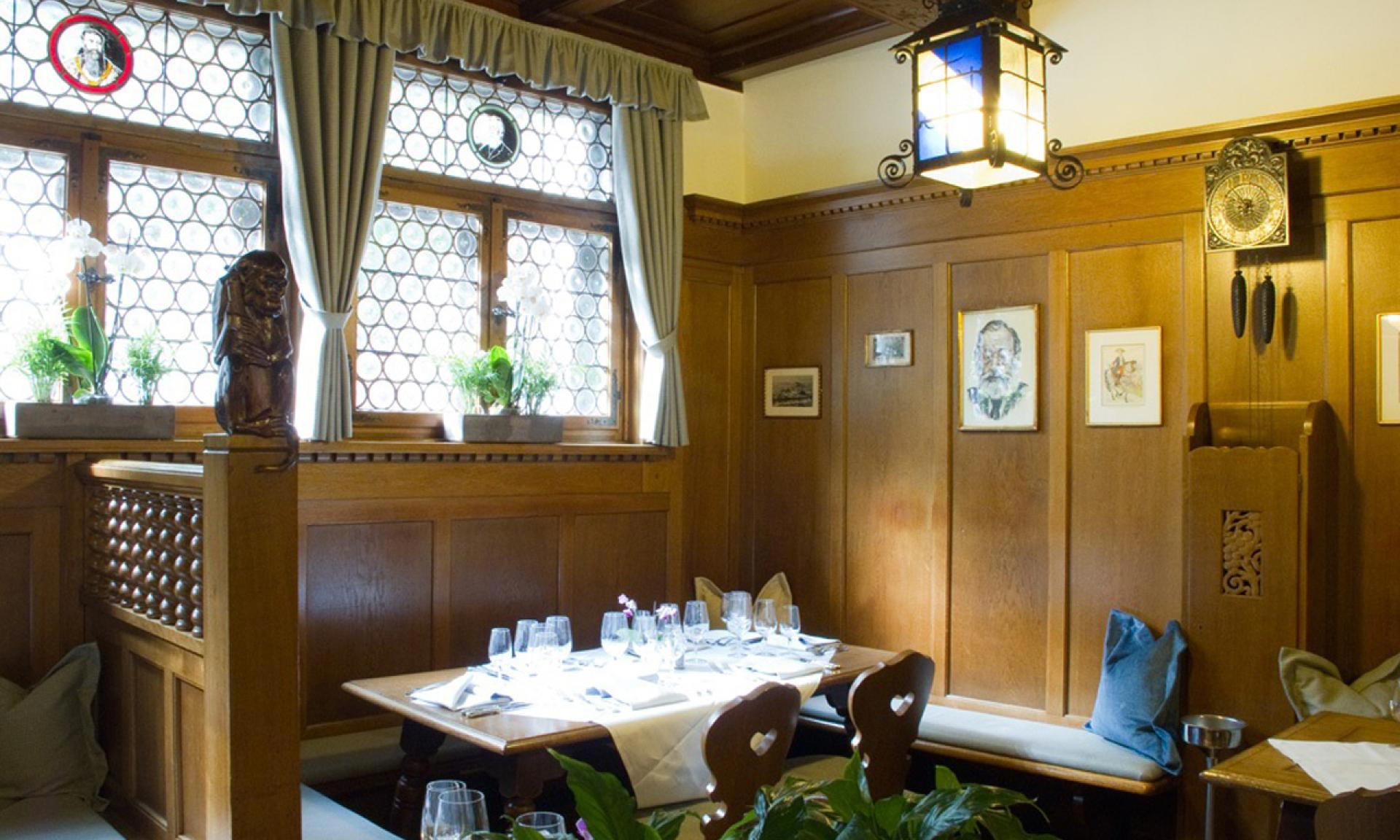
A Room That Predates Modern Dining
The approach to Rindermarkt 12 sets the terms before you reach the door. The street is narrow, the building timber-framed and low-slung in the way of the Zurich Altstadt's older stock, and the sign above the entrance has none of the typographic self-consciousness of contemporary restaurant branding. Oepfelchammer is not performing antiquity — it simply is old, in the way that only a handful of European dining rooms can claim. The beamed interior, the long communal tables, the wine racks that crowd the walls: these are not design decisions but inherited conditions, accumulated across centuries of continuous use.
That continuity matters because it shapes everything about what happens at the table. Kitchens with long institutional memories tend to cook differently from those built around a chef's individual ambition. The repertoire here is Swiss-German in direct sense: dishes that reflect the agricultural rhythms of the Swiss Mittelland, the trade routes that once passed through Zurich, and the preservation techniques that cold-weather cooking demanded long before refrigeration. Where many of Zurich's contemporary restaurants — IGNIV Zürich by Andreas Caminada or The Counter, for instance, operate inside the international fine-dining conversation, Oepfelchammer occupies a different position entirely: the keeper of a civic dining tradition rather than a participant in a global one.
Sourcing as the Organizing Principle
Swiss restaurant culture has a specific relationship with ingredient provenance that differs from the broader European farm-to-table movement. It is less a marketing posture and more a structural fact: Switzerland's geography, its small-scale agriculture, and its network of regional producers make local sourcing not an ideology but the path of least resistance for any kitchen that takes its supply chain seriously. Autumn brings game from the Swiss Alps and Jura forests; winter puts root vegetables, preserved meats, and lake fish at the center; spring opens the window for white asparagus from the Rhine plain and early dairy production from alpine herds returning to lower pastures.
At Oepfelchammer, this seasonal structure is not dressed up with elaborate technique. The kitchen's role is closer to that of an interpreter than an inventor, taking what the Swiss agricultural calendar provides and presenting it in forms that a centuries-old dining room has always understood. That means Geschnetzeltes at its appropriate moment, game dishes timed to the hunting season, and preparations where reduction and braising do the work that ingredient quality has already made possible. For a frame of reference beyond Zurich, this approach shares sensibility with the produce-led discipline you find at Schloss Schauenstein in Fürstenau, though the register here is entirely different, vernacular rather than haute, communal rather than ceremonial.
The wine operation reinforces this regional orientation. Swiss wine remains underexposed internationally, a structural consequence of the country consuming most of what it produces domestically. A room like Oepfelchammer, which has been cellaring and serving Swiss bottles across multiple generations, provides a depth of access to regional producers, particularly from Zurich canton, Graubünden, and the Valais, that newer operations simply cannot replicate. The wine racks visible throughout the dining room are not decorative; they represent an actual working cellar with genuine historical depth.
Where Oepfelchammer Sits in Zurich's Dining Picture
Zurich's restaurant scene divides roughly into three layers. At the leading, the Michelin-recognized kitchens, including The Restaurant, compete on the same terms as comparable rooms in Paris, Copenhagen, or Tokyo. In the middle, a dense tier of contemporary European cooking ranging from the Italian focus of Eden Kitchen & Bar to the Swiss-inflected comfort of Widder. Below that, or beside it entirely, since the comparison is not about quality, sit a small number of rooms whose value proposition is historical continuity and civic identity rather than culinary ambition in the contemporary sense.
Oepfelchammer belongs emphatically in that third category. It has been a gathering point for Zurich's writers, craftspeople, and intellectual life across different eras, and the room still carries that social function. The long tables encourage the kind of conversation between strangers that Swiss dining rooms with communal seating have always facilitated. This is not a place for a quiet dinner for two in a banquette; it is a place for the kind of evening that ends later than planned and involves people you did not know when you arrived.
For visitors who have already worked through Zurich's fine-dining circuit, or who are arriving from Switzerland's other serious kitchens, whether Hotel de Ville Crissier, Memories in Bad Ragaz, or Cheval Blanc in Basel, an evening at Oepfelchammer offers something those rooms cannot: a direct connection to the civic dining culture that predates Switzerland's contemporary fine-dining identity. The same argument applies when comparing it with celebrated rooms further afield, from Le Bernardin in New York City to Lazy Bear in San Francisco, both of which, whatever their merits, are emphatically products of their own contemporary moment.
Planning Your Visit
Oepfelchammer is located in the Altstadt on Rindermarkt, a short walk from the Grossmünster and the Niederdorf quarter. The address, Rindermarkt 12, 8001 Zürich, places it in one of the oldest sections of the city, most easily reached on foot from the central tram stops around Helmhaus or Bellevue. Autumn and winter are the seasons that align most naturally with the kitchen's strengths: game, braised meats, and the heavier preparations of Swiss-German tradition are at their most relevant when the temperature drops and the city's social life moves indoors. Those planning a wider Swiss itinerary will find it useful to map Oepfelchammer against other regional options, from Einstein Gourmet in Sankt Gallen to focus ATELIER in Vitznau, Mammertsberg in Freidorf, Maison Wenger in Le Noirmont, La Table du Valrose in Rougemont, and Da Vittorio in St. Moritz. Our full Zurich restaurants guide covers the broader range of options across the city.
How Restaurant Oepfelchammer Zürich compares with similar nearby venues.
| Venue | Cuisine | Price |
|---|---|---|
| Bauernschänke | Country cooking | €€ |
| IGNIV Zürich by Andreas Caminada | Sharing | €€€€ |
Continue exploring
More in Zürich
Restaurants in Zürich
Browse all →
Bars in Zürich
Browse all →
Hotels in Zürich
Browse all →

At a Glance
- Classic
- Cozy
- Rustic
- Well Known
- Lively
- Group Dining
- Casual Hangout
- Special Occasion
- Historic Building
- Standalone
- Extensive Wine List
- Local Sourcing
Current opening hours
- Monday
- Closed
- Tuesday
- 11:30 AM–11:30 PM
- Wednesday
- 11:30 AM–11:30 PM
- Thursday
- 11:30 AM–11:30 PM
- Friday
- 11:30 AM–11:30 PM
- Saturday
- 11:30 AM–11:30 PM
- Sunday
- Closed
Hours can change for holidays and private events. Last verified .
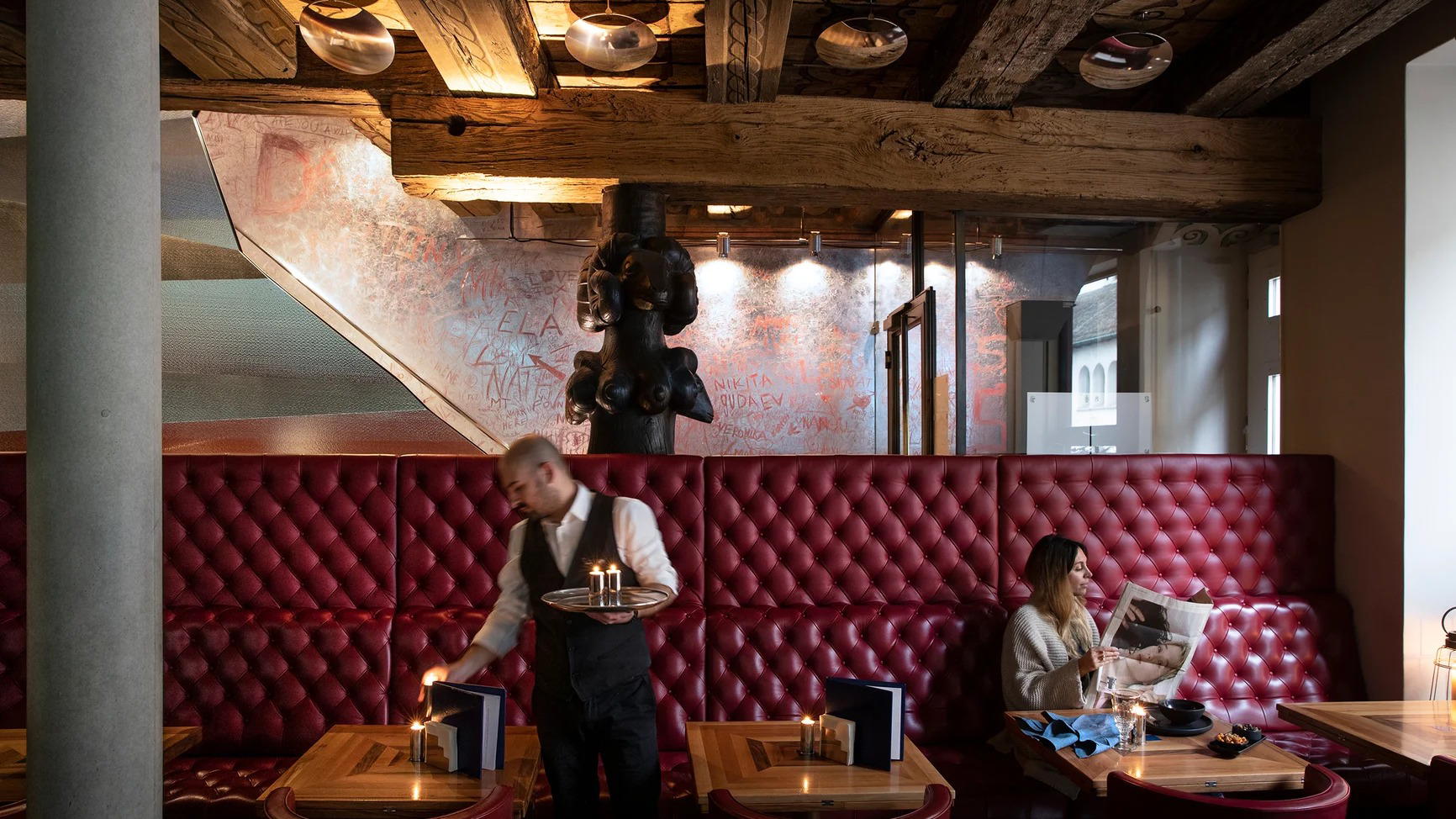
Dark wood-paneled rooms with coffered ceilings, graffitied walls covered in carved names and messages dating back to 1801, warm candlelit tavern atmosphere with a mix of rustic charm and convivial energy.