Restaurant Murtaröl
Restaurant Murtaröl sits in Plaun da Lej, a small settlement at the edge of Engadin valley country where Alpine sourcing traditions run deep. In a Swiss dining scene increasingly defined by the distance between farm and plate, restaurants in this region occupy a particular position: the landscape does much of the editorial work, and kitchens that pay attention to it tend to show it clearly. A table here belongs to that conversation.
 Discover on Pearl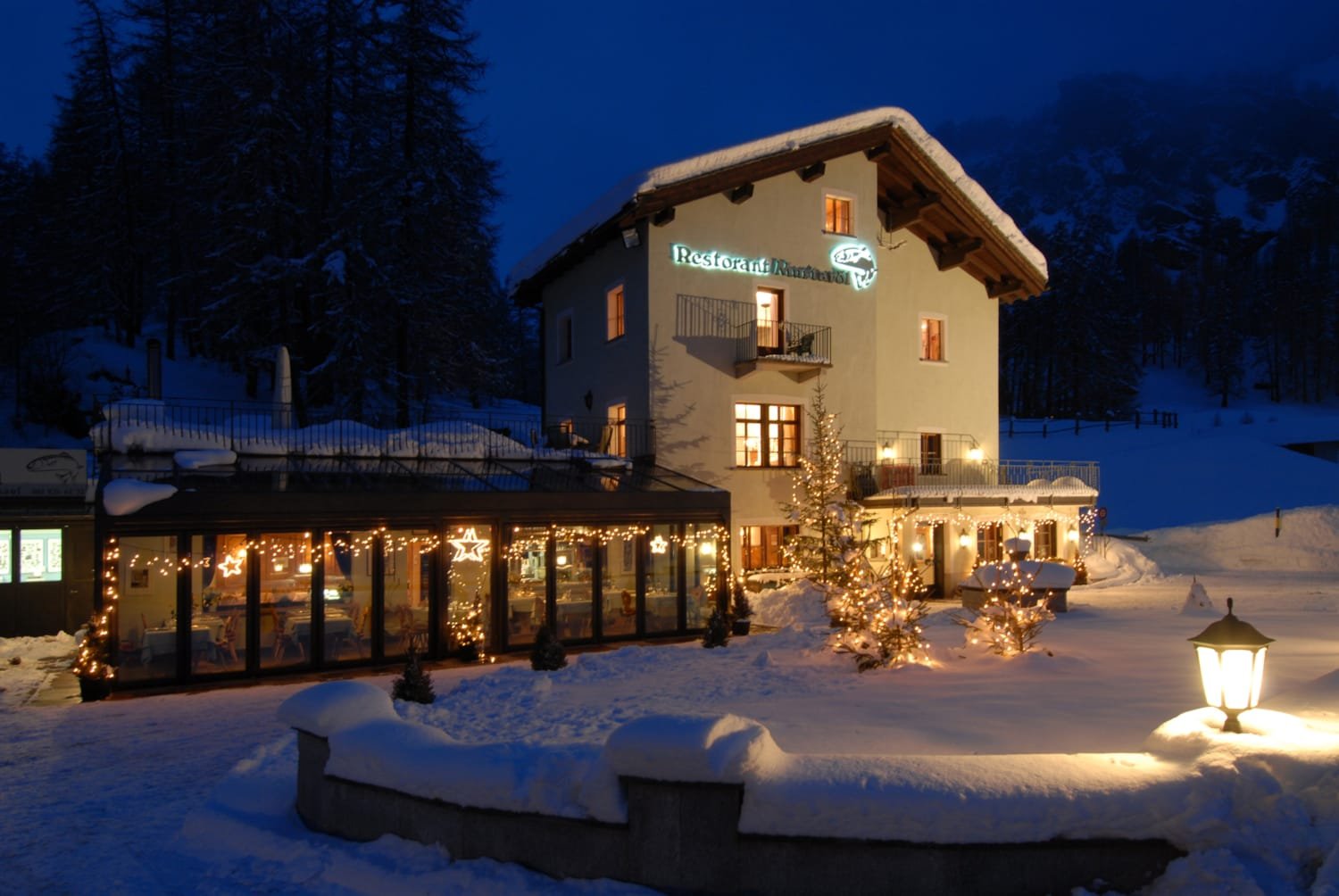
Where the Engadin Sets the Menu
Plaun da Lej sits at the lower end of the Upper Engadin, a narrow valley corridor in Graubünden where the altitude, the light, and the proximity to alpine pasture create conditions that serious kitchens in this part of Switzerland have long understood as an advantage rather than a constraint. The village itself is small enough that the restaurant addresses the surrounding terrain directly — not as backdrop, but as supplier. In the Swiss Alpine dining tradition, that relationship between kitchen and catchment area is the defining variable, and it is the first thing worth understanding before you arrive.
The address — Via dal Malögia 14 , places Restaurant Murtaröl at the edge of this community, close enough to the Maloja Pass road that guests arriving from St. Moritz or the Italian border at Chiavenna will find it naturally on their route. Plaun da Lej is not a destination town in the conventional resort sense, which means the restaurant draws on a different logic than the high-season spectacle dining found twenty minutes north in St. Moritz. For comparison, Da Vittorio - St. Moritz in St. Moritz operates as a luxury-resort extension of an Italian fine-dining brand , a different proposition entirely. Murtaröl's context is quieter, more rooted in the specific character of this valley stretch.
The shortlist, unlocked.
Hard-to-book tables, cellar releases, and concierge-planned trips.
Get Exclusive Access →The Alpine Sourcing Logic
Graubünden has one of the most coherent regional ingredient stories in Switzerland. The canton's combination of altitude variation, German, Italian, and Romansh cultural influence, and a long tradition of cured meats, mountain dairy, and foraged produce creates a sourcing framework that ambitious kitchens in the region can draw from with real depth. The Engadin in particular , with its high-altitude grazing, its proximity to Val Müstair's biosphere reserve, and its short but intense growing season , produces ingredients that carry genuine specificity. Alpine dairy at this elevation develops flavour profiles that differ measurably from lower-altitude equivalents. Graubünden's dried meat traditions, particularly Bündnerfleisch, represent a preservation culture that predates modern gastronomy by centuries.
This is the ingredient context that frames Restaurant Murtaröl. In the Swiss dining conversation, kitchens that engage seriously with regional sourcing occupy a different tier of interest than those importing luxury ingredients to alpine addresses. The most critically recognised Swiss restaurants have largely made this shift: Schloss Schauenstein in Fürstenau, which holds three Michelin stars and sits within Graubünden itself, built its identity substantially on Graubünden produce and Andreas Caminada's articulation of that regional specificity. Memories in Bad Ragaz similarly grounds its modern Swiss kitchen in the wider Alpine Swiss sourcing tradition. The editorial value of a restaurant in Plaun da Lej lies precisely in its position within this regional sourcing conversation, rather than in any comparison to urban fine dining.
Dining in the Upper Engadin: What the Setting Demands
Restaurants in the Upper Engadin operate within a seasonal rhythm that the Alps impose with little negotiation. Winter brings the skiing season and a concentration of high-spending visitors; summer brings hikers, cyclists, and a slower, longer kind of tourism oriented around the lake district and the mountain trails above Maloja. The kitchen calendar in this part of Switzerland reflects those two distinct populations, and the menus that work leading here tend to track the seasons explicitly rather than maintain a fixed, year-round identity.
The proximity to the Maloja Pass also connects Plaun da Lej to the northern Italian ingredient corridor , Valtellina's wines, Lombardy's cheeses, and the market traditions of Chiavenna are within reach in a way that isn't true of Swiss restaurants further north. That cross-border proximity shapes what thoughtful kitchens in this micro-region can do, and it distinguishes the culinary character here from, say, the more exclusively Swiss-German reference points that define restaurants like Magdalena in Schwyz or Einstein Gourmet in Sankt Gallen.
Across the broader Swiss scene, the most interesting kitchens currently sit at this kind of cultural intersection , where the sourcing logic is locally anchored but the culinary reference points are plural. IGNIV Zürich by Andreas Caminada in Zurich works the sharing format with Swiss produce in an urban context; focus ATELIER in Vitznau brings creative modern Swiss cooking to a lakeside setting. The Engadin equivalent of that editorial ambition tends to present itself more quietly, in smaller venues with less institutional infrastructure , which is part of what makes restaurants in a village like Plaun da Lej worth seeking out.
Planning a Visit
Plaun da Lej is accessible by the Rhaetian Railway, which connects the Upper Engadin corridor from Chur through St. Moritz. The closest station to the Maloja end of the valley is at Maloja itself, with Plaun da Lej reachable by car or local transport from there. Guests arriving from St. Moritz by road travel the lake-flanked Via da Malögia, a route that frames the approach to this part of the valley as much as the destination. Given the village's scale and the alpine seasonal calendar, visiting during the high summer or winter seasons typically offers the fullest picture of what this part of Graubünden does. Booking ahead is advisable regardless of season: restaurants of this type in small alpine settlements have limited covers, and the visitor flow in the Engadin concentrates on particular weeks rather than spreading evenly across the year. For broader orientation across the region, our full Plaun Da Lej restaurants guide covers the current dining options in and around the village.
Those building a longer Swiss itinerary around serious dining might pair a visit here with Cheval Blanc by Peter Knogl in Basel, Hotel de Ville Crissier in Crissier, 7132 Silver in Vals, Colonnade in Lucerne, L'Atelier Robuchon in Geneva, La Brezza in Ascona, La Table du Lausanne Palace in Lausanne, or Maison Wenger in Le Noirmont to map the full spread of Switzerland's dining ambition across its different cultural and geographic zones. For international reference points operating at the intersection of technique and sourcing rigour, Le Bernardin in New York City and Atomix in New York City both demonstrate how ingredient provenance can serve as a primary editorial commitment in a kitchen.
Frequently Asked Questions
- Is Restaurant Murtaröl suitable for children?
- Plaun da Lej is a small alpine village rather than a resort with dedicated family infrastructure, and restaurants in this setting tend to attract guests oriented toward a quieter, more considered dining experience. Whether the format suits younger children will depend on the meal's pace and structure. If you are travelling with children, it is worth contacting the restaurant directly to understand the current menu format and whether they can accommodate younger guests , in this price tier and setting, advance communication is always the clearer approach.
- What's the overall feel of Restaurant Murtaröl?
- The feel is consistent with what the Upper Engadin does at its most considered: alpine in setting, deliberate in pace, and oriented toward the kind of guest who arrives because of where they are rather than despite it. Plaun da Lej sits at the quieter, less commercial end of the valley compared to St. Moritz, and restaurants here tend to reflect that register , less performance, more attention to what is on the plate and the view beyond the window.
- What should I order at Restaurant Murtaröl?
- Without current menu data available, the most reliable approach is to follow whatever the kitchen is signalling as seasonal at the time of your visit. In Graubünden, this typically means paying attention to alpine dairy, cured meats from the regional tradition, and whatever the short mountain growing season has produced. Kitchens in this region that take their sourcing seriously will usually make those priorities visible on the menu; ask the service team what has come in recently.
- Is Restaurant Murtaröl connected to the Romansh culinary tradition of the Engadin?
- The Engadin valley, and Plaun da Lej specifically, sits within Romansh-speaking Graubünden, a region with a distinct food culture that includes preparations like maluns, capuns, and pizokel alongside the canton's cured meat traditions. Restaurants in this part of the valley have the option of engaging with that heritage directly, though the degree to which any kitchen foregrounds Romansh culinary reference points varies. The village address and the regional sourcing context place Murtaröl inside that conversation regardless of how explicitly the menu frames it.
In Context: Similar Options
These are the closest comparables we have in our database for quick context.
| Venue | Cuisine | Price | Awards | Notes |
|---|---|---|---|---|
| Restaurant Murtaröl | This venue | |||
| Schloss Schauenstein | Modern European, Creative | €€€€ | Michelin 3 Star | Modern European, Creative, €€€€ |
| Memories | Modern Swiss | €€€€ | Michelin 3 Star | Modern Swiss, €€€€ |
| focus ATELIER | Modern Swiss, Creative | €€€€ | Michelin 2 Star | Modern Swiss, Creative, €€€€ |
| IGNIV Zürich by Andreas Caminada | Sharing | €€€€ | Michelin 2 Star | Sharing, €€€€ |
| La Table du Lausanne Palace | Modern French | €€€€ | Michelin 2 Star | Modern French, €€€€ |
Need a table?
Our members enjoy priority alerts and concierge-led booking support for the world's most difficult tables.
Get Exclusive AccessThe shortlist, unlocked.
Hard-to-book tables, cellar releases, and concierge-planned trips.
Get Exclusive Access →