Restaurant Limousine
Restaurant Limousine sits in Saint Lambert, a quiet residential community on Montreal's South Shore that has quietly developed its own dining identity separate from the city across the river. The restaurant operates within a regional context where Quebec's ingredient traditions, farm sourcing, seasonal discipline, and francophone culinary culture, define the table more than any single chef's biography.
 Discover on Pearl
Pearl is the En Primeur Club membership app — saves, bookings, and concierge access live there. Same editors, same standards.
Saint Lambert and the South Shore Table
The restaurants that tend to matter most in Quebec's smaller communities are rarely the ones making noise in Montreal's dining press. Saint Lambert, a composed residential borough on the South Shore of the St. Lawrence, sits close enough to Montreal to draw from the city's culinary energy while operating at a pace and scale that rewards a different kind of dining. The neighbourhoods along this stretch of the river have long maintained their own table culture, francophone, seasonally anchored, and rooted in the agricultural rhythms of the broader Montérégie region that surrounds them. For context on the wider Saint Lambert scene, see our full Saint Lambert restaurants guide.
Restaurant Limousine operates within that context. The restaurant's name alone signals a certain register: not the self-conscious branding of a downtown destination, but the kind of naming that belongs to a specific place and community. What draws attention here is not spectacle but continuity, the kind of cooking that relies on where ingredients come from rather than on technique as performance.
Ingredient Geography: Why the Montérégie Region Matters
Quebec's relationship with its agricultural land is one of the defining threads in the province's restaurant cooking. The Montérégie, which fans out south and southwest of Montreal, is among the most productive agricultural zones in Canada, apple orchards, market gardens, dairy farms, and grain producers occupy a corridor that runs from the Richelieu Valley to the Ontario border. Restaurants in communities like Saint Lambert sit at the edge of that supply chain in the most literal sense: the distance between a farm gate and a kitchen pass can be measured in minutes, not hours.
This proximity has shaped how serious kitchens in the region think about their menus. Rather than importing credibility through named producers from farther afield, the strongest South Shore tables have tended to build menus around what the immediate season makes available. That discipline, when applied consistently, produces cooking that reads differently from the polished tasting-menu format that dominates Montreal's higher end. It is quieter, more constrained, and often more honest about what the land actually yields at a given time of year. Comparable approaches to terroir-led sourcing have defined well-regarded Quebec kitchens like Tanière³ in Quebec City and, further afield, Restaurant Pearl Morissette in Lincoln, where the sourcing philosophy is as central to the identity as the cooking itself.
A Quiet Address in a Considered Context
Saint Lambert is not a dining destination in the way that a neighbourhood like Mile Ex or Verdun functions in Montreal. It does not cluster restaurants for competition or comparison; venues here serve a local community first, and visitors who make the short trip across the Champlain area find a setting that reflects that priority. The atmosphere arriving at a South Shore address of this kind tends toward the residential, streets that quiet down after the weekday commute, a civic character that values discretion over display.
For diners accustomed to the formats that define Quebec's most-discussed restaurants, the $200-plus tasting menus at places like Jérôme Ferrer's Europea in Montreal or the technically rigorous Canadian fine dining represented by Alo in Toronto, a South Shore address like this one represents a different proposition. The comparison set is not the downtown flagship but the considered neighbourhood restaurant that earns its place through consistency and sourcing intelligence rather than through press cycles.
That positioning places Restaurant Limousine in a category that Canadian dining has sometimes struggled to name: not casual, not destination fine dining, but the middle register that serious eaters often find most reliable. Across the country, restaurants in that register have done some of the most interesting work with local supply, AnnaLena in Vancouver and Narval in Rimouski both operate in versions of this space, where the sourcing story is as legible as any award on the wall.
Regional Tradition and the Quebec Table
Quebec's food culture carries a particular historical weight that distinguishes it from the rest of Canada's dining scene. The province's French-speaking majority has maintained culinary traditions, tourtière, cipaille, the use of lard and maple and preserved meats, that predate the influence of French nouvelle cuisine and its Canadian adaptations. Restaurants in communities like Saint Lambert exist inside that tradition even when they are not explicitly invoking it. The French language on the menu, the rhythm of service, the expectation of a certain formality in a room that might otherwise look modest: these are cultural signals that do not require a tasting menu to communicate.
That cultural register distinguishes South Shore dining from what you find at, say, Aux Anciens Canadiens in Quebec City, which leans deliberately into heritage presentation, or from the stripped-back rural intensity of Eigensinn Farm in Singhampton. The South Shore register sits somewhere between those poles: rooted but not performative, contemporary but not fashion-driven.
For further reference on how ingredient-led cooking has developed across Canada's regional restaurant scene, the work being done at The Pine in Creemore and Cannery Restaurant in Niagara-on-the-Lake reflects the same broader shift toward sourcing transparency that is reshaping expectations across the country. Internationally, the emphasis on provenance and product that defines kitchens like Le Bernardin in New York City and the seasonal precision of Atomix demonstrate that this is not a regional concern but a global direction of travel.
Planning Your Visit
Saint Lambert is accessible from central Montreal via the Champlain Bridge corridor, and the community's compact scale means that most addresses are reachable on foot from the nearest metro connection at the Longueuil terminus. For visitors arriving from outside the region, the South Shore is leading approached as a half-day or evening commitment: the neighbourhood rewards the slower pace of a dedicated outing rather than a rushed stopover between other Montreal engagements. Other restaurants in similar community settings across Canada, including Barra Fion in Burlington and Bonimi in Etobicoke, tend to operate on reservation-preferred models with limited walk-in availability, which is worth bearing in mind for any South Shore address of this type.
Fast Comparison
Comparable venues nearby, for context on price, style, and recognition.
| Venue | Cuisine | Price | Awards | Notes |
|---|---|---|---|---|
| Restaurant LimousineThis venue — the venue you are viewing | French Bistro | $$$ | , | |
| Le Pois Penche | French Brasserie | $$$ | , | Golden Square Mile |
| The Sequel | Modern French-Italian Casual Fine Dining | $$$ | , | Coal Harbor |
| BARROCO | French Steakhouse with Mediterranean Influences | $$$ | , | Vieux Montréal |
| Pear Tree Restaurant | Modern French Fine Dining | $$$ | , | Burnaby North |
| Ciel | Modern French Bistro with Quebec Influences | $$$ | , | Vieux-Québec, Cap-Blanc, Colline parlementaire |
At a Glance
- Elegant
- Cozy
- Sophisticated
- Opulent
- Date Night
- Special Occasion
- Open Kitchen
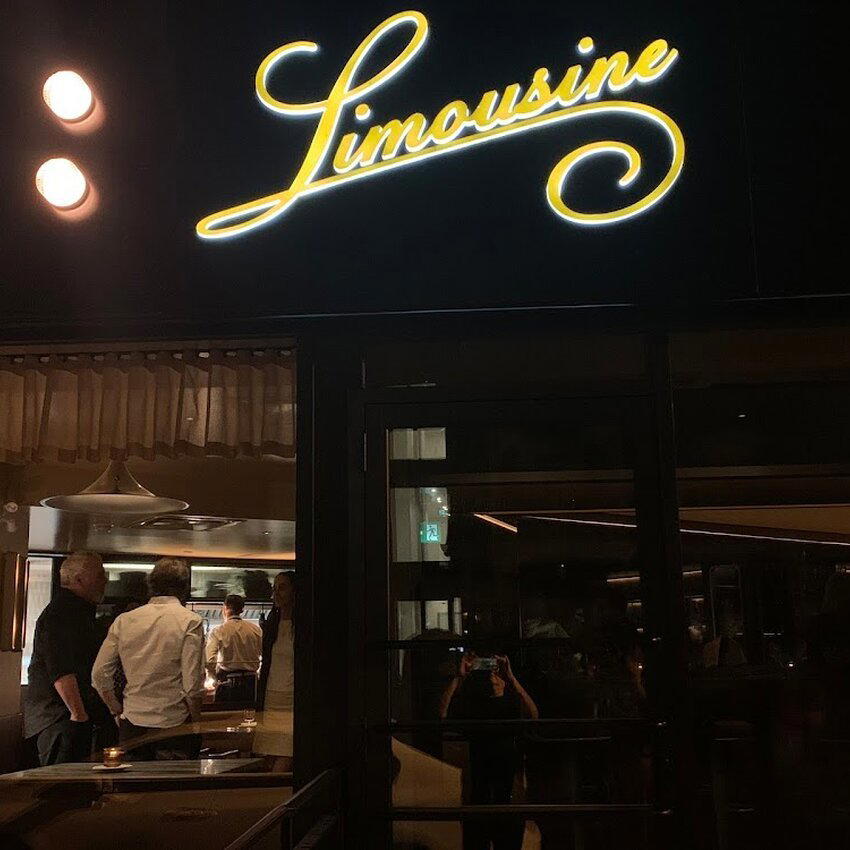
Cozy and fun with luxe materials, cinematic lighting, and a celebratory energy evoking retro glamour.