Restaurang Kungsleden sits inside Abisko Turiststation, one of Swedish Lapland's most remote gateway lodges, where the sourcing conversation is dictated by geography rather than trend. Dining here means eating in a landscape where the nearest supermarket is over an hour away, and the kitchen's relationship with local suppliers, foraged ingredients, and Arctic-latitude produce defines every plate on the menu.
Pearl is the En Primeur Club membership app — saves, bookings, and concierge access live there. Same editors, same standards.
- Address
- ABISKO TURISTSTATION 2, 981 07 Abisko, Sweden
- Directions
- Get directions
 Saves & bookings on Pearl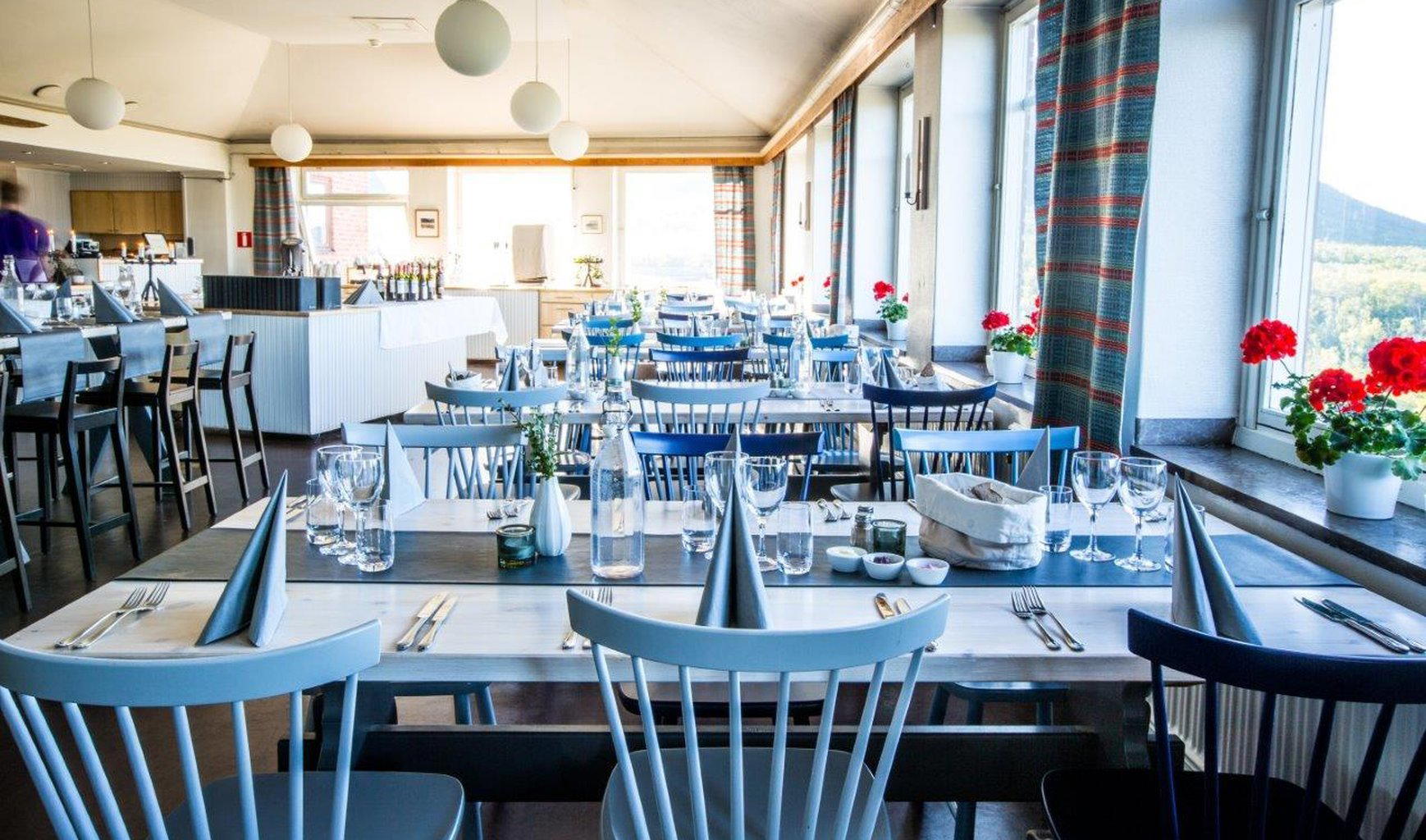
Eating at the Edge of the Trail: Dining in Swedish Lapland
There is a particular logic to restaurant dining in Arctic Sweden that has little to do with urban fine dining conventions. When a kitchen sits 200 kilometres north of the Arctic Circle, inside one of the country's most visited wilderness stations, the sourcing question answers itself: you use what the region provides, or you explain why you didn't. Restaurang Kungsleden, operating within Abisko Turiststation on the shores of Lake Torneträsk, exists in that context. The restaurant serves guests arriving at one of the primary entry points to the Kungsleden trail, the 440-kilometre hiking route running south through Swedish Lapland, which means the dining room draws a mixed crowd of endurance trekkers, winter aurora tourists, and travellers who have made the journey to this latitude primarily to be somewhere genuinely remote.
What Arctic Latitude Does to Ingredient Logic
The sourcing conditions in northern Sweden operate on different terms than those governing kitchens in Stockholm or Malmö. The growing season at this latitude is compressed into a brief window between June and August, during which herbs, berries, and wild plants emerge with an intensity that short summers in extreme climates tend to produce. Cloudberries, lingonberries, and Arctic crowberries grow in the surrounding terrain. Reindeer herding, practised by the Sámi communities whose territory spans this region, remains the primary source of local meat, and Sámi-raised reindeer carries a provenance and cultural specificity that no farmed equivalent can replicate. Freshwater fish from Lake Torneträsk, one of Sweden's largest and deepest lakes, provides another regional anchor. These are not ingredients chosen for menu narrative purposes; they are available because they are here, and their presence in a kitchen this far from distribution infrastructure carries real meaning.
This dynamic distinguishes Arctic dining from the sourcing conversations happening in Sweden's southern restaurant scene. At places like VYN in Simrishamn or ÄNG in Tvååker, hyperlocal sourcing is a deliberate creative philosophy layered onto kitchens that could, if they chose, access broader supply chains. In Abisko, it is closer to a structural condition. The nearest substantial town is Kiruna, roughly 90 kilometres by road, a drive that includes a stretch of E10 where reindeer crossings are a routine navigational reality. For a comparison point on how Kiruna-area hospitality handles this challenge, Camp Ripan in Kiruna offers a useful reference.
The Setting: Station Dining in a Wilderness Gateway
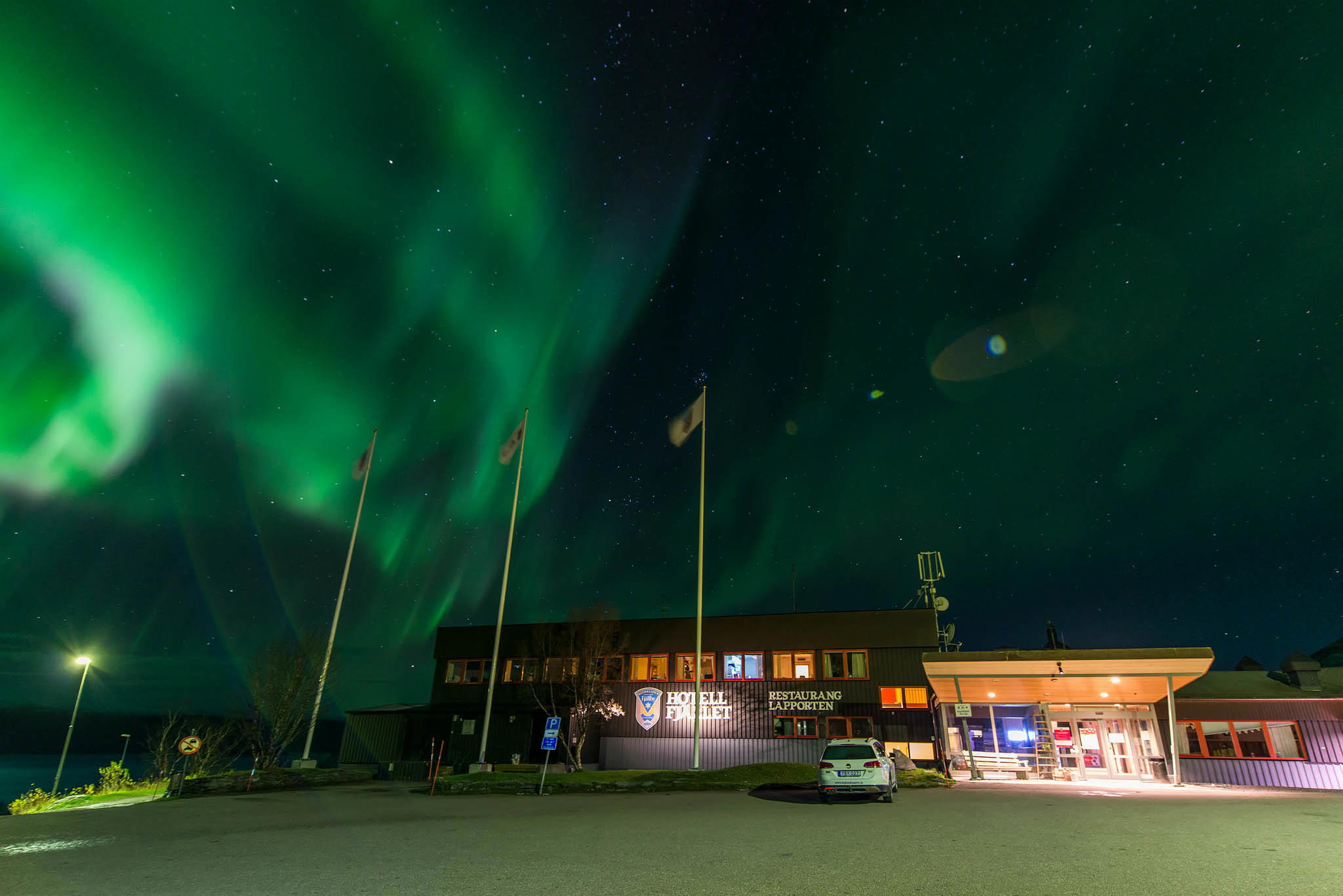
Abisko Turiststation was established by the Swedish Tourist Association (STF) in 1902 and has operated continuously as a base for wilderness access ever since. The station sits at the edge of Abisko National Park, where the Abiskojokk river meets the southern shore of Lake Torneträsk, with the Lapporten mountain pass, the U-shaped valley that functions as an informal symbol of Swedish Lapland, visible from the grounds. Approaching the dining room, the physical environment is already doing significant work: the lake stretches to the north, the mountains frame the view in every direction, and the light changes according to season in ways that have no urban equivalent. In winter, darkness is nearly total around the December solstice, and the station is one of the more reliable locations in Europe for northern lights observation due to a localised weather pattern that produces clear skies more frequently than surrounding areas. In summer, the midnight sun means the dining room windows admit daylight at 2am.
This is station dining in the original Scandinavian sense, a lodge-based restaurant serving people who have arrived at a wilderness threshold, not a destination restaurant that people travel to eat at specifically. That distinction matters for how you read the experience. The frame of reference is closer to a well-run alpine hut restaurant operating at a high standard of regional ingredient use than to the tasting-menu formats at Vollmers in Malmö or the precise New Nordic technique of VYN. Sweden's fine dining tier, anchored by operations like Frantzén in Stockholm, operates in a different register entirely. Kungsleden's kitchen works within the constraints and advantages of its location, which is a different kind of achievement.
Planning Your Visit: Practical Considerations for a Remote Destination
Abisko is not a drop-in destination. The primary access route is the Malmbanan railway line, which connects Luleå on the Baltic coast to Narvik in Norway, with a station at Abisko Turiststation itself, making the train one practical arrival method for most visitors. Overnight sleeper services from Stockholm reach Abisko in approximately 17 hours. The station operates year-round, and the main seasons carry different character: winter visits are oriented around northern lights and dog-sledding, while summer visits serve hikers beginning or completing the Kungsleden trail. The restaurant operates primarily to serve station guests, so staying on-site is one direct route to a table.
For context on how other Swedish regional restaurants handle the balance between local ingredient sourcing and accessible dining formats, PM & Vänner in Växjö and Knystaforsen in Rydöbruk offer useful southern comparisons, while Signum in Mölnlycke, 28+ in Gothenburg, Adrian Restaurang in Borås, Brasserie Park in Jonkoping, Enoteket in Norrköping, Lilla Bjers in Visby, John's Place in Varberg, and Veto in Örebro round out a picture of how Sweden's regional dining scene distributes itself across the country. For international benchmarks in technically precise cooking with strong sourcing identities, Le Bernardin in New York City and Atomix in New York City represent the upper tier of that reference set.
Side-by-Side Snapshot
Comparable venues nearby, for context on price, style, and recognition.
| Venue | Cuisine | Price | Notes |
|---|---|---|---|
| Restaurang KungsledenThis venue — the venue you are viewing | Seasonal Swedish Fine Dining | $$$ | Not listed |
| Fäviken Magasinet | Hyper-local Swedish Avant-Garde | $$$$ | Järpen |
| Arctic Bath | Modern Arctic Sámi Fine Dining | $$$$ | Harads |
| Restaurang CG | Scandinavian Charcoal Grill | $$$ | City Center |
| Icehotel Restaurant | Modern Swedish Fine Dining with Ice Presentation | $$$$ | Jukkasjarvi |
| Beijing8 | Modern Chinese Dumplings | $$ | Östermalm |
At a Glance
- Scenic
- Quiet
- Cozy
- Rustic
- Special Occasion
- Date Night
- Family
- Hotel Restaurant
- Panoramic View
- Organic
- Local Sourcing
- Mountain
- Waterfront
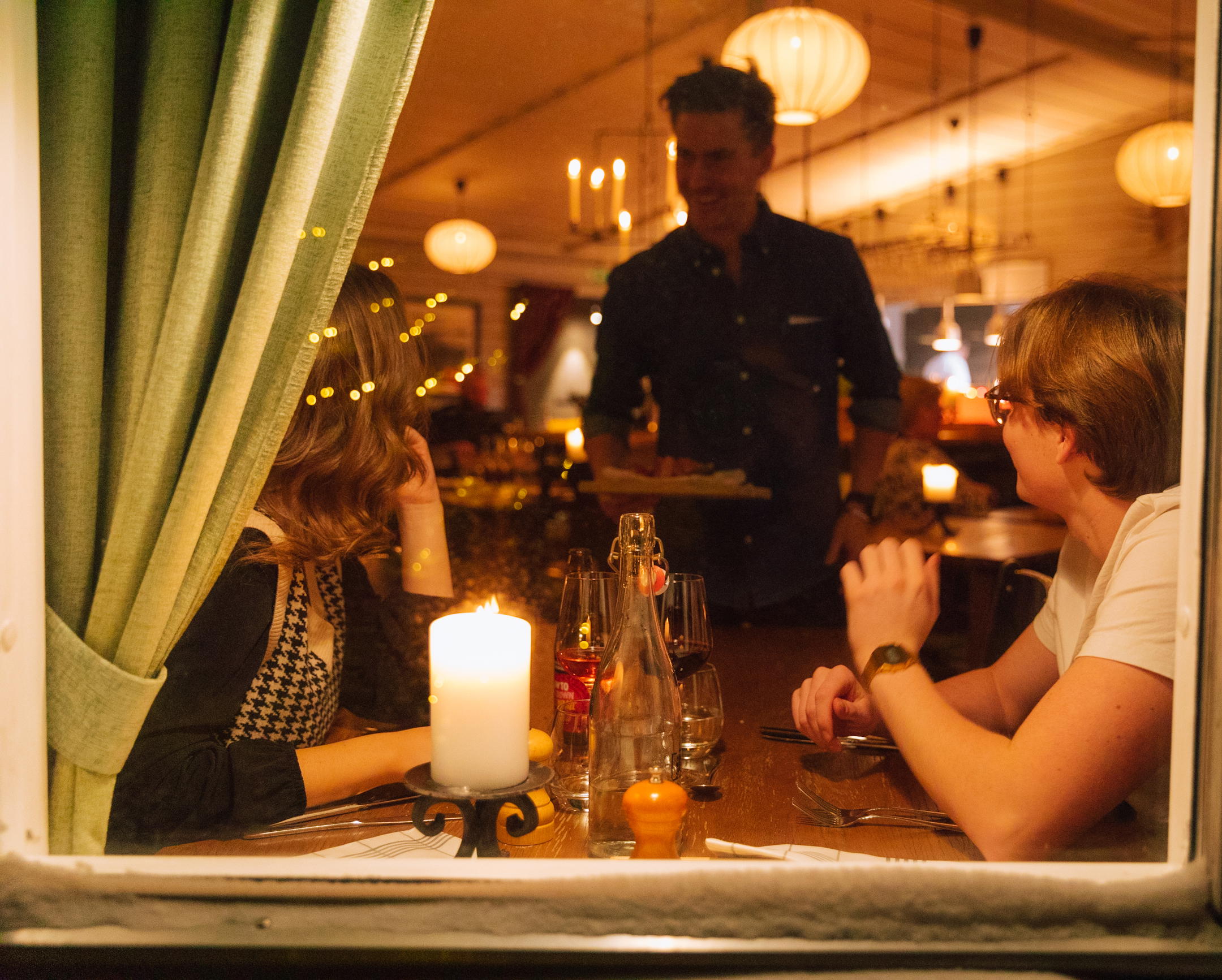
Quiet and scenic lodge-style dining with a remote mountain-station atmosphere and expansive lake and alpine views.