
Camp Ripan sits at the edge of Kiruna's subarctic wilderness, where the sourcing of ingredients is dictated less by trend than by geography. Operating in a town 145 kilometres above the Arctic Circle, the property draws on Sami foraging traditions and northern Swedish larder, reindeer, arctic char, lingonberry, placing it within a dining culture shaped by winter light and extreme terrain rather than metropolitan ambition.
Pearl is the En Primeur Club membership app — saves, bookings, and concierge access live there. Same editors, same standards.
- Address
- Campingvägen 5, 981 35 Kiruna, Sweden
- Phone
- +4698063000
- Website
- ripan.se
- Directions
- Get directions
 Saves & bookings on Pearl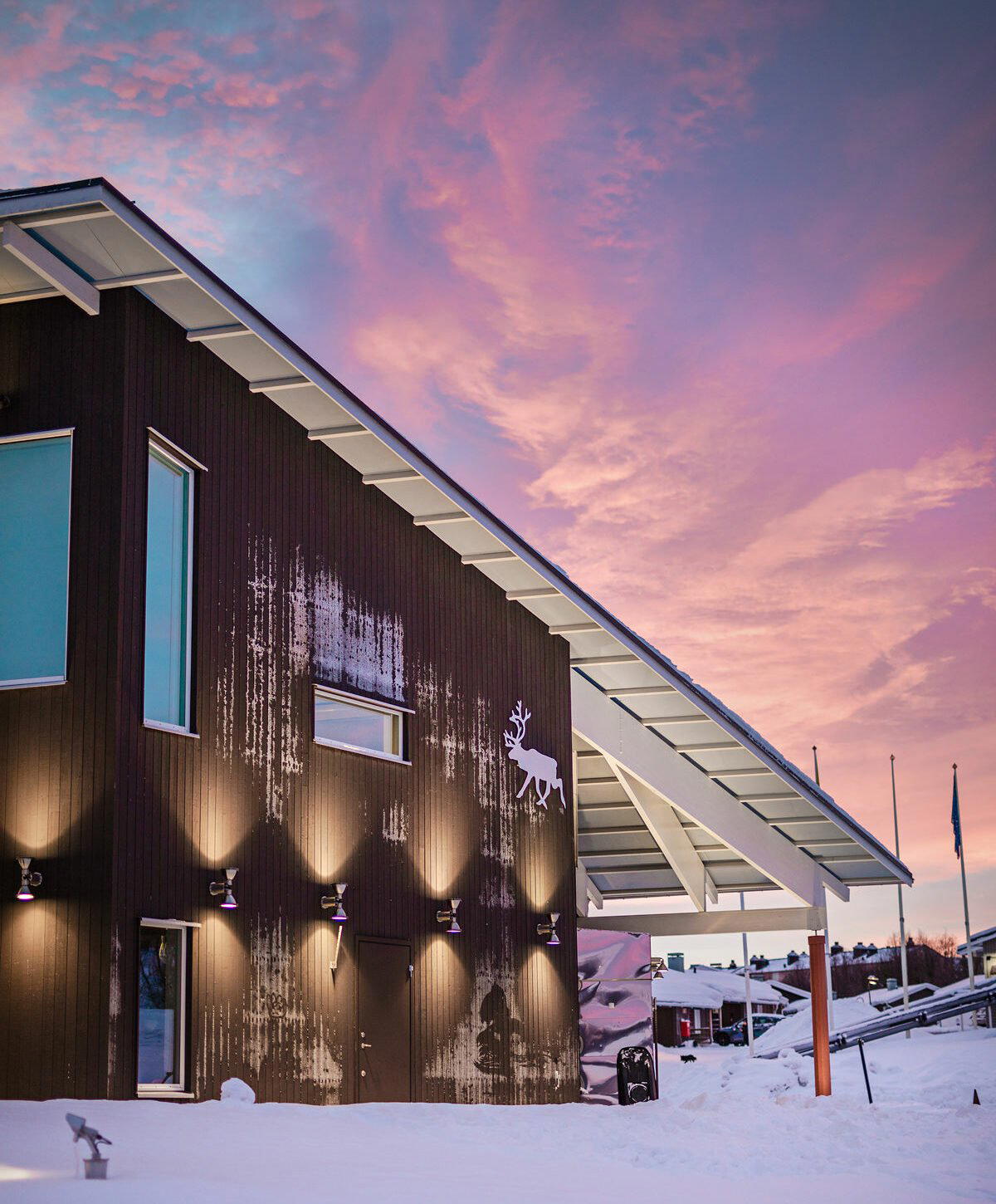
Where the Arctic Shapes What Ends Up on the Plate
Kiruna sits 145 kilometres north of the Arctic Circle, and that fact is not merely a geographical footnote, it determines what grows, what can be hunted, and what can realistically be transported to a kitchen operating in one of Sweden's most remote populated towns. The dining culture that has developed here does not mimic what is happening in Stockholm or Malmö. It operates on different terms, where the Sami tradition of reindeer herding, the short-window foraging of subarctic berries, and the clean cold waters of nearby lakes and rivers provide the actual architecture of a meal. Camp Ripan, at Campingvägen 5 in Kiruna, sits directly inside that tradition, geographically and conceptually.
For context on how far Kiruna's food culture sits from the Swedish mainstream, consider that the country's most discussed Nordic restaurants, Frantzén in Stockholm, VYN in Simrishamn, or Vollmers in Malmö, operate within reach of major supply chains, coastal fishing fleets, and urban forager networks. Kiruna's version of ingredient sourcing is more constrained and, in a specific way, more honest. There is no pretending that something arrived this morning from a ferry terminal two hours away. What reaches the kitchen in winter is largely what the surrounding landscape can provide or preserve: dried, smoked, fermented, or frozen as a matter of necessity rather than culinary fashion.
The Northern Larder as a Starting Point
Across Scandinavia's top tier, at addresses like ÄNG in Tvååker, Knystaforsen in Rydöbruk, or PM & Vänner in Växjö, sourcing narratives tend to arrive pre-packaged: named farms, named fishermen, hand-drawn maps of provenance. In Kiruna, provenance is simpler to explain and harder to fake. Reindeer comes from the Sami herders whose livelihoods are tied to the same land the restaurant occupies. Arctic char is fished from rivers and lakes that are genuinely local. Lingonberries, cloudberries, and birch leaves are products of a growing season that lasts only a few months and cannot be extended by greenhouse technology or imported substitutes.
This is not a philosophical stance adopted to differentiate a menu. It is a structural condition of operating in the sub-polar north. That constraint, the same constraint that has defined Sami food culture for centuries, is what gives dining in Kiruna a specificity that restaurants in more accessible locations work hard to manufacture. Places like Fäviken in Kall, the now-closed Magnus Nilsson project that briefly put Swedish wilderness cooking on the international map, demonstrated that extreme-north Swedish sourcing could command serious critical attention. Kiruna's dining culture operates in the same geographical logic, even without the same international recognition apparatus.
What Camp Ripan Represents in Kiruna's Context
Camp Ripan functions as one of the more established hospitality anchors in a town that is, by any measure, not a dining destination in the way that Gothenburg or Malmö are. Kiruna's population is small, its visitor base is largely driven by aurora tourism and LKAB iron ore industry traffic, and its restaurant infrastructure reflects that reality. The property at Campingvägen 5 operates in a context where it is one of the more complete hospitality offers in the region, with accommodation and dining under a single roof, a format that makes practical sense in a town where evening temperatures in winter make traversing distance between a hotel and a restaurant a logistical consideration rather than a casual afterthought.
For Sweden-focused dining outside the urban south, the broader comparison set includes addresses like Signum in Mölnlycke, Hoze in Gothenburg, Bistro Jarlen in Halmstad, and Claesgatan 8 in Malmö. None of these operate under the same sourcing constraints as a Kiruna property. The gap is not one of ambition or technique, it is one of latitude, logistics, and what the land around a kitchen can actually provide. That distinction matters for a reader deciding what kind of Swedish food experience they want. The south offers access to a wider, more cosmopolitan larder. The north offers something more specific: a direct line between the Sami tradition, the subarctic terrain, and what arrives on a plate.
Planning a Visit: Practical Considerations for Kiruna
Kiruna is reached most efficiently by direct flight from Stockholm Arlanda, a route that takes under two hours and operates year-round. The town itself is compact and manageable on foot or by local transport in summer; in winter, the extreme cold (temperatures regularly drop below minus twenty Celsius from November through March) makes warm layering a functional requirement rather than an optional packing suggestion. Aurora season runs from September through March, which is also when reindeer dishes dominate menus and the local larder is at its most characteristically northern. Summer, by contrast, brings the midnight sun and a shift toward foraged greens and freshwater fish, with the landscape entirely transformed. Visitors planning a meal-focused trip should note that Kiruna's dining options are limited by southern Swedish standards, which makes aligning accommodation and restaurant access, as a combined-offer property like Camp Ripan enables, a more significant logistical advantage than it would be in a larger city. For a broader orientation to eating and drinking in the area, our full Kiruna restaurants guide maps the options across price points and formats.
The Wider Swedish Dining Frame
Sweden's culinary reputation internationally rests on a handful of tasting-menu addresses and the broader New Nordic movement. What gets less attention is how that tradition translates at the regional level, in places like Kiruna, where the sourcing principles that New Nordic made fashionable are less a trend than a daily operational reality. Restaurants earning international notice, from Sydkustens at Pillehill in Skivarp to Archipelago of Gothenburg in Styrso, each operate within Sweden's ingredient culture but from different geographic starting points. The comparison with internationally recognised tasting-menu formats, say Le Bernardin in New York City or Lazy Bear in San Francisco, is instructive primarily for contrast: those kitchens source globally and operate in cities where logistics are solved by proximity and budget. A Kiruna kitchen solves sourcing through necessity and tradition, not supply-chain sophistication. That is a different kind of knowledge, and for a specific category of food-interested traveller, it is the more compelling one. Readers wanting Sweden's urban fine dining equivalent can also consider Kitchenette Ågatan 3 in Örebro or Ribersborgs open-air bath in Slottsstaden for a different register of Swedish hospitality entirely.
How It Stacks Up
Comparable venues nearby, for context on price, style, and recognition.
| Venue | Cuisine | Price | Notes |
|---|---|---|---|
| Camp RipanThis venue — the venue you are viewing | Nordic Sami Fusion | $$$ | Not listed |
| Icehotel Restaurant | Modern Swedish Fine Dining with Ice Presentation | $$$$ | Jukkasjarvi |
| Beijing8 | Modern Chinese Dumplings | $$ | Östermalm |
| Phở & Bún | Authentic Vietnamese Phở | $$ | Gamla Stan |
| Linnéa & Peter | Modern Nordic European | $$$ | central |
| Restaurang CG | Scandinavian Charcoal Grill | $$$ | City Center |
Recognition history
Dated appearances from independent guides and award organizations, with the underlying list record or original source where available.
White Guide Sweden Restaurants - Fine Level
White Guide
Continue exploring
More in Kiruna
Hotels in Kiruna
Browse all →
At a Glance
- Rustic
- Cozy
- Scenic
- Special Occasion
- Group Dining
- Hotel Restaurant
- Local Sourcing
- Mountain
Warm and cozy with natural lighting, evoking cultural heritage and northern wilderness.