Set within Hotel Safayie in the heart of Yazd, Ras Tooran occupies the quieter, heritage-hotel dining tier that defines much of this ancient desert city's food scene. The kitchen draws on the deep larder of central Iranian cuisine, where pomegranate, saffron, and dried fruits have structured cooking for centuries. For travelers moving through one of Iran's most architecturally preserved cities, it represents a grounded, place-specific option.
 Discover on Pearl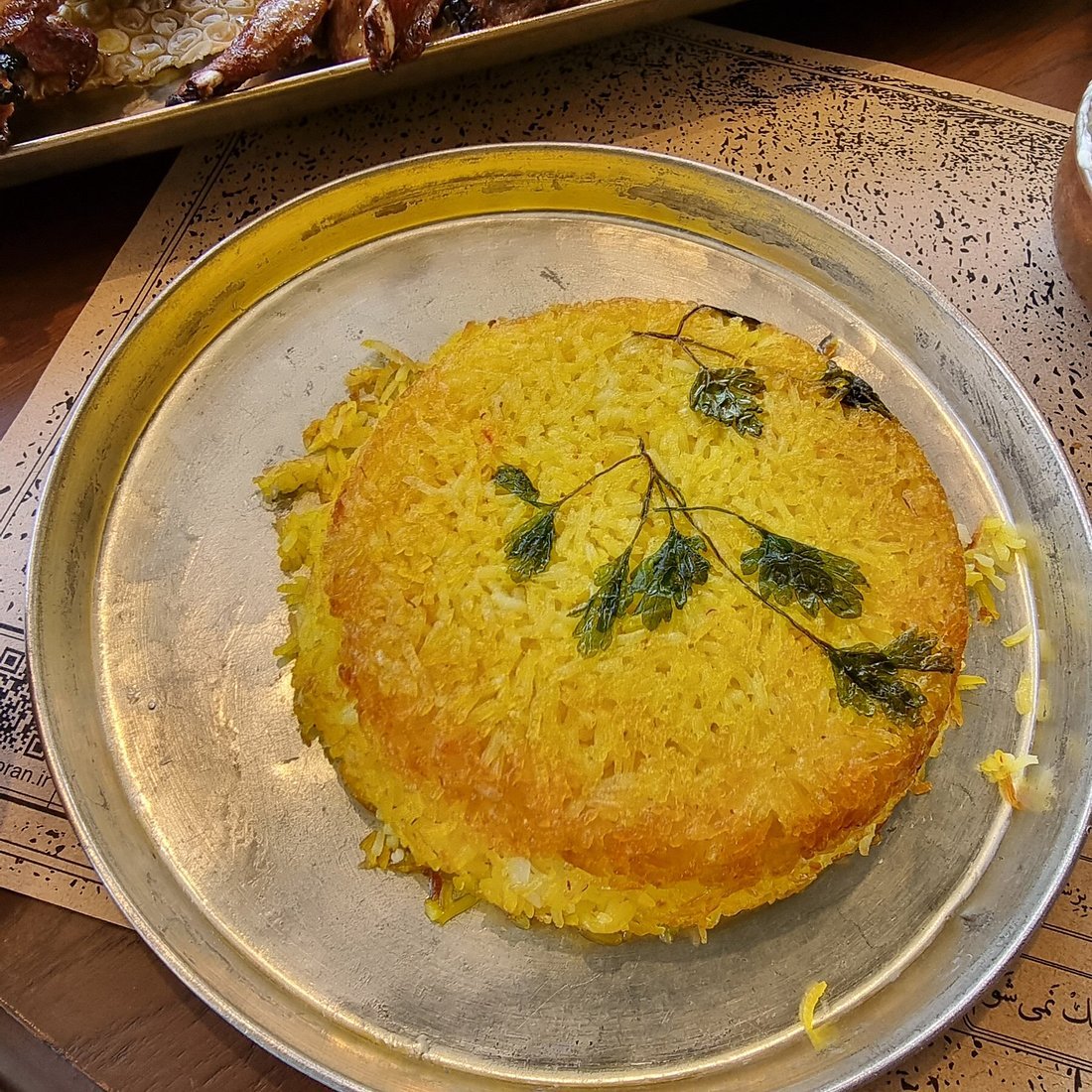
Eating in the Desert: What Yazd's Dining Tradition Actually Means
Yazd sits at the intersection of two ancient trade corridors, and its cuisine reflects that position more honestly than most Iranian cities. This is a place where the larder has always been shaped by scarcity and ingenuity: the Central Plateau's dry climate drove a preserving culture built around dried fruits, concentrated pomegranate paste, toasted nuts, and the kind of long-braised protein dishes that made the most of whatever livestock the desert allowed. Saffron, grown in the wider Khorasan region and traded through Yazd for centuries, became a structural ingredient rather than a garnish. Understanding that context is the starting point for understanding what you eat here.
Hotel-based dining in Yazd tends to cluster around this inherited canon. The city's accommodation stock is dominated by converted courtyard houses and caravanserai-style properties, and their restaurants generally follow a similar logic: traditional recipes, local sourcing where available, and a setting that reinforces the architectural character of the building itself. Talar-e Yazd Restaurant (رستوران تالار یزد) operates in that same register, as does the broader peer group of heritage-property kitchens across the city. Ras Tooran, attached to Hotel Safayie, belongs to this category and should be read within it.
The shortlist, unlocked.
Hard-to-book tables, cellar releases, and concierge-planned trips.
Get Exclusive Access →The Hotel Safayie Setting
Hotel Safayie is one of Yazd's established accommodation addresses, and the restaurant occupies space within that property. Yazd's old city is a UNESCO-listed warren of mud-brick alleyways, wind towers, and earthen domes, and the sensory experience of approaching any restaurant here involves that architecture first. The quality of light in the city changes hour by hour as it passes through brickwork lattices and narrow passages, and the ambient temperature in courtyard spaces drops significantly relative to the open streets. These are not incidental details: they shape how a meal registers.
Iranian hotel restaurants of this type tend toward a layout that prioritizes the courtyard or a sheltered terrace, with interior seating for cooler months. The planning logic for visitors is worth noting: Yazd's extreme summer heat means evening dining outdoors becomes the natural rhythm from late spring through early autumn, while the mild winters make midday meals the more comfortable choice. If you are coordinating a visit to Yazd's major sites, including the Jameh Mosque, the Zoroastrian Towers of Silence, and the historic Amir Chakhmaq complex, building a meal at a hotel restaurant into the late afternoon works practically given the distances involved. For the wider Yazd restaurant picture, see our full یزد restaurants guide.
Sourcing and the Central Iranian Kitchen
The editorial angle that matters most for a restaurant in this position is ingredient provenance. Central Iran's food culture is one of the more self-sufficient in the country: pomegranates come from the surrounding villages, walnuts from the mountain-adjacent zones, lamb from local flocks, and saffron from regional supply chains that predate modern distribution networks. A kitchen working within this tradition and drawing on proximate sources is cooking with genuine geographical logic, not imported frameworks.
Dishes rooted in this tradition, such as the pomegranate-and-walnut-based fesenjan stew or the slow-cooked lamb preparations that define much of the Central Plateau's repertoire, carry actual information about place. The same is true of shirini-ye yazdi, the city's signature pastry made with cardamom and rose water, which appears as a dessert or accompaniment in virtually every food-serving establishment in Yazd. Comparing this to the sharper, more tomato-forward profiles of northern Iranian cooking, or to the seafood-centered menus of Persian Gulf cities like those you'll find at Khorsand Seafood in Bandar Abbas or Mr Fish (آقای ماهی) in Bandar Abbas, makes clear how distinct the Yazdi pantry actually is.
Hotel restaurants in heritage properties across Iran vary considerably in how faithfully they execute this regional logic. Some lean toward a generalized national menu designed for international visitors; others maintain a tighter connection to local recipes and sourcing. The distinction matters for travelers who have come specifically to understand Yazd rather than to eat a standardized version of Iranian cuisine. Venues like Baastan Restaurant in Isfahan and Anar Caravanserai in Anar represent comparable heritage-property dining formats in neighboring regions, each reflecting their own local sourcing logic.
Placing Ras Tooran in the Yazd Dining Tier
Yazd does not have a high-end restaurant market in the sense that Tehran or Isfahan do. The city's dining options sort into a relatively flat hierarchy: a small number of hotel restaurants, a larger number of traditional teahouse-style eateries, and a handful of more casual street-food operations. Within that structure, hotel restaurants at established properties occupy a middle tier: more considered in execution and setting than street-level options, but not competing with the destination-dining programs of the larger Iranian cities.
For context, Tehran's more ambitious restaurant addresses, like Koohpayeh Restaurant in Tehran, operate in a different category entirely, with urban scale and a broader competitive set. Yazd's hotel-restaurant tier is better understood as cuisine in context rather than cuisine as destination. Caesar Italian Restaurant in Yazd represents the city's attempt at international formats, which offers a useful point of contrast: Ras Tooran sits at the opposite end of that local spectrum, oriented toward the regional tradition rather than away from it.
For travelers who have been moving through Iran's food belt, from the kabab houses of Jijian Classic Kabab in Qeshm to the classical Persian table at venues like Eghbali Restaurant in Qazvin or Bozorgi Restaurant in Qom, Ras Tooran represents the Central Plateau chapter of that wider story. The cooking here, in category terms, is Iranian in its most geographically specific form. See also Polo Restaurant in Zanjan and Laneh Tavoos Restaurant in Marv Dasht for how other mid-tier provincial restaurants handle the same tension between regional authenticity and visitor accessibility. And for travelers curious how Iranian dining compares to the kind of highly technical, sourcing-obsessed programs that define the international conversation, the gap between a Yazd hotel kitchen and a New York counter like Le Bernardin or Atomix is worth holding in mind, not as a criticism but as a framing device for understanding what each format is actually trying to do.
Planning a Visit
Hotel Safayie is located within Yazd, and the restaurant is accessible to non-staying guests, as is standard practice for hotel dining in Iranian cities of this scale. No phone or website data is available in our records, so the most practical approach is to arrive at the hotel directly and confirm current hours and availability in person or through your accommodation. Yazd's old city is compact enough that most heritage hotels are within walking distance of each other and of the major sites; factoring a meal here into a broader day of sightseeing requires minimal logistical planning. Given the absence of a published reservations system in our database, walk-in timing earlier in the evening is the lower-risk approach, particularly during the peak spring and autumn travel seasons when Yazd draws significant visitor numbers.
The shortlist, unlocked.
Hard-to-book tables, cellar releases, and concierge-planned trips.
Get Exclusive Access →Frequently Asked Questions
A Quick Peer Check
A fast peer set for context, pulled from similar venues in our database.
Need a table?
Our members enjoy priority alerts and concierge-led booking support for the world's most difficult tables.
Get Exclusive AccessThe shortlist, unlocked.
Hard-to-book tables, cellar releases, and concierge-planned trips.
Get Exclusive Access →