
Tabelog 100 #87
Our verdict
Ramen Senmon Ten Tokugawa Cho Josui represents Nagoya ramen at its disciplined counter-service end: compact, quick, and built around repeatable craft rather than spectacle. Its Tabelog Ramen AICHI 100 selection in 2025, following earlier EAST selections, places it among Aichi’s more closely watched ramen shops without pushing the experience into fine-dining territory.

Pearl is the En Primeur Club membership app, where members save venues, book tables and use the concierge.
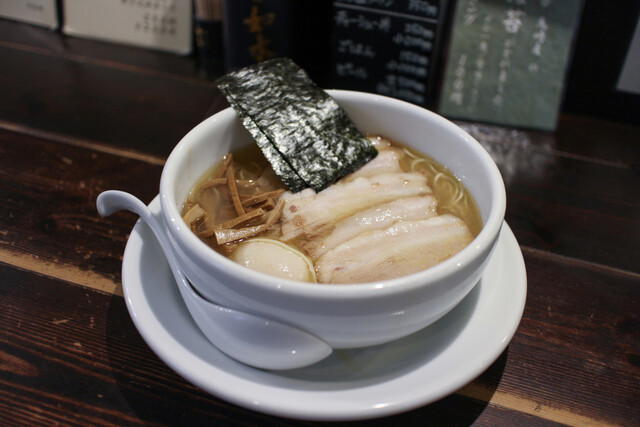
The menu
What to order
- Shio ramen
- Shoyu ramen
- Josui-style Taiwan ramen
- Josui-style tantanmen
- Tsukemen
- Taiwan tsukemen
The room should be read through the logic of ramen before the first bowl appears: quick decisions, a narrow culinary brief, and the practical compression that defines serious noodle shops across Japan. In Nagoya, where higher-budget dining can move through more formal and polished restaurant formats, ramen occupies a different register. It is faster, more focused in scope, and judged with less tolerance for distraction. Ramen Senmon Ten Tokugawa Cho Josui belongs to that category: a ramen and tsukemen address where the meal is built around the bowl rather than ceremony.
That matters because Nagoya’s dining identity is often discussed through broader local eating habits and familiar city shorthand. Ramen sits slightly apart from those references. The stronger ramen addresses compete less on tourist symbolism than on consistency, broth character, noodle handling, and repeat appeal. A Tabelog Hyakumeiten recognition in 2025 signals that this shop is being judged within a specialist field, not as a casual stop that happens to draw attention.
A counter built for ramen discipline, not theatre
The format keeps the meal focused. This is not the kind of restaurant where the point is to linger over courses or outsource the experience to ambience. It is a ramen and tsukemen address, and the category tells diners to think in those terms: direct, compact, and centred on whether the bowl delivers.
The more useful comparison is not with tasting-menu dining but with Nagoya’s spread of specialist restaurants across different planning roles. Yoshimitsu, Garden Restaurant Tokugawaen, LE PIGNON, SOLAMENT'UNO, and Myoan all sit elsewhere in the city’s restaurant landscape, which helps explain why ramen can be one of the sharpest ways to read a city’s food culture. It compresses technique, local demand, and repeat dining into a short meal rather than a long evening.
For travellers building a Nagoya itinerary, the distinction is practical as much as culinary. A ramen meal can anchor a day between activities, stops, or train transfers without turning lunch into an event. The better shops, however, are not interchangeable. Recognition such as Tabelog’s Hyakumeiten lists rewards a restaurant’s standing inside a crowded category, and the 2025 listing gives this address a clear marker within that field.
Where Nagoya ramen fits beside the city's higher-budget tables
Ramen’s economy changes the critical lens. At a more elaborate restaurant, pacing, service choreography, and table comfort may carry part of the evaluation. At a ramen shop, the equivalent is curation by subtraction: a tighter category focus, a narrow production logic, and a format that leaves little room for ornamental hospitality. The drink program is not the story here; the editorial interest sits in how much confidence a shop shows by keeping the experience compact.
That compactness also separates ramen from the city’s destination dining rooms. Garden Restaurant Tokugawaen and Myoan invite a different, more extended reading of Nagoya hospitality. A ramen shop like this belongs to a parallel tradition, one where craft is measured in repeat visits, operational flow, and whether a bowl can hold attention without the scaffolding of pairings or multi-course sequencing. It is a more accessible meal, but not a less serious one.
Tsukemen also matters in the positioning. Dipping noodles are not merely a side category; they ask diners to evaluate texture and concentration differently from soup ramen. A shop listed for both ramen and tsukemen is operating across two related but distinct noodle grammars. That breadth, kept within a specialist ramen framework, is part of why focused noodle addresses can develop followings without expanding into broader restaurant genres.
How to place it in a Nagoya dining plan
The strongest use case is a focused meal rather than a grand night out. It suits diners who want a precise ramen stop without turning the evening over to a long-form restaurant. The format is naturally friendly to solo diners and pairs; larger groups should approach it with the expectations that apply to specialist ramen shops rather than full-service destination restaurants.
Families can treat it as a casual ramen option rather than a formal dining room. As with any compact noodle shop, the experience depends less on ceremony than on the basic tempo of ordering, eating, and moving on. That makes it practical, but the best fit is still for diners who are comfortable with a focused, bowl-led meal.
Payment and access details should be treated with the same realism as the food. This is a ramen address with local operating habits, not an international hotel restaurant. The smarter approach is to arrive with enough flexibility for the shop’s rhythm and to treat the meal as a sharp, low-ceremony insertion into a broader Nagoya schedule.
For broader planning, use Our full Nagoya restaurants guide alongside the city’s hotel, bar, winery, and experience pages: Our full Nagoya hotels guide, Our full Nagoya bars guide, Our full Nagoya wineries guide, and Our full Nagoya experiences guide. Nearby and Japan-wide restaurant reading can also include other dining in Nagoya, additional casual counters, specialist noodle shops, and broader restaurant guides across Japan and beyond.
Frequently asked questions
Is Ramen Senmon Ten Tokugawa Cho Josui suitable for children?
Ramen Senmon Ten Tokugawa Cho Josui is best approached as a compact ramen and tsukemen stop in Nagoya. Families should treat it like a focused noodle shop rather than a formal restaurant.
What's the vibe at Ramen Senmon Ten Tokugawa Cho Josui?
Expect a practical ramen and tsukemen shop in Nagoya, with the experience centred on the bowl rather than extended service or elaborate ambience. The rhythm is focused and casual rather than polished.
What should I budget for a meal at Ramen Senmon Ten Tokugawa Cho Josui?
Pricing at Ramen Senmon Ten Tokugawa Cho Josui is listed as JPY 1,000 - JPY 1,999 - JPY 999, with dinner at JPY 1,000 - JPY 1,999 and lunch at up to JPY 999.
What are the operating hours at Ramen Senmon Ten Tokugawa Cho Josui?
Specific operating hours are not provided here. Check current hours before visiting Ramen Senmon Ten Tokugawa Cho Josui in Nagoya.
What part of town is Ramen Senmon Ten Tokugawa Cho Josui in?
Nagoya.
What has Ramen Senmon Ten Tokugawa Cho Josui built its reputation on?
It has been recognized in Tabelog Hyakumeiten in 2025, with a listed score of 3.72. The core draw is ramen and tsukemen in Nagoya.
Category Peers
Side-by-side context: comparable cuisine and price.
| Venue | Cuisine | Price | Awards | Notes |
|---|---|---|---|---|
| Ramen Senmon Ten Tokugawa Cho JosuiThis venue (the venue you are viewing) | Ramen & tsukemen shop | $10–20 | Tabelog 100 #87 | Not listed |
| Naruto Ya | Ramen & Tsukemen Shop | $1–10 | Tabelog 100 #94 | Naka |
| Heritage | Traditional Nagoya Eel (Hitsumabushi) | $30–50 | Not listed | Tenpaku |
| Taiyo Shokudo | Ramen & fried rice counter | $10–20 | Tabelog 100 #22 | Nakamura |
| Chuka Soba Naru | Ramen & Tsukemen | $10–20 | Tabelog 100 #76 | Chikusa |
| Ramen Suiren | Cozy Bali-inspired ramen counter | $1–10 | Tabelog 100 #46 | Shōwa |
Recognition history
Dated appearances from independent guides and award organizations, with the underlying list record or original source where available.
Tabelog 100 #87 · No. 87
Tabelog · Tabelog 100 - Ramen - AICHI - 2025
Continue exploring
More in Nagoya
Restaurants in Nagoya
All restaurants in Nagoya →




Details
- Lively
- Casual
- Classic
- Solo
- Casual Hangout
- Family
- After Work
- Late Night
- Standalone
- Beer Program
- A La Carte
- Counter Dining
- Beer
Current opening hours
- Monday
- 11 AM–2:30 PM, 5:30–11 PM
- Tuesday
- Closed
- Wednesday
- 11 AM–2:30 PM, 5:30–11 PM
- Thursday
- 11 AM–2:30 PM, 5:30–11 PM
- Friday
- 11 AM–2:30 PM, 5:30–11 PM
- Saturday
- 11 AM–2:30 PM, 5:30–11 PM
- Sunday
- 11 AM–2:30 PM, 5:30–11 PM
Hours can change for holidays and private events. Hours as of .
Casual, bustling ramen-ya with a direct design focused on counter and table seating; bright and functional rather than decorative, with steady traffic of solo diners, families, and small groups.