
Tabelog 100 #94
Our verdict
Naruto Ya places Nagoya ramen in a compact counter format rather than a dining-room spectacle. The Sakae shop is listed in Tabelog 100 - Ramen - AICHI - 2025, with a 14-seat counter, ramen and tsukemen focus, and a long run dating to 2005.

Pearl is the En Primeur Club membership app, where members save venues, book tables and use the concierge.
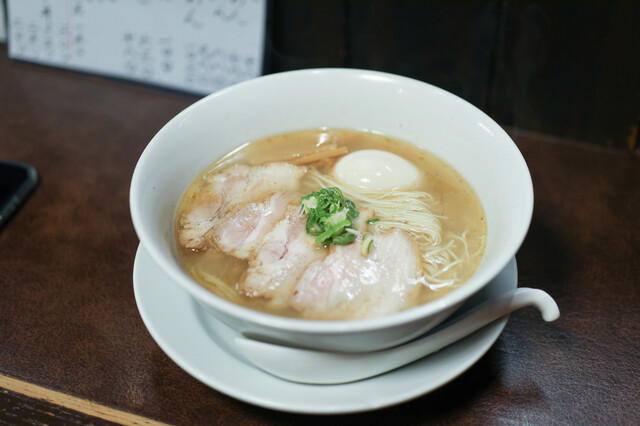
In Nagoya, ramen works at close range. The room is best understood not as a place for lingering over courses or wine, but around the counter, the bowl, and bodies adjusting within a compact urban frame. Naruto Ya belongs to a Nagoya category where the container matters: a focused ramen format closer to a workshop than a restaurant floor.
That discipline is part of the appeal. Nagoya dining ranges from hotel French rooms such as All Day Dining Montmartre to izakaya formats and noodle shops, but ramen at this level is judged by compression. A compact setting leaves little space for theatrical service, shifting the hierarchy to pace, broth structure, noodle handling, and consistency. Naruto Ya has recognition within that frame: it appears on Tabelog 100 - Ramen - AICHI - 2025 and holds a Tabelog score of 3.71.
A counter-led ramen room in Nagoya's practical dining grid
Nagoya’s restaurants serve both local regulars eating with purpose and visitors moving between shopping, hotels, bars, and transport. Ramen suits that rhythm because it asks less of an evening than formal Japanese or French dining, while still carrying serious local weight. The better shops do not need large rooms. They need turnover, consistency, and a counter that keeps the kitchen visible without making the meal a performance.
Naruto Ya’s compact setup places it in that exacting lane. A small ramen room changes the social contract: solo dining is natural, small groups need to follow the room’s rhythm, and tempo follows the kitchen’s production cycle. This is not the plush Nagoya dining of Restaurant Loire French, where spend sits far higher. Nor is it the group-driven hot-pot economy of Shabushabu Creative Izakaya Butagin Sakae ten. The point is the compact ramen counter as urban tool: fast enough for a weekday, serious enough to justify crossing Nagoya for a bowl.
The physical reading supports that point. Counter-led ramen removes much of the buffer between guest and kitchen, and the small-room format keeps attention on the bowl rather than on décor or ceremony. In a city where many restaurants live by regular repeat custom rather than spectacle, category recognition carries more weight than show.
Ramen and tsukemen without the luxury-language trap
The listed categories are ramen and tsukemen, a useful distinction because they answer different appetites. Ramen is judged as a complete bowl, with soup, noodles, seasoning, fat, and garnish working in one vessel. Tsukemen separates noodles from dipping broth, emphasizing noodle texture and concentration. In Nagoya, recognized ramen shops can show broader noodle vocabulary than the city’s shorthand suggests.
Naruto Ya’s award placement matters because Tabelog’s Hyakumeiten lists reward category depth rather than luxury polish. Tabelog 100 - Ramen - AICHI - 2025 places the shop among ramen addresses selected for that category, not among broad fine-dining rooms. Travellers should assess a bowl here against serious ramen counters, including Sapporo Ramen Ezo Men Rock Shinsakae ten, rather than full-service Japanese restaurants like Nadaman or hotels with multiple departments.
The category note is relevant without becoming the story. Editorially, Naruto Ya is best read through ramen fundamentals rather than personal mythology. Shops with clear category focus often stand or fall on defined grammar: broth concentration, noodle choice, tare balance, and service rhythm need settling before the first customer sits down.
For broader Nagoya planning, Naruto Ya fits into a day moving between compact, high-turnover dining and larger hospitality formats. Readers comparing the city’s food scene can start with Our full Nagoya restaurants guide, then map the evening around Our full Nagoya bars guide or a stay from Our full Nagoya hotels guide. For non-restaurant planning, Our full Nagoya experiences guide and Our full Nagoya wineries guide keep the city view wider than one meal.
How to read the room before choosing the meal
The smart approach is to read the format first. Compact ramen seating rewards parties able to eat at the room’s pace. Solo dining is especially well suited, while small groups should be ready to fit the flow rather than control it. This is not a drawback; it is the category. Ramen at this scale works because every seat faces the same proposition.
Payment and timing are practical signals to verify before going. Smaller specialist restaurants can operate with limited systems, and current details should be checked close to the visit. The value sits in a low-price ramen bracket, with the public record listing - JPY 999 - JPY 999, but planning depends on timing and expectations, not formality.
For readers building a wider Japan food route, the contrast between compact noodle counters and other formats is part of the education. Compare the scale and genre with other dining in Nagoya and elsewhere in Japan rather than treating every Japanese restaurant as the same kind of experience. Outside Nagoya, Japan’s range stretches across casual counters, specialist shops, hotel dining, and full-service restaurants. For a trans-Pacific comparison in casual Japanese formats, other cities show how differently Japanese drinking, noodle, and rice-counter culture can be translated.
The editorial case for Naruto Ya is not extravagance. It is the opposite: a small Nagoya ramen room with category recognition, a counter-oriented logic built for concentration, and enough public standing to suggest Nagoya’s noodle culture is not only novelty. In a city where premium dining often announces itself through hotel rooms and formal service, this is the lower-cost, higher-focus counter version of seriousness.
Frequently asked questions
What price level is Naruto Ya?
Pricing at Naruto Ya is listed as - JPY 999 - JPY 999.
What part of town is Naruto Ya in?
Naruto Ya is located in Nagoya.
When can I go to Naruto Ya?
Check the venue's official channels for the latest details before going.
What's the signature at Naruto Ya?
The public record lists ramen and tsukemen, so those are the core orders at Naruto Ya in Nagoya. It was selected for Tabelog Ramen AICHI "Tabelog 100" 2025, which is the clearest quality signal in the public record. Check the venue's official channels for the latest details.
How does Naruto Ya handle allergies?
No allergy policy is listed in the public record, so the practical move is to ask before ordering in Nagoya. Check the venue's official channels for the latest details.
Nearby-ish Comparables
Comparable options at the same price tier.
| Venue | Cuisine | Price | Awards | Notes |
|---|---|---|---|---|
| Naruto YaThis venue (the venue you are viewing) | Ramen & Tsukemen Shop | $1–10 | Tabelog 100 #94 | Not listed |
| Shabushabu Creative Izakaya Butagin Sakae ten | Lettuce Shabu-Shabu & Pork Izakaya | $30–50 | Tabelog 100 #56 | JPY 4,000 - JPY 4,999 |
| Sapporo Ramen Ezo Men Rock Shinsakae ten | Sapporo-style Ramen | $10–20 | Tabelog 100 #79 | JPY 1,000 - JPY 1,999 JPY 1,000 - JPY 1,999 View spending breakdown |
| Nadaman | Seasonal Japanese Kaiseki, Sushi and Tempura | $100–150 | Not listed | Not listed |
| Restaurant Loire French | Classic French Fine Dining | $50–100 | Tabelog 100 #36 | JPY 10,000 - JPY 14,999 JPY 6,000 - JPY 7,999 |
| All Day Dining Montmartre | International hotel buffet with Parisian flair | $30–50 | Not listed | Not listed |
Recognition history
Dated appearances from independent guides and award organizations, with the underlying list record or original source where available.
Tabelog 100 #94 · No. 94
Tabelog · Tabelog 100 - Ramen - AICHI - 2025
Continue exploring
More in Nagoya
Restaurants in Nagoya
All restaurants in Nagoya →

Details
- Cozy
- Quiet
- Intimate
- Solo
- Family
- Casual Hangout
- After Work
- Late Night
- Chefs Counter
- Standalone
- A La Carte
- Counter Dining
- Beer
- Soft Drinks
Current opening hours
- Monday
- 11:30 AM–2 PM, 6–10:30 PM
- Tuesday
- 11:30 AM–2 PM, 6–10:30 PM
- Wednesday
- 11:30 AM–2 PM, 6–10:30 PM
- Thursday
- 11:30 AM–2 PM, 6–10:30 PM
- Friday
- 11:30 AM–2 PM, 6–10:30 PM
- Saturday
- 11:30 AM–2 PM, 6–10:30 PM
- Sunday
- Closed
Hours can change for holidays and private events. Hours as of .
A small, non‑smoking counter‑only ramen shop with a relaxed, low‑key atmosphere, suited to solo diners or casual visits rather than long social gatherings.