
Ramen Ogane belongs to Sano’s handmade-noodle culture, where local wheat, water texture, and dumpling craft matter more than metropolitan polish. Its repeated selection for Tabelog Ramen EAST “Tabelog 100” places it among the region’s serious ramen addresses, but the appeal is grounded in an everyday format: ramen, gyoza, counter seats, tatami seating, and a room built for regular traffic rather than ceremony.
Pearl is the En Primeur Club membership app — saves, bookings, and concierge access live there. Same editors, same standards.
- Address
- 3229-7 Ohashicho, Sano, Tochigi 327-0003, Japan
- Phone
- +81 283-23-1989
- Website
- ramen-ogane.com
 Saves & bookings on Pearl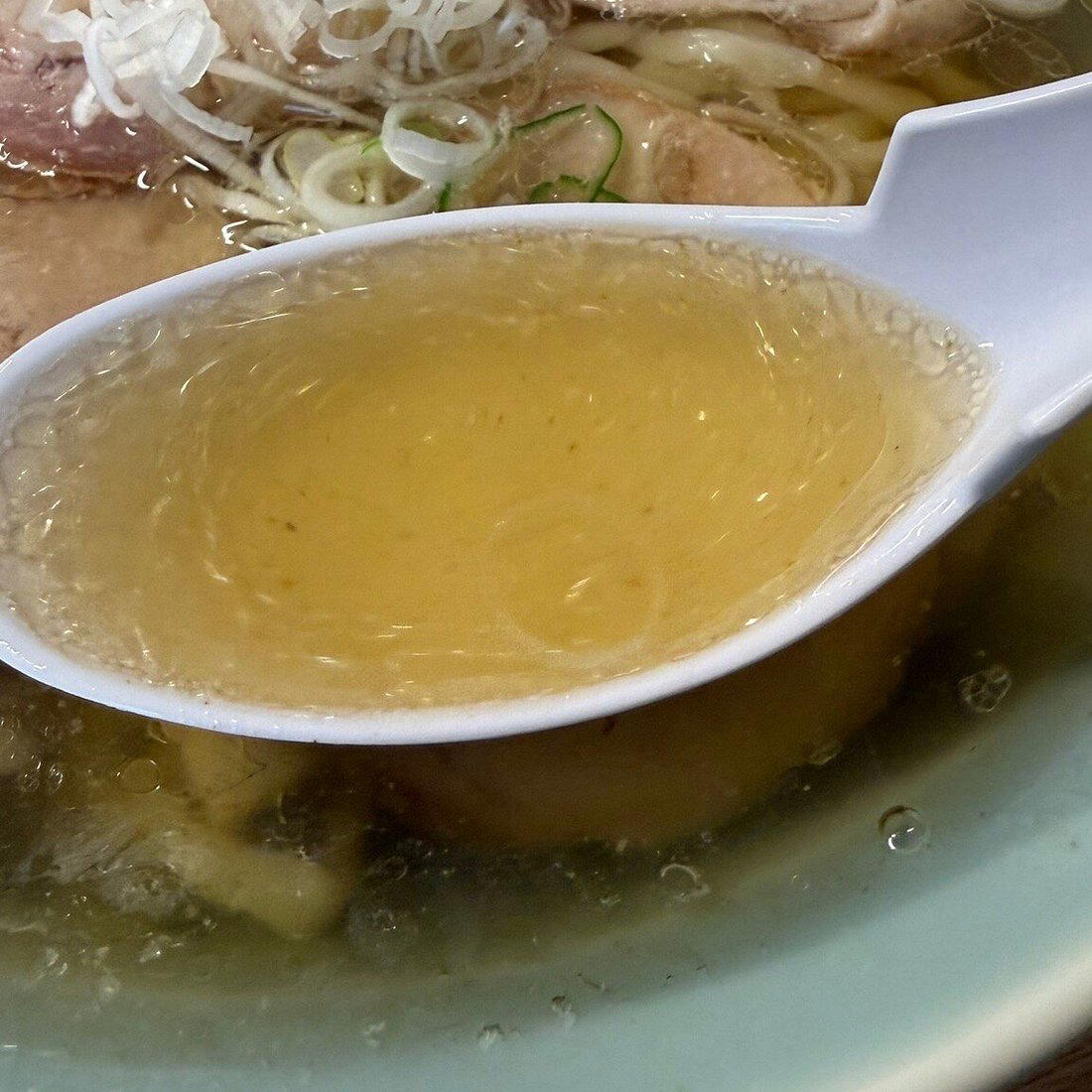
Approaching a Sano ramen room differs from approaching a Tokyo counter. The rhythm is broader and less theatrical: cars turn in, families file through, solo diners take counter seats, and the meal is judged first by noodle texture. In this part of Tochigi, ramen culture is tied to local hand-making, and the difference is not cosmetic. The point is noodle spring, bowl clarity, and how a casual shop can carry enough regional identity to justify a detour.
Ramen Ogane works inside that Sano grammar. Its category is ramen and dumpling, a pairing that matters because Sano’s ramen circuit is not built only around bowls. Handmade gyoza are a second measure of craft: dough handling, filling balance, and kitchen throughput join the same local argument. Selection for Tabelog Ramen EAST “Tabelog 100” in 2025, with earlier selections in 2024, 2018, and 2017, gives external validation; more usefully, this is a regional ramen address with repeat recognition in a field where consistency is harder than novelty.
Sano ramen is a noodle-first tradition, not a chef's-stage format
Sano ramen has a distinct place in Japan’s ramen map because the local style centers the noodle. The hand-made, irregular quality associated with the area gives the bowl a looser rhythm than factory-straight strands, changing how the soup reads. A clear broth can feel flat with the wrong noodle; with a resilient, uneven strand it gains movement. Serious Sano ramen shops are compared less by luxury ingredients than by how the noodle carries heat, broth, and pace from first bite to last.
Within Sano, Ramen Ogane belongs to a cluster best read as a local circuit rather than a single-stop checklist. Aodake Teuchi Ramen Hinataya and Menya Yosuke sit in a lower listed price band, useful references for travelers trying to understand the everyday end of the style. Nomura Ya Honten aligns more closely on spend, while United Noodle Amenooto broadens the conversation around how Sano-area ramen moves between local classicism and newer shop identities. The point is not crowning a winner, but seeing how a modest city sustains several credible interpretations of the same noodle culture.
The ingredient-sourcing angle begins with humble parts travelers often underread: flour, water, stock discipline, and dumpling dough. Sano’s reputation depends on texture and clarity more than garnish. That makes the ramen-and-dumpling format a useful lens on the city’s food identity. A restaurant can look casual and still be technically demanding when the core product exposes every shortcut.
A large, practical ramen room with repeat awards pressure
The room signals scale, not preciousness: 74 seats, counter seating, tatami space, wheelchair access, and a non-smoking interior with an outdoor smoking area. That matters because many destination ramen shops trade comfort for scarcity. Here, the format is closer to a regional dining room built for families, solo diners, and groups, with private rooms available for group reservations within the stated limit. The children-welcome policy and weekday-night children’s menu show a restaurant still part of local life, not only a stop for ramen tourism.
Repeat award selection changes expectation. A Tabelog Hyakumeiten selection is not a Michelin star, but for ramen it is a meaningful public filter, placing a shop inside a broad, competitive eastern Japan category where countless modest rooms serve serious bowls. Ramen Ogane’s Tabelog score of 3.73 adds another measurable signal, especially in a platform culture where ramen ratings cluster tightly and small differences matter to dedicated diners.
For travelers, the editorial case is strongest when Sano is treated as a food stop, not a side note between larger cities. The local dining map rewards narrow focus: ramen at lunch, dumplings alongside, then a wider look at the town’s independent restaurants. Start with our full Sano restaurants guide to build a day around regional food rather than chase one bowl. For overnight stays, our full Sano hotels guide gives the practical base; our full Sano bars guide, our full Sano wineries guide, and our full Sano experiences guide widen the itinerary without diluting the ramen focus.
How to read the menu without overcomplicating the meal
The useful move is to treat ramen and dumplings as a paired study in dough. That does not require a long order or rare seasonal special. It requires attention to structure: noodle bounce, broth clarity, gyoza skin, and whether the kitchen keeps those elements steady across a room of meaningful size. Take-out and photo menus make the shop more accessible to travelers who do not read Japanese, while sake availability keeps drinks simple and local in tone.
There is a broader lesson for eating well in Japan outside the major hotel-and-fine-dining corridor. Regional restaurants can be technically serious without ceremony. Sano’s ramen culture, like regional udon or soba towns elsewhere, rewards diners who care about repeatable craft. The absence of grand performance is part of the point: the bowl has to carry the reputation.
Readers comparing Japanese dining across cities can place this stop beside other formats: beef sukiyaki in Kamakura at -Grilled beef Sukiyaki- KAMAKURA TANUKIAN 鎌倉 たぬき庵 in Kamakura, seafood and charcoal in Tokyo at. 鮪と炭火焼き うお炭 秋葉原店 in Tokyo, café culture at.cafe in Osaka, contemporary dining at.know in Kumamoto, Vietnamese cooking at (Shoku) Vietnam in Kawasaki, curry specialization at [Curry Senmon Ten] Maruyama Kyoju. in Sapporo, and Kyoto’s smaller-format scene at [ki:] in Kyoto. For a transpacific contrast in Japanese-adjacent drinking and casual food culture, Jōdo Saké Bar in Los Angeles and Onigiri Time in Pasadena show how Japanese formats shift away from regional origins. Sano, by comparison, is valuable because the format has not been abstracted: noodle, broth, dumpling, room, repeat.
A Quick Peer Check
Comparable venues by cuisine and price in the same metro.
| Venue | Cuisine | Price | Notes |
|---|---|---|---|
| Ramen OganeThis venue — the venue you are viewing | Traditional Sano-style ramen | $ | Not listed |
| Menya Yosuke | Sano-Style Ramen | $ | Tajima-cho |
| Nomura Ya Honten | Japanese Noodle Shop | $ | Sano |
| United Noodle Amenooto | Modern Ramen & Tsukemen | $ | Horigome |
| Aodake Teuchi Ramen Hinataya | Traditional Sano-style aodake hand-rolled ramen | $ | Sano |
| ひろめで安兵衛 | High Kochi Yatai Gyoza | $ | 帯屋町 |
Recognition history
Dated appearances from independent guides and award organizations, with the underlying list record or original source where available.
Tabelog 100 #56 · No. 56
Tabelog · Tabelog 100 - Ramen - EAST - 2025
Continue exploring
More in Sano
Restaurants in Sano
Browse all →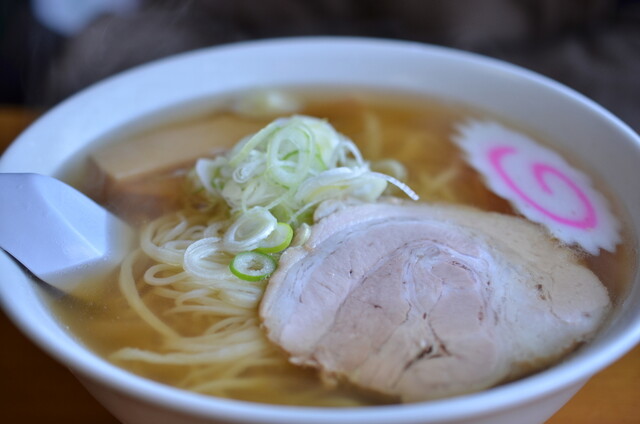
Hotels in Sano
Browse all →
Wineries in Sano
Browse all →
At a Glance
- Classic
- Cozy
- Lively
- Solo
- Family
- Casual Hangout
- After Work
- Group Dining
- Standalone
- Beer Program
- Local Sourcing
Current opening hours
- Monday
- Closed
- Tuesday
- 11:30 AM–2:45 PM, 5–7 PM
- Wednesday
- 11:30 AM–2:45 PM, 5–7 PM
- Thursday
- 11:30 AM–2:45 PM, 5–7 PM
- Friday
- 11:30 AM–2:45 PM, 5–7 PM
- Saturday
- 11:30 AM–2:45 PM, 5–7 PM
- Sunday
- 11:30 AM–2:45 PM, 5–7 PM
Hours can change for holidays and private events. Last verified .
Bright, casual, and functional family ramen shop atmosphere with classic Sano-ramen counter and table seating, steady crowds and turnover, and a focus on comfort and accessibility rather than design flourishes.