
Ramen Kai belongs to Tokyo’s compact-counter ramen culture rather than the theatrical end of restaurant dining. In Kuramae, its 10-seat counter, ramen and tsukemen focus, repeated Tabelog Ramen TOKYO “Tabelog 100” selections, and no-reservations format make it a disciplined stop for readers who care about form, turnover, and craft over ceremony.
Pearl is the En Primeur Club membership app — saves, bookings, and concierge access live there. Same editors, same standards.
- Address
- 4 Chome-20-10 Kuramae, Taito City, Tokyo 111-0051, Japan
- Phone
- +81 3-3864-6055
- Website
- instagram.com
 Saves & bookings on Pearl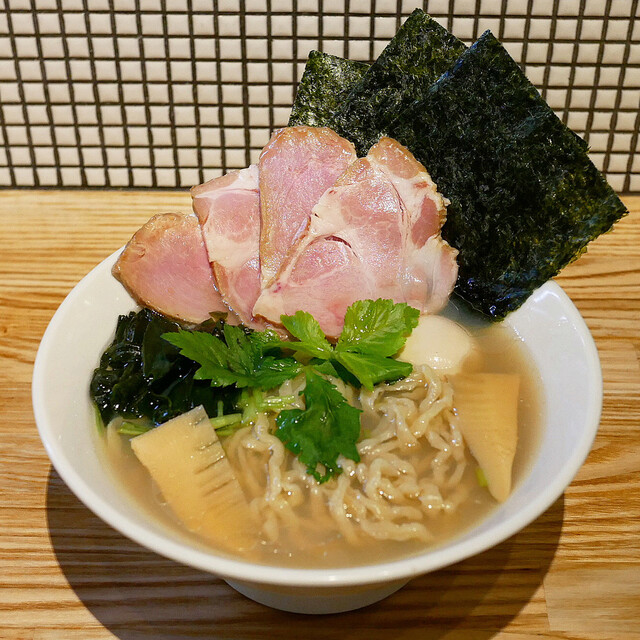
Kuramae rewards small rooms. Around the station, old warehouse bones, craft shops, coffee counters, and lunch queues sit close together, so a ramen shop can feel less like a destination restaurant than a piece of neighbourhood infrastructure. Ramen Kai fits that scale: counter seating only, a compact rhythm, and a format built around ramen and tsukemen rather than a long menu of distractions.
Tokyo ramen culture is often misunderstood by visitors as casual by default. The better reading is narrower: many serious bowls are served in spaces designed for speed, concentration, and repetition. A 10-seat counter changes the psychology of the meal. There is no dining room theatre to soften the wait, no private table conversation to stretch the sitting, and no elaborate service choreography. The room pushes attention toward the bowl, the ticket-to-seat flow, and the pace of the counter.
A 10-seat counter in Kuramae, not a restaurant built for lingering
The design argument here is simple and useful. Counter-only ramen rooms compress the transaction between kitchen and diner: order, sit, eat, leave. That format has shaped Tokyo ramen as much as broth styles or noodle thickness. At Ramen Kai, the physical container places it closer to the city’s specialist ramen shops than to the broader casual-dining scene around Kuramae, where cafés and bakeries often encourage a slower afternoon.
That distinction matters in this neighbourhood. Kuramae has become a polished east-Tokyo address for independent retail and low-key food stops, but its appeal is still practical rather than grand. Nearby comparison points show the range: DANDELION CHOCOLATE Fakutorii&kafe kuramae and Pelican Cafe sit in the same accessible spending band, while SERENDIB and McLean -old burger stand- occupy a slightly broader casual-meal lane. Tonkatsu Sugita represents another Japanese specialist tradition altogether. Against that local mix, a ramen-and-tsukemen counter reads as the fast, focused option, the place where the room’s constraints are part of the appeal.
The award signal supports that reading without turning the shop into a trophy case. Ramen Kai was selected for Tabelog Ramen TOKYO “Tabelog 100” in 2025, with previous selections listed for 2024, 2023, 2022, 2020, 2019, and 2018. In a city where ramen excellence is spread across backstreets, stations, and residential pockets, repeated inclusion says more than a single spike of attention. It places the counter inside Tokyo’s durable ramen conversation, not merely its novelty cycle.
Ramen and tsukemen as a spatial discipline
The listed categories are ramen and tsukemen, which is enough to understand the governing idea. Ramen is eaten immediately, with broth, noodles, aroma, and heat arriving as one composition. Tsukemen separates noodles and dipping broth, slowing the mechanics without turning the meal into leisure dining. In both cases, the counter is not decoration. It is the operating system.
That operating system also defines the kind of traveller who should prioritise it. This is a stronger fit for a solo diner, a pair willing to move at counter pace, or a ramen obsessive mapping Tokyo by style and neighbourhood. It is a weaker fit for anyone seeking a long conversation, a mixed group with different dietary needs, or a celebratory dinner built around drinks and lingering service. Tokyo has plenty of rooms for those purposes; this is not one of them.
The cost tier also tells part of the story, even if the body of the meal should not be reduced to value hunting. Ramen remains one of Tokyo’s great democratic formats because craft and price have not separated as aggressively as they have in sushi, wagyu, or kappo. A shop can earn serious local recognition while remaining in the everyday lunch-and-dinner bracket. That is why ramen counters continue to matter in a city increasingly fluent in luxury dining: they keep technical food tied to ordinary urban movement.
How to read it within a Tokyo eating day
The restaurant works better as a precise insertion than as the anchor of a whole evening. Pair it with Kuramae’s walking scale, move through the area before or after, and treat the meal as a focused interval. The no-reservations format and counter-only setup mean the reader’s advantage is timing rather than negotiation. The room is designed for turnover, so patience and flexibility matter more than ceremony.
For a broader Tokyo plan, place this stop alongside different formats rather than more of the same. EP Club’s city coverage can help build that contrast: start with Our full Tokyo restaurants guide, then widen the itinerary through Our full Tokyo hotels guide, Our full Tokyo bars guide, Our full Tokyo wineries guide, and Our full Tokyo experiences guide. Other restaurant pages give useful contrast across genre and mood, from. 鮪と炭火焼き うお炭 秋葉原店, 12/10 Shinjuku ten, and 124. KAGURAZAKA (Yakitori) to 2D Cafe and 3 Chome no Curry Ya San. For Japan and Japanese-adjacent references beyond central Tokyo, compare -Grilled beef Sukiyaki- KAMAKURA TANUKIAN 鎌倉 たぬき庵 in Kamakura.cafe in Osaka.know in Kumamoto, (Shoku) Vietnam in Kawasaki, [Curry Senmon Ten] Maruyama Kyoju. in Sapporo, [ki:] in Kyoto, Jōdo Saké Bar in Los Angeles, and Onigiri Time in Pasadena.
The editorial case is not that every Tokyo visitor needs another famous queue. It is that this particular kind of room explains something essential about eating in the city. Serious food does not always announce itself through linen, wine lists, or long sittings. Sometimes it is ten counter seats in Kuramae, a narrow menu vocabulary, repeated recognition from a ramen-specific list, and a meal that asks the diner to pay attention quickly.
Comparison Snapshot
Comparable venues by category and price.
| Venue | Cuisine | Price | Notes |
|---|---|---|---|
| Ramen KaiThis venue — the venue you are viewing | Clam-focused Japanese ramen | $ | Not listed |
| Oniyanma Ningyouchou ten | Standing Udon Noodle Bar | $ | Chūō |
| Caligari Akihabara | Japanese curry house specializing in coconut curry | $ | Chiyoda |
| TOKYO LIGHT BLUE HONGO-3 | Standing Sanuki udon & tempura | $ | Bunkyō |
| Suikou Dou Honten | Traditional Japanese Wagashi & Daifuku | $ | Chūō |
| Ichigenya | Traditional Japanese Sweets (Wagashi) | $ | Chiyoda |
Recognition history
Dated appearances from independent guides and award organizations, with the underlying list record or original source where available.
Tabelog 100 #64 · No. 64
Tabelog · Tabelog 100 - Ramen - TOKYO - 2025







At a Glance
- Cozy
- Solo
- After Work
- Casual Hangout
- Standalone
Current opening hours
- Monday
- 11 AM–3 PM, 5:30–9 PM
- Tuesday
- 11 AM–3 PM, 5:30–9 PM
- Wednesday
- 11 AM–3 PM, 5:30–9 PM
- Thursday
- 11 AM–3 PM, 5:30–9 PM
- Friday
- 11 AM–3 PM, 5:30–9 PM
- Saturday
- 11 AM–9 PM
- Sunday
- 11 AM–9 PM
Hours can change for holidays and private events. Last verified .
Small counter-only ramen shop with a casual, bustling atmosphere and an intimate, no-frills setting typical of neighborhood Tokyo ramen spots.