
Tabelog 100 #15
Our verdict
Ramen Hoppeya belongs to Sapporo’s compact, counter-led ramen culture rather than its tourist-facing miso ramen circuit. Recognition in Tabelog’s Ramen HOKKAIDO 100 for 2024 and 2025 gives it a clear local signal, while the small room and ramen-tsukemen focus keep the experience closer to everyday Sapporo eating than destination dining theatre.

Pearl is the En Primeur Club membership app, where members save venues, book tables and use the concierge.
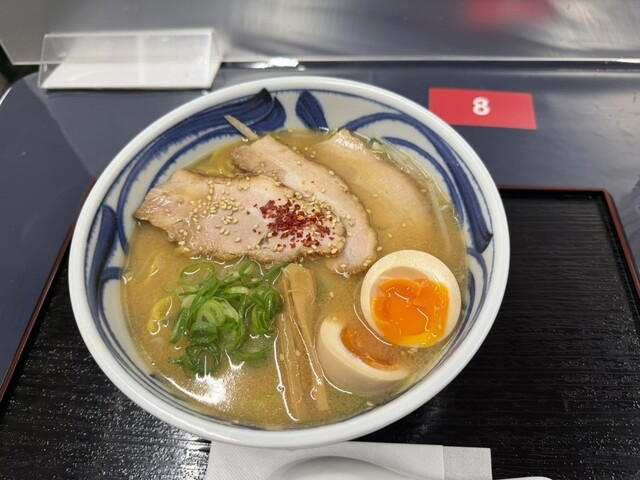
The menu
What to order
- Japanese-style shoyu ramen
- Tonkotsu and seafood broth ramen
- Tsukemen (dipping noodles)
- Morning ramen
Approaching a Sapporo ramen shop is rarely about grand arrival. The cues are usually practical: a direct meal, a focused bowl, and the everyday rhythm that defines much of Japan’s ramen culture. In Sapporo, Ramen Hoppeya fits into that context as a ramen and tsukemen stop rather than a destination built around ceremony or luxury-dining expectations.
Sapporo’s ramen identity is often reduced abroad to a few familiar images, but the city’s actual noodle scene is broader and more competitive. Ramen and tsukemen shops here are commonly judged on broth, noodle texture, seasoning balance, and repeat appeal rather than on spectacle. That matters for visitors: a serious bowl in Sapporo does not need a tasting-menu frame, and it often reads better when judged against the city’s everyday ramen standards than against luxury dining expectations.
A Sapporo ramen stop in the city's everyday noodle culture
The useful way to read Ramen Hoppeya is through category. It belongs to Sapporo’s ramen and tsukemen field, where the meal is typically narrow, direct, and centered on the bowl. This is not the frame for lingering over multiple courses; it is the frame where ramen’s efficiency becomes part of the pleasure. The atmosphere should be understood as part of an everyday noodle culture rather than as a luxury restaurant experience.
The menu category is also telling. Ramen and tsukemen sit beside each other in Japan’s noodle taxonomy but ask different things from a kitchen: ramen is judged as an integrated bowl, while tsukemen separates noodles and dipping broth, putting more scrutiny on noodle chew and broth intensity. A shop listed in both categories enters a tougher local conversation than a venue described only in general dining terms, especially in Hokkaido, where ramen expectations are unusually high.
Recognition through Tabelog’s Hyakumeiten program in 2025 gives the shop an external marker inside that conversation. Tabelog’s Hyakumeiten lists are not luxury awards; they are category-specific signals, useful because they track a field where everyday pricing, high volume, and local repeat dining can matter as much as formal dining narratives. In Sapporo, that is a more relevant credential for ramen than imported fine-dining language.
Where it sits among Sapporo's noodle and curry circuits
Sapporo eating is not a single-track ramen itinerary. The city’s casual dining strength also runs through curry and specialist noodle stops. A comparison set makes the point: Sapporo Fujiya, Ame wa, Yasashiku NO,2, and Ramen Yuzuki can sit within a broader Sapporo noodle conversation, while European Curry KEN and Curry Tamashii Destroyer show how curry-focused pages can occupy a neighboring casual-meal lane without being the same kind of stop as Ramen Hoppeya.
That wider field helps explain why a ramen and tsukemen shop can be worth planning around without being treated as a grand occasion. Sapporo rewards repeat, category-led eating: one meal for ramen, another for curry, another for an unnamed casual dining room elsewhere in the city.
The broader Japanese casual-dining map is useful too, because it shows how specific these formats can be. Compare Sapporo’s ramen-and-curry habits with other casual dining rooms in Japan, from compact everyday formats to neighborhood specialists. Outside Japan, Japanese casual formats can shift again once they enter American dining culture, which makes Sapporo’s local ramen grammar feel even more precise by contrast.
How to frame the stop in a Sapporo itinerary
The right expectation is precision over spectacle. Ramen Hoppeya belongs to the kind of Sapporo meal that works because it is narrow and category-specific. The ramen-and-tsukemen format means the focus is on the bowl rather than on dress, ceremony, or a pre-planned fine-dining booking. For a visitor, that is part of the appeal: the meal can slot into the day without asking the rest of the itinerary to orbit around it.
Use it as one data point in a city that takes casual food seriously. Sapporo’s winter reputation can make travelers over-focus on warming bowls, but ramen is not only a cold-weather decision here; it is a year-round civic habit, sharpened by competition and by diners who know the difference between a passable bowl and one with enough structure to earn repeat attention. Ramen Hoppeya’s 2025 Tabelog Hyakumeiten recognition places it in that conversation, without requiring the reader to mistake a ramen and tsukemen shop for a luxury restaurant.
For wider planning, start with Our full Sapporo restaurants guide, then layer the trip with Our full Sapporo hotels guide, Our full Sapporo bars guide, Our full Sapporo wineries guide, and Our full Sapporo experiences guide. The point is not to chase every famous bowl; it is to understand how ramen, curry, counters, and small rooms form the city’s practical dining intelligence.
Frequently asked questions
Where is Ramen Hoppeya in Sapporo?
Sapporo.
Is Ramen Hoppeya expensive?
Pricing at Ramen Hoppeya is listed as - JPY 999 - JPY 999, with dinner and lunch budgets also listed as - JPY 999.
Is Ramen Hoppeya reservation-only?
Ramen Hoppeya is a ramen and tsukemen shop in Sapporo. Its 2025 Tabelog Hyakumeiten recognition suggests it has earned notice within the local ramen field.
What is Ramen Hoppeya known for?
Ramen Hoppeya is known as a Sapporo ramen and tsukemen shop recognized by Tabelog’s Hyakumeiten program in 2025.
Budget Reality Check
Comparable venues to calibrate price, style, and recognition.
| Venue | Cuisine | Price | Awards | Notes |
|---|---|---|---|---|
| Ramen HoppeyaThis venue (the venue you are viewing) | Traditional Sapporo ramen & tsukemen | $10–20 | Tabelog 100 #15 | Not listed |
| Sumire Sapporo susukino ten | Japanese Ramen | $10–20 | Tabelog 100 #1 | Chūō, Japanese Ramen |
| MEN SHOUKI | Modern Japanese Ramen & Tsukemen | $10–20 | Tabelog 100 #73 | Higashi, Modern Japanese Ramen & Tsukemen |
| Keyaki Susukino honten | Sapporo miso ramen shop | $10–20 | Tabelog 100 #85 | Chūō, Sapporo miso ramen shop |
| Sapporo Rou Curry NAGAMIYA | Additive-free Japanese roux curry & biryani | $1–10 | Tabelog 100 #57 | Chūō, Additive-free Japanese roux curry & biryani |
| Menya Nanabee Honten | Ramen | $10–20 | Tabelog 100 #82 | Shiroishi, Ramen |
Recognition history
Dated appearances from independent guides and award organizations, with the underlying list record or original source where available.
Tabelog 100 #15 · No. 15
Tabelog · Tabelog 100 - Ramen - HOKKAIDO - 2025
Continue exploring
More in Sapporo
Restaurants in Sapporo
All restaurants in Sapporo →
Bars in Sapporo
All bars in Sapporo →
Details
- Cozy
- Intimate
- Solo
- Family
- Casual Hangout
- After Work
- Standalone
- A La Carte
- Counter Dining
A tiny, non-smoking neighborhood ramen shop with just nine seats split between counter and a couple of small tables, creating a cozy, low-key atmosphere suited to solo diners and families looking for a calm, everyday bowl rather than a loud, late-night scene.