Our verdict
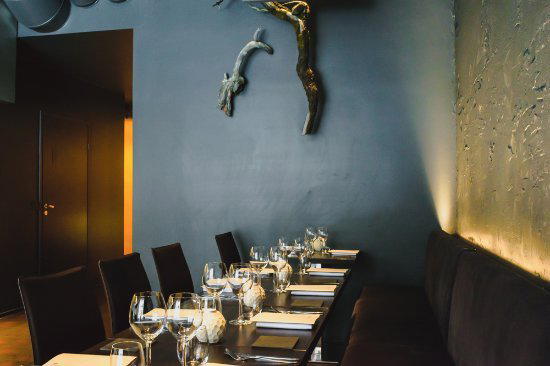
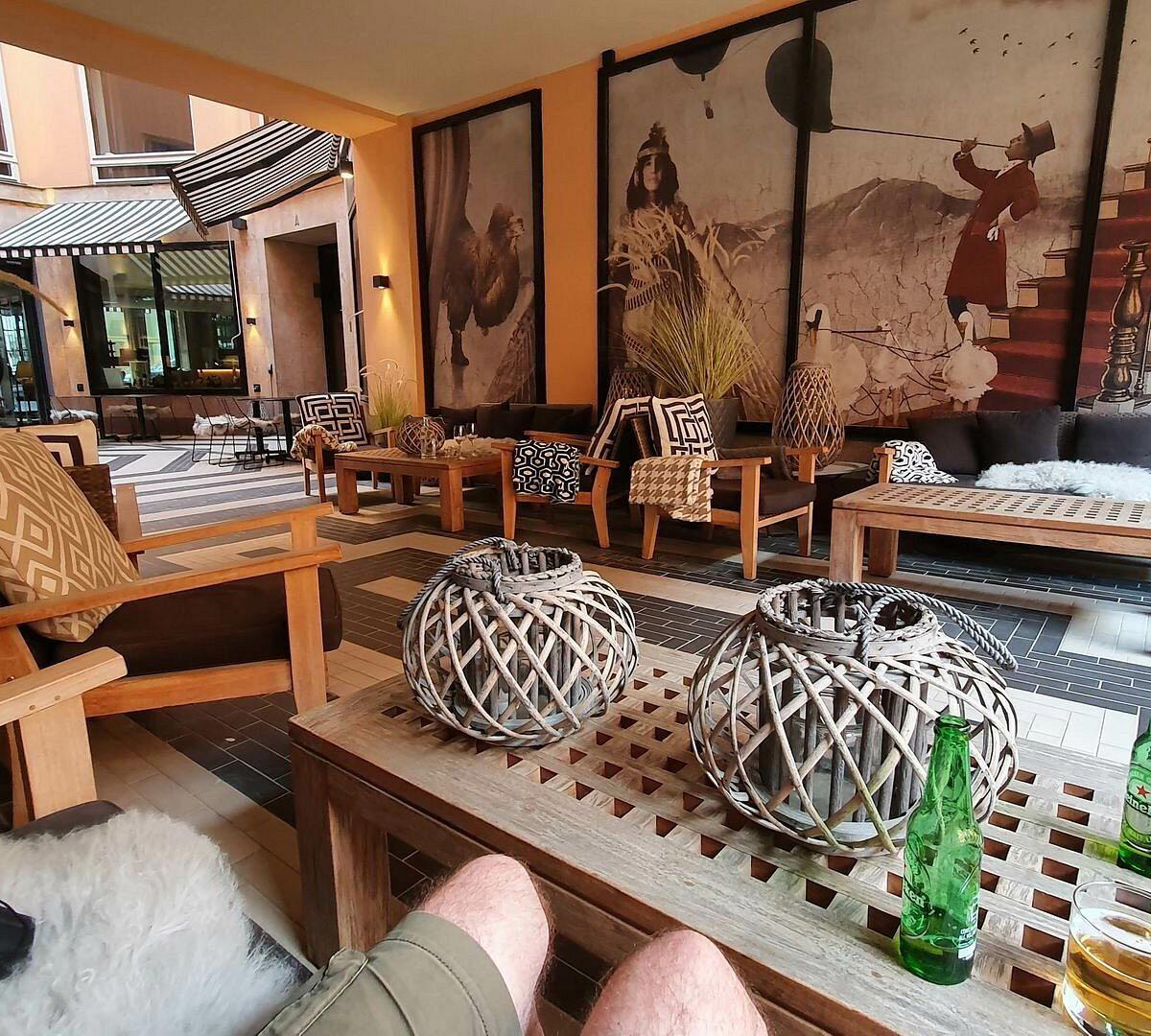
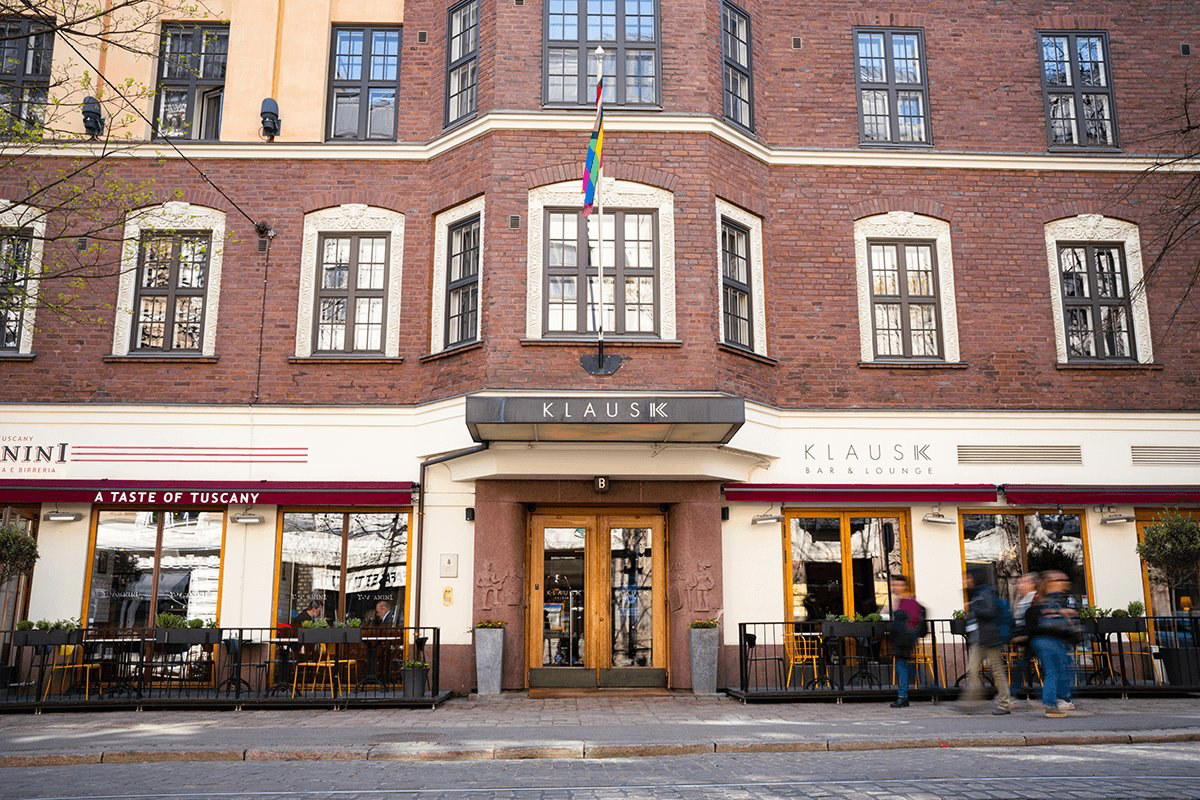
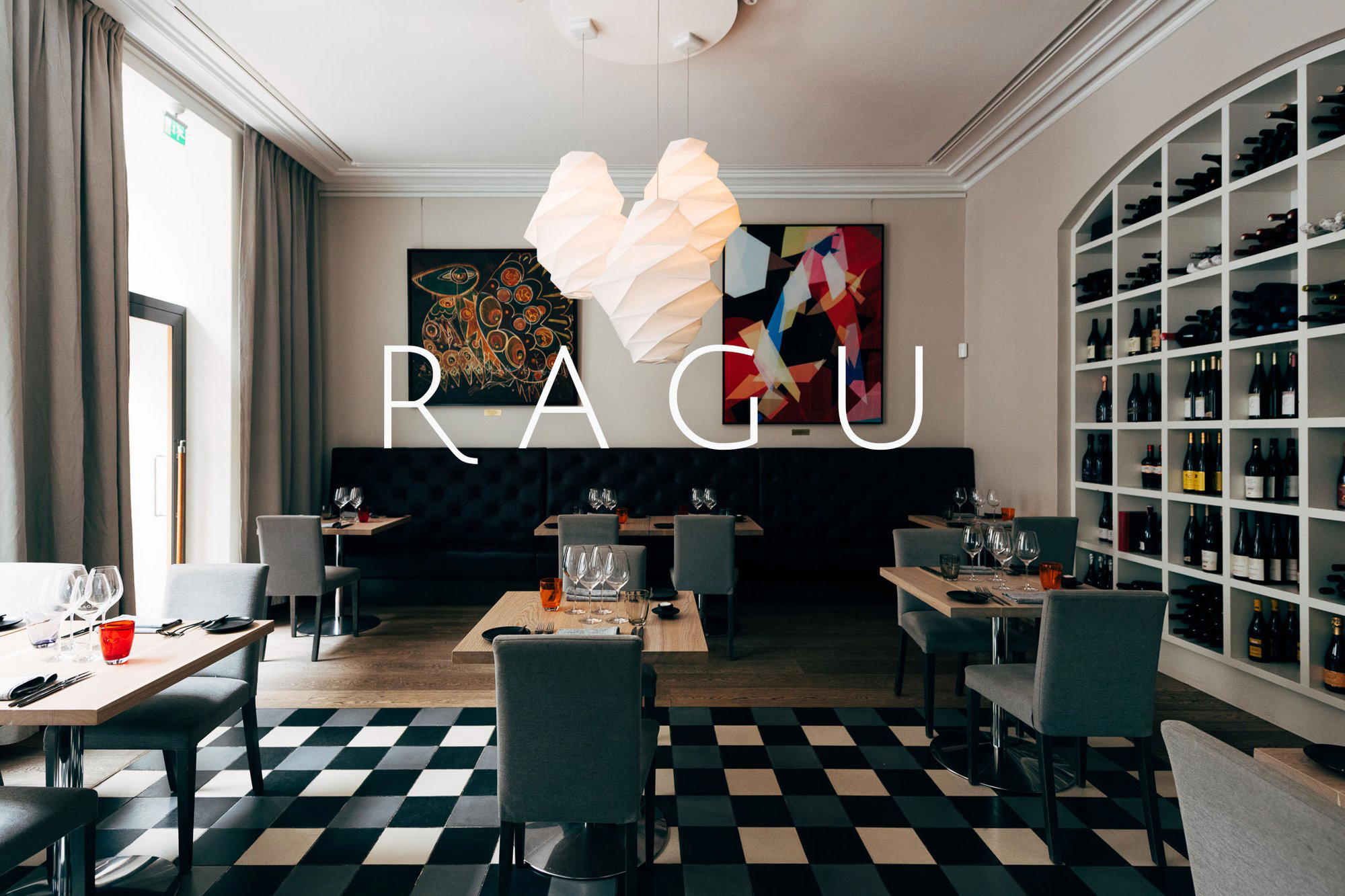
Ragu occupies a quiet address on Ludviginkatu in Helsinki's Punavuori district, where the city's more considered dining rooms have taken hold over the past decade. The space draws attention as much for its physical presence as for what arrives at the table, placing it in a small cohort of Helsinki restaurants where architecture and atmosphere carry as much editorial weight as the menu.

Pearl is the En Primeur Club membership app, where members save venues, book tables and use the concierge.
A Room That Does the Talking First
Ludviginkatu sits in the calmer southern reaches of Punavuori, a district that has accumulated Helsinki's more thoughtful dining addresses over the past fifteen years. The street is residential in character, with the kind of low foot traffic that filters out casual walk-ins. Arriving at Ragu, the physical container announces itself before anything culinary does. This is a pattern that has emerged across Helsinki's mid-to-upper dining tier: spaces where the architecture is a deliberate editorial statement, setting expectations for pacing, proximity, and the kind of attention the kitchen intends to give each table.
That spatial logic matters in Helsinki more than in some comparable Nordic capitals. The city's dining culture has historically rewarded intimacy over volume, and the rooms that have built the strongest reputations, from the high-floor formality of Palace to the spare, green-lit counter at Grön, tend to treat seating arrangement and spatial proportion as primary design decisions, not afterthoughts. Ragu's address on Ludviginkatu 3-5 places it in a neighbourhood where that approach has room to breathe.
Where Ragu Sits in Helsinki's Dining Geography
Helsinki's restaurant scene has stratified into reasonably distinct tiers over the past decade. At the leading end, the city carries several tasting-menu operations that compete on a Scandinavian and European level: Olo with its refined Scandinavian progressions, Finnjävel Salonki with its deep excavation of Finnish culinary heritage, and The ROOM by Kozeen Shiwan operating in the creative fine-dining register. Below that, a wider band of restaurants occupies the territory where cooking ambition and spatial comfort intersect without demanding a full tasting-menu commitment from the diner.
Ragu appears to operate in that intermediate zone, where the room is the first signal of intent and the menu follows its logic. This tier is, in some ways, the most competitive in the city. It requires a clear identity, in design, in cuisine, in the dining rhythm the space imposes, because the markers that distinguish top-end operations (awards, tasting-menu length, reservation scarcity) are less definitively in play. The rooms that succeed here do so because the physical experience is coherent enough to carry the evening when the food alone isn't asked to do all the work.
For reference across the wider Finnish dining conversation, strong regional performers like Kaskis in Turku and VÅR in Porvoo demonstrate how Nordic culinary thinking has spread well beyond Helsinki's city centre. Bistro Henriks in Tampere and Figaro in Jyväskylä reflect similar patterns in secondary cities, where the spatial identity of a dining room often compensates for the absence of a metropolitan dining circuit to validate a restaurant's positioning. Even further afield, Hai Long in Rovaniemi, Filipof in Joensuu, Gösta in Mänttä, JJ's BBQ in Salo, Vintti in Hameenlinna, and Hejm in Vaasa each show how Finnish dining identity is being constructed at a granular, local level.
The Architecture of a Dining Room as Argument
The broader shift in how serious Helsinki restaurants present themselves is worth naming directly. Through much of the 2000s, dining-room design in the city trended toward the spare and the cool: bare concrete, open kitchens, neutral palettes that signalled Nordic restraint. The current generation of rooms has moved toward a warmer spatial register without abandoning that restraint. Materials are more varied, lighting is considered as an active tool rather than mere utility, and the relationship between table spacing and acoustic softness has become a genuine design discipline.
Ragu's location in Punavuori places it in a neighbourhood that has supported this evolution. The district's mix of residential scale and commercial discretion means that restaurants here are not competing for attention through street-level spectacle. The room has to do its work from the inside out. That logic tends to produce more careful interior decisions: where you sit relative to other diners, how sound moves through the space, whether the kitchen is visible or implied, how the transition from street to table feels. These are the questions that define the spatial argument a restaurant makes about what kind of evening it intends to produce.
At the level of global fine dining, the design-led dining room has become a category of its own. Operations like Le Bernardin in New York City have built institutional authority partly through the consistency of their physical presence, while more recent critical darlings like Atomix in New York demonstrate how a tightly controlled spatial concept can become inseparable from the food identity. Helsinki's equivalent conversations happen at a smaller scale, but the underlying logic is the same: the room is a statement about what the kitchen believes.
Planning a Visit
Ragu is at Ludviginkatu 3-5, 00130 Helsinki, in the Punavuori district. The address is walkable from the city centre and accessible by tram along the southern routes that connect Punavuori to the central station corridor. Helsinki's better-regarded dining rooms at this level tend to fill midweek as readily as weekends, so building in lead time is advisable regardless of when you intend to visit. For a broader orientation to what Helsinki's dining scene offers across different tiers and neighbourhoods, the EP Club Helsinki restaurants guide maps the full competitive field.
Frequently asked questions
What part of town is Ragu in?
Ragu is located at Ludviginkatu 3-5, 00130 Helsinki, Finland, Helsinki.
Is Ragu a good option for a Helsinki dinner without a tasting menu commitment?
That is precisely where Ragu finds its footing. Helsinki's upper dining tier is dominated by multi-course tasting formats, and Ragu at Ludviginkatu 3-5 in Punavuori represents an alternative for diners who want a kitchen with genuine ambition but not the two-to-three-hour structured progression that the city's top-end rooms typically require.
What's the signature dish at Ragu?
Visitors coming for a fixed showpiece dish will likely find the approach here more fluid than that.
How far ahead should I plan for Ragu?
Ragu sits in Punavuori, a district that has drawn Helsinki's more considered dining addresses and the reservation pressure that follows. Booking a week or two in advance is a reasonable baseline for a straightforward weekday visit; weekends in the busier autumn and winter months warrant more lead time than that.
What's Ragu best at?
Ragu occupies a specific position in Helsinki's dining geography: serious enough to sit above the city's casual mid-market, without the formality or price ceiling of the tasting-menu tier. The address in Punavuori signals that intent, this is a neighbourhood that has accumulated restaurants built around cooking rather than spectacle.
Cuisine and Credentials
Comparable venues nearby, for context on price, style, and recognition.
| Venue | Cuisine | Price | Awards | Notes |
|---|---|---|---|---|
| RaguThis venue (the venue you are viewing) | Modern Scandinavian-Italian Fine Dining | $50–100 | Not listed | Not listed |
| Birdie Numnum | Modern Scandinavian Fine Casual | $50–100 | Not listed | Linjat |
| Emo | Modern Scandinavian Bistro | $50–100 | Star Wine List | Kaartinkaupunki |
| Grotesk | Modern European Steakhouse with Nordic Twist | $30–50 | Not listed | Kaartinkaupunki |
| Ravintola Jason | Nordic-Asian Fusion | $100–150 | Not listed | Kamppi |
| Scolare | Modern Italian | $50–100 | Star Wine List | Kaartinkaupunki |