Raamen to Tenshin Graphmi

Raamen to Tenshin Graphmi is a compact Ichinomiya ramen and dim sum address selected for Tabelog 100 - Ramen - AICHI - 2025. Its appeal sits in the way regional ramen culture is moving beyond a single-bowl transaction, pairing noodle craft with a side category that changes how a casual meal can be paced.
Pearl is the En Primeur Club membership app — saves, bookings, and concierge access live there. Same editors, same standards.
- Address
- 愛知県一宮市中島通2-43
- Website
- tabelog.com
 Saves & bookings on Pearl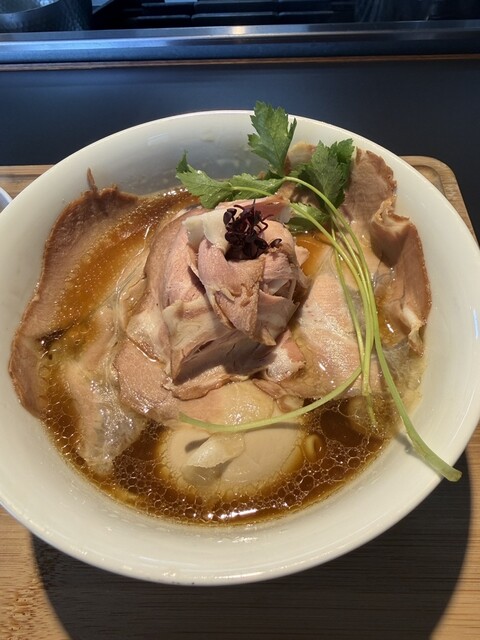
In Ichinomiya, the ramen room often announces itself before the bowl does: counter seats, a compact rhythm, and the quiet choreography of solo diners moving through lunch without ceremony. Raamen to Tenshin Graphmi belongs to that practical, local strain of Japanese eating, but its ramen-and-dim-sum pairing gives the format a wider range than the standard noodle stop. The setting is a house restaurant rather than a high-gloss dining room, which matters. This is food built for repeat local use, not destination theatre.
Aichi’s ramen culture is less internationally packaged than Tokyo’s, and that makes its stronger addresses more revealing. The region rewards places that can draw regulars without leaning on tasting-menu language or imported luxury cues. Selection for Tabelog 100 - Ramen - AICHI - 2025 places Raamen to Tenshin Graphmi inside a prefectural group judged on ramen rather than hospitality spectacle. That distinction is useful for travellers: the draw is the bowl, the cadence of service, and the supporting dim sum format, not a chef biography or a room designed for long-form dining.
Ramen with dim sum changes the pace of a casual Ichinomiya meal
Ramen is often treated as a single decision: broth style, noodle texture, toppings, then leave. Adding dim sum shifts the meal toward comparison and sequencing. It invites a diner to think about starch, steam, wheat, and stock together rather than treating noodles as the only measure of craft. The pairing also puts sourcing and kitchen discipline under pressure. A ramen shop can hide behind intensity; a mixed ramen and yum cha category has to manage multiple forms of dough, heat, and timing.
That is where ingredient logic becomes the stronger editorial lens. The value of a ramen address is not only whether the soup is rich or clear, but whether the kitchen can keep its base elements in balance across formats. Wheat behaves differently in noodles and dumpling wrappers. Fat, salt, and aromatics have to read differently when a diner moves from a bowl to a steamed or filled item. The better version of this format avoids turning dim sum into garnish. It makes the side category part of the meal’s structure.
Ichinomiya has a useful spread of dining types for reading the city. Mugi no Michi Sugure sits in the same accessible ramen price band, which makes it a natural point of contrast for noodle-focused meals. At the other end, Ryuen and Kappou Tenkai occupy higher-spend territory, where the expectations move toward longer meals and more formal sequencing. Restaurant HONJIN broadens that map again. Read together, these addresses show why Ichinomiya should not be treated as a single-note stop between larger cities.
A Tabelog 100 signal in a city that rewards regulars
Tabelog’s Hyakumeiten selections carry particular weight in Japan because they sit close to domestic dining behaviour rather than overseas prestige cycles. A ramen selection in Aichi speaks to local competitiveness: repeatability, consistency, and a level of public attention strong enough to register in a crowded category. Raamen to Tenshin Graphmi’s Tabelog score of 3.59 supports that picture without turning the meal into trophy dining.
The room format reinforces the point. Counter seating suits ramen’s speed and solo-dining culture, while the family-friendly designation makes the place less rigid than many small specialist counters. Non-smoking status also matters in Japan’s casual dining sector, especially for travellers planning meals with children or those sensitive to smoke. The restaurant’s position near Imaise in Ichinomiya makes it part of a local circuit rather than a station-front convenience play.
For a broader city read, start with Our full Ichinomiya restaurants guide, then place the meal alongside Our full Ichinomiya hotels guide, Our full Ichinomiya bars guide, Our full Ichinomiya wineries guide, and Our full Ichinomiya experiences guide. The useful itinerary is not about chasing a single dining room; it is about seeing how a mid-sized Japanese city supports everyday specialisation.
How to read the value proposition
The strongest reason to prioritise the restaurant is its category mix. A ramen-only address can be brilliant but narrow. A ramen and dim sum address gives more information in one sitting: how the kitchen handles broth, noodles, dough, and quick-service pacing. For travellers already eating across Aichi, that breadth is useful. It creates a sharper comparison with single-specialty noodle shops and with higher-budget Ichinomiya restaurants where the meal is structured around courses rather than bowls.
The payment setup also points to an old-school casual Japanese model, so planning should be practical rather than aspirational. This is not the place to build an evening around luxury markers. It is the place to read local appetite through an award-listed ramen counter with a secondary dim sum language. That is a different kind of credibility, and for Ichinomiya it may be the more interesting one.
Travellers extending the comparison beyond Ichinomiya can read across other Japanese and Japan-adjacent dining formats: Chuka Soba Hanamaru, -Grilled beef Sukiyaki- KAMAKURA TANUKIAN 鎌倉 たぬき庵 in Kamakura. 鮪と炭火焼き うお炭 秋葉原店 in Tokyo.cafe in Osaka.know in Kumamoto, (Shoku) Vietnam in Kawasaki, [Curry Senmon Ten] Maruyama Kyoju. in Sapporo, Jōdo Saké Bar in Los Angeles, and Onigiri Time in Pasadena. The through-line is not cuisine similarity alone; it is how casual formats carry cultural information when the kitchen has a defined point of view.
Side-by-Side Snapshot
Comparable venues by cuisine and price in the same metro.
| Venue | Cuisine | Price | Notes |
|---|---|---|---|
| Raamen to Tenshin GraphmiThis venue — the venue you are viewing | Ramen and dim sum | $$ | Not listed |
| Kappou Tenkai | Japanese Kaiseki | $$$ | Kannonji |
| Chuka Soba Hanamaru | Traditional Japanese ramen | $ | .null |
| Mugi no Michi Sugure | Modern tsukemen & ramen | $$ | Ichinomiya |
| Yukkuri Wine Shokudo Gocchaponto | Italian Wine Shokudo | $$$ | Ichinomiya |
| Ryuen | Japanese Yakiniku | $$$ | Owari Ichinomiya |
Recognition history
Dated appearances from independent guides and award organizations, with the underlying list record or original source where available.
Tabelog 100 #88 · No. 88
Tabelog · Tabelog 100 - Ramen - AICHI - 2025
Continue exploring
More in Ichinomiya
Restaurants in Ichinomiya
Browse all →
At a Glance
- Modern
- Cozy
- Trendy
- Solo
- Family
- Casual Hangout
- Late Night
- Standalone
Casual and lively ramen shop atmosphere with a stylish, modern interior and counter seating, suited to both solo diners and families.