Kappou Tenkai

Kappou Tenkai places Ichinomiya’s small-format Japanese cooking in a serious national conversation, backed by selection for Tabelog’s Japanese cuisine EAST “Tabelog 100” 2025. The appeal is not spectacle, but the kappou grammar of counter work, seasonal sourcing, and a room scaled for close attention rather than volume.
Pearl is the En Primeur Club membership app — saves, bookings, and concierge access live there. Same editors, same standards.
- Address
- 1 Chome-18-12 Suehiro, Ichinomiya, Aichi 491-0918, Japan
- Phone
- +81 586-44-7797
- Website
- tabelog.com
- Directions
- Get directions
 Saves & bookings on Pearl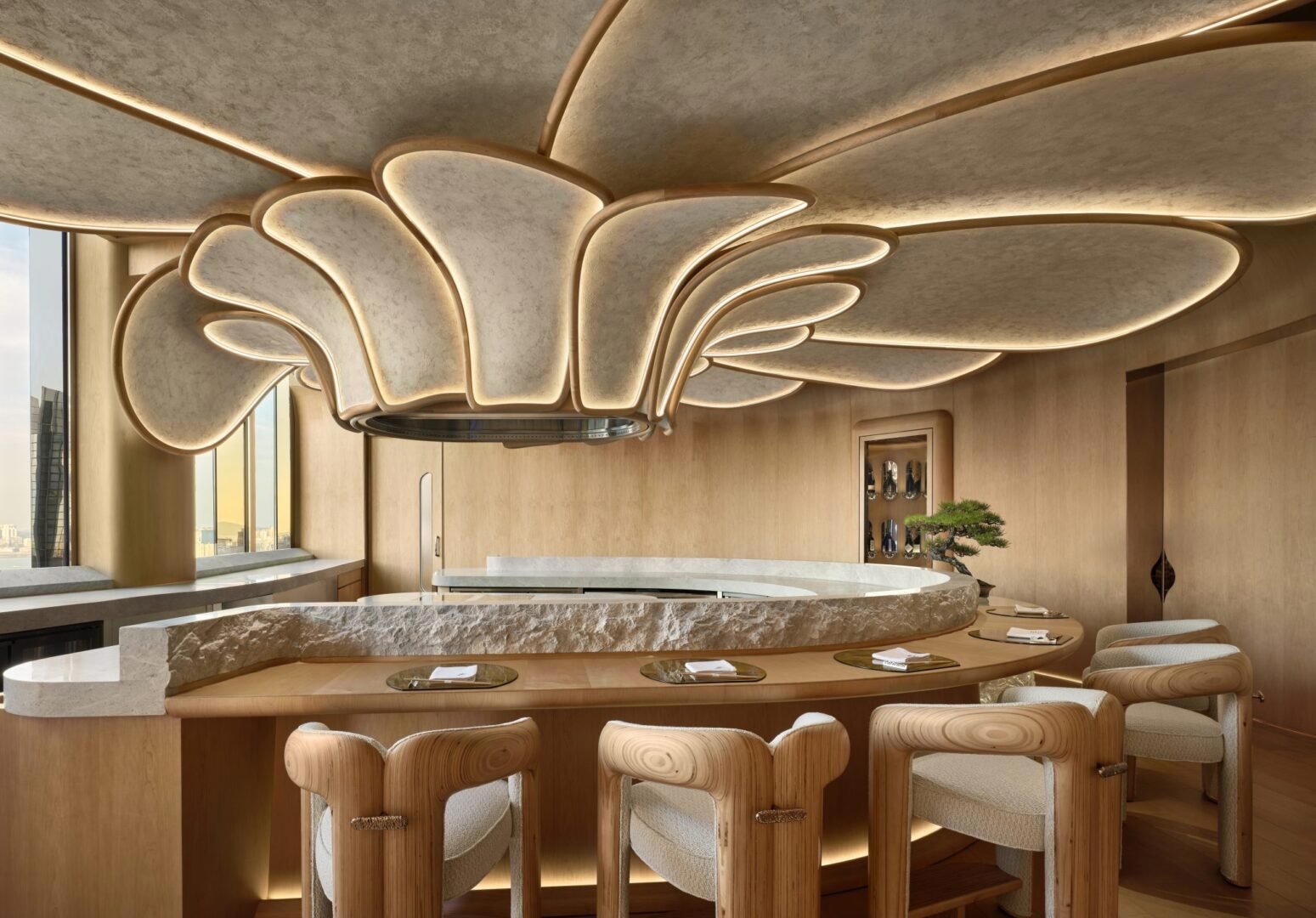
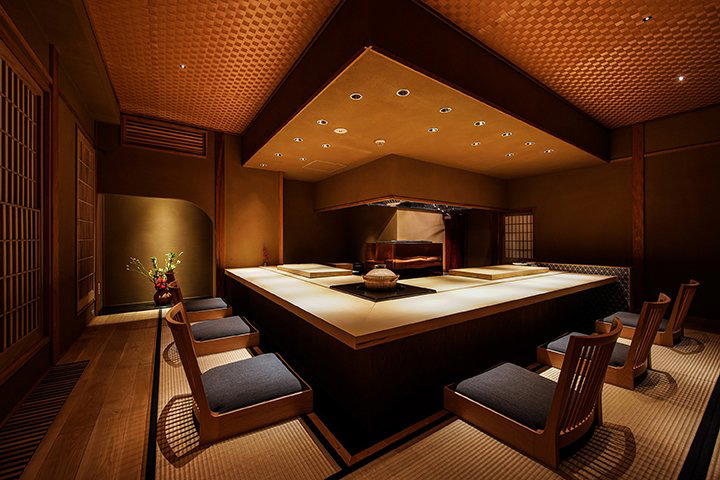
The house-restaurant setting matters before the first course is considered. In Ichinomiya, where serious dining is often folded into residential streets rather than announced by hotel lobbies or urban design theater, a compact Japanese counter changes the rhythm of the meal. The room is small enough for the mechanics of kappou to read clearly: the cook’s station, the counter seats, the tatami area, the implicit exchange between season and technique. Kappou Tenkai belongs to that tradition, where the point is not a long manifesto but disciplined handling of ingredients in a format close enough for the diner to understand the work.
That distinction is useful in Aichi. Nagoya pulls much of the region’s dining attention, yet satellite cities such as Ichinomiya often preserve a less performative version of Japanese cooking: neighborhood-based, reservation-led, and judged by repeat credibility rather than visual excess. Selection for Tabelog’s Japanese cuisine EAST “Tabelog 100” 2025 places Kappou Tenkai inside a broader field of Japanese restaurants assessed beyond local familiarity. It is a meaningful signal because kappou does not travel well as a concept when reduced to photographs; the category depends on procurement, timing, knife work, and restraint.
Ingredient-led kappou in a small Ichinomiya room
Kappou sits between the ceremony of formal kaiseki and the looser pleasures of an izakaya. The counter is not merely seating, it is the operating system. Ingredients move through a sequence of preparation rather than a fixed theatrical arc, and the cook’s judgment lies in how much intervention each item needs. In a market like Ichinomiya, that format suits diners who want Japanese cuisine without the price inflation and destination choreography attached to larger-city tasting counters.
The sourcing angle is central because Japanese cuisine at this level is rarely about novelty. Fish, vegetables, stock, rice, pickles, and seasonal garnishes carry meaning through freshness, season, and regional expectation. The restaurant’s award category, Japanese cuisine rather than a narrower label, suggests a kitchen judged on range rather than a single specialty. That matters for travelers: a ramen shop can be assessed through its broth and noodle identity, while kappou asks for broader confidence across simmered, grilled, raw, and composed preparations. Ichinomiya’s dining map reflects that spread. Chuka Soba Hanamaru, Mugi no Michi Sugure, and Raamen to Tenshin Graphmi speak to the city’s noodle culture, while Restaurant HONJIN and Ryuen sit in a more occasion-driven dining lane.
The room’s scale reinforces the ingredient logic. Eighteen seats, divided between counter and tatami seating, put this in the low-capacity tier rather than the broad-service restaurant category. That does not automatically make a meal better, but it changes the burden of execution. Smaller rooms expose timing, temperature, and pacing. They also reward diners who care about what a kitchen chooses not to do: fewer garnishes, less explanation, less noise around the plate.
How to read its position in Ichinomiya
Ichinomiya does not require the same dining strategy as Tokyo, Kyoto, or Osaka. The stronger play is to treat the city as a set of focused rooms rather than a checklist of name-driven counters. In that context, Kappou Tenkai occupies a useful middle: more serious than a casual quick meal, less financially aggressive than higher-spend special-occasion formats in the city. Compared with SORCIERE, Ryuen, and Yukkuri Wine Shokudo Gocchaponto, the draw is not a broader European or wine-dining identity but the narrower pleasure of Japanese cooking in close quarters.
The Tabelog 100 selection also gives the restaurant a different kind of trust signal from international guide recognition. Michelin and global lists often concentrate attention in major metropolitan centers; Tabelog’s Japanese cuisine lists are more granular and can surface regional rooms that matter to domestic diners. For visitors building a food itinerary through Aichi, that distinction is practical. It helps separate a competent neighborhood dinner from a place with enough consensus to justify planning around.
There is also a useful contrast with casual specialists. Mugi no Michi Sugure works in a lower-spend noodle bracket, where repetition and specialization define the meal. Kappou runs on breadth and seasonality, so the value calculation is different. The question is not whether a single dish carries the visit, but whether the kitchen can keep a sequence coherent without leaning on luxury signaling. That is where ingredient sourcing becomes the real test: less about rarity for its own sake, more about whether each product is used at the right moment and in the right register.
Planning a food-focused stop in Ichinomiya
For travelers, the strongest case is to fold this meal into a wider Ichinomiya food day rather than treat the city as a one-stop detour. The local restaurant field covers ramen, Japanese cuisine, Chinese cooking, and Western-leaning dining within a compact urban area. Start with Our full Ichinomiya restaurants guide for the core dining map, then use Our full Ichinomiya hotels guide, Our full Ichinomiya bars guide, Our full Ichinomiya wineries guide, and Our full Ichinomiya experiences guide to decide whether to stay locally or connect the meal with a broader Aichi itinerary.
Readers comparing Japanese dining across cities can also place this address against a wider national spread. -Grilled beef Sukiyaki- KAMAKURA TANUKIAN 鎌倉 たぬき庵 in Kamakura frames a more tightly defined beef tradition, while. 鮪と炭火焼き うお炭 秋葉原店 in Tokyo points toward tuna and charcoal cooking in a capital-city setting. For a broader scan of casual and specialist formats, compare.cafe in Osaka.know in Kumamoto, (Shoku) Vietnam in Kawasaki, [Curry Senmon Ten] Maruyama Kyoju. in Sapporo, Jōdo Saké Bar in Los Angeles, and Onigiri Time in Pasadena. The comparison clarifies why this Ichinomiya address is better understood as a measured kappou choice than as a trend-led destination.
The editorial read is simple: the restaurant is for diners who value the quiet evidence of Japanese cooking, an award-recognized category, a small room, and ingredient discipline over spectacle. In a city where the dining conversation is broader than one acclaimed neighborhood, that makes it a serious entry in Ichinomiya’s Japanese cuisine tier.
Comparison Snapshot
Comparable venues by cuisine and price in the same metro.
| Venue | Cuisine | Price | Notes |
|---|---|---|---|
| Kappou Tenkai | Japanese Kaiseki | $$$ | Kannonji |
| Ryuen | Japanese Yakiniku | $$$ | Owari Ichinomiya |
| Yukkuri Wine Shokudo Gocchaponto | Italian Wine Shokudo | $$$ | Ichinomiya |
| Raamen to Tenshin Graphmi | Ramen and dim sum | $$ | Ichinomiya |
| SORCIERE | Intimate French Bistro & Wine Bar Counter | $$$ | Sakae |
| Mugi no Michi Sugure | Modern tsukemen & ramen | $$ | Ichinomiya |
Recognition history
Dated appearances from independent guides and award organizations, with the underlying list record or original source where available.
Tabelog 100 #22 · No. 22
Tabelog · Tabelog 100 - Japanese cuisine - EAST - 2025
Continue exploring
More in Ichinomiya
Restaurants in Ichinomiya
Browse all →
Bars in Ichinomiya
Browse all →
At a Glance
- Quiet
- Cozy
- Classic
- Intimate
- Sophisticated
- Solo
- Business Dinner
- Special Occasion
- Standalone
Current opening hours
- Monday
- 5:30–9:30 PM
- Tuesday
- 5:30–9:30 PM
- Wednesday
- Closed
- Thursday
- 5:30–9:30 PM
- Friday
- 5:30–9:30 PM
- Saturday
- 5:30–9:30 PM
- Sunday
- 5:30–9:30 PM
Hours can change for holidays and private events. Last verified .
A small house-style Japanese restaurant with counter and tatami seating, creating an intimate, understated, and traditional atmosphere.