Mugi no Michi Sugure

A 10-seat counter in Ichinomiya’s Honmachi area, Mugi no Michi Sugure sits in Aichi’s serious ramen conversation through tsukemen and ramen rather than high-ticket tasting-menu theatre. Its Tabelog Ramen AICHI 100 selection in 2025 gives the shop a clear credential, while the compact format keeps the experience closer to everyday Japanese noodle culture than destination dining ceremony.
Pearl is the En Primeur Club membership app — saves, bookings, and concierge access live there. Same editors, same standards.
- Address
- 3 Chome-5-2 Honmachi, Ichinomiya, Aichi 491-0859, Japan
- Phone
- +81 586-64-8303
- Website
- menjasugure.com
 Saves & bookings on Pearl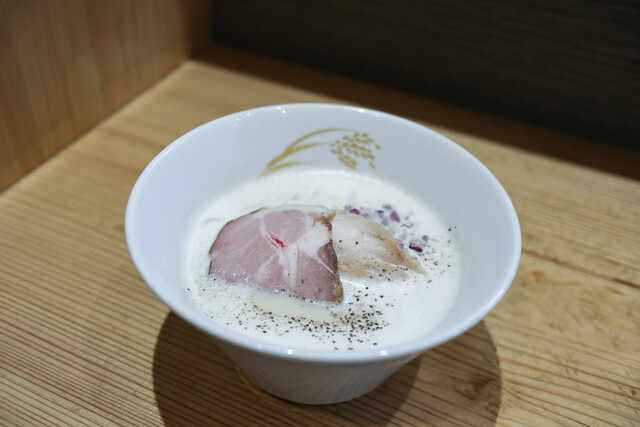
Honmachi’s ramen rhythm runs on short queues, counter seats and diners who know what they came for. In Ichinomiya, better known to many travellers as a rail stop between Nagoya and Gifu than a dining destination, the stronger noodle rooms differ from the region’s formal restaurants: fewer seats, faster turnover, lower spend, sharper focus. Mugi no Michi Sugure fits that register, a compact counter built around tsukemen and ramen rather than a broad izakaya menu or chef’s-course format.
The point is concentration, not luxury. Aichi ramen has absorbed Nagoya’s miso culture, central Japan’s wheat and noodle traditions, and Japan’s appetite for tightly specialised shops. Tsukemen, with noodles and dipping broth served separately, rewards discipline: noodle texture, broth density and portion balance define the experience. Ramen narrows judgement into a single bowl. A shop serving both needs range without losing its centre.
A counter format that puts the noodle before the occasion
Ichinomiya’s higher-spend dining sits elsewhere: Kappou Tenkai and Ryuen occupy a more formal local bracket, while Restaurant HONJIN points to a broader restaurant economy beyond ramen. The contrast matters. Mugi no Michi Sugure is not competing on linen, wine depth or long-course pacing; it argues that a short, focused noodle meal can carry enough precision to merit regional attention.
The 10-seat, all-counter setup reinforces that case. Counter ramen is one of Japan’s great democratic dining forms because it strips away most soft theatre: diners see the work, eat quickly and free the seat. Ingredient sourcing here is less pastoral storytelling than legibility: wheat character, broth structure, seasoning restraint or intensity, and whether the tsukemen holds together beyond the first bites. The listing’s “health and wellness menu” tag is an interesting signal, suggesting awareness of modern ramen’s tension between richness and digestibility without becoming wellness branding.
Recognition separates serious counters from merely busy ones. Mugi no Michi Sugure was selected for Tabelog Ramen AICHI 100 in 2025 and Tabelog Ramen EAST 100 in 2024, with a Tabelog score of 3.69. These are not Michelin-style decorations, but in Japan’s ramen culture they are useful filters, pointing to shops that earned attention from a demanding local review ecosystem, especially where prices are modest and differences are technical rather than theatrical.
Why ingredient discipline matters more in tsukemen
Tsukemen exposes shortcuts. Because noodles sit apart from dipping broth, temperature, chew and surface texture become obvious. A broth that seems balanced when diluted across a soup bowl can read heavy or flat as a dip; a noodle without structure collapses quickly. Wheat selection, hydration, broth concentration and tare balance are not background details but the meal’s architecture.
That is why regional ramen lists often reward specialist shops outside major tourist circuits. Tokyo and Osaka dominate international ramen conversation, but prefectural selections reveal Japan’s local noodle density. Ichinomiya is not where travellers usually build a full ramen itinerary, yet its counter shops can be more revealing because they sit inside ordinary urban life. For a wider view of the city’s food map, Our full Ichinomiya restaurants guide places this noodle counter alongside local peers such as Chuka Soba Hanamaru and Raamen to Tenshin Graphmi.
The appeal is logistical, too. A counter-only ramen shop suits solo diners, small groups and families comfortable with a compact room and quick meal rhythm. Reservations are unavailable, so planning is about timing appetite around lunch or dinner service. Payment is old-school ramen: cards, electronic money and QR payments are not accepted, so assume cash. Coin parking nearby helps drivers, while rail travellers can fold the meal into an Ichinomiya stop without making it a half-day excursion.
Where it fits in an Ichinomiya itinerary
For travellers building a day around Ichinomiya, the restaurant works as the low-ceremony food anchor, not the finale. It pairs better with a neighbourhood walk, rail transfer or casual local circuit than a dressed-up evening. The city’s dining range is broader than ramen, and that contrast is useful: visitors can read the area from compact noodle counters to higher-budget Japanese dining and Western-leaning rooms.
Planning beyond the meal is easier when the city is treated as a small network rather than a single stop. Our full Ichinomiya hotels guide, Our full Ichinomiya bars guide, Our full Ichinomiya wineries guide and Our full Ichinomiya experiences guide frame the stop within a wider Aichi itinerary. Readers comparing Japan’s casual-specialist dining across cities can also look to formats as different as -Grilled beef Sukiyaki- KAMAKURA TANUKIAN 鎌倉 たぬき庵 in Kamakura. 鮪と炭火焼き うお炭 秋葉原店 in Tokyo.cafe in Osaka.know in Kumamoto, (Shoku) Vietnam in Kawasaki and [Curry Senmon Ten] Maruyama Kyoju. in Sapporo. The same lens extends overseas, where focused Japanese formats appear in different cultural settings at Jōdo Saké Bar in Los Angeles and Onigiri Time in Pasadena.
The editorial case is clear: this is a specialist ramen address with credible regional recognition, a small counter and pricing that keeps the meal inside everyday Japan rather than luxury tourism. For Ichinomiya, it is useful not because it represents the whole city, but because it captures one of the country’s most disciplined casual dining traditions at close range.
Snapshot
Comparable venues by cuisine and price in the same metro.
| Venue | Cuisine | Price | Notes |
|---|---|---|---|
| Mugi no Michi SugureThis venue — the venue you are viewing | Modern tsukemen & ramen | $$ | Not listed |
| Raamen to Tenshin Graphmi | Ramen and dim sum | $$ | Ichinomiya |
| Kappou Tenkai | Japanese Kaiseki | $$$ | Kannonji |
| Chuka Soba Hanamaru | Traditional Japanese ramen | $ | .null |
| Ryuen | Japanese Yakiniku | $$$ | Owari Ichinomiya |
| Yukkuri Wine Shokudo Gocchaponto | Italian Wine Shokudo | $$$ | Ichinomiya |
Recognition history
Dated appearances from independent guides and award organizations, with the underlying list record or original source where available.
Tabelog 100 #10 · No. 10
Tabelog · Tabelog 100 - Ramen - AICHI - 2025
Continue exploring
More in Ichinomiya
Restaurants in Ichinomiya
Browse all →
At a Glance
- Cozy
- Lively
- Modern
- Solo
- Casual Hangout
- After Work
- Family
- Group Dining
- Standalone
- Local Sourcing
Current opening hours
- Monday
- 11 AM–2 PM, 6–9:30 PM
- Tuesday
- 11 AM–2 PM, 6–9:30 PM
- Wednesday
- 11 AM–2 PM, 6–9:30 PM
- Thursday
- 11 AM–2 PM, 6–9:30 PM
- Friday
- 11 AM–2 PM, 6–9:30 PM
- Saturday
- 11 AM–2:30 PM, 6–9:30 PM
- Sunday
- 11 AM–2:30 PM, 6–9:30 PM
Hours can change for holidays and private events. Last verified .
Casual, modern ramen-ya atmosphere focused on quick but attentive service, with a cozy, bustling feel typical of popular noodle shops.