
Tabelog 100 #52
Our verdict
Yokohama’s tachinomi culture rewards speed, proximity, and repeat use rather than ceremony. Hanamichi sits in that compact stand-up bar tradition, with sake and shochu at the center and a 2025 Tabelog 100 Tachinomi selection giving it a clear signal beyond ordinary station drinking.

Pearl is the En Primeur Club membership app, where members save venues, book tables and use the concierge.
The menu
What to order
- Motsu nabe or stewed offal (もつ煮)
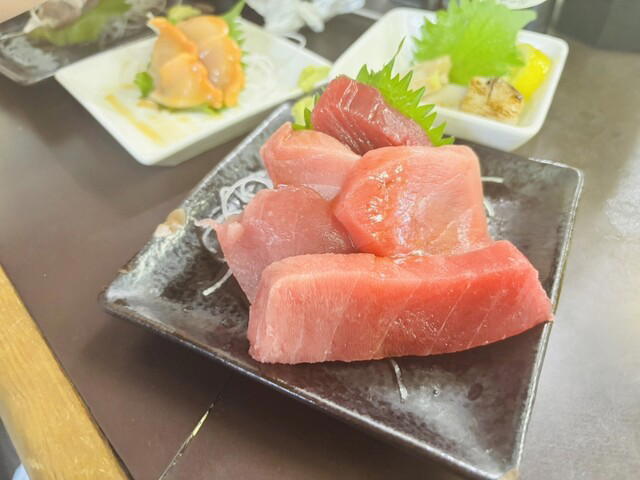
- Maguro sashimi
- Kushi katsu
- Megochi tempura
The approach to a tachinomi in Yokohama is part of the grammar: station traffic, short conversations, and the sense that the room is built for people who know exactly how long they want to stay. Hanamichi belongs to that Yokohama lineage of standing bars where the occasion is not dressed up with linen or theatre. The occasion is the after-work drink, the early-evening catch-up, the solo stop, or the low-key celebration that needs energy rather than ceremony.
That matters in a city often read through polished dining rooms and visitor-facing itineraries. Yokohama’s more useful food map is split between port-city eclecticism, everyday drinking culture, older commercial gravity, and station-adjacent places that serve residents before they serve itineraries. For a broader sweep of the city, Our full Yokohama restaurants guide gives the dining frame, while Our full Yokohama bars guide is the cleaner companion for anyone tracking the city by glass rather than tasting menu.
Standing-room drinking with Yokohama's practical streak
Tachinomi is not a consolation format. In Japan, the standing bar has its own discipline: short dwell times, close proximity, modest tabs, and a bias toward regulars who read the room without needing much instruction. Hanamichi’s 2025 selection from Tabelog’s Hyakumeiten coverage places it inside a wider conversation about this form, not just a local convenience category. The Tabelog score of 3.54 is less important than the specific recognition: tachinomi is judged by rhythm, utility, and consistency, not by the markers that flatter formal restaurants.
The identity is direct: Hanamichi is listed as a stand-up bar. That suits the room better than a ceremonial, reservation-led format would. The category keeps the bar close to everyday drinking culture and gives it the working-night flexibility that makes standing bars useful before dinner, after dinner, or instead of dinner. Compared with Yokohama peers such as Banri and Shinki, Hanamichi reads as the tighter, more compressed choice. Against Sumire Yokohama ten, Yoshoku Kimura Noge ten, and Mizunobu Fruit Parlour Labo, it belongs to a different social category altogether: less about a seated meal, more about the practiced half-hour that turns into a second round.
For milestone dining, that distinction is easy to misread. This is not where the city performs luxury. It is where a small celebration can feel more local than staged: a birthday drink before a larger dinner, a reunion that does not need ceremony, a solo toast after arriving in Yokohama, or a final stop after other Yokohama dining. The value is in its refusal to inflate the moment. In a city with plenty of polished dining, the standing bar can be the sharper choice when the company matters more than the table setting.
How to place it in a Yokohama itinerary
Yokohama gives Hanamichi its advantage. The city connects business traffic, leisure visitors, and everyday drinkers, so a standing bar here can function as a hinge between plans rather than the whole evening. That makes it useful for travelers who want Yokohama’s everyday drinking culture without committing to a long seated progression. Pairing it with other casual dining, a more formal meal, or a late snack makes more sense than treating it as a destination dinner in isolation.
Yokohama rewards that kind of sequencing. A visitor could look toward other Yokohama dining rooms for another local register, a different casual format, or a more established everyday meal. Everyday-food options add different angles again. The point is not to rank these places against one another; it is to understand how Yokohama works better when the evening is assembled across formats.
Travel planning around the city should follow the same logic. Our full Yokohama hotels guide is useful for deciding how to balance access, comfort, and evening movement within the city. Our full Yokohama experiences guide helps separate cultural time from dining time, and Our full Yokohama wineries guide covers the category for readers building a wider drinks itinerary. Regional side trips can stretch the same food map, while nearby cities broaden the casual-dining circuit without changing the usefulness of Yokohama as the base.
For travelers comparing Japan with overseas Japanese drinking and snack cultures, the contrast is instructive. Different cities underline how format changes by place, audience, and pace. Abroad, standing-bar and snack-counter ideas often translate differently when distance removes the station-adjacent context. Hanamichi’s appeal is that it has not been translated. It remains a Yokohama standing bar, and that is the reason to put it in the plan.
Frequently asked questions
What's the pricing like at Hanamichi?
Pricing at Hanamichi is listed as JPY 1,000 - JPY 1,999 JPY 1,000 - JPY 1,999.
Where is Hanamichi located?
Yokohama.
What days is Hanamichi closed?
Specific closing days and hours are not provided here.
What is Hanamichi known for?
Hanamichi is known as a stand-up bar in Yokohama and for its 2025 Tabelog Hyakumeiten recognition. Its Tabelog score is listed as 3.54.
At a Glance
Comparable venues at similar price and category levels.
| Venue | Cuisine | Price | Awards | Notes |
|---|---|---|---|---|
| HanamichiThis venue (the venue you are viewing) | Traditional Japanese standing bar (tachinomi) | $10–20 | Tabelog 100 #52 | Not listed |
| Banri | Chinese Dumplings | $20–30 | Tabelog 100 #57 | JPY 2,000 - JPY 2,999 - JPY 999 |
| Sumire Yokohama ten | Hokkaido-Style Miso Ramen | $10–20 | Tabelog 100 #63 | JPY 1,000 - JPY 1,999 JPY 1,000 - JPY 1,999 |
| Shinki | Traditional Yakitori & Izakaya Counter | $20–30 | Tabelog 100 #12 | JPY 2,000 - JPY 2,999 |
| Yoshoku Kimura Noge ten | Classic Yokohama yoshoku (Japanese Western-style) | $10–20 | Tabelog 100 #10 | JPY 1,000 - JPY 1,999 JPY 1,000 - JPY 1,999 |
| Mizunobu Fruit Parlour Labo | Fruit Parlor / Café | $10–20 | Tabelog 100 #1 | JPY 1,000 - JPY 1,999 JPY 1,000 - JPY 1,999 |
Recognition history
Dated appearances from independent guides and award organizations, with the underlying list record or original source where available.
Tabelog 100 #52 · No. 52
Tabelog · Tabelog 100 - Tachinomi - 2025
Continue exploring
More in Yokohama
Restaurants in Yokohama
All restaurants in Yokohama →


Bars in Yokohama
Browse all →


Details
- Lively
- Classic
- Cozy
- Energetic
- After Work
- Casual Hangout
- Solo
- Standalone
- Beer Program
- Sake Program
- A La Carte
- Counter Dining
- Small Plates
- Beer
- Nihonshu
- Shochu
Current opening hours
- Monday
- 12–9:45 PM
- Tuesday
- 12–9:45 PM
- Wednesday
- 12–9:45 PM
- Thursday
- 12–9:45 PM
- Friday
- 12–9:45 PM
- Saturday
- 12–7:30 PM
- Sunday
- Closed
Hours can change for holidays and private events. Hours as of .