Pullman Market

Our verdict
Pullman Market is a multi-concept food hall and marketplace at 221 Newell Ave, San Antonio, built around Texas ingredients by the Austin chef duo behind Emmer & Rye. The complex spans breakfast pastries and tacos through wood-fired beef at Isidore, heritage-grain pasta at Fife and Farro, Sonoran-style cooking at Mezquite, and a dedicated dessert tasting menu at Nicosi — all under one roof.

Pearl is the En Primeur Club membership app — saves, bookings, and concierge access live there. Same editors, same standards.
- Address
- 221 Newell Ave, San Antonio, TX 78215
- Phone
- (210) 759-0086
- Hours
- Mon–Thu 8 AM–9 PMFri–Sat 8 AM–10 PMSun 8 AM–9 PM
- Website
- pullmanmarket.com
- Directions
- Get directions
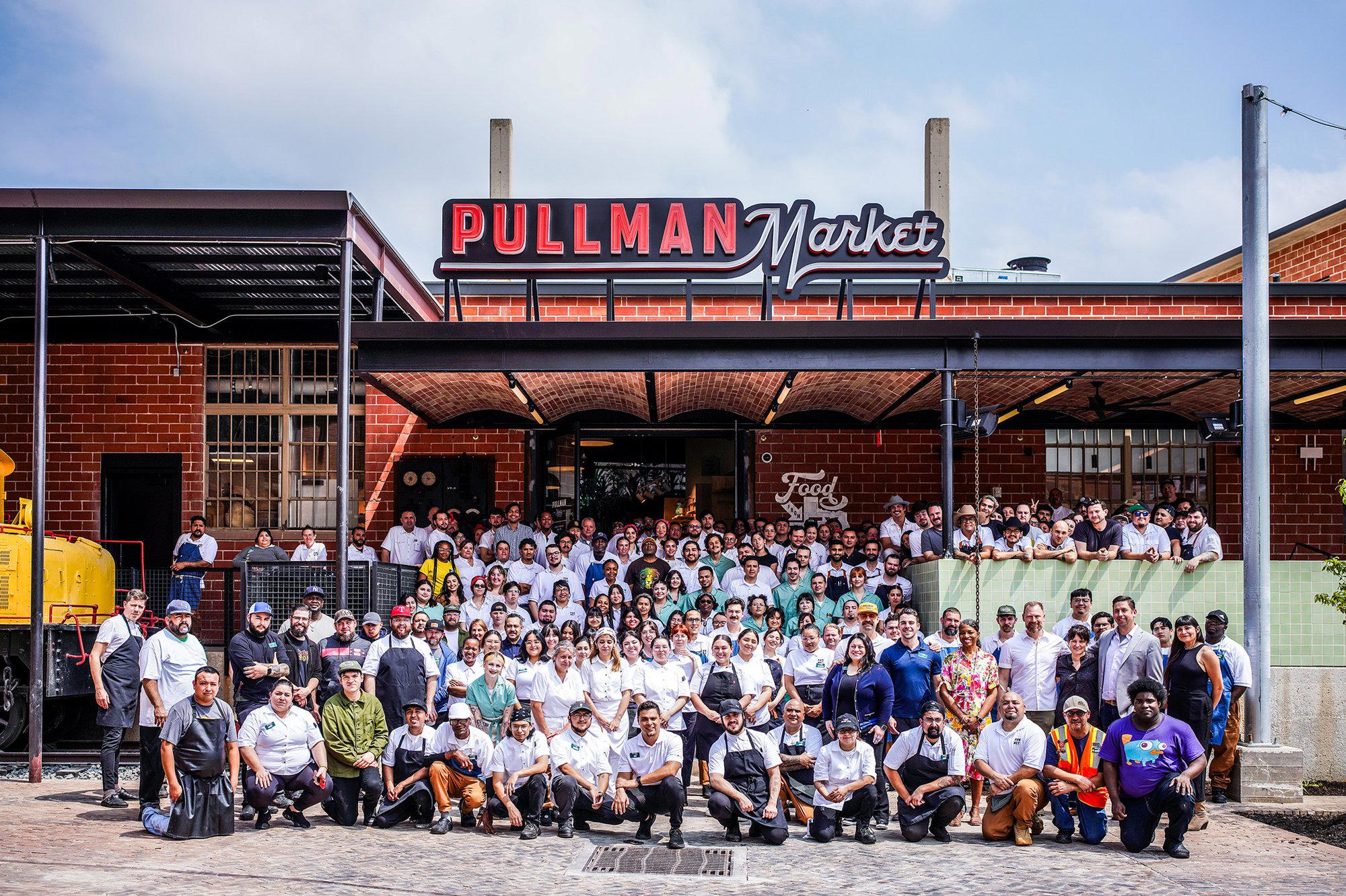
A Different Kind of Food Hall
American food halls have spent the better part of a decade cycling through the same playbook: global street food stalls, artisan coffee, a raw bar, and a beer garden loosely connected by exposed ductwork. Pullman Market, at 221 Newell Ave in San Antonio, takes a different position entirely. Where most multi-concept spaces aggregate unrelated operators under one roof, this complex is built around a single culinary thesis — that Texas ingredients, from heritage grains to Sonoran-influenced ranching traditions, are worth a full day of serious eating. The result is something closer to a regional larder with dining attached than a food court with ambitions.
The project comes from Austin chefs Kevin Fink and Tavel Bristol-Joseph, whose work at Emmer & Rye and Hestia has consistently placed Texas provenance at the center of a menu rather than treating it as a marketing footnote. Pullman Market represents their most expansive statement yet — several distinct restaurant concepts and marketplace components operating simultaneously, each drawing from the same sourcing philosophy but arriving at genuinely different dining experiences.
The Concepts, and Why the Differentiation Matters
Multi-concept hospitality spaces live or die by the quality of differentiation between their individual programs. A pizza counter and a pasta counter that share the same dough supplier are not two concepts, they are one concept in two booths. Pullman Market avoids that trap. The range here spans breakfast pastries baked in-house, breakfast tacos built with bacon from the on-site butcher and tortillas made fresh on the premises, through to Fife and Farro's pizza and pasta made from local heritage grains, Mezquite's Sonoran-style menu, the wood-fired Texas beef program at Isidore, and Nicosi, a chef's counter dedicated entirely to a dessert tasting menu.
That last concept deserves attention on its own terms. Standalone dessert tasting menus remain rare in the United States outside of a handful of ambitious fine-dining rooms. Venues like Alinea in Chicago and The French Laundry in Napa have long reserved their most technically adventurous pastry work for the close of a full tasting progression. Offering the dessert counter as a destination in itself, the only thing on the menu, represents a genuine commitment to pastry as a primary, not supplementary, discipline. In the context of San Antonio's dining scene, where a venue like Mixtli has established that the city can support serious tasting-menu formats, Nicosi's existence makes more sense than it might have five years ago.
Drinks, Curation, and the Role of the Wine Program
Multi-concept spaces present a structural problem for wine programs: the format encourages casual, high-turnover drinking rather than the kind of deliberate pairing and cellar depth that marks a serious list. The risk is a lowest-common-denominator selection that services every concept adequately but serves none particularly well. The more interesting approach, used by projects like Single Thread Farm in Healdsburg and Lazy Bear in San Francisco, is to build the beverage program around the same sourcing philosophy that defines the food, in this case, a Texas-first orientation that draws on the state's growing Hill Country wine production and its emerging natural wine community.
Texas wine has moved meaningfully in the last decade. The Hill Country appellation, centered roughly between Austin and San Antonio, now produces Tempranillo, Roussanne, and Mourvèdre at a quality tier that can credibly sit alongside mid-range Spanish and Southern Rhône imports. A complex like Pullman Market, given its explicit Texas provenance mandate, has both the editorial reason and the customer base to build a list weighted toward those producers. Whether the program leans into that opportunity is something visitors will need to assess on arrival, but the conceptual framework is there.
Beyond Texas, a space that moves from a butcher-sourced breakfast taco through heritage-grain pasta to wood-fired beef at dinner operates across a wide flavor arc. A wine program that tracks that arc, lighter, higher-acid selections for the grain-forward concepts and Mezquite's Sonoran cooking, more structured reds for Isidore's fire-driven beef, would serve the space better than a single undifferentiated list. Some of the more technically sophisticated multi-concept beverage programs in the United States, such as those at Atomix in New York City and Le Bernardin, demonstrate what concept-specific curation looks like at a high level; Pullman Market's challenge is delivering that kind of intentionality at food-hall scale and price points.
Where Pullman Market Fits in San Antonio's Dining Picture
San Antonio's restaurant scene has historically been defined by its Riverwalk-anchored dining corridor and a barbecue tradition that runs from institutions like 2M Smokehouse to the more direct neighborhood pull of Barbecue Station. The more ambitious dining tier, the kind of place that treats a meal as a structured argument about ingredients and technique, has been growing but remains a smaller segment. Pullman Market lands in that ambitious tier while remaining accessible across price points, which is a genuinely difficult balance to hold.
The comparison to Eataly is inevitable, given the marketplace-plus-restaurant format, and the venue's own positioning acknowledges it. But where Eataly's individual concepts tend to converge on a shared Italian-American register, the restaurants at Pullman Market occupy more distinct culinary territories. Sonoran beef culture, heritage grain cultivation, and a standalone dessert counter are not the same conversation, and the fact that they share a building does not make them interchangeable. The complexity of managing that differentiation at scale is part of what makes the project interesting, and part of what makes it worth monitoring as it matures.
Projects of this ambition take time to settle. Emeril's in New Orleans and similar chef-anchored expansions have shown that scaling a culinary identity across multiple formats creates execution pressure that single-restaurant operations do not face. The Fink and Bristol-Joseph track record in Austin provides reasonable confidence in the sourcing infrastructure, the grain relationships, the meat supply, the pastry talent. Whether that infrastructure translates consistently across every concept simultaneously is the question that repeat visits, over time, will answer.
Planning a Visit
Pullman Market is at 221 Newell Ave, San Antonio, TX 78215, in a part of the city that rewards arriving with time rather than a single reservation. The format works well as a day-long engagement: a morning pass through the marketplace, a lunch at Fife and Farro, and an evening anchored at Isidore or Mezquite, with Nicosi as a final, deliberate course. If the dessert counter operates on a reservation model, as most chef's-counter formats do, booking that seat before arrival is the practical priority. For a broader view of what San Antonio's dining scene offers across categories and price tiers, see our full San Antonio restaurants guide, as well as our San Antonio hotels guide, bars guide, wineries guide, and experiences guide.
Frequently asked questions
Is Pullman Market okay with children?
The food hall format works well for families. Because the complex spans multiple counters and concepts, from fresh breakfast tacos and in-house pastries to pizza and pasta at Fife and Farro, children have genuine options rather than a compromised kids' menu. The exception is Nicosi, the chef's counter tasting experience devoted entirely to dessert, which suits a quieter adult audience.
What kind of setting is Pullman Market?
Pullman Market is a large-format food hall and marketplace at 221 Newell Ave, San Antonio, housing several distinct restaurant concepts under one roof. The architecture of the project draws comparison to Eataly, but the concepts here, built around Texas meat, grains, and produce by the Austin team behind a recognized mini-empire of restaurants, are more differentiated in focus. The setting accommodates everything from a quick counter lunch to a full tasting-menu dinner at Nicosi.
What's Pullman Market known for in terms of accolades?
Pullman Market has received recognition including: Chefs Kevin Fink and Tavel Bristol-Joseph have spawned a mini-empire in Austin—and a thread that has run through much of their work is an exploration of the bounty of Texas meat, grains, and produce. Now, in their most ambitious project to ….
What do people recommend at Pullman Market?
The range here is the point: morning visitors tend toward the in-house pastries or breakfast tacos built with bacon from the on-site butcher and fresh-made tortillas. Fife and Farro draws attention for pizza and pasta milled from local heritage grains. For dinner, Isidore's seasonal wood-fired Texas beef and Mezquite's Sonoran-style cooking represent the most substantial programs, while Nicosi, a chef's counter tasting menu devoted solely to dessert, is the most singular concept in the building.
Where exactly is Pullman Market?
Pullman Market is located at 221 Newell Ave, San Antonio, TX 78215, San Antonio.
A Pricing-First Comparison
Comparable venues nearby, for context on price, style, and recognition.
| Venue | Cuisine | Price | Notes |
|---|---|---|---|
| Pullman MarketThis venue — the venue you are viewing | Texas Farm-to-Market Eclectic | Not listed | Not listed |
| The Boiler House | Texas Grill and Wine Garden | $50–100 | River North District, Texas Grill and Wine Garden |
| Cavalier | American Brasserie | $50–100 | Houston Street District, American Brasserie |
| Stella Public House | Farm-to-Table Wood-Fired Pizza | $20–30 | King William Historic District, Farm-to-Table Wood-Fired Pizza |
| The County Line | Texas Barbecue | $20–30 | Northwest, Texas Barbecue |
| Supper | Seasonal American Farm-to-Table | $50–100 | River North District, Seasonal American Farm-to-Table |
Recognition history
Dated appearances from independent guides and award organizations, with the underlying list record or original source where available.
Robb Report The 10 Best New Restaurants in America #3
Robb Report
Continue exploring
More in San Antonio
Restaurants in San Antonio
Browse all →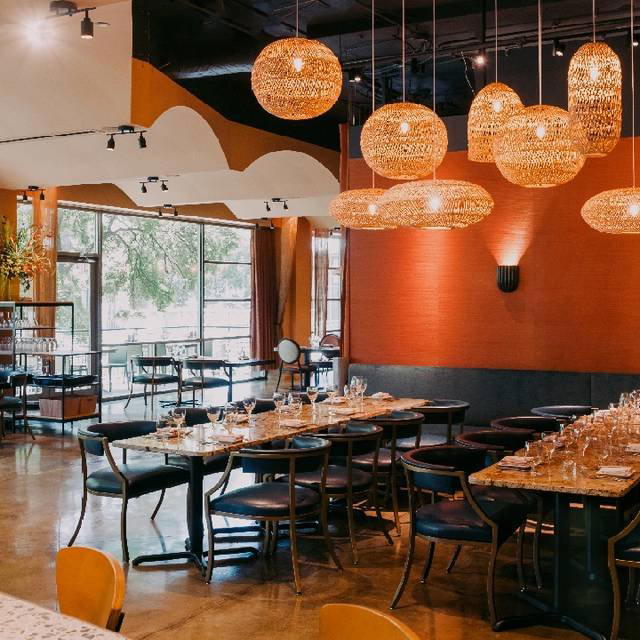
Bars in San Antonio
Browse all →

Hotels in San Antonio
Browse all →


Wineries in San Antonio
Browse all →
Pullman Market
The wine
- Wine program
- Curated wine list
- Craft cocktails
Details
- Modern
- Trendy
- Lively
- Industrial
- Casual Hangout
- Group Dining
- Family
- Brunch
- Open Kitchen
- Hotel Restaurant
- Craft Cocktails
- Farm To Table
- Local Sourcing
- A La Carte
- Small Plates
- Vegetarian Friendly
Current opening hours
- Monday
- 8 AM–9 PM
- Tuesday
- 8 AM–9 PM
- Wednesday
- 8 AM–9 PM
- Thursday
- 8 AM–9 PM
- Friday
- 8 AM–10 PM
- Saturday
- 8 AM–10 PM
- Sunday
- 8 AM–9 PM
Hours can change for holidays and private events. Last verified .
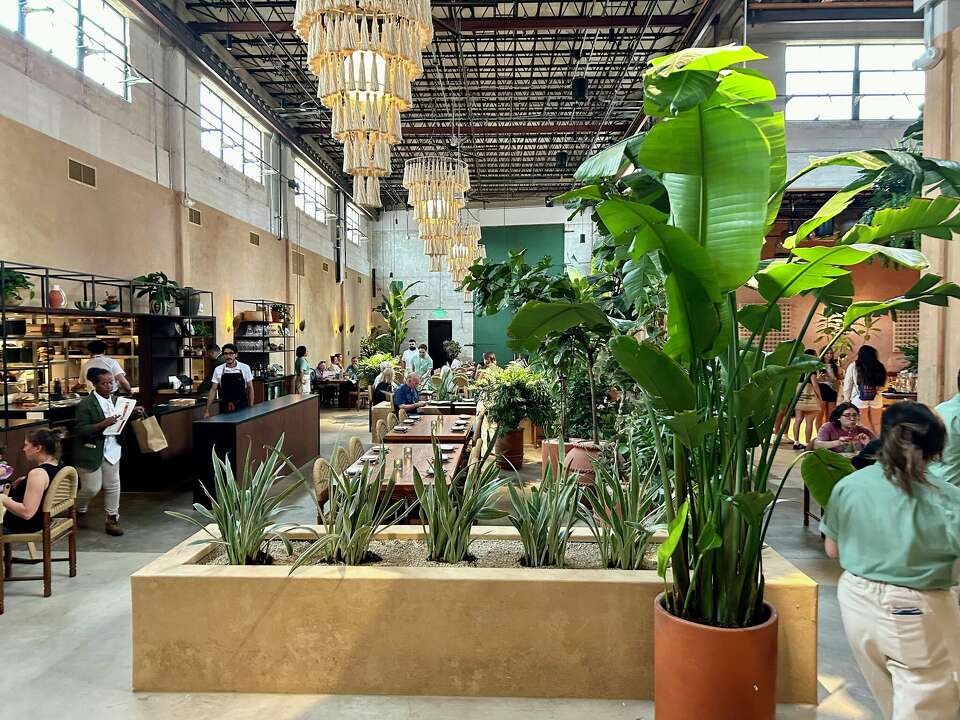
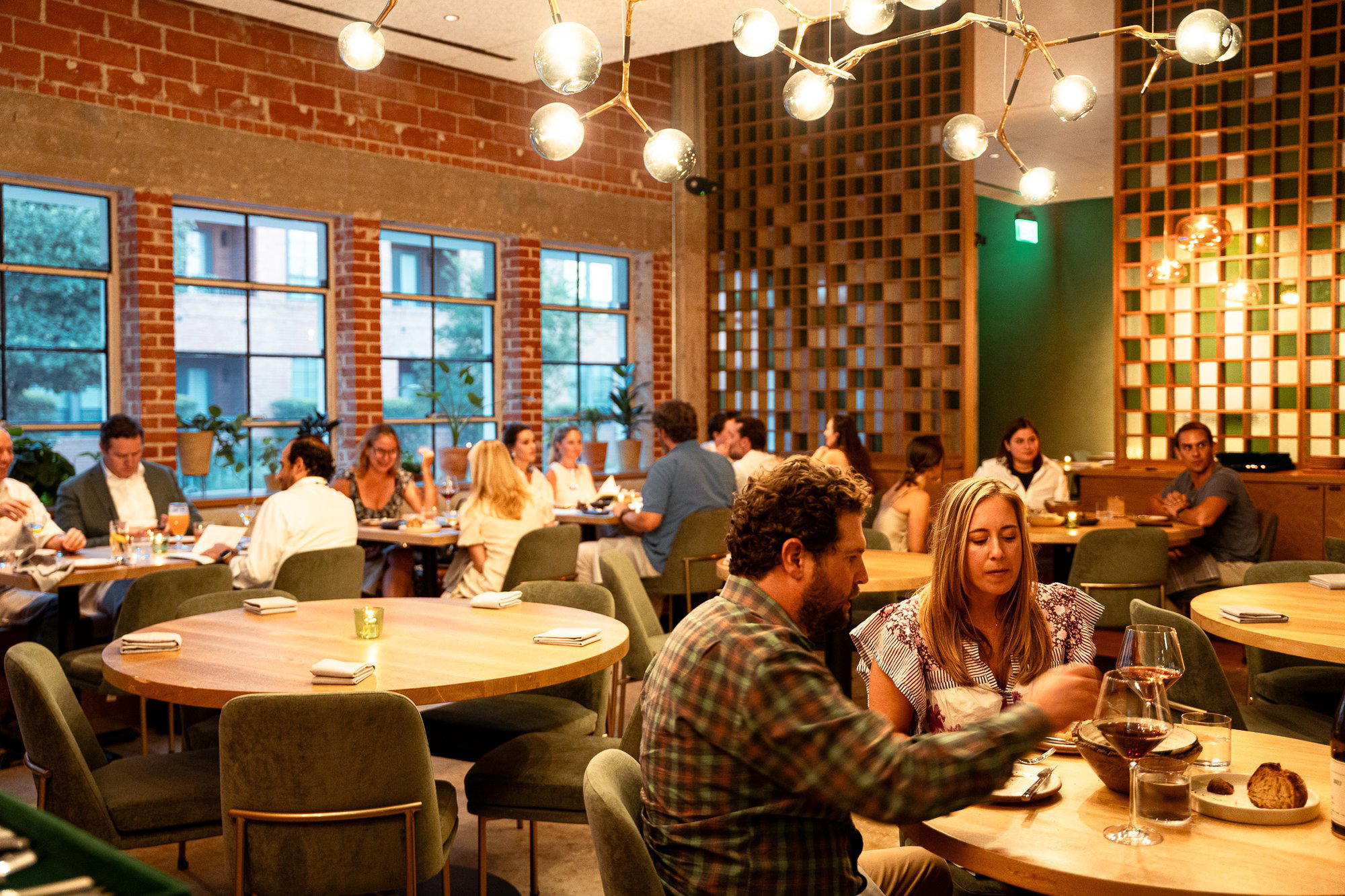
Lively and energetic market atmosphere with wood-fired cooking aromas, lively seating areas blending lounge-style cafe spaces and dedicated restaurant zones.