Proefverlof
Proefverlof occupies one of Leeuwarden's most architecturally significant addresses, Blokhuisplein 40, inside the city's former prison complex that has been reborn as a cultural hub. Positioned alongside the city's growing dining scene, it draws on the neighbourhood's layered identity to inform its character. For visitors exploring Frisian hospitality, it sits at an interesting intersection of place and purpose.
Pearl is the En Primeur Club membership app — saves, bookings, and concierge access live there. Same editors, same standards.
- Address
- Blokhuisplein 40, 8911 LJ Leeuwarden, Netherlands
- Phone
- +31583020030
- Website
- proefverlof.frl
- Directions
- Get directions
 Saves & bookings on Pearl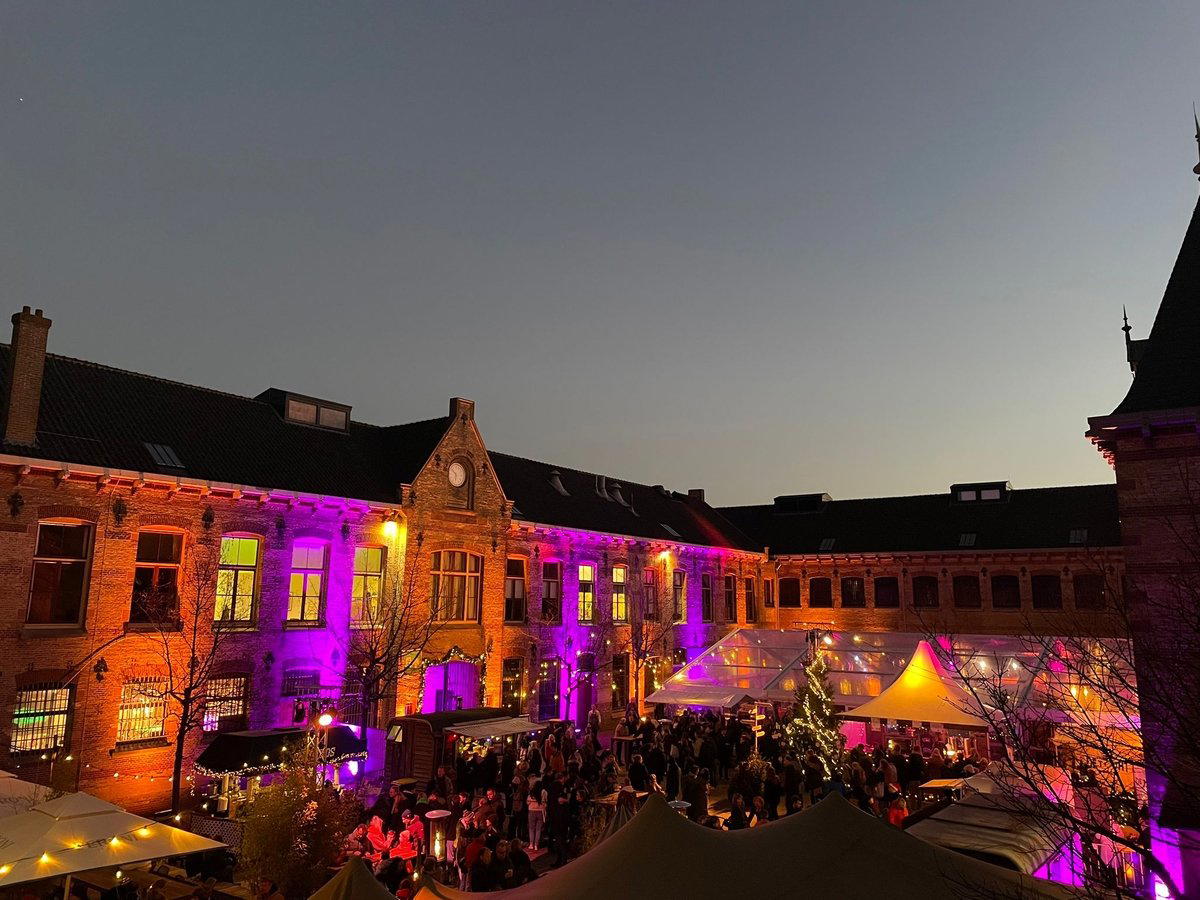
A Former Prison, Now a Place to Linger
Leeuwarden's Blokhuisplein is one of the more quietly compelling addresses in the Dutch provincial dining circuit. The complex at its centre is a former House of Detention, a nineteenth-century fortress of brick and iron that sat largely dormant until a sustained wave of cultural reinvestment transformed it into one of the city's most active social spaces. That transformation did not happen overnight: Leeuwarden's designation as European Capital of Culture in 2018 accelerated the kind of adaptive reuse that had already been building slowly in the Frisian capital, and Blokhuisplein became one of its most visible results. Proefverlof sits inside this complex at number 40, which means its physical context is doing considerable editorial work before anything arrives at the table.
The name itself rewards a moment's attention. Proefverlof is Dutch for probationary release, a dry legal term for the conditional freedom granted to prisoners before full discharge. Used as a venue name within a repurposed prison, it carries a register that is neither ironic nor heavy-handed: it simply acknowledges where you are. In a country where hospitality venues sometimes strain to generate atmosphere through design, this one inherits it structurally.
Leeuwarden's Dining Scene, and Where This Sits in It
Provincial Dutch dining has quietly matured over the past decade. The cities north of Amsterdam's gravitational pull, including Groningen, Zwolle, and Leeuwarden, have developed dining cultures that function independently of the capital's trends rather than trailing them. Leeuwarden in particular has benefited from civic investment and a compact old town that keeps quality venues within walking distance of one another. The result is a dining circuit where a visitor can move between distinct registers in an evening without covering much ground.
Within that circuit, the Blokhuisplein address gives Proefverlof a character that differs from the more conventional restaurant addresses in the city centre. Venues on or near the Nieuwestad or Grote Kerkstraat corridors operate in a more immediately legible hospitality context. Blokhuisplein requires a short detour and a degree of intention: you go there because you know it, not because you stumble past it on the way to somewhere else. That self-selection tends to produce a more engaged crowd. Comparable establishments in other Dutch cities have found that destination-within-a-destination formats attract a clientele that arrives primed rather than casual, and the atmosphere follows accordingly.
For context on where Leeuwarden's dining sits relative to the broader Dutch fine-dining circuit, the reference points are mostly elsewhere in the country. Three-Michelin-star territory includes De Librije in Zwolle and Ciel Bleu in Amsterdam, while the two-star tier encompasses venues like Aan de Poel in Amstelveen and De Bokkedoorns in Overveen. International comparison points such as Le Bernardin in New York City and Atomix in New York City illustrate how destination dining functions when the setting carries as much weight as the kitchen. Leeuwarden does not compete in that tier, nor does it need to: its dining identity is built around accessibility, local character, and a scale that larger cities cannot replicate.
The Neighbourhood as Context
Blokhuisplein's reinvention is worth understanding as a pattern, not just as a fact about one building. Across the Netherlands, adaptive reuse of institutional buildings has produced some of the more interesting hospitality spaces of the past fifteen years. Former churches, factories, and civic halls have been converted into hotels, food halls, and event venues with varying degrees of success. The challenge in each case is whether the new use honours the architectural weight of the shell or simply ignores it. At Blokhuisplein, the approach has generally been to keep the structure legible: the brick, the proportions, and the institutional geometry remain present rather than being plastered over with contemporary fitout. A venue operating inside that context inherits an atmosphere that is earned rather than manufactured.
For a visitor coming from outside Friesland, the neighbourhood immediately around Blokhuisplein also offers a useful lens on Leeuwarden's self-image. The city is the provincial capital of Friesland, a region with its own language, its own dairy identity, and a cultural confidence that sits at some distance from the Netherlands' western Randstad. The Frisian character tends toward directness and a certain pragmatic warmth, and those qualities surface in the city's better hospitality, where service tends to be attentive without being performative. Venues that do well here generally do so by reading that register correctly.
Nearby for Comparison and Completion
A visitor building an itinerary around Leeuwarden's dining has several reference points worth considering alongside Proefverlof. Bistro Aragosta operates in the €€ French bracket and represents the kind of confident bistro format that Leeuwarden's central streets support well. Pecorino Wijn & Eetbar positions itself as a wine-led eating bar, a format that has grown across Dutch mid-sized cities as natural wine culture has spread from Amsterdam outward. Jamuna, Fellini Leeuwarden, and Burgemeester van Napels round out a picture of a city that can sustain genuine variety across cuisine types at accessible price points.
Further afield in the Dutch provincial dining circuit, venues like De Groene Lantaarn in Staphorst, De Lindenhof in Giethoorn, De Nieuwe Winkel in Nijmegen, De Lindehof in Nuenen, Brut172 in Reijmerstok, and 't Nonnetje in Harderwijk illustrate that serious dining attention has distributed across the country in ways that reward exploration beyond the capital. Leeuwarden sits credibly within that dispersed quality tier.
Practical planning for a visit to Proefverlof is leading approached through the venue's current online presence, as hours, booking arrangements, and format details are subject to change at any address within a living cultural complex like Blokhuisplein. The address itself, at Blokhuisplein 40, is walkable from Leeuwarden's central train station in under fifteen minutes, and the complex is well-signposted within the city. Visiting mid-week tends to give a quieter read of the space; weekend evenings at Blokhuisplein attract a broader crowd drawn by the complex's events programme. For a broader view of what the city offers across dining categories, the EP Club Leeuwarden restaurants guide covers the full range.
How Proefverlof Leeuwarden compares with similar nearby venues.
| Venue | Cuisine | Price |
|---|---|---|
| Restaurant Eindeloos | Modern Cuisine | €€€ |
| Bistro Aragosta | French | €€ |
Continue exploring
More in Leeuwarden
At a Glance
- Cozy
- Historic
- Scenic
- Casual Hangout
- Group Dining
- Waterfront
- Historic Building
- Terrace
- Craft Cocktails
- Local Sourcing
- Waterfront
Current opening hours
- Monday
- Closed
- Tuesday
- 11 AM–11 PM
- Wednesday
- 11 AM–11 PM
- Thursday
- 11 AM–11 PM
- Friday
- 11 AM–11 PM
- Saturday
- 11 AM–11 PM
- Sunday
- 11 AM–11 PM
Hours can change for holidays and private events. Last verified .
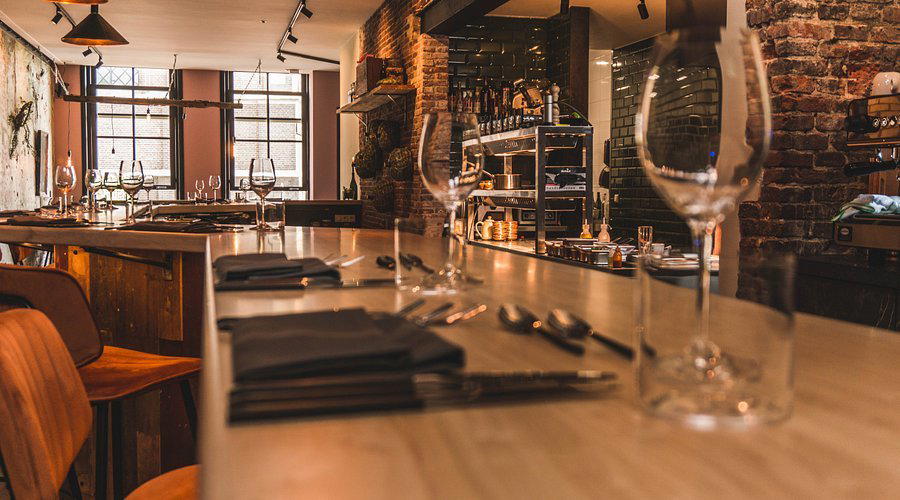
Atmospheric historic prison interior with low lighting, industrial fittings, and a lively canal-side terrace.
Know Before You Go
- Getting there
- Blokhuisplein 40, 8911 LJ Leeuwarden, Netherlands