← Guides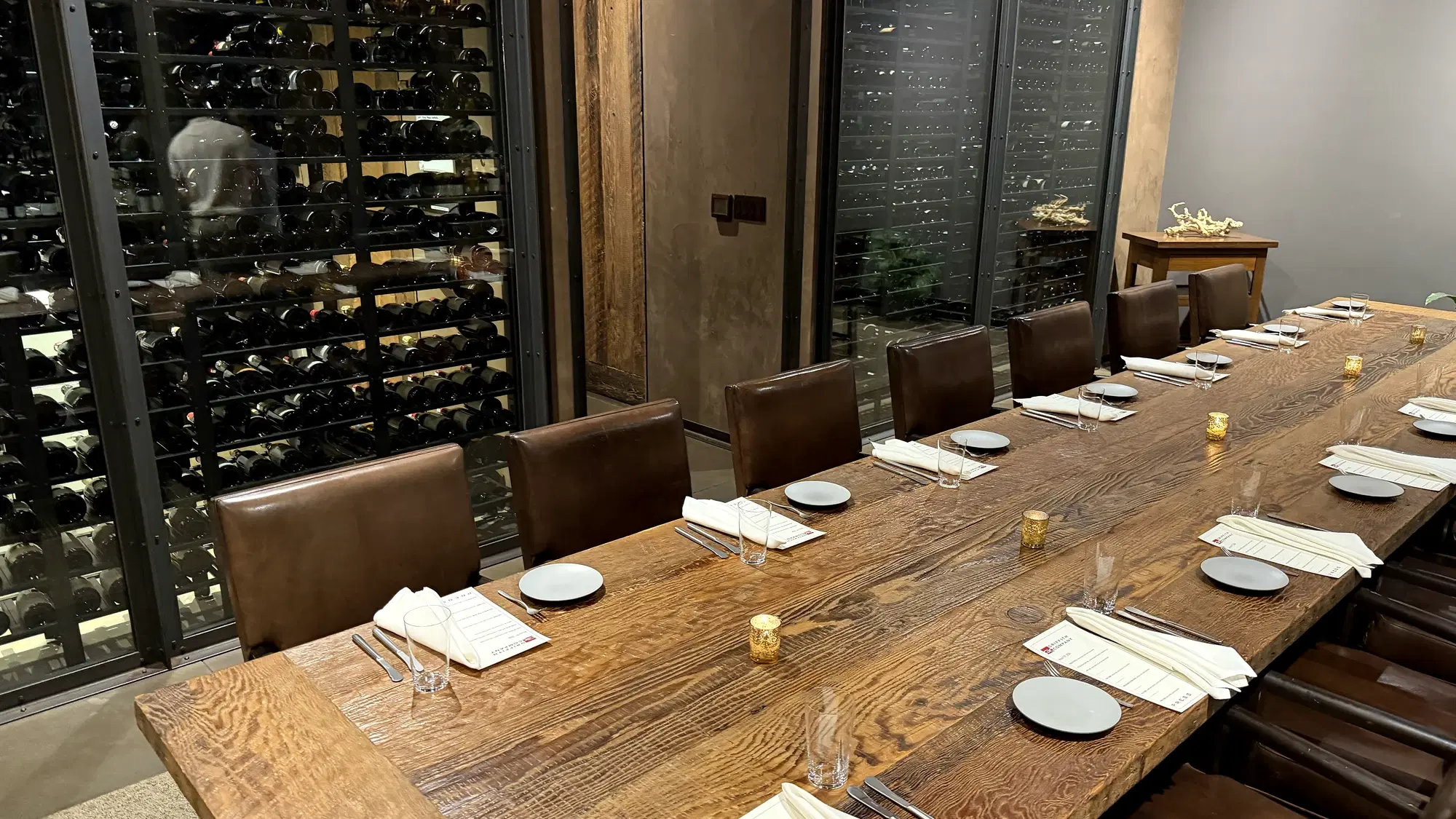
At PRESS in St. Helena, I went for Napa's cellar as much as dinner, and found 10,000 bottles matched by caviar pretzel before lobster chawanmushi and dry-aged Kurobuta pork.
At PRESS in St. Helena, I went for Napa's cellar as much as dinner, and found 10,000 bottles matched by caviar pretzel before lobster chawanmushi and dry-aged Kurobuta pork.
PRESS is the St. Helena restaurant we would book when the wine is not an accessory to dinner but one of the reasons for having dinner at all. Its cellar holds roughly 10,000 bottles and more than 2,700 distinctive Napa Valley selections, yet our August meal never felt like a wine archive with a kitchen attached. Chef Partner Philip Tessier's food had enough precision, acidity, and personality to share the center of the table with serious bottles.
That balance is what makes PRESS notable. The restaurant began in 2005 as Leslie Rudd's modern Napa Valley steakhouse. Under his daughter Samantha Rudd and Tessier, it has become a Michelin-starred expression of contemporary Wine Country cooking without erasing the pleasures that made the original idea work: a handsome room, generously scaled dishes, excellent meat, and time to drink well with friends.
Our dinner moved from caviar pretzel, chicken wings, and sweet-and-sour pig ears through lobster chawanmushi, ricotta gnudi, black truffle caramelle, dry-aged Kurobuta pork, and a table full of desserts. Along the way, we saw the open kitchen and walked through a cellar that carries more Napa history than many tasting rooms.
Yes. If you care deeply about Napa Valley wine, PRESS should be near the upper end of your dinner list. It is one of the rare restaurants where a collector can use a meal to explore Napa across producers and decades rather than drink only the current release from the winery visited that afternoon.
The recommendation is just as enthusiastic for diners who prioritize food. Tessier's menu is polished but lively, with global references that make sense in the dish rather than reading as decoration. Five spice and Shao Hsing wine appear on chicken wings. Green curry whey surrounds lobster chawanmushi. 'Nduja and shaved black truffle deepen sweet corn caramelle. Suya, aguachile, and shishito salsa verde accompany a tomahawk. This is recognizably Napa cooking because of its produce, purveyors, and relationship to wine, not because it confines itself to one culinary vocabulary.
One satisfying way to experience PRESS is with a group that likes to share. The four-course prix fixe and chef's tasting menu offer clear routes, but ordering broadly lets the table see the restaurant's range. Our dinner was expansive, social, and paced for conversation. That is exactly what Leslie Rudd intended when he imagined a restaurant around great food, great wine, and enough time to enjoy both.
Prices, formats, and hours are current at the time of writing and can change with the season. PRESS explicitly marks its menus as subject to change, so use the live food page when planning.
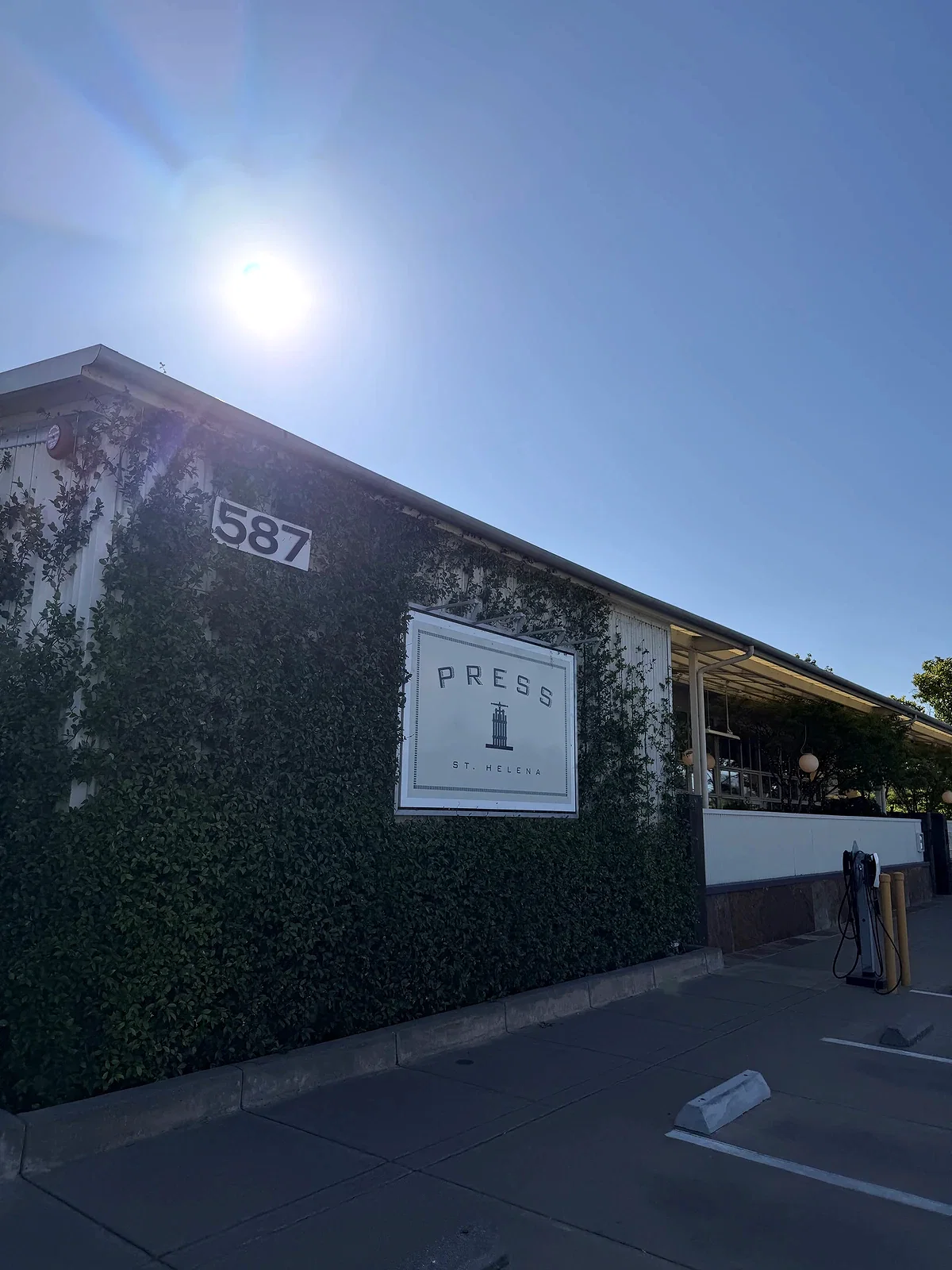
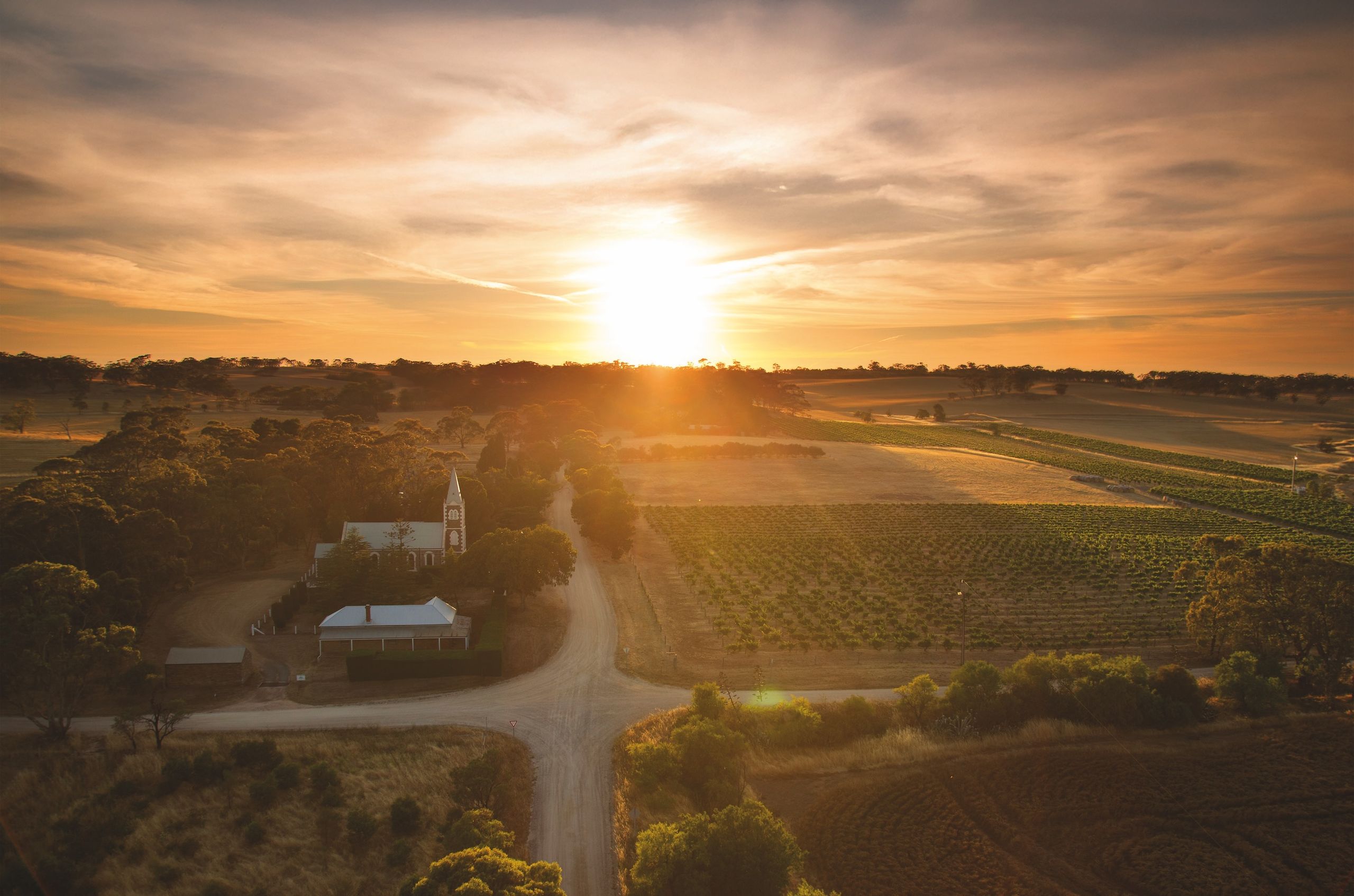
PRESS sits on St. Helena Highway, north of the center of town and directly on the route many visitors travel between Napa appointments. It looks like a refined Wine Country restaurant, not a monument to one of the world's deepest regional wine collections.
That understatement works. The dining room is warm rather than theatrical, with wood, leather, stone, a high ceiling, and sightlines toward the kitchen. The building has the broad, contemporary-farmhouse proportions associated with Napa, but the evening becomes more intimate once the tables fill and the light drops. It can hold a celebratory room without feeling like an event hall.
The awards wall offers an early clue to the restaurant's ambition. The Michelin recognition belongs to the kitchen; the Wine Spectator Grand Award belongs to the entire wine program. Neither is treated as the evening's headline. The team lets the meal demonstrate why both matter.
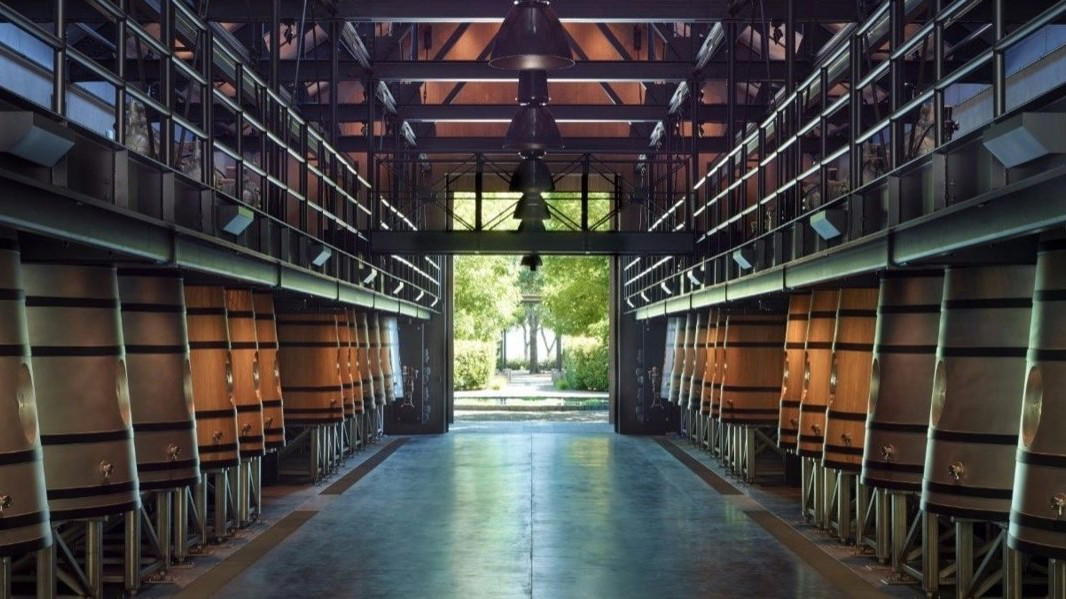
PRESS describes its collection as the largest Napa Valley wine collection in the world: around 10,000 bottles, more than 2,700 distinctive selections, and older vintages reaching back more than 70 years.
Numbers alone can make a cellar sound like inventory. At PRESS, the collection is closer to a research library. A guest can compare vintages from the same producer, follow how a vineyard has changed through different winemakers, or look beyond Cabernet Sauvignon to the varieties and eras that shaped Napa before its modern reputation hardened. The list makes time available by the bottle.
The collection also changes what dinner can be after a day of winery visits. A winery naturally tells its own story. PRESS can place those stories next to one another. That makes the restaurant particularly valuable at the end of a Napa trip, when the questions raised by several estates are still fresh and a comparative bottle can tie the itinerary together.
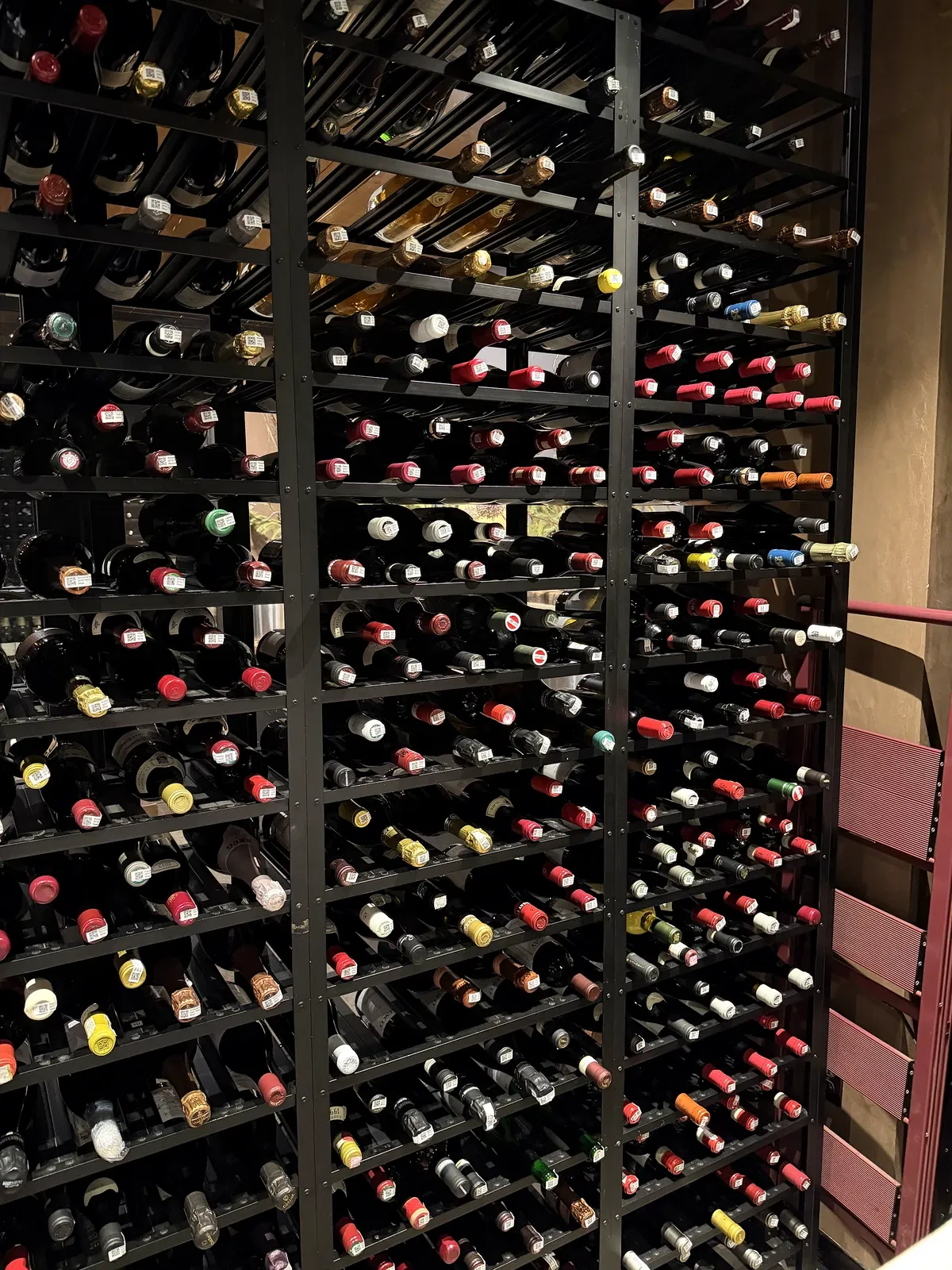
The current PRESS wine page names Tyler Potts as Beverage Director. It also publishes a $100 corkage fee per 750-milliliter equivalent, a four-bottle maximum per party, and a waiver structure tied to bottles purchased from the list. Confirm the policy when booking because it can change. More important, share what you enjoy, your budget, and how adventurous you want to be. A list this deep becomes useful through conversation with the sommelier team.
The long private table sits surrounded by glass-fronted cellar walls, and it captures PRESS particularly well: a room built for a group, bottles on nearly every sightline, and enough warmth in the wood and candlelight to keep the setting from becoming museum-like.
For a collector dinner, winery gathering, or milestone celebration, this may be among the more compelling private dining settings in St. Helena. The cellar is not printed as a backdrop; it physically encloses the room. Guests do not need to be experts for that to work. The setting naturally prompts questions about years, labels, and where the night might go.
The private room also makes the founding idea legible. Leslie Rudd was inspired by a rainy Sunday lunch at L'Ami Louis in Paris, where friends in the wine business raised a glass to great food, great wine, and time together. PRESS has evolved dramatically since 2005, but the long table inside the cellar is still that idea in architectural form.
Leslie Rudd founded PRESS in 2005 after establishing Rudd Estate in Oakville. The original restaurant was a modern steakhouse devoted to Napa Valley ingredients and wine, a concept that made intuitive sense in a region where serious bottles often outpaced the local dining options available to drink with them.
Before his death in 2018, Leslie handed stewardship to his daughter Samantha. Her leadership is the bridge between the original steakhouse and the restaurant PRESS is now. The Napa focus remains unusually strict, but the food has become more contemporary and the kitchen more ambitious. The restaurant is not preserving a 2005 concept behind glass. It is carrying forward the reason the concept existed.
That distinction matters. Legacy restaurants can become trapped by their most familiar dishes or by guests who want the room never to change. PRESS kept the conviviality, the cellar, and the generosity of a great steakhouse while allowing technique and menu structure to move forward. The Michelin star recognizes the result, but the transformation is apparent even without knowing the award.
Chef Partner Philip Tessier has a résumé built around exacting kitchens: Le Bernardin and Per Se in New York, then Bouchon and The French Laundry in Napa Valley. In 2015, he became the first American chef to reach the Bocuse d'Or podium, winning silver. He later coached Team USA to its first gold medal. At PRESS, Tessier works alongside Chef de Cuisine Vincenzo Loseto, whose nightly execution carries that broader culinary direction through the menu.
Competition cooking can produce food that looks engineered for judges. That is not what our table received. The technical discipline showed up in clarity: crisp objects stayed crisp, broths arrived aromatic and clean, sauces had intensity without heaviness, and complicated dishes remained readable. The food felt designed to be eaten with wine and shared in a real dining room.
Tessier's larger achievement has been reframing PRESS from a classic steakhouse into a modern American restaurant grounded in Napa. The menu can still send a dry-aged pork chop or 21-day tomahawk to the table, but vegetables, seafood, ferments, spice, and texture now carry equal narrative weight. The meat is no longer the only reason for the plate.
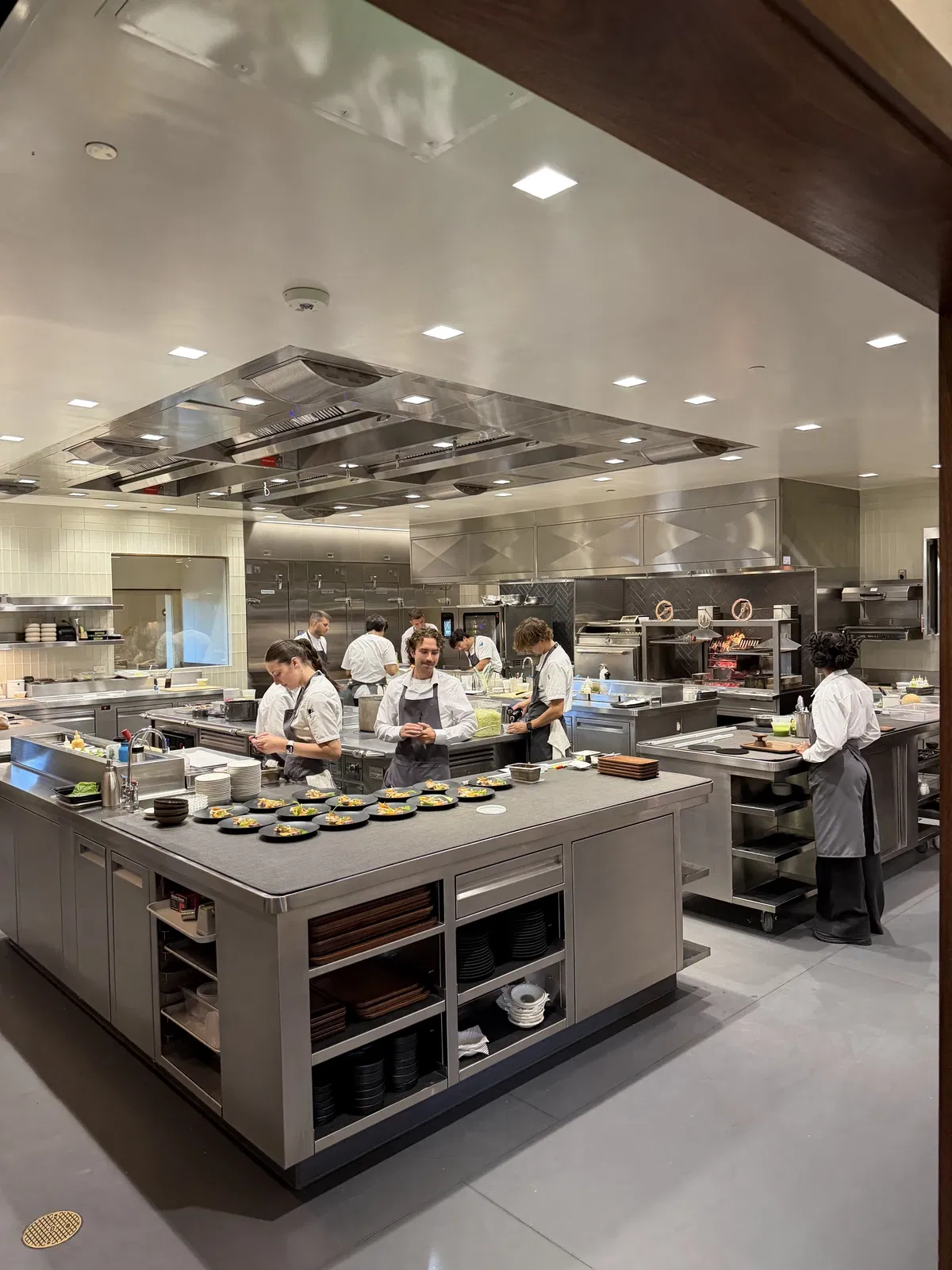
The open kitchen reinforces that change. From the dining room we could see a large team moving through a bright, highly organized space. The scale suggests serious production, yet the plates leaving the pass were detailed and controlled. PRESS manages to feel like a substantial Napa institution and a chef-driven restaurant at the same time.
At the time of writing, PRESS offers a $195 chef's tasting menu, a $150 four-course prix fixe, and an à la carte lounge menu. The four-course format asks guests to choose a first, second, third, and fourth course, with supplements for certain ingredients and cuts. Wine pairings are available in standard and reserve tiers.
Our August 11, 2026 menu gave the table another useful option: build an abundant, shared progression across snacks and courses. The page moved from caviar pretzel, chips and dip, pig ears, lobster roll, oysters, falafel, and chicken wings into composed starters, pastas, chawanmushi, vegetables, fish, chicken, pork, beef, and desserts.
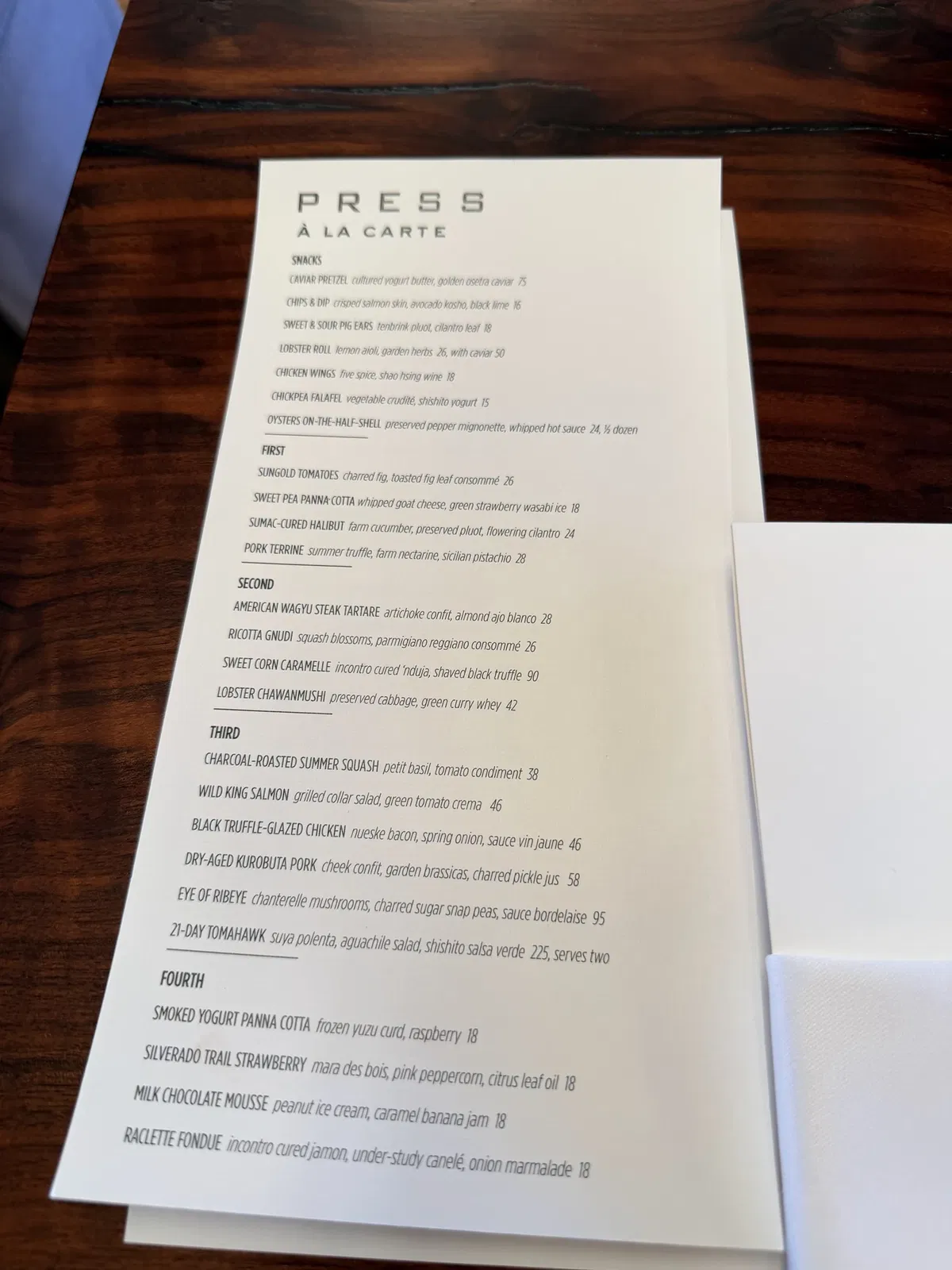
That structure encourages a flexible meal. A couple can follow the prix fixe. A group can add snacks and supplements, compare several second courses, and share a larger cut. A wine-focused table can ask the team to shape the food around one important bottle. There is enough range for the evening to become personal without losing the discipline of a tasting menu.
Our first small bites arrived with different visual languages: one wrapped in a bright green leaf and topped with tiny flowers, the other in a dark cup under a light, aromatic foam. What mattered was the signal they sent. Dinner would not begin with a heavy steakhouse gesture. It would begin with delicacy, fragrance, and contrast.
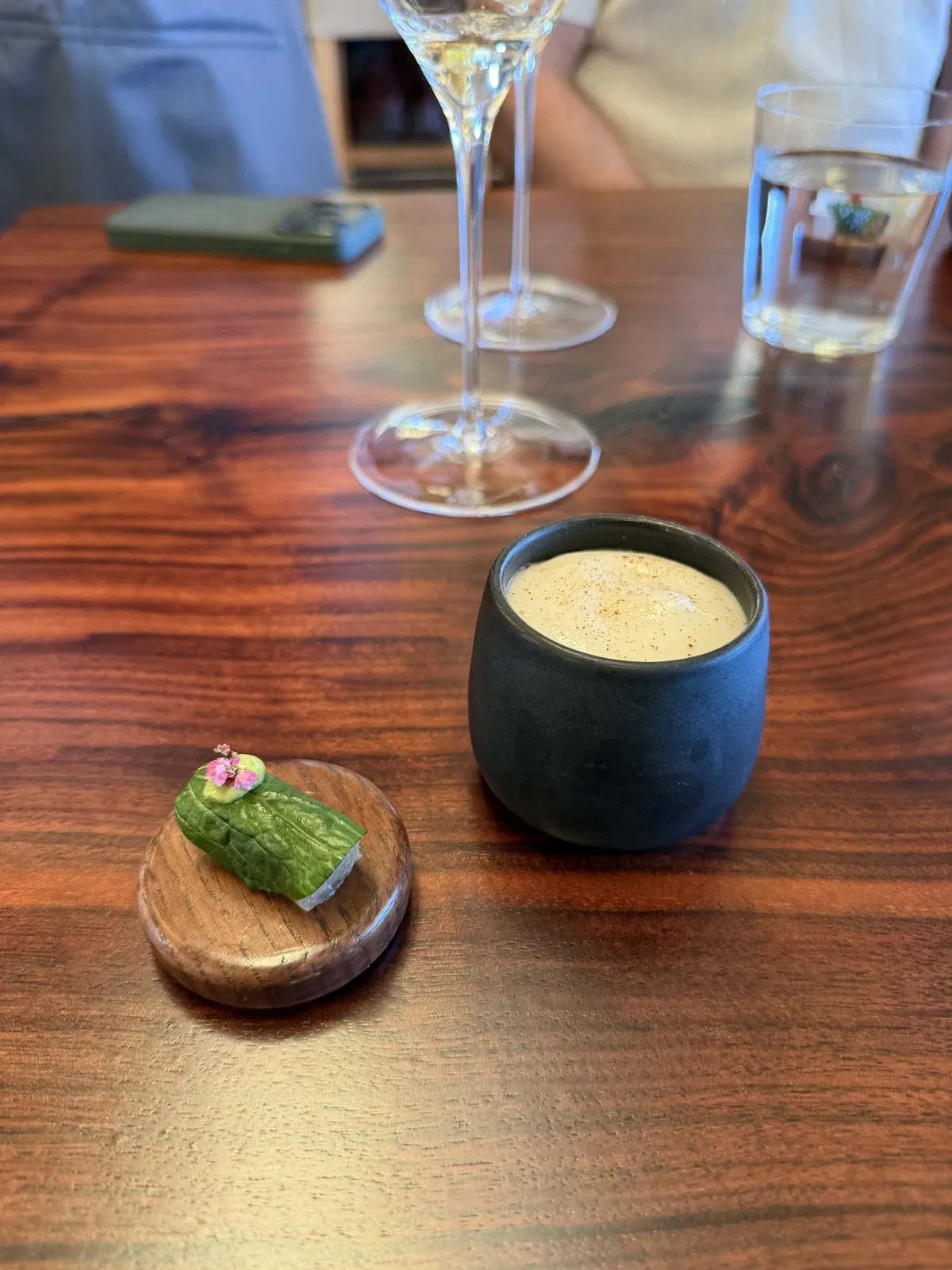
That opening made the later abundance easier to absorb. PRESS understands pacing. It can send fried snacks and butter, then pull the meal back with something green or acidic before the next rich course. The kitchen's control is not only inside each plate; it is in how the whole table rises and falls.
The snacks were among the more immediately enjoyable parts of the dinner because they invited everyone to reach into the center of the table. Our spread included the caviar pretzel, five-spice chicken wings with Shao Hsing wine, sweet-and-sour pig ears with Tenbrink pluot and cilantro, and lobster chawanmushi with preserved cabbage and green curry whey.
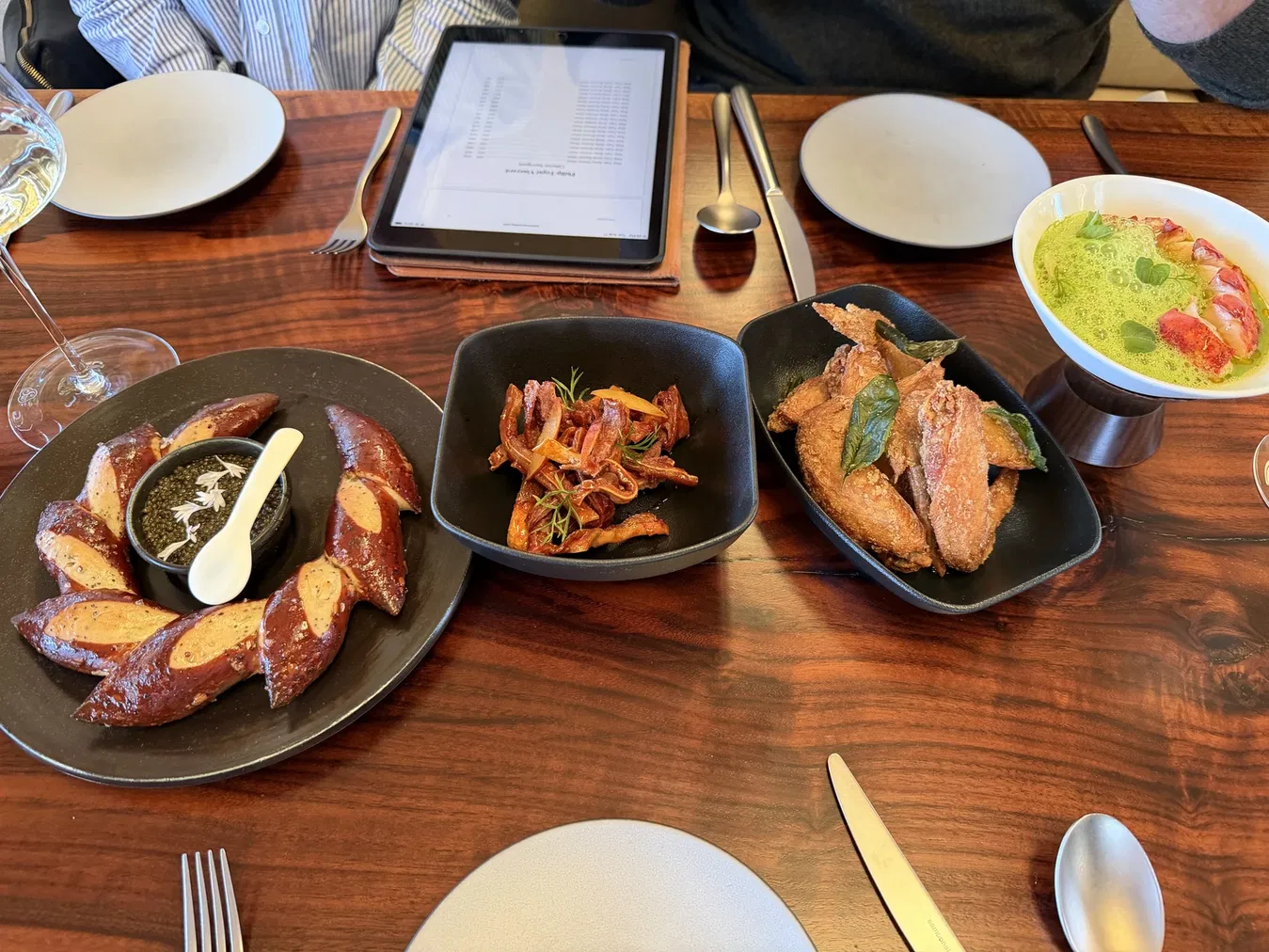
This is where Tessier's global references feel most playful. The chicken wings were recognizably comforting, but the five spice and rice wine gave them more aromatic depth than a standard glazed wing. The pig ears leaned into crunch, sweet fruit, acid, and herbs. They were bar snacks in the clearest sense: salty and tactile enough to make the next sip of wine feel inevitable.
For a first visit, we would not rush past this portion of the menu. The snacks express PRESS at its most relaxed, and they prevent a Michelin-starred dinner from becoming overly solemn. Order at least two for the table before the formal courses begin.
The caviar pretzel has become the dish most closely associated with modern PRESS. It arrived glossy and deeply browned, presented with cultured yogurt butter and a generous crown of caviar. The format is clever because it treats caviar as a pleasure rather than a ceremony. You pull apart warm bread, spread the tangy butter, and assemble the bite yourself.
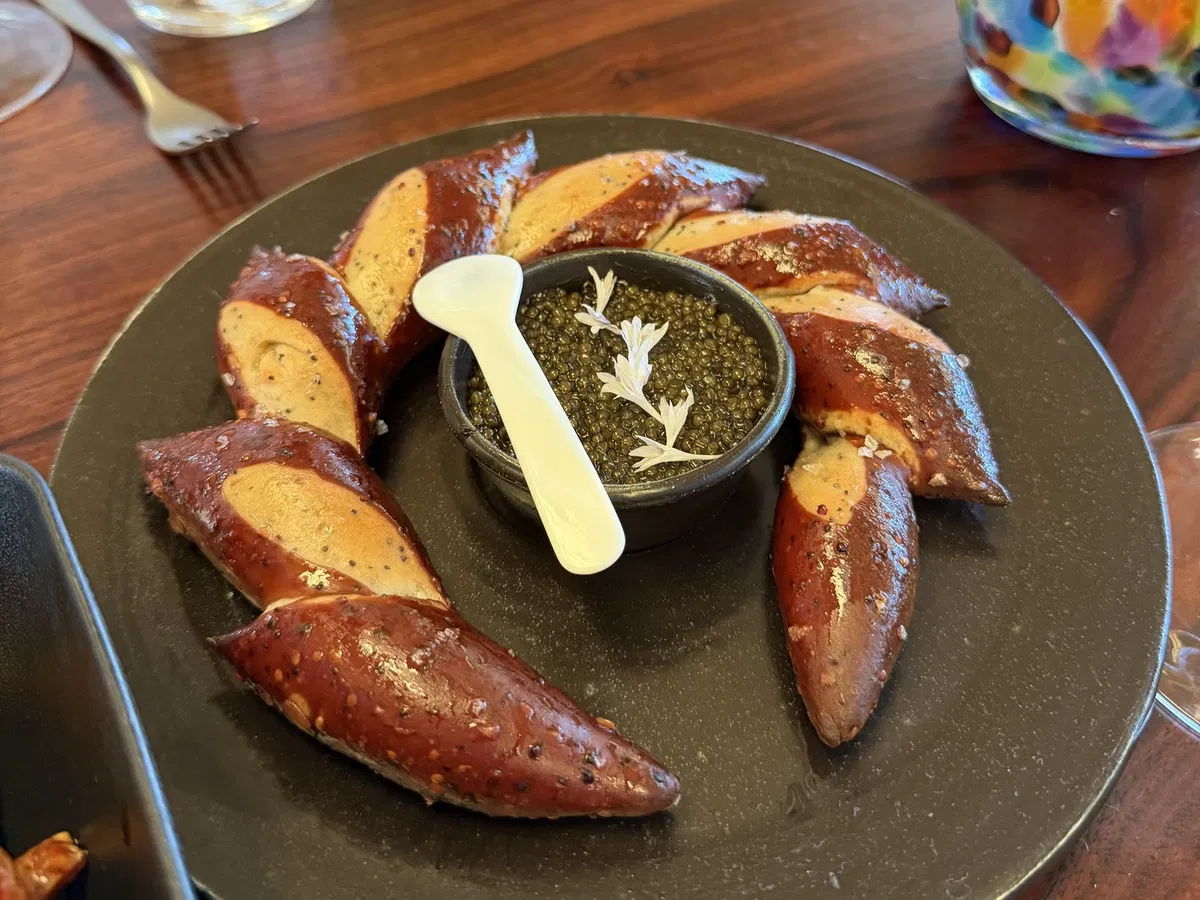
Salt, cultured acidity, warm crumb, and cool roe do the work. The pretzel is visually luxurious but emotionally familiar. It bridges the restaurant's steakhouse generosity and Tessier's precise fine-dining instincts in a single object.
At $75 on our printed menu, it is a meaningful supplement. We would still order it on a first visit, especially for a group. The portion and shared ritual make more sense across several people than as an isolated luxury bite. It is also an easy course around which the sommelier team can build a Champagne recommendation.
The lobster chawanmushi was one visually vivid dish on our table: large pieces of lobster arranged around a soft savory custard beneath a bright green, aerated sauce. The menu described preserved cabbage and green curry whey. Those words sound busy; the bowl did not.
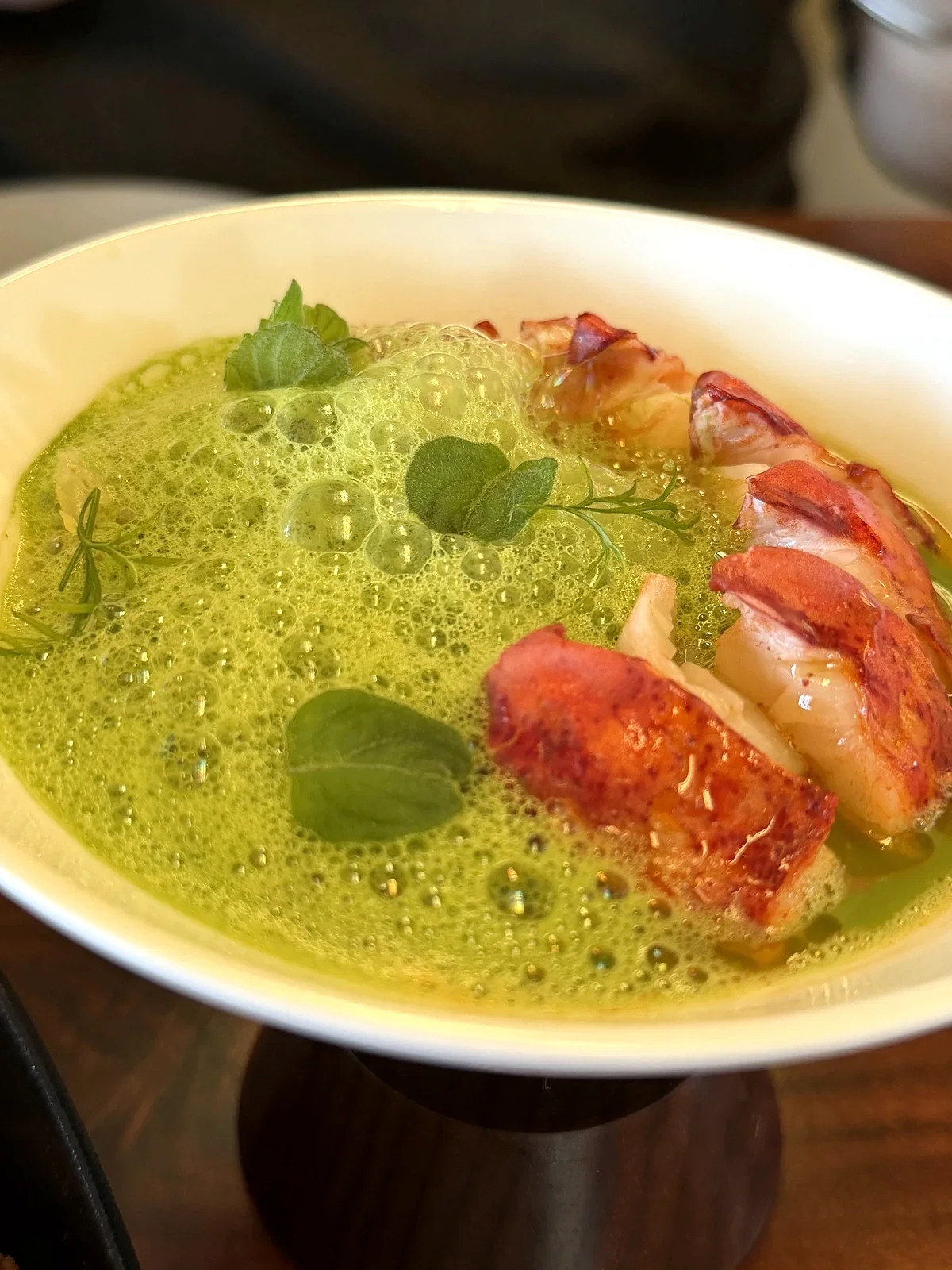
Chawanmushi depends on texture. The custard needs to feel almost weightless while still holding enough seasoning to support seafood. Here, the lobster provided sweetness and density, while the curry-whey element brought aroma, acidity, and color. The dish showed how PRESS borrows a form without flattening it into fusion shorthand.
It also demonstrated why the kitchen works so well with wine. Rich ingredients are regularly paired with something fermented, herbal, or bright. The result can accommodate a white Burgundy, a mature Napa white, Champagne, or a sommelier's more unexpected choice without forcing the wine to fight through cream and butter.
The second-course section of our menu contained two of the meal's most Napa-in-summer dishes. Ricotta gnudi came with squash blossoms and Parmigiano Reggiano consommé. Sweet corn caramelle paired Incontro-cured 'nduja with shaved black truffle.
The gnudi used a clear broth to keep the cheese and blossoms from becoming heavy. The caramelle moved in the opposite direction: sweet corn, cured pork heat, pasta, and black truffle layered into something broader and more decadent. Tableside truffle shaving made the aroma part of the service, not just the ingredient list.
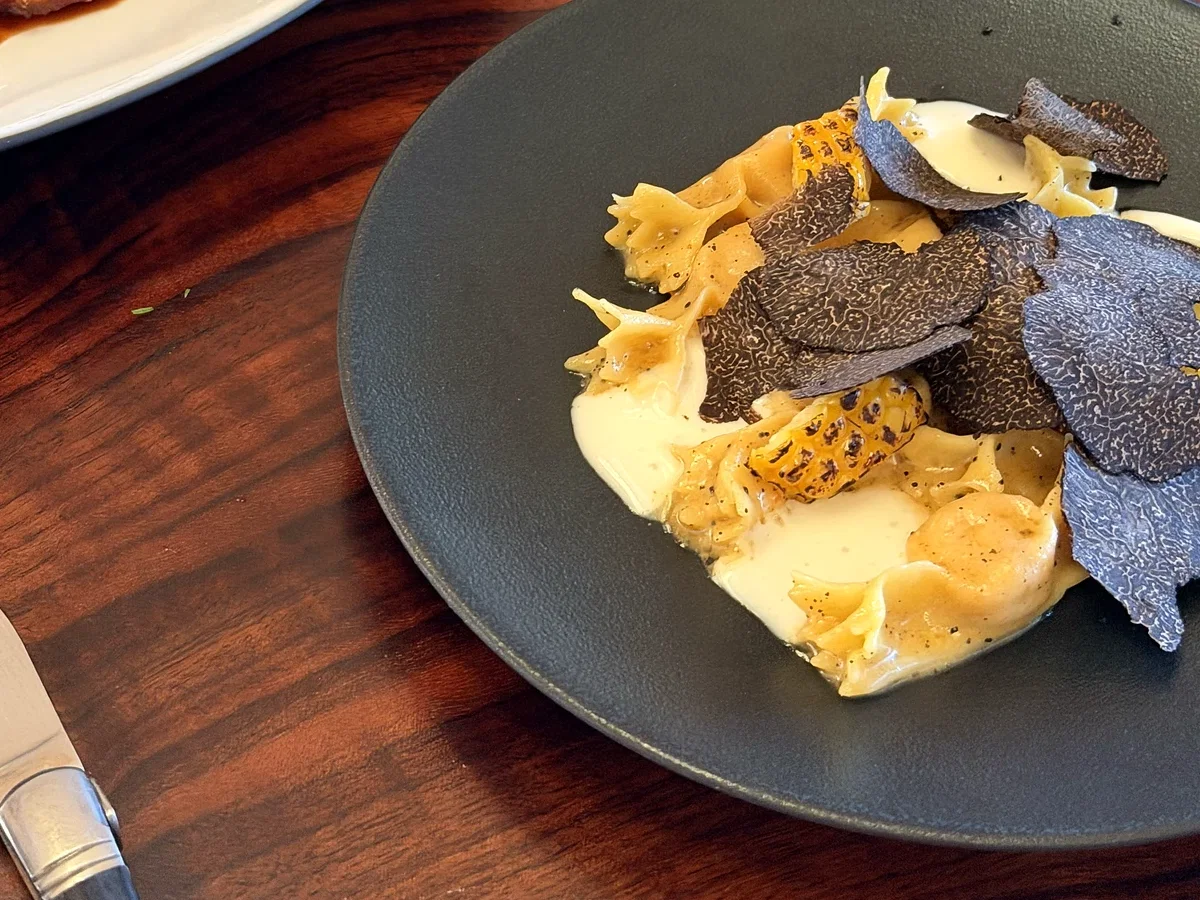
Ordering both was the right decision. Side by side, they showed the kitchen's range with pasta-like forms: one quiet, floral, and broth-driven; the other concentrated, sweet-savory, and perfumed with truffle. If the caramelle is available, it is the course we would prioritize after the caviar pretzel. If the table needs a reset, add the gnudi rather than choosing between them.
PRESS has not abandoned the primal satisfaction of its steakhouse roots. It has made the accompaniments more specific. Our menu paired black truffle-glazed chicken with Nueske bacon, spring onion, and sauce vin jaune. The dry-aged Kurobuta pork came with cheek confit, garden brassicas, and charred pickle jus.
The chicken was presented sliced, allowing the glaze and truffle to read across each portion rather than only on the skin. Bacon and vin jaune could have pushed the dish into excess. Spring onion and controlled portions kept it composed.
The pork was one of the strongest main-course images and one of the clearest expressions of the restaurant's evolution. The bone-in chop carried a proper char and substantial richness, but diced vegetables, herbs, and the acidic charred-pickle jus gave every bite a second direction. The cheek confit extended the ingredient into a different texture instead of simply increasing the size of the chop.
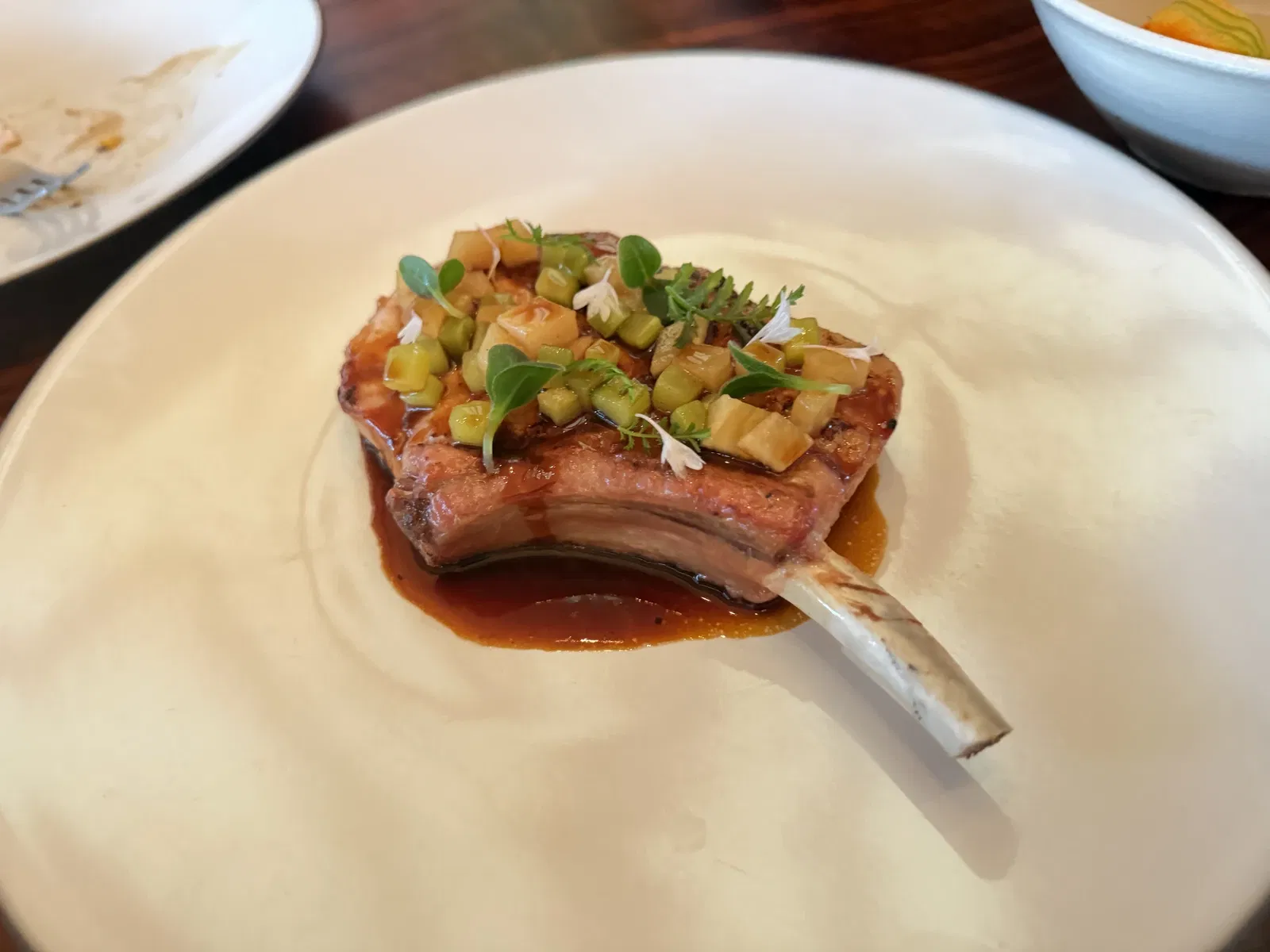
This is the dish for someone who still wants PRESS to deliver the pleasure of a great steakhouse while tasting the work of the current kitchen. It is generous, recognizable, and much more thoughtful than meat plus sauce.
Our table included Krug Grande Cuvée 171ème Édition, Stéphane Bernaudeau Les Onglés, and a 2006 Domaine Mugneret-Gibourg Vosne-Romanée. The bottles tell a broader story than a strictly Napa flight: Champagne for the opening snacks and caviar, a white wine with enough freshness for the seafood and green-curry whey, and mature red Burgundy for truffle, poultry, and pork.
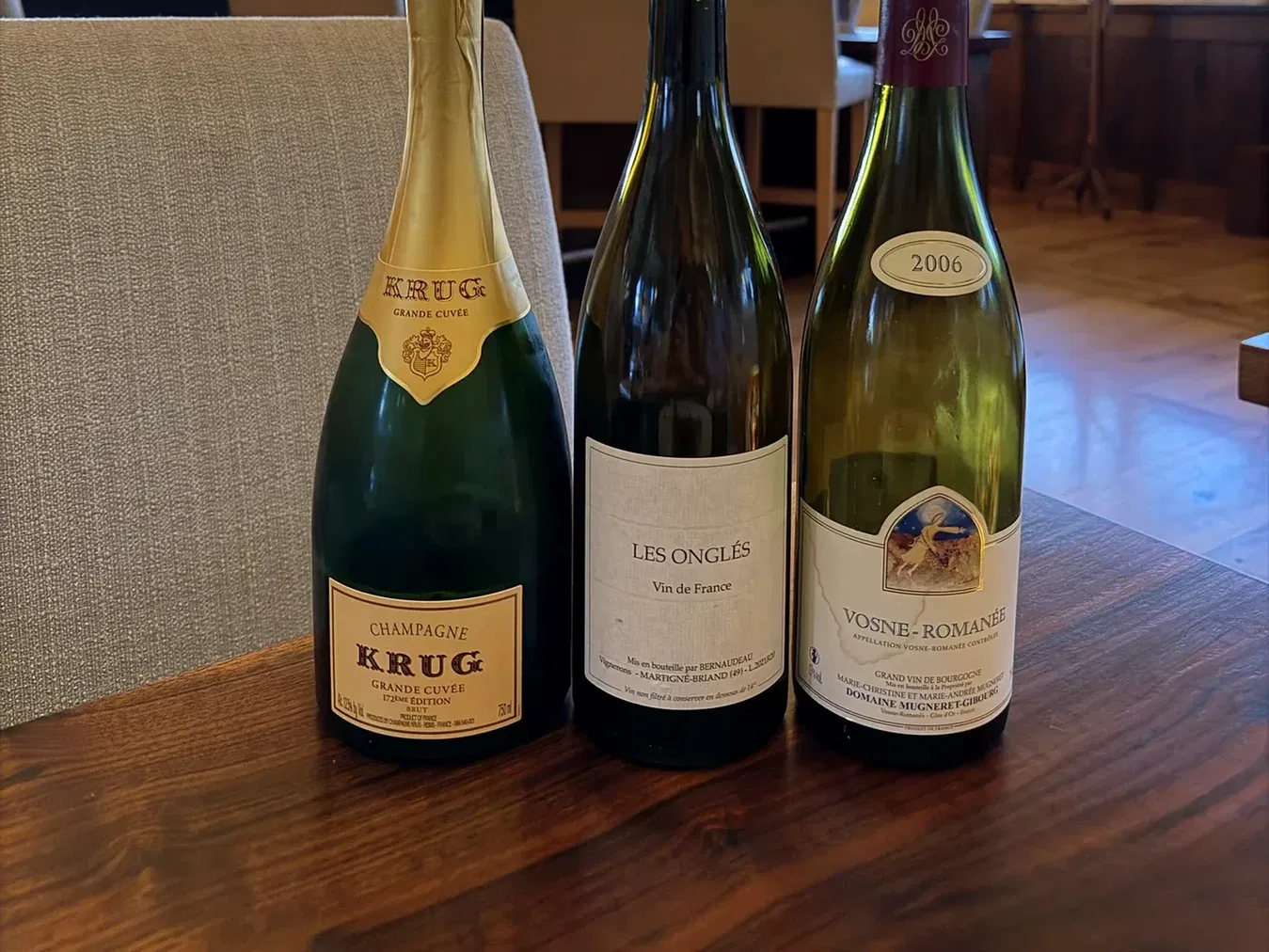
The lineup showed how naturally PRESS's menu can support a serious bottle plan, whether the table explores the restaurant's Napa cellar or uses its published corkage policy for a personal bottle. The food had enough brightness and variation to move from Champagne through Chenin Blanc to mature red Burgundy without bending the meal around the wine.
The 2006 Mugneret-Gibourg was especially compelling as a dinner bottle because mature Vosne-Romanée can meet truffle and glazed poultry through perfume and earth rather than force. It also created a useful counterpoint to PRESS's regional collection. Strong Napa-focused wine programs are not provincial. They understand Napa more clearly because the team knows the world's other reference points.
For most guests, however, we would let PRESS make the night about Napa. Tell the sommelier what you tasted during the day and ask for a producer, vineyard, vintage, or variety that adds context. The chance to drink an older Napa bottle at dinner, correctly stored and served with food designed for wine, is the restaurant's most distinctive advantage.
PRESS received Wine Spectator's Grand Award in 2022. Then-wine director Vincent Morrow used the acceptance moment to credit Leslie Rudd's vision and the wider Napa wine and food community. That framing is important. The list is not impressive only because it contains rare, expensive bottles. It preserves a regional record that would otherwise remain scattered across private cellars and wineries.
Current Beverage Director Tyler Potts now leads the program. The official list reaches back more than 70 years and includes current releases beside mature vintages. That creates several productive ways to order:
The smartest order is not automatically the rarest bottle. It is the bottle that makes the rest of your Napa trip more coherent. A good conversation with the team can turn the list from an intimidating document into the final chapter of an itinerary.
Toward the end of the meal, the table encountered an unusual Chartreuse service, including older-looking bottles and both green and yellow expressions. The visual alone captured another PRESS strength: dinner can continue into a deep, specific beverage conversation after the wine is finished.
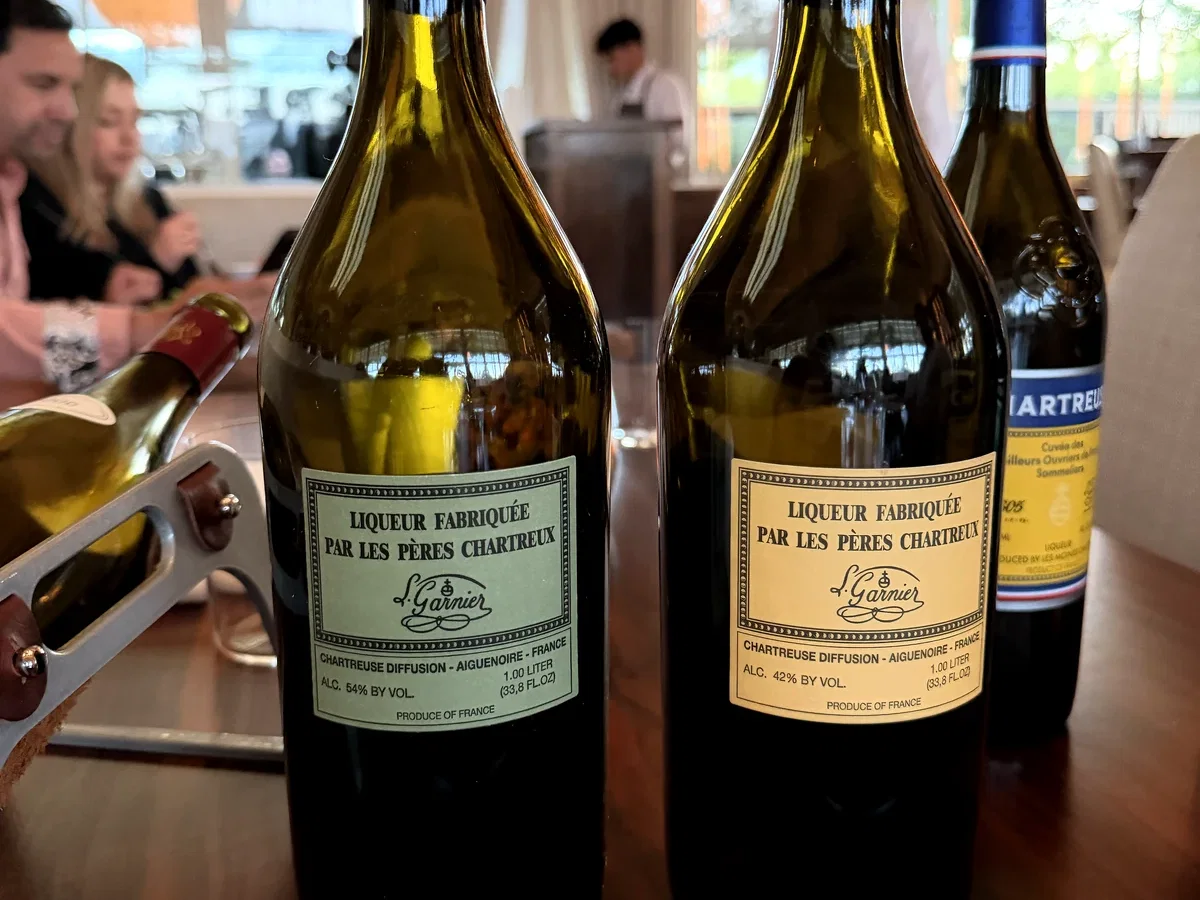
This is not necessary for every table. It is part of what makes the restaurant especially rewarding for enthusiasts. The team has the vocabulary and material to follow curiosity. If a guest wants one last small pour and a story, the evening does not end with a generic after-dinner list.
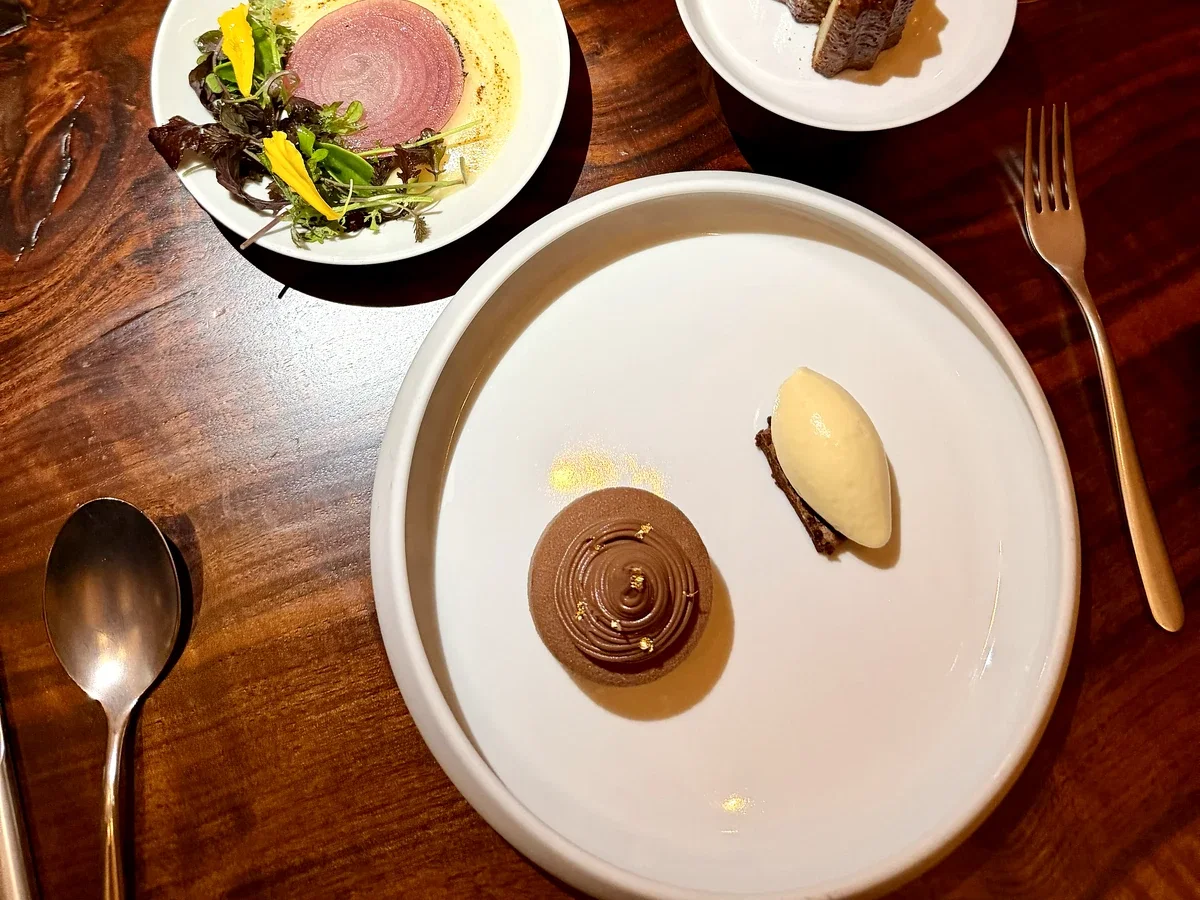
Our dessert spread was refreshing in scale and variety after a rich savory progression. The August menu listed smoked yogurt panna cotta with frozen yuzu curd and raspberry; Silverado Trail strawberry with Mara des Bois, pink peppercorn, and citrus leaf oil; milk chocolate mousse with peanut ice cream and caramel-banana jam; and a savory raclette fondue with Incontro-cured jamón, an Under-Study canelé, and onion marmalade.
The panna cotta and strawberry options promised acidity and fruit, while the chocolate dessert moved toward nostalgia through peanut and banana. The raclette course gave the table a cheese-adjacent finish that still belonged to the menu's wider Napa and local-producer narrative.
This is another moment when sharing improves the experience. One dessert would close the meal. Several show how the pastry program moves between cultured dairy, local fruit, chocolate, savory cheese, and precise temperature contrasts. After a long dinner, the portions felt calibrated for tasting rather than endurance.
PRESS service needs to coordinate more information than a normal restaurant: multiple menu formats, supplements, a vast wine list, mature bottle service, dietary needs, and guests arriving with different levels of wine knowledge. Our dinner still felt conversational rather than procedural.
The pacing was particularly strong. Snacks arrived as a social cluster. More technical courses had room around them. Rich dishes were separated by brighter flavors, and the wine service remained connected to the food instead of running on a parallel track. We had time to look at bottles, talk, and absorb the cellar without the table going still.
That combination makes PRESS suitable for both serious collectors and friends who simply want a great Napa dinner. Nobody needs to perform expertise. The room respects curiosity. Ask direct questions, give the team a real budget, and let them narrow the possibilities.
PRESS works well on an evening when you do not have an early commitment immediately afterward. It is in St. Helena, convenient to many appointments in Oakville, Rutherford, St. Helena, and Howell Mountain. The location makes it easy to move from a day among vineyards into a dinner that puts those wines into historical context.
We would schedule it in one of three ways:
Build the day around two focused winery visits, leave time to reset at the hotel, and give PRESS the full evening it deserves. That rhythm keeps the palate fresh enough to appreciate both the food and the cellar.
Collectors seeking a PRESS-focused reservation should contact the restaurant or email concierge@enprimeurclub.com.
Menus change, so this is a strategy rather than a permanent checklist. Based on our August dinner, our first-visit order for four people would look like this:
For a couple, the four-course prix fixe is the cleanest route. Add the caviar pretzel if it is your first visit and split choices across each course. For a food-first experience, take the chef's tasting. For a spontaneous or shorter meal, the lounge's à la carte menu retains many of the restaurant's most expressive snacks.
PRESS is not merely a place to drink an old Napa Cabernet, and it is no longer merely the steakhouse some returning visitors remember. It is among the more complete dinner experiences in St. Helena because the food, cellar, room, and service all deepen the same idea: Napa Valley is worth studying, but it should still be enjoyed around a table.
The wine collection gives the restaurant its singularity. Philip Tessier's cooking gives it momentum. Samantha Rudd's stewardship connects the institution Leslie Rudd founded in 2005 to a more ambitious, contemporary form. Our meal made that evolution tangible in every direction, from a warm caviar pretzel and green curry chawanmushi to truffle caramelle, dry-aged pork, mature Burgundy, and a final Chartreuse conversation.
Should you book PRESS? Yes. Book it for a celebratory Napa dinner, for the chance to learn from one of the deepest regional wine collections anywhere, or simply because the current kitchen is cooking at a level that justifies the evening on its own. Then give the meal time. PRESS is at its best when nobody is watching the clock.
For current reservations and menus, check PRESS.
Yes. PRESS combines Michelin-starred modern Napa cooking, unusually strong service, and a wine collection with more than 2,700 distinctive Napa Valley selections. It is especially worthwhile for wine enthusiasts, celebrations, and diners who want a full evening rather than a quick meal.
Yes. PRESS currently holds one Michelin star and is listed by the Michelin Guide as modern cuisine. Check the current guide and restaurant website when planning because distinctions can change.
Philip Tessier is Chef Partner. He previously worked at Le Bernardin, Per Se, Bouchon, and The French Laundry. In 2015 he became the first American chef to reach the Bocuse d'Or podium, winning silver, and he later coached Team USA to gold.
Samantha Rudd is the owner. Her father, Leslie Rudd, founded PRESS in 2005 and passed stewardship to her before his death in 2018. Justin Williams is the current Director of Operations.
PRESS serves modern Napa Valley cuisine with global influences. The menu is rooted in Wine Country ingredients and purveyors but may incorporate Japanese, Chinese, French, Mexican, West African, and other techniques or flavor references.
At the time of writing, the chef's tasting menu is $195 per person and the four-course prix fixe is $150 per person, before supplements, wine, tax, and gratuity. Pairings and à la carte lounge options are also available. Consult the official menu for current pricing.
The caviar pretzel is a warm glazed pretzel served with cultured yogurt butter and caviar. It is a shareable supplement and one of the restaurant's signatures. On our August 2026 menu it was priced at $75.
PRESS says its cellar holds roughly 10,000 bottles and more than 2,700 distinctive Napa Valley selections, with vintages extending back more than 70 years. The restaurant calls it the largest Napa Valley wine collection in the world.
Yes. At the time of writing, PRESS publishes a $100 corkage fee per 750-milliliter equivalent and a maximum of four bottles per party. It waives one corkage, up to two, for each equivalent-value bottle purchased from the list. Confirm the current policy directly.
Yes. PRESS currently publishes an à la carte lounge menu alongside its chef's tasting and four-course prix fixe formats. Availability and dishes change, so verify the live menu before visiting.
Yes. The menu rewards sharing, and PRESS offers private event spaces. The cellar dining room is particularly compelling for a wine-focused group because a long table sits within glass-fronted bottle storage.
PRESS is at 587 St Helena Highway in St. Helena, California. It is convenient to winery visits in St. Helena, Rutherford, Oakville, and Howell Mountain.
Allow about two and a half to three hours for a broad dinner, and more if the table plans to explore older bottles or a long tasting menu. Exact timing depends on the format and party size.
Start with the caviar pretzel and at least one playful snack. If available, add the lobster chawanmushi and sweet corn caramelle, then share a substantial main such as the dry-aged Kurobuta pork. Finish with more than one dessert so the table can compare the pastry program's fruit, cultured dairy, chocolate, and savory options.
Restaurant details, current menu formats, leadership, wine information, and policies were last checked August 24, 2026 against PRESS, Michelin, and Wine Spectator. The menu descriptions and all photographs come from a firsthand August 11, 2026 dinner. Menus and prices change seasonally.
Get the App
Take the shortlist into the En Primeur Club app for concierge access, saved places, and the next step after discovery.
Get Exclusive AccessMore from the editors