Our verdict
On Rue Beaubien in Montreal's Rosemont-La Petite-Patrie neighbourhood, Poutineville takes Quebec's foundational comfort dish and builds an entire format around it. The proposition is straightforward: poutine as a customisable, ingredient-led meal rather than a fast-food afterthought. For anyone tracking how Montreal treats its own culinary canon, this address is a useful reference point.

Pearl is the En Primeur Club membership app — saves, bookings, and concierge access live there. Same editors, same standards.
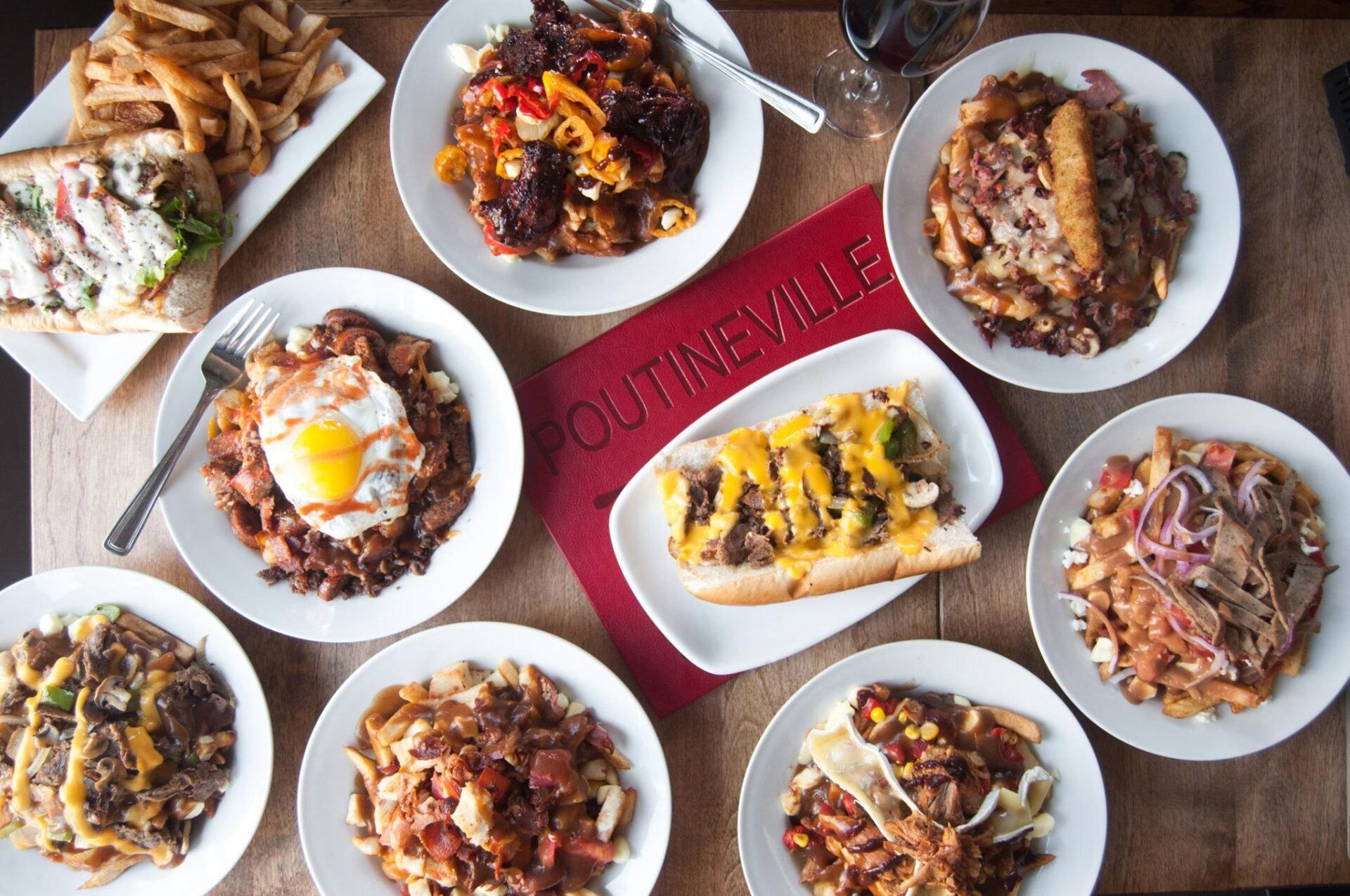
Where a Quebec Staple Gets Treated as a Serious Subject
Rue Beaubien Est runs through Rosemont-La Petite-Patrie with the unhurried confidence of a neighbourhood that has never needed to perform for tourists. The commercial strip here is dense with independent businesses, the foot traffic local rather than itinerant, and the dining rooms small enough that tables fill with recognisable faces. It is in this context that Poutineville operates at 1348 Rue Beaubien E, a location that signals something about its intended audience: this is a place built for Montrealers who take poutine seriously, not for visitors ticking a cultural box.
Poutine's status in Quebec is genuinely contested territory. It sits somewhere between embarrassment and pride in the provincial food conversation, oscillating between greasy-spoon staple and subject of fierce regional loyalty. The question any poutine-focused restaurant has to answer is whether it treats the dish as a platform or merely a product. Poutineville's format, built around customisation and ingredient selection, leans toward the former.
The Ingredient Logic Behind the Format
The customisable poutine model is a direct argument about sourcing and composition. When a restaurant asks a diner to make choices about what goes into their bowl, it is implicitly claiming that the individual components carry enough quality to matter independently. The fries, the curds, the gravy, and whatever additions follow each become a point of decision rather than a predetermined outcome.
Quebec's cheese curd supply chain is one of the more reliable in North America. The province's dairy infrastructure, shaped by supply-management policies that have kept small and mid-scale producers viable, means that fresh curds with genuine squeak — the textural sign of proper acidity and freshness — are accessible in a way they simply are not in most other markets. A restaurant operating in this geography and focusing on poutine has a material advantage at the foundational layer: the curds. How well any given kitchen uses that advantage is a different question, but the starting position is stronger here than it would be almost anywhere else in Canada.
The gravy tier is where poutine differentiation typically happens in Montreal's more ambitious versions of the dish. Classic brown gravy versus chicken-based versus more elaborate reductions, these choices define a kitchen's position on the tradition-to-experimentation axis. Poutineville's approach to this layer, and to the protein and topping selections that follow, reflects the broader Montreal tendency to treat even humble formats with a certain seriousness of purpose. This is a city where, across the dining spectrum from the grand French tradition of Jérôme Ferrer - Europea to neighbourhood-scale modern cooking at Mastard and Sabayon, ingredient sourcing is treated as a credibility signal.
Poutine in Montreal's Comfort-Food Tier
Montreal's casual dining segment contains a handful of institutions that have built durable identities around a single dish or format. Schwartz's smoked meat deli operates on that model, as does the French bistro tradition exemplified by L'Express. These are places where the format is fixed and the quality of execution over time is the whole proposition. Poutineville occupies a different structural position: the format is open-ended, and the proposition is about breadth of choice within a defined culinary language.
This places it in a different competitive conversation than the city's fine-dining addresses. The four-figure tasting menus at Toqué and the modern cuisine programmes at venues like 3 Pierres 1 Feu and Abu el Zulof are solving a different problem for a different occasion. Poutineville's price tier and format make it accessible for a broader frequency of visit, which changes what consistency means in that context. Getting the curds right every service, maintaining the fry texture across a busy evening, keeping the gravy at the correct temperature and viscosity, these are unglamorous operational challenges that determine whether a high-volume comfort food format holds up over time.
For a broader map of where this fits in Montreal's dining scene, the EP Club Montreal restaurants guide covers the full spectrum from neighbourhood tables to destination-level rooms.
Rosemont-La Petite-Patrie as Context
The neighbourhood matters as much as the address. Rosemont-La Petite-Patrie has developed a food culture that rewards specificity: specialty grocers, independent bakeries, and restaurants that serve a defined audience rather than the broadest possible one. Dining on Rue Beaubien feels different from the tourist-facing density of the Plateau's main arteries, and that difference shapes what a restaurant here needs to be. Repeat business from local residents is the economic model, which tends to produce either very good neighbourhood restaurants or very forgettable ones, the middle ground is harder to sustain than it looks.
Across Canada's dining geography, the contrast is instructive. The farm-to-table seriousness of Eigensinn Farm in Ontario, the hyper-local sourcing at Fogo Island Inn Dining Room in Newfoundland, and the ingredient discipline at Tanière³ in Quebec City all represent one end of the Canadian sourcing conversation. Poutineville operates at the other end of the formality scale, but the underlying question, where does the food come from, and does that origin matter, is the same one running through Canadian dining culture at every price point.
Other Canadian addresses worth cross-referencing for sourcing-led thinking at different scales include Alo in Toronto, AnnaLena in Vancouver, Restaurant Pearl Morissette in Lincoln, The Pine in Creemore, Narval in Rimouski, Cafe Brio in Victoria, and Busters Barbeque in Kenora. For reference points further afield, Le Bernardin in New York City and Lazy Bear in San Francisco show what ingredient-led conviction looks like at the other end of the formality spectrum.
Planning a Visit
Poutineville is at 1348 Rue Beaubien E in Rosemont-La Petite-Patrie, accessible by metro via the Beaubien station on the orange line, which puts it a short walk from the front door. The neighbourhood's character skews local and residential, so arriving on foot or by public transit fits the rhythm of the area better than driving. Current hours, booking options, and menu details are best confirmed directly with the venue, as specific operational data was not available at time of publication.
Frequently asked questions
What do people recommend at Poutineville?
Poutineville's format centres on the customisable poutine model, where diners select components from a menu of bases, proteins, and toppings rather than choosing from a fixed set of dishes. The appeal, consistently noted in visitor accounts, is the flexibility to build something close to a classic Quebec poutine, fresh curds, brown gravy, proper fries, or to move further into more constructed combinations. Quebec's strong dairy supply chain means the cheese curd quality is a foundational advantage here, and that starting point shapes how the dish holds up regardless of what else is added. For context on where this fits in Montreal's broader dining range, the EP Club Montreal guide covers the city's full spectrum alongside addresses like Jérôme Ferrer - Europea at the fine-dining end.
What is the ideal way to book Poutineville?
In Montreal's casual dining segment, the higher-stakes booking protocols apply to restaurants like Toqué at the top of the price range; at the comfort-food tier where Poutineville operates, availability is generally less constrained. Visiting on a weekday or arriving early in the evening will typically offer more flexibility than a weekend peak.
Is Poutineville a good option for vegetarians visiting Montreal?
The customisable poutine format at Poutineville gives it structural flexibility that fixed-menu comfort food spots do not have. Diners can, in principle, build a version of the dish that avoids meat-based gravies or protein additions, though the specific vegetarian or vegan options available at any given time should be confirmed with the venue. In a city where Quebec's dairy culture is central, the cheese curd base remains a draw for lacto-vegetarians. This makes it a more practical option for mixed groups than many single-format casual restaurants in the Rosemont area.
Recognition Snapshot
A quick peer check to anchor this venue’s price and recognition.
| Venue | Cuisine | Price | Awards | Notes |
|---|---|---|---|---|
| PoutinevilleThis venue — the venue you are viewing | Canadian Poutine Specialist | $10–20 | Not listed | Not listed |
| L’Express | Classic French Bistro | $50–100 | Michelin Plate · Star Wine List | French Bistro |
| Schwartz’s | Montreal Smoked Meat Deli | $20–30 | Michelin Plate | Delicatessen |
| Toqué | Modern Quebecois Fine Dining | $100–150 | Michelin Plate · La Liste Top Restaurants | French |
| Jérôme Ferrer - Europea | Modern French Fine Dining with Quebec Influences | $150–200 | 1 Michelin Star · Relais Chateaux Award | Modern Cuisine |
| Mastard | Modern Quebec Terroir Fine Dining | $50–100 | 1 Michelin Star · Canada's 100 Best Restaurants #63 | Modern Cuisine |
Continue exploring
More in Montréal
Restaurants in Montréal
All restaurants in Montréal →
Bars in Montréal
All bars in Montréal →

Details
- Lively
- Cozy
- Trendy
- Casual Hangout
- Family
- Group Dining
- Late Night
- Beer Program
- Local Sourcing
- A La Carte
- Beer Program
- Vegetarian Friendly
- Vegan Options
Current opening hours
- Monday
- 11 AM–9 PM
- Tuesday
- 11 AM–9 PM
- Wednesday
- 11 AM–9 PM
- Thursday
- 11 AM–9 PM
- Friday
- 11 AM–11 PM
- Saturday
- 9 AM–11 PM
- Sunday
- 9 AM–9 PM
Hours can change for holidays and private events. Last verified .
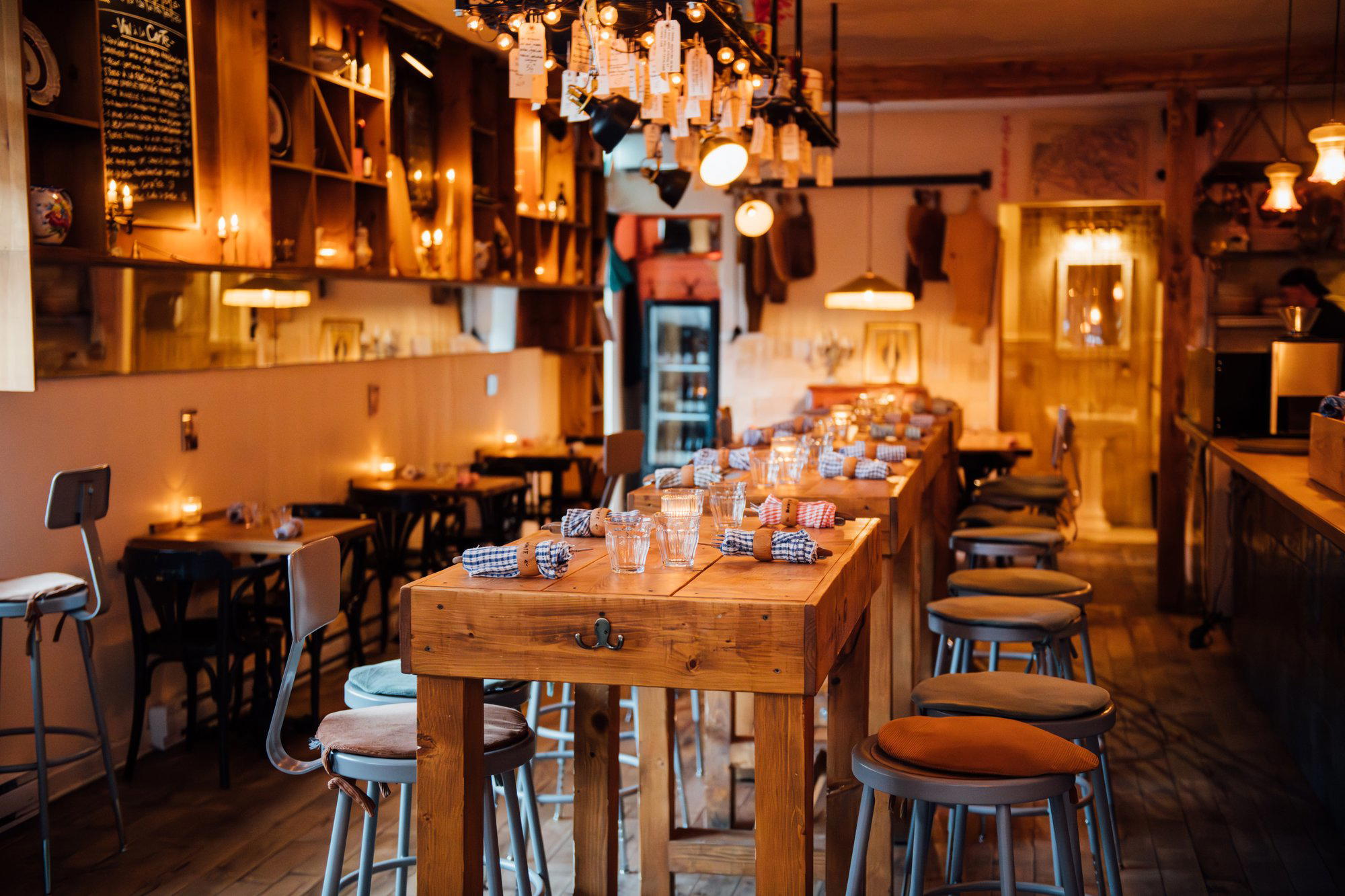
Relaxed and casual atmosphere with direct table service in a comfortable, family-friendly setting.