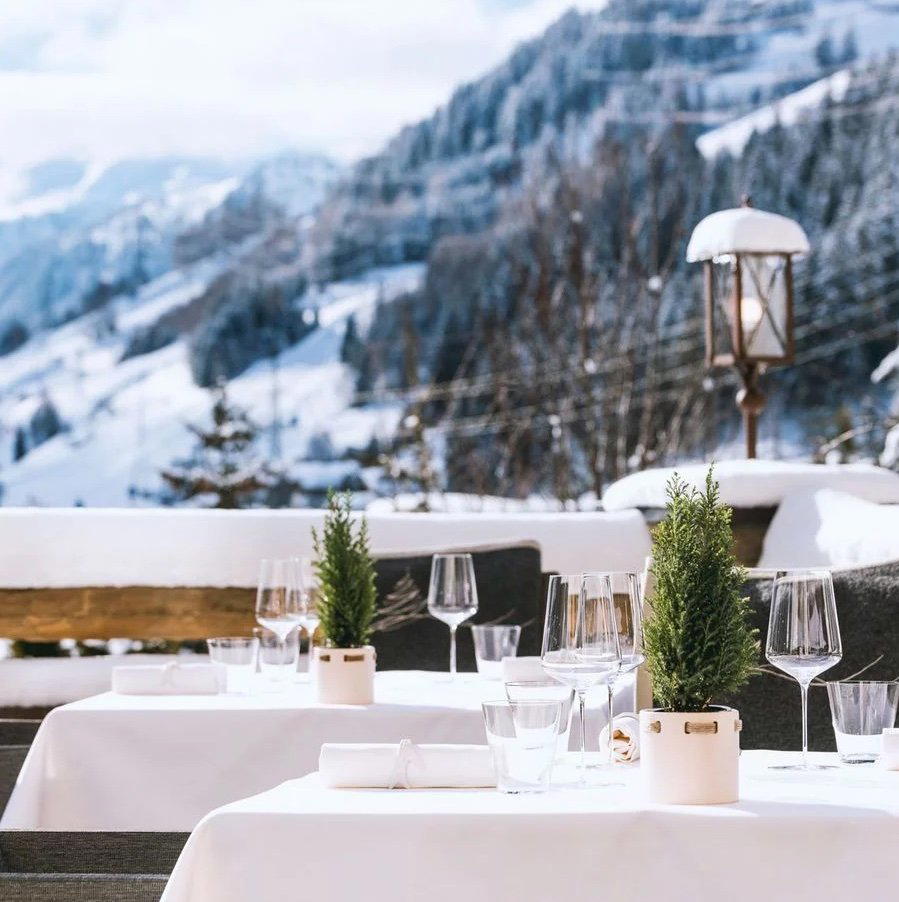
Posthotel Taube serves Traditional Austrian Montafoner cooking with an extensive wine list and garden views; lunch or dinner both fit.
Pearl is the En Primeur Club membership app — saves, bookings, and concierge access live there. Same editors, same standards.
- Address
- Silvrettastraße 1, 6780 Schruns, Austria
- Phone
- +43720701571
- Website
- posthotel-taube.at
- Directions
- Get directions
 Saves & bookings on Pearl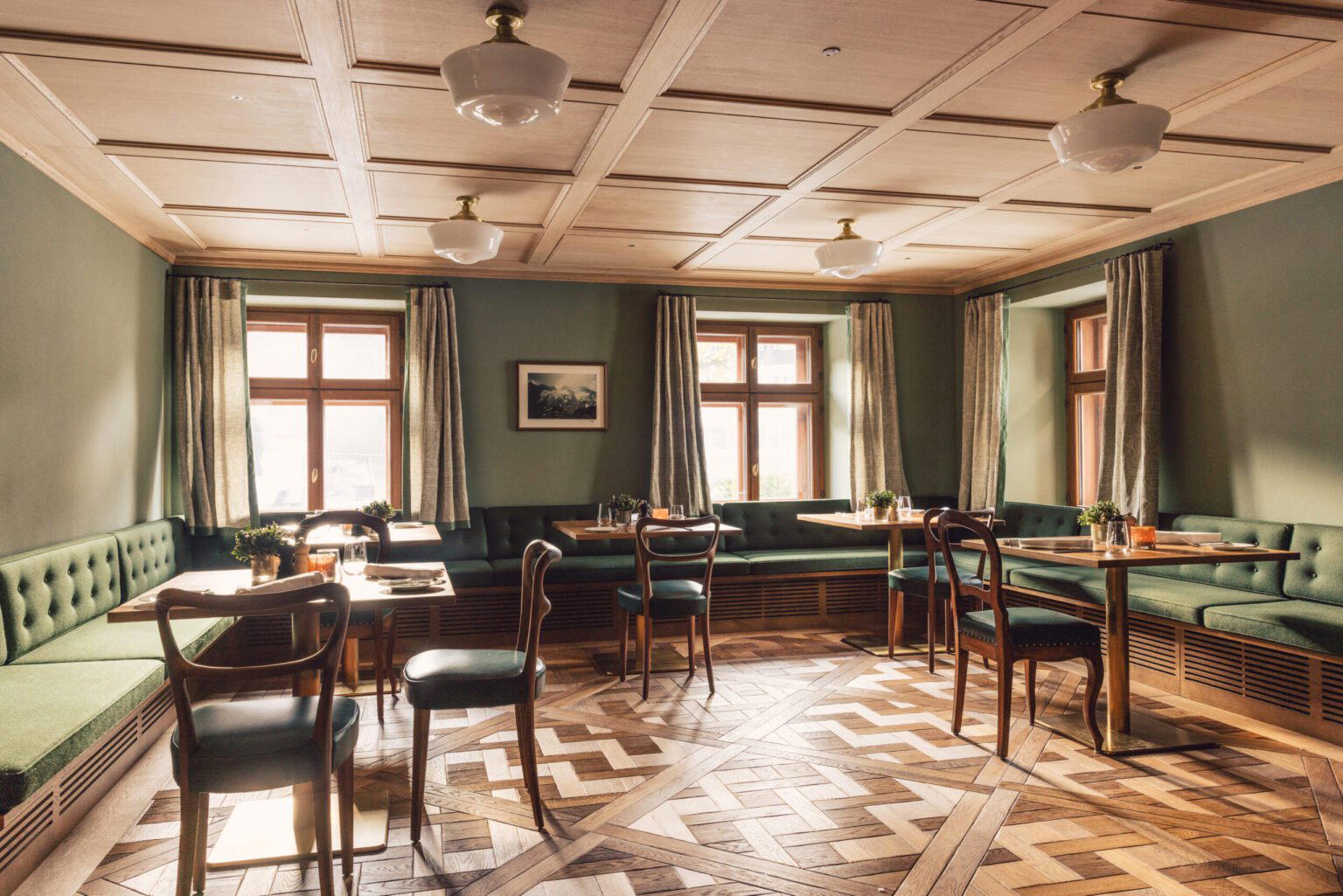
Where the Alpine Ritual Begins
Schruns sits in the Montafon valley in Vorarlberg, Austria's westernmost province, at an elevation where the pace of eating changes as noticeably as the air pressure. The valley's dining tradition is built around the long table, the unhurried course, and the kind of hospitality that treats the meal as the evening's primary event rather than a prelude to something else. Posthotel Taube, at Silvrettastraße 1 in the centre of Schruns, occupies a position inside that tradition that is hard to separate from the building itself: a historic post hotel in a market town that has been receiving travellers long before ski tourism defined the region's identity.
The concept of the posthotel is worth understanding before you arrive. These were not simply inns. They were the institutional hospitality of the pre-rail era, obligated to receive guests, provide stabling, and maintain a standard of table that reflected the importance of the post road they served. That structural seriousness about the meal persists in many Austrian alpine hotels of this lineage, and Posthotel Taube carries the format into the contemporary context: a house that takes dining seriously as a matter of institutional character, not merely commercial positioning.
The Pacing of an Alpine Evening
In the Montafon and the broader Vorarlberg dining tradition, the rhythm of a hotel meal differs from the tempo you find at standalone restaurants in urban Austria. The expectation is that you are resident, or at minimum that you are not rushing. Courses arrive at intervals that allow conversation to develop. The table is treated as a space to inhabit rather than a slot to turn. This is the dining ritual that Posthotel Taube's setting is built around, and it is the primary lens through which the experience reads.
That pacing is not incidental. Austria's alpine hotel dining sits in a distinct tradition that runs from simple Gasthof suppers to the formal multi-course formats found at higher-tariff properties in Lech and Sankt Anton. The latter tier includes places like Griggeler Stuba in Lech and Gourmetrestaurant Tannenhof in Sankt Anton am Arlberg, both operating at the award-recognised end of the alpine hotel dining spectrum. Posthotel Taube's position within Schruns places it in a more grounded, market-town context, where the formality is real but not performative, and where the local community is as much a part of the dining room as the visiting skier or summer hiker.
Across Schruns itself, the dining scene divides between hotel restaurants and independent operations. Alpenrose, Brasserie Leonis, Das Esszimmer, Löwen Stube, and Vitalquelle Montafon each represent different registers of the local offer, from wellness-adjacent dining to more classic Austrian formats. Read our full Schruns restaurants guide for a mapped comparison of the town's dining options.
The Broader Austrian Alpine Context
To understand where hotel dining in a place like Schruns sits in the national picture, it helps to place it against Austria's wider restaurant culture. At the formal end, houses like Steirereck im Stadtpark in Vienna, Obauer in Werfen, and Döllerer in Golling an der Salzach define what recognition-level Austrian cooking looks like: regional product, serious wine programs, and a disciplined approach to the meal's structure. Further into the alpine and rural tier, Landhaus Bacher in Mautern an der Donau, Kräuterreich by Vitus Winkler in Sankt Veit im Pongau, Ois in Neufelden, Restaurant 141 by Joachim Jaud in Mieming, and Ikarus in Salzburg demonstrate how seriously the country's provincial and mountain-adjacent dining has developed. Against this backdrop, Schruns represents a more everyday register: hospitality rooted in community and season rather than in accolades.
The contrast with internationally recognised dining formats is worth noting for readers who cross-reference Austrian alpine dining against global benchmarks. The kind of precision-driven technical programs that define counters like Le Bernardin in New York City or the multi-course conceptual work at Atomix in New York City represent a different tradition entirely. Alpine hotel dining, at its leading, is not competing on those terms. It is competing on warmth, on regional material culture, and on the specificity of place that only a family-run property in a particular valley can offer.
Planning a Visit
Schruns is accessible by train via the Montafonerbahn from Bludenz, which connects to the main Austrian rail network. The town sits at the base of the Montafon ski area, making winter the primary high season, though summer hiking traffic sustains the valley's hospitality economy through July and August. Visiting outside the peak winter window, particularly in early November or late April, typically means a quieter dining room and more direct engagement with the house. The restaurant's central address on Silvrettastraße places it within walking distance of Schruns's main square and the valley's public transport connections. Given the venue's hotel format, reservations made directly with the property are standard practice for dinner; as with most Austrian alpine hotel restaurants, walk-in availability varies considerably by season.
Style and Standing
| Venue | Cuisine |
|---|---|
| Posthotel TaubeThis venue — the venue you are viewing | This venue |
Continue exploring
More in Schruns
Restaurants in Schruns
Browse all →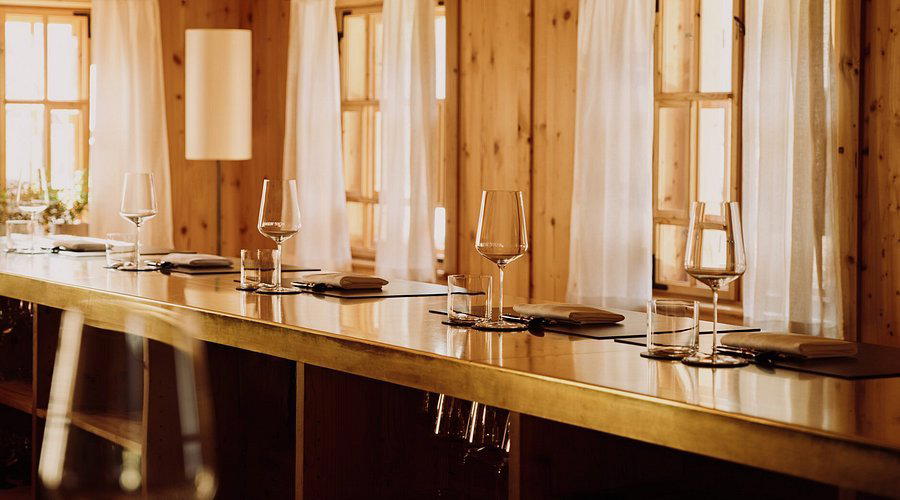
Bars in Schruns
Browse all →


Hotels in Schruns
Browse all →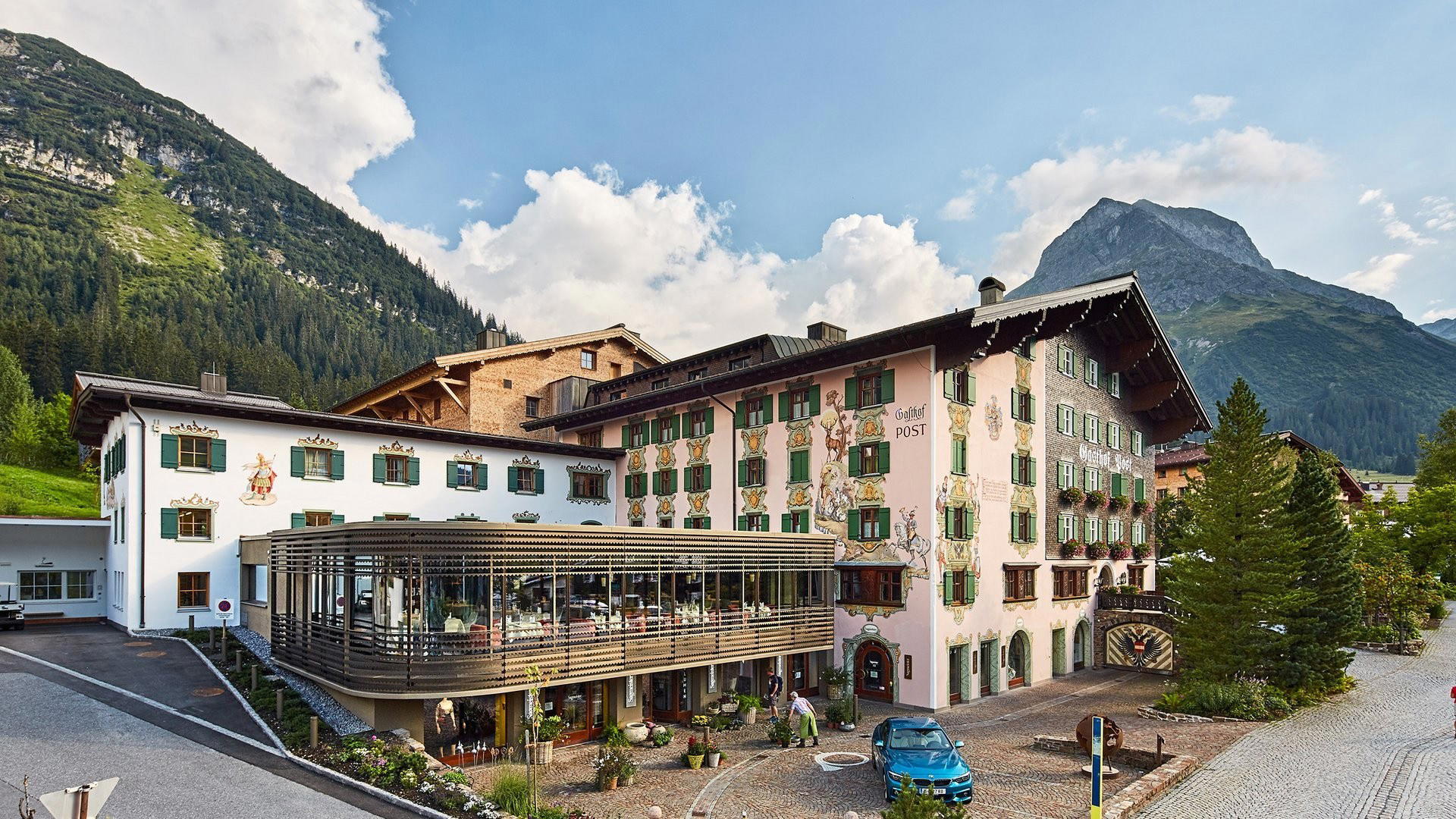

At a Glance
- Scenic
- Cozy
- Classic
- Sophisticated
- Date Night
- Business Dinner
- Group Dining
- Celebration
- Special Occasion
- Garden
- Wine Cellar
- Private Dining
- Hotel Restaurant
- Extensive Wine List
- Craft Cocktails
- Local Sourcing
- Mountain
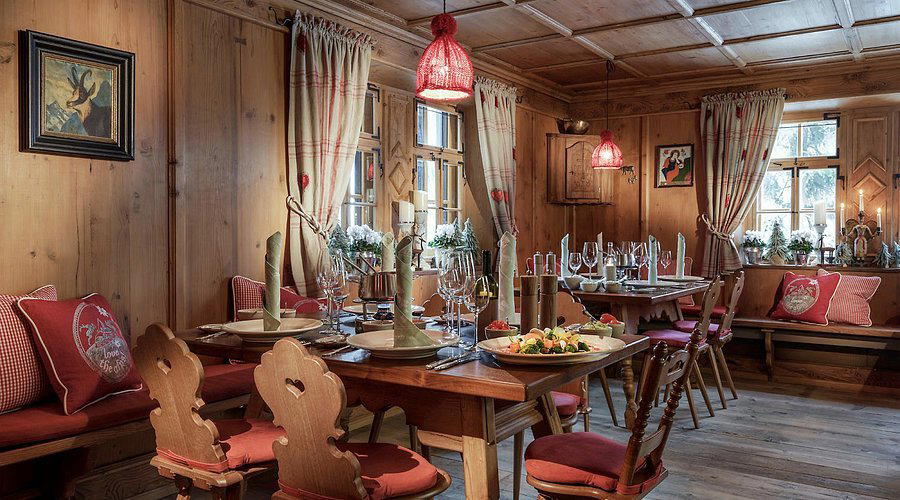
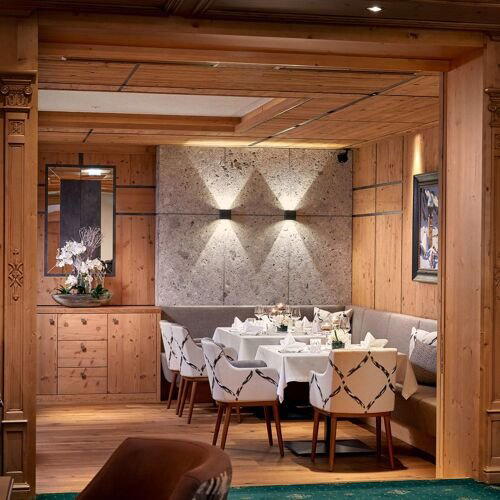
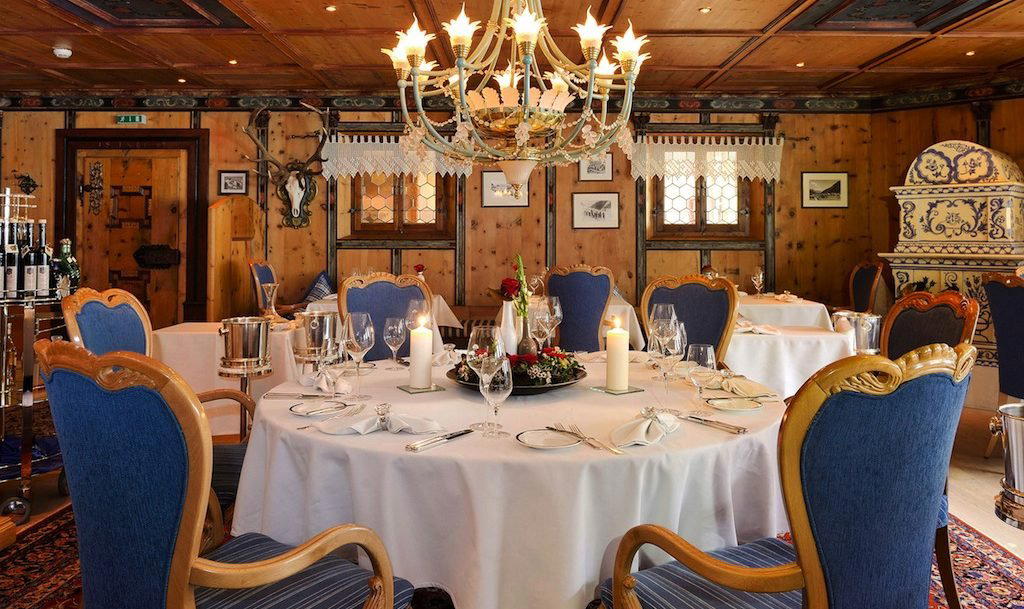
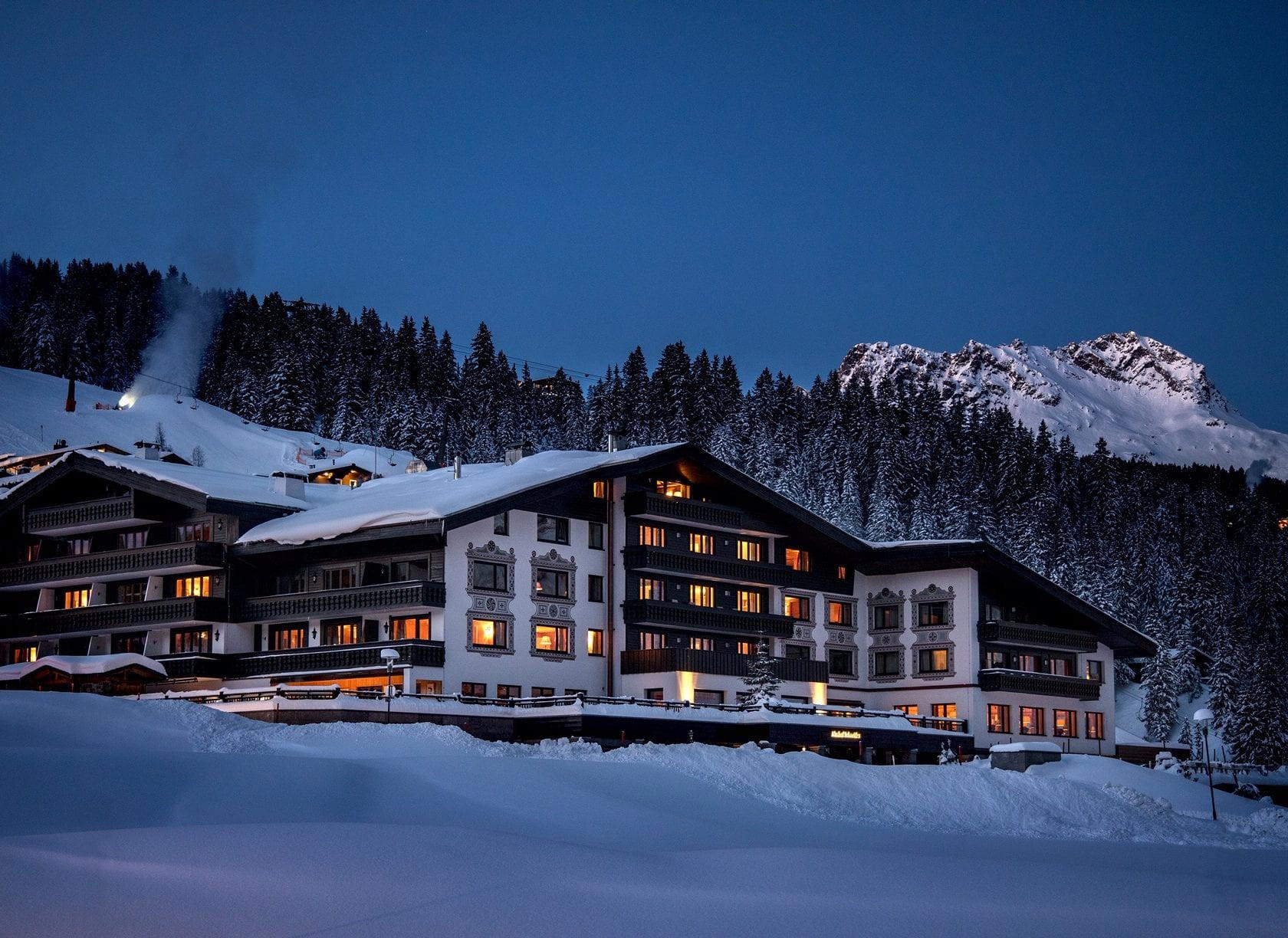
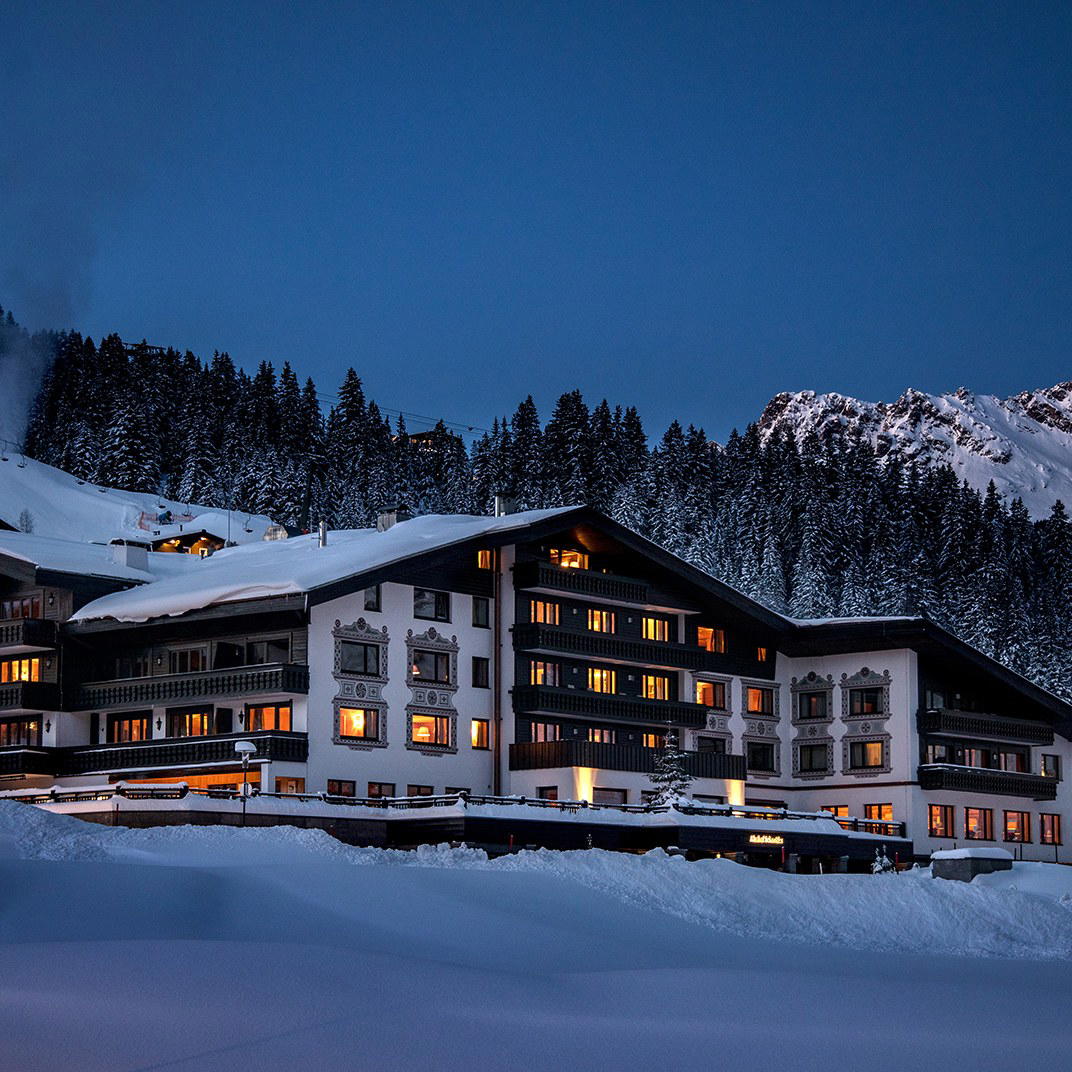
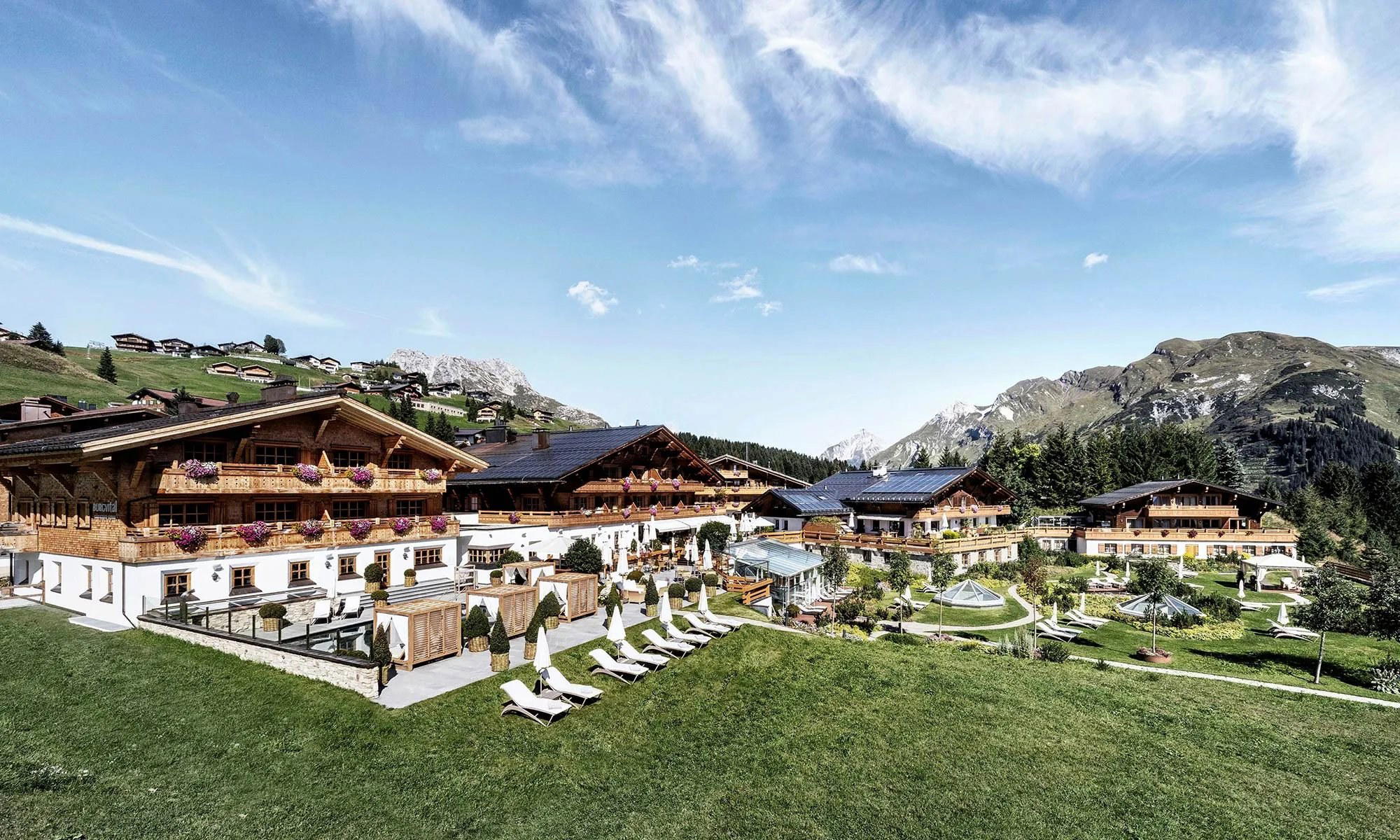
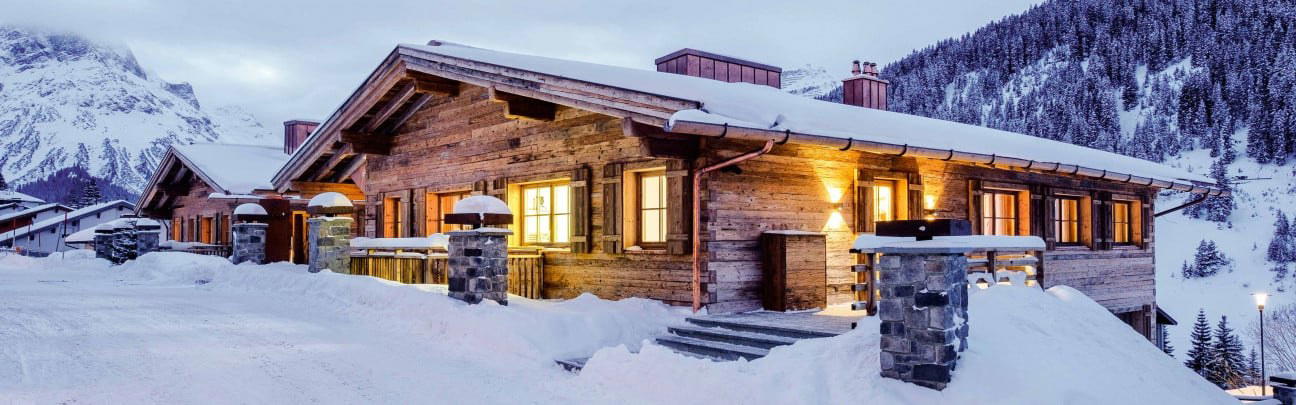
A stylish alpine setting that blends traditional Montafon character with modern design, creating a warm yet polished atmosphere.