A Stube in the Montafon Valley The Montafon valley in Vorarlberg sits at the western edge of Austria, hemmed in by the Silvretta massif and Verwall ranges, and its towns carry a distinct cultural personality that separates them from the more...
Pearl is the En Primeur Club membership app — saves, bookings, and concierge access live there. Same editors, same standards.
- Address
- Silvrettastraße 8, 6780 Schruns, Austria
- Phone
- +434355567141
- Website
- loewen-hotel.com
- Directions
- Get directions
 Saves & bookings on Pearl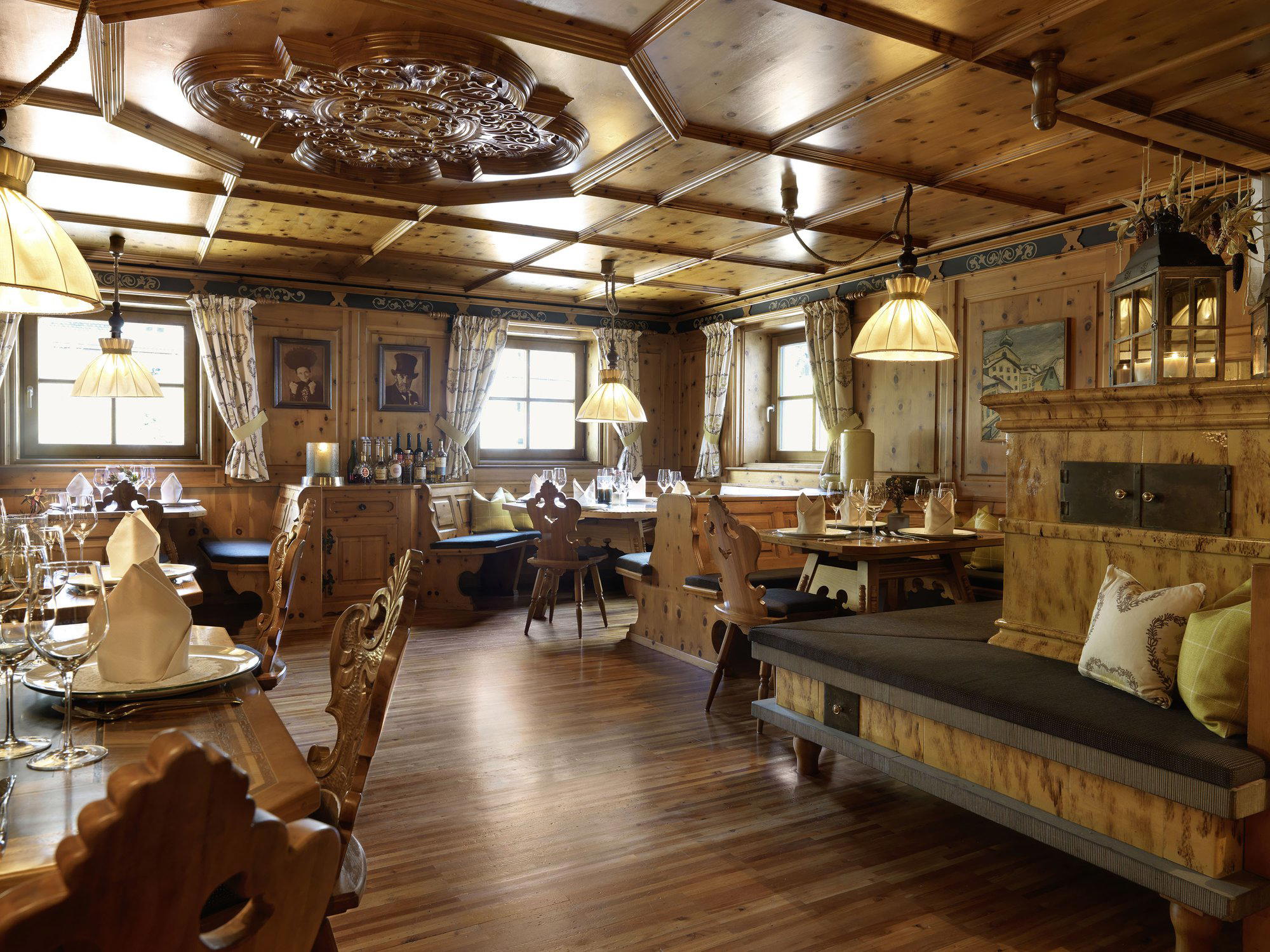
A Stube in the Montafon Valley
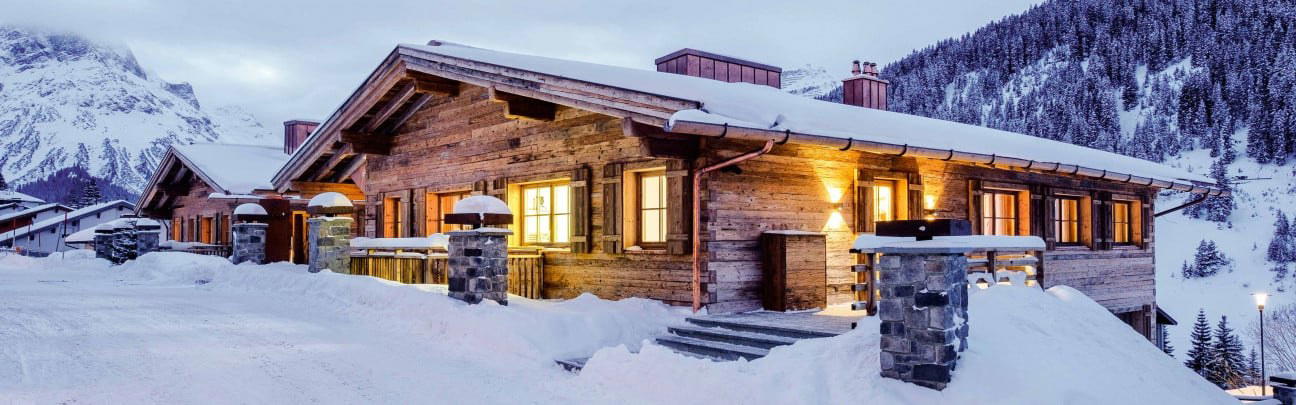
The Montafon valley in Vorarlberg sits at the western edge of Austria, hemmed in by the Silvretta massif and Verwall ranges, and its towns carry a distinct cultural personality that separates them from the more internationally trafficked Arlberg corridor to the east. Schruns is the valley's main town, and its eating culture reflects that positioning: grounded in Alemannic tradition, shaped by altitude and season, and largely oriented toward a local and regional clientele rather than the transient luxury crowd that passes through Sankt Anton or Lech. Löwen Stube, at Silvrettastraße 8, is a restaurant serving French-inspired Alpine Fine Dining.
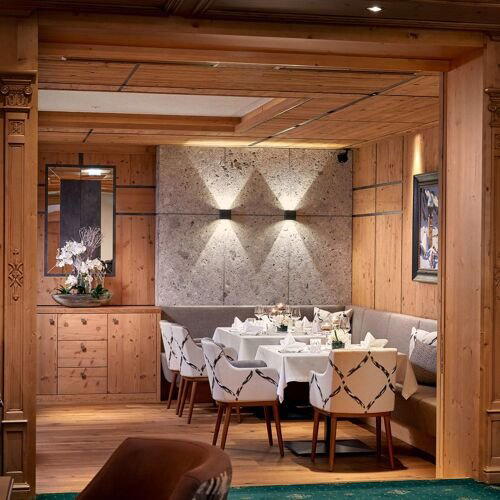
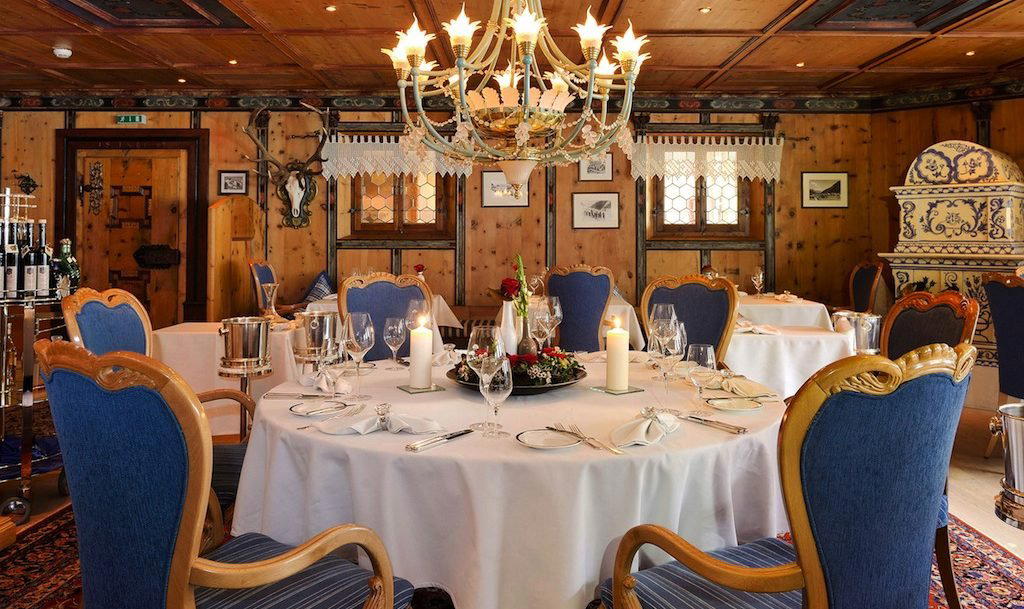
The name itself signals the format. A Stube in the Alpine tradition is not a restaurant in the urban sense; it is a heated room, historically the warmest in the house, where guests were received and meals were shared. The word carries connotations of enclosure, wood, candlelight, and winter. Whether in Tyrol, Vorarlberg, or Bavaria, the leading Stuben hold to that original logic: low ceilings, panelled walls, and a menu that answers the cold outside. That physical and culinary grammar is what distinguishes a Stube from a brasserie or a gasthaus, and it is the frame through which Löwen Stube should be read.
The Culinary Tradition Behind the Format
Vorarlberg cooking occupies a specific and sometimes overlooked position within Austrian cuisine. While the eastern provinces lean into Viennese classics and the Salzburg region anchors much of the country's fine-dining conversation, Vorarlberg draws more naturally from the Alemannic agricultural tradition it shares with neighbouring Switzerland and the German state of Baden-Württemberg. Dairy features heavily: the Bregenzerwald to the north has one of Europe's more notable concentrations of artisan cheese producers, and that culture of careful milk processing filters south into Montafon cooking. Sennerei butter, fresh mountain cheese, and cream-based preparations appear alongside game, root vegetables, and cured meats wherever the regional tradition is maintained.
This places Vorarlberg's serious kitchens in an interesting position relative to Austrian fine dining more broadly. Operations like Steirereck im Stadtpark in Vienna or Obauer in Werfen work within traditions shaped by court cuisine and Salzburg's historical wealth. The Arlberg's decorated kitchens, such as Griggeler Stuba in Lech and Gourmetrestaurant Tannenhof in Sankt Anton am Arlberg, operate under the pressure of a high-spending international ski clientele. Montafon's better restaurants sit in a different tier: less exposed to that international fine-dining arms race, more rooted in the valley's own agricultural identity. For a sense of where that discipline leads at altitude elsewhere in Austria, Kräuterreich by Vitus Winkler in Sankt Veit im Pongau shows how regional herbal and foraged traditions can anchor a serious kitchen.
Schruns and Its Dining Context
Schruns has a literary footnote that its residents have not forgotten: Ernest Hemingway spent several winters here in the 1920s, working on The Sun Also Rises and skiing the surrounding mountains. That detail says something about the town's character before the Austrian ski industry scaled. It was a place of serious winters and quiet industry, not conspicuous resort spending. That temperament persists in the dining culture. The town supports a range of formats, from Brasserie Leonis and Das Esszimmer at one end of the register to Alpenrose, Posthotel Taube, and Vitalquelle Montafon at others. The full Schruns restaurants guide maps that spread.
Within that local field, a Stube-format venue holds a particular social role. It functions as a neighbourhood anchor: the kind of place where tables are booked by families for celebrations, where returning guests order without looking at the menu, and where the rhythm of service is set by a local rather than a resort calendar. Seasonal transitions matter here, with the kitchen adjusting between the winter ski season and summer hiking trade. That dual seasonality is characteristic of Montafon hospitality at large, and it places a different set of demands on a kitchen than the concentrated winter-only trade that shapes so much Arlberg cooking.
Where the Format Sits in the Wider Austrian Picture
The Stube format has not been static. Across Austria's Alpine west, the last two decades have seen it split into two distinct expressions. The first is the traditional, family-run version: unpretentious, menu-driven, anchored in regional recipes. The second is the upscaled version, where the panelled aesthetic is retained but the kitchen moves into tasting-menu territory with trained brigades behind it. Both Ikarus in Salzburg and Landhaus Bacher in Mautern an der Donau represent the broader Austrian tendency to take traditional formats and push them toward fine-dining ambition, a move also visible in operations like Döllerer in Golling an der Salzach and Ois in Neufelden. International comparisons help calibrate the difference in approach: where a room like Le Bernardin in New York City operates with a single-minded technical focus or Atomix in New York City foregrounds conceptual precision, the Alpine Stube tradition prioritises warmth and continuity over ambition and novelty. The formats solve different problems. Restaurant 141 by Joachim Jaud in Mieming offers a useful Tyrolean reference point for the middle register of that spectrum.
Planning a Visit
Löwen Stube is at Silvrettastraße 8 in central Schruns, within walking distance of the town's main facilities and the Montafoner Bahn rail connection that links the valley to Bludenz and the main Austrian rail network. Guests should contact the restaurant directly before arriving, particularly during shoulder-season transitions when Alpine kitchens sometimes operate on reduced schedules.
Budget Reality Check
Comparable venues nearby, for context on price, style, and recognition.
| Venue | Cuisine | Price | Awards | Notes |
|---|---|---|---|---|
| Löwen StubeThis venue — the venue you are viewing | Not listed | $$$ | Not listed | Not listed |
| Brasserie Leonis | Schruns, French-Austrian Brasserie | $$$ | Michelin Plate | Not listed |
| Alpenrose | Not listed | $$$ | Not listed | Schruns, Regional Austrian Alpine Cuisine |
| Vitalquelle Montafon | Not listed | $$$ | Not listed | Schruns, Modern Austrian with International Influences |
| Posthotel Taube | Not listed | $$$ | Not listed | Schruns center, Traditional Austrian Montafoner |
| Das Esszimmer | Schruns, Alpine Sushi Fusion | $$$$ | Not listed | Not listed |
Continue exploring
More in Schruns
Restaurants in Schruns
Browse all →
Bars in Schruns
Browse all →


Hotels in Schruns
Browse all →

At a Glance
- Cozy
- Elegant
- Rustic
- Special Occasion
- Date Night
- Hotel Restaurant
- Sommelier Led
- Local Sourcing
- Mountain
Cozy stube atmosphere with elegant alpine chic and relaxed post-dinner club vibe.