Portage Bay Cafe - Ballard
Portage Bay Cafe's Ballard location on NW Market Street sits inside Seattle's most ethically committed breakfast and brunch tier, where local sourcing and seasonal menus define the offer rather than decorate it. The cafe operates within a small regional group that has built a following on farmer-direct ingredients and house-made components. For northwest Seattle residents, it functions as a reliable weekend anchor.
Pearl is the En Primeur Club membership app — saves, bookings, and concierge access live there. Same editors, same standards.
- Address
- 2821 NW Market St, Seattle, WA 98107
- Phone
- +12067831547
- Website
- portagebaycafe.com
- Directions
- Get directions
 Saves & bookings on Pearl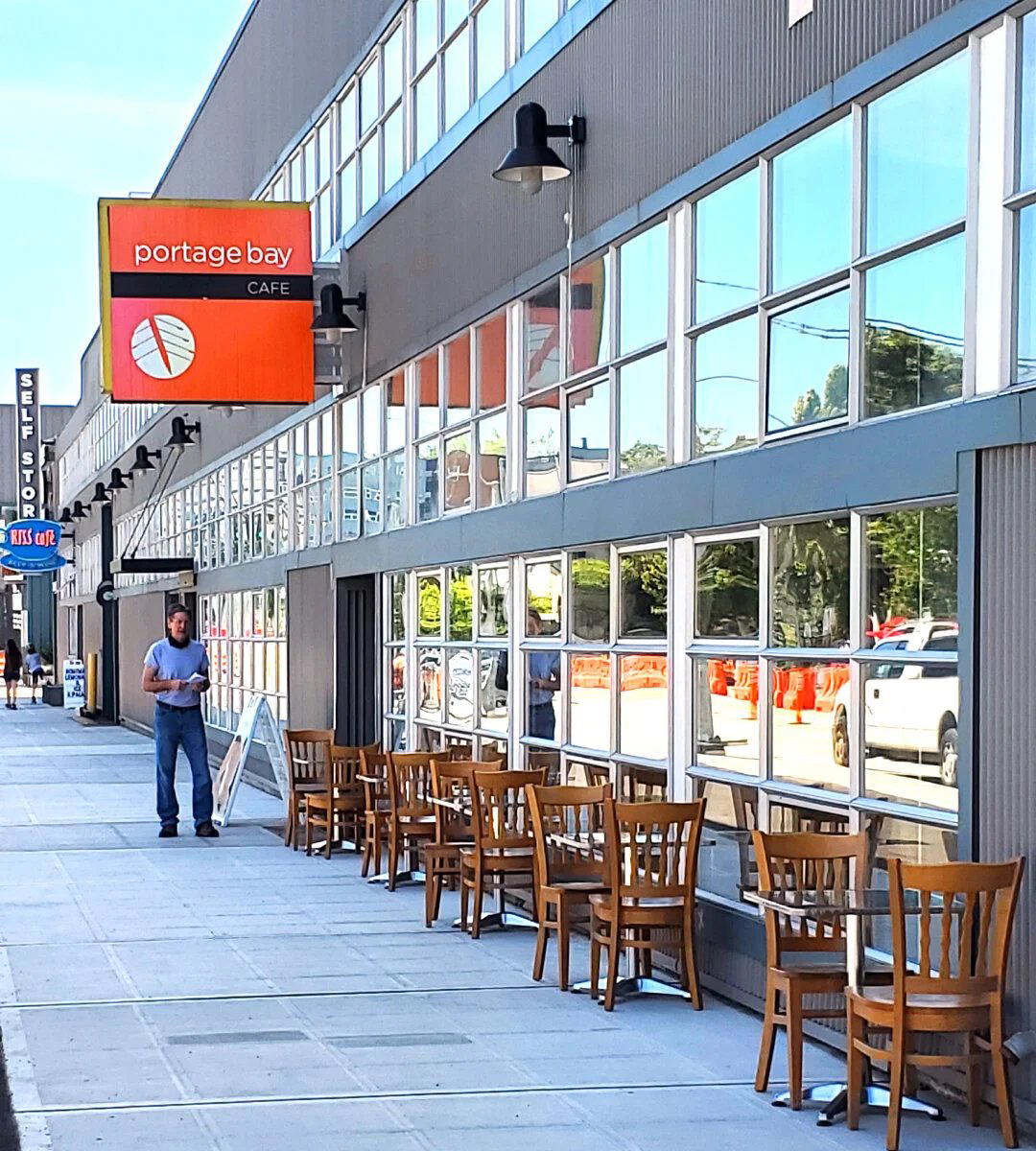
Where Ballard Starts Its Morning
NW Market Street in Ballard moves differently on weekend mornings. The neighborhood's Scandinavian maritime roots have given way to a denser, more eclectic residential character, but the ritual of a long, unhurried breakfast remains intact. The sidewalks fill early, and the queue outside Portage Bay Cafe's Ballard address at 2821 NW Market St tends to form before the doors open. That queue speaks to sustained demand at a walk-in breakfast spot.
Seattle's breakfast scene has stratified over the past decade. At the leading end, properties like Canlis have moved toward tightly controlled, reservation-only formats. Below that, the mid-market is crowded with all-day cafes that rotate seasonal language onto otherwise static menus. Portage Bay operates in a distinct band: serious about sourcing, accessible in price, and consistent across visits. Its multi-location model functions as a regional institution more than a neighborhood discovery.
The Ethics Behind the Ingredient List
Pacific Northwest dining has long traded on proximity to notable produce, but proximity alone does not guarantee commitment. Portage Bay Cafe has built its identity around direct relationships with local farms, and that positioning places it in conversation with a national conversation about what ethical sourcing actually means in practice. The distinction worth drawing is between venues that name-check a farm on a menu and those that structure their offer around what nearby farms can supply seasonally. The latter category is considerably smaller.
Across the United States, a handful of restaurants have made farm-integration their central proposition. Blue Hill at Stone Barns in Tarrytown operates its own farm and treats the kitchen as an extension of agricultural practice. Single Thread Farm in Healdsburg controls a farming operation that directly feeds a tasting menu format. These are fine-dining applications of a philosophy that Portage Bay applies at a breakfast price point: the idea that the plate is a downstream consequence of land stewardship rather than a purchasing decision made from a wholesale catalog.
That philosophy has practical implications for the menu's seasonal range. Items shift as Pacific Northwest harvests move through the calendar. The berry season that peaks in late summer in western Washington changes what lands on the table in ways that go beyond decoration. For a visitor arriving in July or August, the fresh-fruit component of the menu reflects a specific agricultural moment. Arriving in February means a different set of available local ingredients, and the menu reflects that honestly rather than papering over the gap with imported produce.
Waste Reduction and the Scratch Kitchen Model
The scratch-kitchen model that Portage Bay operates under has a waste-reduction logic built into it that is easy to underestimate. When sauces, batters, and components are made in-house rather than purchased pre-made, the kitchen retains control over quantities, timing, and what happens to surplus. That control supports waste reduction.
This positions the cafe within a broader movement in American restaurant culture toward transparency about the full lifecycle of an ingredient. Operations like Lazy Bear in San Francisco have made process transparency part of their guest experience at the fine-dining tier. The argument Portage Bay makes is that the same ethics can operate at a neighborhood breakfast scale, where the per-cover economics are tighter and the volume pressures are different. Managing waste in a high-turnover brunch environment requires more discipline than managing it in a forty-cover tasting menu setting.
Ballard's proximity to the water and its historically working-class relationship with food production give the cafe's sourcing narrative a local anchor. A commitment to knowing where ingredients come from reads as continuity rather than trend. That contextual fit is not incidental, it is part of why Portage Bay's Ballard location carries the sourcing story with more credibility than it might in a neighborhood with no such history.
Ballard in the Broader Seattle Dining Picture
For visitors building a Seattle itinerary, the question of where Ballard fits matters. The neighborhood sits northwest of Capitol Hill and South Lake Union, which host a denser cluster of evening dining destinations. Ballard's dining character skews toward neighborhood regulars rather than destination-seekers, which means the ratio of locals to out-of-towners at Portage Bay is higher than at, say, a Capitol Hill destination that draws from across the city. That local-majority dynamic affects service cadence and the overall feel of a meal.
Seattle's most ambitious evening kitchens, Joule for New Asian technique, 1415 1st Ave in the downtown corridor, operate in a different register. The Ballard addresses worth knowing, including 1744 NW Market St and 2963 4th Ave S, serve a neighborhood that eats well without performing ambition. Portage Bay fits that character: the sourcing is serious, the execution is consistent, and the format is resolutely unpretentious.
On a national scale, the scratch-kitchen, local-sourcing breakfast format that Portage Bay represents sits in contrast to the fine-dining venues where those same values generate Michelin attention and national press. Providence in Los Angeles, Le Bernardin in New York City, and Addison in San Diego all carry sustainability credentials alongside formal recognition. Portage Bay shows that those commitments are not format-dependent. They translate to a weekend brunch setting when the operational will is there.
Know Before You Go
- Address: 2821 NW Market St, Seattle, WA 98107
- Neighborhood: Ballard, northwest Seattle
- Booking: Walk-in format; weekend queues form early, particularly during summer berry season
- Leading timing: Weekday mornings carry shorter waits; peak weekend demand runs from mid-morning through early afternoon
- Seasonal note: Pacific Northwest berry season (July through August) drives menu variation worth timing a visit around
Peers in This Market
Comparable venues nearby, for context on price, style, and recognition.
| Venue | Cuisine | Price | Notes |
|---|---|---|---|
| Portage Bay Cafe - BallardThis venue — the venue you are viewing | Organic Farm-to-Table American Brunch | $$ | Not listed |
| Endolyne Joe's | American Comfort Food | $$ | Fauntleroy |
| North Star Diner | Classic American Diner | $$ | Greenwood |
| Great State Burger | Organic Grass-Fed Burger Joint | $$ | Denny Triangle |
| A Pizza Mart | American Pizza | $$ | Belltown |
| 5 Spot | American Regional Diner | $$ | East Queen Anne |
Continue exploring
More in Seattle
Restaurants in Seattle
Browse all →
Bars in Seattle
Browse all →
Hotels in Seattle
Browse all →

At a Glance
- Cozy
- Rustic
- Brunch
- Casual Hangout
- Family
- Open Kitchen
- Farm To Table
- Local Sourcing
- Organic
Current opening hours
- Monday
- 8 AM–1 PM
- Tuesday
- 8 AM–1 PM
- Wednesday
- 8 AM–1 PM
- Thursday
- 8 AM–1 PM
- Friday
- 8 AM–1 PM
- Saturday
- 8 AM–2 PM
- Sunday
- 8 AM–2 PM
Hours can change for holidays and private events. Last verified .
Bright, open, cozy atmosphere with an energetic brunch vibe.